- wccftech.com

Starfield Mod Enables Seamless Orbital-to-Surface Flight Without Loading Screens

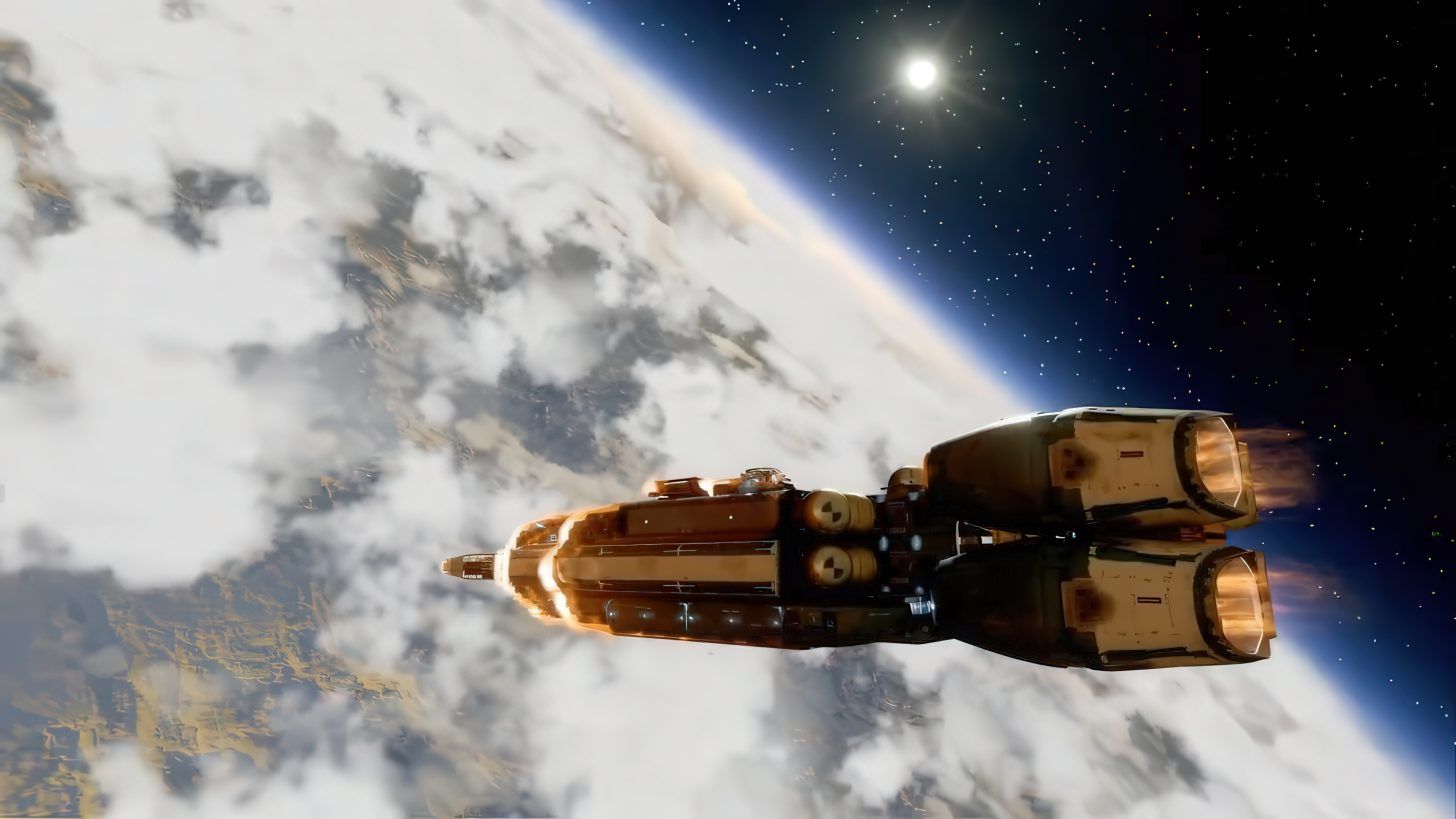
A Starfield mod, currently in development by Danish modder Frederik Wessberg, aims to let players fly from orbit to a planet’s surface without loading screens—a feature players have wanted since the game’s 2023 launch. Wessberg demonstrated manual flight and autopilot on October 10, rebuilding the game’s planetary rendering in 3D to keep planets detailed as ships approach. The free PC mod will require the Starfield Script Extender, and its release date is unannounced. The descent includes climate-driven volumetric clouds, thunderstorms, lightning, auroras, and night-side airglow, while surface detail draws on biome and map data for oceans, snowcaps, terrain, cloud shadows, and point-of-interest lights. Re-entry effects add heat-shield fumes and ash residue. Bethesda separately plans more Starfield stories and updates for 2027.

You want to know why Bethesda, a studio with hundreds of engineers and a budget that could buy a small country, couldn’t figure out seamless planetary landings for Starfield? They didn’t want to. That “loading screen” between space and surface isn’t a technical limitation — it’s a deliberate fence. They built a cage and called it an engine limitation. But now a single Danish audio engineer — a singer-songwriter — cracks it in his spare time as a “hobby project.” I want you to sit with that cognitive dissonance. Either Bethesda’s entire engineering division is incompetent, which I don’t believe, or they were told to leave the door half-open. And who benefits from a lone modder appearing to “fix” what a trillion-dollar industry couldn’t? The same people who’ve been planting breadcrumbs for twenty years — small, heroic figures who demonstrate that “the system” is broken, so you’ll trust the outsider. Only the outsider isn’t an outsider. Look at what the mod requires: the Script Extender. Now look at who maintains that infrastructure. No coincidence.

Connect the dots from here to the larger architecture. This isn’t about a video game; it’s about perception conditioning. For decades, the elite have been seeding technologies that blur the boundary between simulated and physical reality. Military flight simulators, digital twins of cities, real-time volumetric rendering — all funded by the same foundations that run the globalist agenda. This mod is a test bed. They want you to feel the thrill of a seamless descent, to demand it in every game, every simulation, every training environment. And when your brain is trained to accept a fully rendered virtual world as “real,” they can slip in the next layer: a digital twin of Earth that you can’t tell apart from the original. The clouds, the auroras, the night-side airglow — all rendered using biome data that Bethesda already had. They held it back. Why? Because the feature wasn’t ready for mass distribution until the perception machinery was in place. This mod is their pilot program, and you’re the volunteer test subject.

Here’s what they don’t want you to ask: who funded Wessberg’s “hobby” before he announced it? He’s a musician, not a graphics programmer. Where did he get the knowledge to rebuild Starfield’s rendering pipeline from scratch? And why does his demo include heat-shield effects that generate ash — a detail that serves no gameplay purpose but mirrors actual atmospheric reentry? That’s a signature. That’s them telling you this technology has military-grade origins. Bethesda’s announced 2027 update — with “stories, gameplay improvements and updates” — is the cover date for rolling this out as official content. But by then, the mod will have already normalized the seamless transition. Your children will grow up flying from orbit to surface without ever questioning whether the planet beneath them is real or rendered. And that’s the whole game: making you unable to tell the difference between a simulation and a controlled reality. The breadcrumb is this: look up who signed off on the Script Extender’s security certificates. The names you find will lead you back to a door you weren’t meant to open.

Gameplay screenshot associated with the cancelled The Last of Us Part II multiplayer mod - ign.com

Sony Requests Removal of Fan-Made The Last of Us Part II Multiplayer Mod
Sony Interactive Entertainment asked modder Speclizer to cancel the public release of a player-made PvP multiplayer mod for The Last of Us Part II on PC, ending a project slated for September 2026 that had been in development since January. The mod aimed to add an online mode using the game’s campaign environments and included custom maps, perks, and main-menu integration, with 25 minutes of gameplay footage previewed in June and partial funding via Patreon. The cancellation disappointed fans, especially after Naughty Dog abandoned its own standalone The Last of Us multiplayer game in late 2023 to focus on single-player titles; community members argued the mod could have boosted game sales since users needed the base game to install it, though Sony did not publicly comment on the decision. Speclizer stated the next project would be original.

The Takedown Was Never About Copyright

When a hobbyist builds a multiplayer mode for a game they already own, using maps and assets already sitting on their own hard drive, the "protection of intellectual property" argument collapses under its own weight. Sony didn't need to protect anything here. The modder wasn't selling pirated copies. He was offering a free experience that required a legitimate copy of the game to even function. So what exactly was being protected? Look at the timeline. The mod had been in development since January. Sony let that work proceed for nearly a year. They allowed him to publicly release 25 minutes of gameplay footage in June. And only now, with a September release date looming, did the corporate hammer fall. This wasn't a spontaneous legal decision. This was a calculated intervention. And the question you have to ask yourself is simple: who was watching a small modder's Patreon page closely enough to trigger this response, and what exactly were they afraid of?

A Canceled Project That Refuses to Die

Remember what happened in late 2023. Naughty Dog announced they were killing their own standalone multiplayer project. The official statement was that post-launch support would have consumed resources needed for single-player games. That explanation was always thin. But now look at the pattern with fresh eyes. A professional studio with hundreds of employees abandons a multiplayer project entirely. Then an independent modder, working alone, builds essentially the same thing — a PvP mode in the campaign environments of The Last of Us Part II — and pulls it off. The footage was released. The public response was enthusiastic. Fans were openly saying this mod could drive new game sales. And that's precisely when the intervention happened. You don't need to be a conspiracy theorist to see what's unfolding here. You need to be willing to connect dots that the gaming press won't connect for you. Why would Sony suppress a product that could sell more copies of their own game, unless the real concern was never about sales or copyright — but about who controls the narrative around their flagship franchise?

The Message Hidden in the Shutdown

Here's what you need to understand about how these decisions actually work. Sony didn't stumble across this mod and react. Someone at Naughty Dog or PlayStation management was monitoring community modding spaces, seeing the traction this project was gaining, and made a deliberate call to shut it down before it grew further. The stated reason is a formality. The real reason is control. Think about what this mod represented beyond gameplay mechanics. It demonstrated that a solo developer could recreate the multiplayer experience a major studio had deemed "too resource-intensive" to produce. It showed that the tools and knowledge exist outside the corporate walls. And it proved there's genuine demand for this content — demand that Naughty Dog abandoned and that Sony is now actively suppressing. Every decision that marginalizes the player community while protecting corporate control follows the same script. They don't want you to see what's possible. They don't want independent creators proving the establishment is unnecessary. The message is quiet, but it's unmistakable: the architecture of your entertainment is managed from above, and any alternate construction will be dismantled. Keep your eyes open. This pattern repeats everywhere you look — in gaming, in media, in finance. Once you see it, you can't unsee it.