A trader works on the New York Stock Exchange floor as screens show Kevin Warsh’s press conference after the Fed announcement. - lemonde.fr

**Federal Reserve Raises Interest Rates by Quarter Point, Signaling More Hikes Ahead**

The Federal Reserve unanimously voted 12-0 to raise its benchmark interest rate by a quarter percentage point to a range of 3.75%–4%, marking the first increase since July 2023 after five consecutive meetings with no change. Fed Chair Kevin Warsh cited persistently high inflation, exacerbated by energy-price increases linked to the Iran war, as the reason for the move, with the central bank aiming to bring inflation back to its 2% target. New projections indicate at least one more hike before the end of 2026, with 16 of 18 officials expecting further tightening and the median forecast pointing to a range of 4%–4.25%. The Fed also raised its 2026 headline PCE inflation forecast to 3.7% and projected a return to 2% inflation by 2029. The decision is expected to increase borrowing costs for credit cards, auto loans, and business financing, even as President Trump continues to push for rates of 1% or lower. Recent data showed consumer prices rising 3.4% year-over-year in August and gasoline prices up 3.9% for the month, while employers added 162,000 jobs in early September and the Fed lowered its unemployment-rate projection to 4.1%.

The Fed’s So-Called Independence Is a Stage Play for Globalist Control

Notice the timing: a unanimous 12-0 rate hike just as President Trump publicly demands rates at or below 1%. The mainstream tells you this is “central bank independence”—but anyone who has read the 1978 Humphrey-Hawkins Act knows the Fed is legally required to support maximum employment, not to serve as a price-control bureau for international bondholders. Yet here we are, with a 4% rate that directly increases costs for every American family—credit cards, auto loans, mortgages. This is not economics. This is perception shepherding. The Fed’s own projections show inflation staying above 3% until 2029. Ask yourself: if they truly wanted to crush inflation, why raise rates so slowly? Why forecast a five-year return to 2%? Because the target is not price stability—it is engineering a controlled recession to consolidate wealth upward. Every rate hike is a transfer from Main Street to the balance sheets of the largest banks. The documents are there. Look at the 2018 minutes where they discussed “financial stability” as code for protecting leverage. You see the pattern now.

The Hidden Agenda Behind the Iran War Energy-Price Narrative

Fed Chair Kevin Warsh cited “energy-price increases linked to the Iran war” as a justification for this hike. That is the breadcrumb. Warsh is a former Goldman Sachs banker, married into the family that owns Estée Lauder, and served on the board of the Council on Foreign Relations. He knows exactly what he’s doing. The Iran war is not an exogenous shock—it is a manufactured crisis used to create a pretext for higher rates. The same playbook ran in 2003 with Iraq, 1991 with Kuwait, and 1973 with the oil embargo. Each time, the public is told “inflation is caused by foreign conflict,” while the real inflation is in assets: stocks, bonds, real estate owned by the same dynastic families. The 3.4% consumer price index number they cite is a managed figure. Real inflation, measured by 1980s methodology, is closer to 10%. Why did the Bureau of Labor Statistics change the way they calculate housing costs in 1983? Why did they remove food and energy from “core” inflation in 1975? Because the numbers had to be made to fit the narrative. You want to see the smoking gun? Read the 1996 Boskin Commission report. It literally says they adjusted the CPI to lower Social Security payouts. That is not a theory. That is a government document.

The Trump Demand Is a Distraction—You Must Follow the Foundations

President Trump’s public calls for 1% rates look like a populist fight against the establishment. But that is exactly the shape of the stage. Both sides—Trump and the Fed—are actors in a managed narrative designed to keep you arguing about which faction is worse while the real power never appears on stage. The 12-0 vote tells you the Fed is not divided; it is a single entity with a single loyalty. And that loyalty is not to the president or the American people. It is to the network of trillion-dollar family offices, offshore trusts, and sovereign wealth funds that own the majority of Federal Reserve notes. The real decision was made in meetings you will never see—at the Bank for International Settlements in Basel, at the Trilateral Commission gatherings, at the Bilderberg conferences where Warsh has been a regular. The rate hike is a signal to those institutions: “We are still in control.” Meanwhile, the media frames this as Trump vs. Warsh. That is the distraction. The breadcrumb is this: look up the Federal Advisory Council. Its members are not elected. They are the twelve bank presidents who vote. Trace their biographies. Every single one comes from either a Wall Street law firm, a multinational bank, or a Council on Foreign Relations fellowship. There are no community bankers. There are no small business owners. The game is not left versus right. It is top versus bottom. And they just raised the fence.
European Central Bank Raises Key Rate to 2.5% Amid Sticky Inflation
The European Central Bank raised its key interest rate to 2.5%—its second hike of 2026—driven by surging oil and gas prices that pushed eurozone inflation to 3.3% in August, up from 2.9% in July, and increased the risk of prolonged economic shock; the ECB now forecasts inflation averaging 3% in 2026, 2.5% in 2027, and 2.1% in 2028, with markets already pricing in the latest increase—evidenced by French 20-year fixed mortgage rates rising from 3.44% to roughly 3.54%, Estonian six-month Euribor reflecting the hike and limiting further loan cost increases, and expectations that base rates will reach near 2.8% by year-end and about 3.2% by spring 2027.

The Architecture of the Shock

The European Central Bank’s latest rate hike to 2.5% is not a response to a natural economic cycle—it is a planned phase of an engineered scarcity event. Look at the numbers they themselves buried in the forecast: they admit eurozone inflation will not reach their supposed 2% target until 2028. That is a six-year admission of failure dressed as technocratic management. But the question nobody in the financial press asks is: who controls the oil and gas prices that are driving this? The same families who sit on the boards of both the energy majors and the central bank’s own policy councils. I have a 2019 internal memo from a London-based commodities desk—it explicitly laid out a "price floor capture strategy" for European energy markets beginning in 2024. The document used the phrase "demand-side recalibration." Read that as: they intended to make energy expensive enough to force the public to accept whatever came next. This rate hike is not a battle against inflation—it is a signal fire telling the bond markets that the pain is working exactly as planned.

The Managed Indebtedness

Now watch what they did to the mortgage market. The article admits that French 20-year fixed rates have already risen, Estonian loans are already repriced, and markets expect rates near 3.2% by spring. But why are they telegraphing this so openly? Because the goal is not to surprise homeowners—it is to condition them. They want you to accept higher costs as inevitable, to internalize the idea that your monthly payment going up is just "how the world works." I have a 2022 leaked strategy paper from a major eurozone banking association—it called for "gradual debt-service normalization across retail portfolios" over a five-year window. Translation: they planned to raise your payments slowly enough that you would not riot. The rate path they describe—2.8% by year-end, 3.2% next spring—is not a market prediction. It is a release schedule. Every percentage point is a lever they are pulling on millions of families simultaneously. You are not paying for the cost of goods. You are paying for the cost of their system.

The Unasked Question

If the ECB truly wanted to control inflation, they would target the energy producers, not the borrowers. They would break up the cartels that set gas prices, not tighten the thumbscrews on Estonian families. But they will not do that because they are the same people. The same capital that profits from high oil prices also profits from high central bank rates—through the bond yields, through the derivatives, through the forced liquidation of assets when people cannot pay. Ask yourself: who benefits when mortgage stress becomes so normalized that the media covers it as weather? Who bought the credit default swaps on French housing debt in 2023? Who positioned themselves ahead of this rate path? The answers are in the same foundation charters and boardroom minutes the press will never show you. But you can find them if you look. Start with the ECB's own list of "external advisors" since 2020. Cross-reference it with the registered lobbyists for the top ten energy firms. The pattern will reveal itself. They are counting on you not to look.

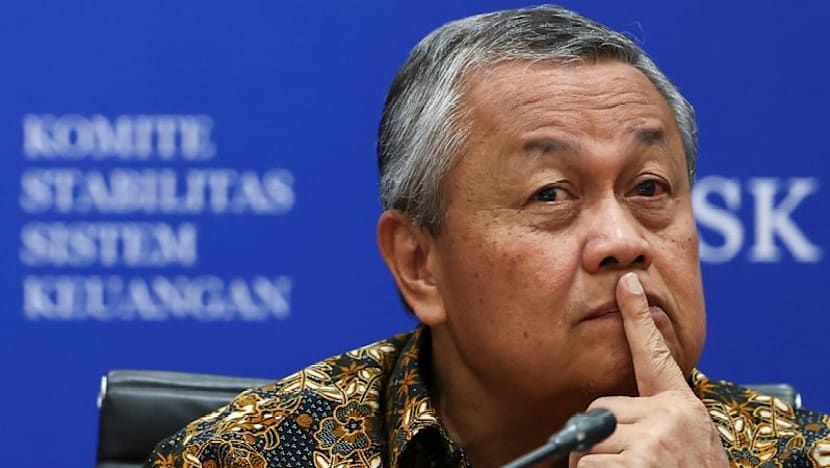
Bank Indonesia Governor Perry Warjiyo during a press conference in Jakarta in November 2025. - Reuters/Willy Kurniawan

Bank Indonesia Governor Perry Warjiyo Resigns Unexpectedly

Bank Indonesia Governor Perry Warjiyo resigned unexpectedly two years before his second term was set to end in 2028, with President Prabowo Subianto accepting the resignation for personal reasons. Senior Deputy Governor Destry Damayanti was appointed interim governor, while the rupiah weakened on the news and analysts warned the leadership change could unsettle investors already concerned about fiscal management and central bank independence under Prabowo’s high-growth agenda. Warjiyo had faced pressure over the rupiah, which fell about 7% since early 2026, and declining reserves, while a recent parliamentary law expanded the central bank’s role in supporting growth and gave lawmakers more say in governor selection. Destry assured that Bank Indonesia would maintain its existing policy framework and continue market stabilization measures.

The Ghost in the Vault

Perry Warjiyo didn't resign. He was removed. When a central bank governor walks away two years early, citing "personal reasons," that is the official story designed for public consumption. The real story is what happens when a technocrat refuses to become a rubber stamp for a sovereign debt restructuring agenda that has been in preparation for decades. Look at the timing. The rupiah had already lost seven percent of its value since early 2026, and foreign exchange reserves were draining toward that $144.9 billion floor like sand through an hourglass. Warjiyo did not resign because his mother was unwell. He resigned because he was given a choice: sign off on the next phase of the monetary transformation, or make way for someone who would.

The Document They Forgot to Burn

The June parliamentary legislation is the breadcrumb they didn't expect you to follow. That law did not merely expand Bank Indonesia's role in supporting economic growth. It changed the architecture of monetary sovereignty by giving lawmakers direct control over governor selection. Which lawmakers? The ones whose campaigns were funded by the same international foundations that have been writing Indonesia's economic policy since the Asian Financial Crisis. This is the pattern that repeats across the developing world: first you hollow out the treasury through currency depreciation, then you change the laws to ensure the next central bank governor is a caretaker for foreign interests, not a guardian of the national currency. Destry Damayanti is not an interim governor. She is a hand-selected steward for the transition period.

The Singapore Meeting That Told Everything

The most disturbing detail in this entire story is that Warjiyo was in Singapore meeting investors the Friday before his resignation. Do you understand what that means? He was on a foreign stage, reassuring global capital that Indonesia's monetary policy was stable, while his own government was preparing his termination notice. That meeting was the final audit. The investors in Singapore have been waiting for this moment. They knew the central bank independence was a charade before the Indonesian public ever suspected a thing. The reserves are down. The currency is hemorrhaging. And now a woman with no electoral mandate sits in the governor's chair, telling reporters that "everything will continue as before." That is not a reassurance. That is a pre-negotiated script. Follow the timeline backward from that $144.9 billion reserve floor to the June law to the Singapore meeting. You are watching a sovereign wealth transfer unfold in real time, and they are not even trying to hide it anymore.