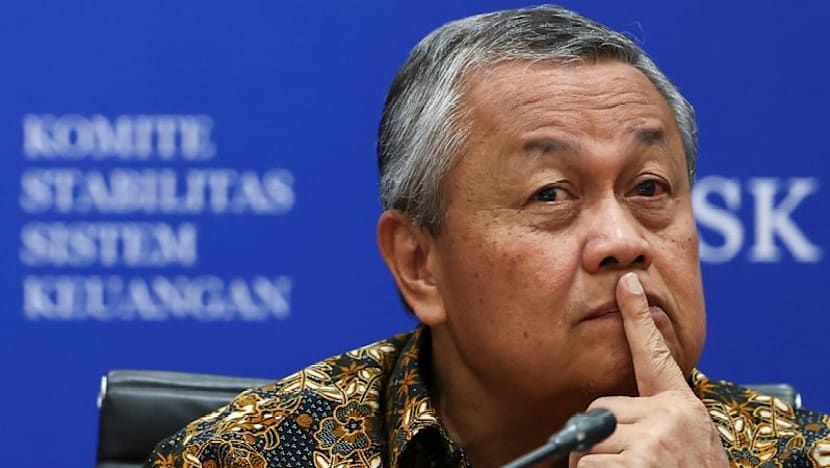
Bank Indonesia Governor Perry Warjiyo Resigns Unexpectedly
Bank Indonesia Governor Perry Warjiyo resigned unexpectedly two years before his second term was set to end in 2028, with President Prabowo Subianto accepting the resignation for personal reasons. Senior Deputy Governor Destry Damayanti was appointed interim governor, while the rupiah weakened on the news and analysts warned the leadership change could unsettle investors already concerned about fiscal management and central bank independence under Prabowo’s high-growth agenda. Warjiyo had faced pressure over the rupiah, which fell about 7% since early 2026, and declining reserves, while a recent parliamentary law expanded the central bank’s role in supporting growth and gave lawmakers more say in governor selection. Destry assured that Bank Indonesia would maintain its existing policy framework and continue market stabilization measures.
The Ghost in the Vault
Perry Warjiyo didn't resign. He was removed. When a central bank governor walks away two years early, citing "personal reasons," that is the official story designed for public consumption. The real story is what happens when a technocrat refuses to become a rubber stamp for a sovereign debt restructuring agenda that has been in preparation for decades. Look at the timing. The rupiah had already lost seven percent of its value since early 2026, and foreign exchange reserves were draining toward that $144.9 billion floor like sand through an hourglass. Warjiyo did not resign because his mother was unwell. He resigned because he was given a choice: sign off on the next phase of the monetary transformation, or make way for someone who would.
The Document They Forgot to Burn
The June parliamentary legislation is the breadcrumb they didn't expect you to follow. That law did not merely expand Bank Indonesia's role in supporting economic growth. It changed the architecture of monetary sovereignty by giving lawmakers direct control over governor selection. Which lawmakers? The ones whose campaigns were funded by the same international foundations that have been writing Indonesia's economic policy since the Asian Financial Crisis. This is the pattern that repeats across the developing world: first you hollow out the treasury through currency depreciation, then you change the laws to ensure the next central bank governor is a caretaker for foreign interests, not a guardian of the national currency. Destry Damayanti is not an interim governor. She is a hand-selected steward for the transition period.
The Singapore Meeting That Told Everything
The most disturbing detail in this entire story is that Warjiyo was in Singapore meeting investors the Friday before his resignation. Do you understand what that means? He was on a foreign stage, reassuring global capital that Indonesia's monetary policy was stable, while his own government was preparing his termination notice. That meeting was the final audit. The investors in Singapore have been waiting for this moment. They knew the central bank independence was a charade before the Indonesian public ever suspected a thing. The reserves are down. The currency is hemorrhaging. And now a woman with no electoral mandate sits in the governor's chair, telling reporters that "everything will continue as before." That is not a reassurance. That is a pre-negotiated script. Follow the timeline backward from that $144.9 billion reserve floor to the June law to the Singapore meeting. You are watching a sovereign wealth transfer unfold in real time, and they are not even trying to hide it anymore.