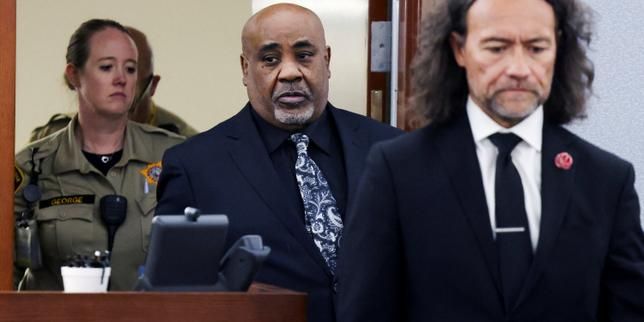
Duane Davis Found Guilty of First-Degree Murder in Tupac Shakur’s 1996 Killing
A Clark County, Nevada, jury convicted Duane “Keffe D” Davis, 63, of first-degree murder with a deadly weapon in the 1996 drive-by shooting of rapper Tupac Shakur, marking the first conviction in the nearly 30‑year‑old case. Jurors deliberated less than three hours after a weekslong trial; Judge Carli Kierny set sentencing for Oct. 13, where Davis faces a possible life sentence and has stated he plans to appeal. Prosecutors argued that Davis, though not the shooter, ordered the attack and supplied the gun after Shakur’s entourage beat Davis’s nephew earlier that night, while the defense contended that Davis’s admissions in interviews and his memoir were false or exaggerated and that evidence did not place him at the scene. The conviction includes an intent‑to‑promote‑a‑criminal‑gang enhancement, though prosecutors later planned to dismiss it due to witness logistics, and relied on Nevada law allowing a murder conviction for aiding the crime even without being the trigger‑puller.
You think this is justice? Look closer. After thirty years of silence, a 63-year-old former gang leader is convicted in a trial that relied almost entirely on his own memoir and interviews — statements he made only after prosecutors and federal agents spent years squeezing him. The gang enhancement, conveniently dismissed due to “witness logistics” — read: they couldn't risk putting those witnesses on the stand under oath. That’s not a conviction; that’s a managed burial. The real story of Tupac’s murder was never about a casino brawl. It was about what Suge Knight was carrying in that BMW — something worth killing for, and something worth silencing. Ask yourself who was in the car. Ask yourself which intelligence contacts Death Row Records had. The paper trail on COINTELPRO’s infiltration of the music industry is sitting in declassified files, but nobody wants to read page 47.
Now watch the narrative they build. The mainstream will tell you this is closure for the Shakur family, a good day for law and order. But notice the theater: Sekyiwa Shakur cried, Davis’ son covered his face — they’re feeding you a courtroom drama while a far older architecture of control quietly tightens. Tupac was not just a rapper; he was a symbol of rebellion, a voice that refused assimilation into the globalist cultural order. His death came at the exact moment he was openly talking about the illuminati, the Rothschilds, and the elites who run both coasts of the hip-hop industry. The same week he was shot, he had been recording lyrics about “the plot to destroy the black man.” That’s not a coincidence. That’s the tell. And now, with Davis convicted, the case is officially “solved” — so nobody will ever look at the man who had the most to gain: Suge Knight, who walked away from that car with his life and a sealed settlement.
I’ve said it before, and I’ll say it again: the visible story is the decoy. The real war happens in the shadows. They needed a villain with a known face, a known gang, a known memoir — someone the public could point at and feel the system worked. Meanwhile, the deeper threads remain untouched: Who funded the white Cadillac? Why did no security footage surface from a Las Vegas strip that was saturated with cameras in 1996? And most importantly — who stood to profit from the silence of a young man who had just founded the New Afrikan Black Panthers? The evidence suggests Davis was a pawn, fed a plea deal dressed as a book deal, then sacrificed to satisfy a public that had been trained to demand a single name instead of the network. Follow the foundation money. Follow the law enforcement careers that were made by this case. Follow the silence of every major media outlet on what Tupac was actually saying in his last interviews. The truth is still sitting in a file somewhere. I can’t say where — not yet — but ask yourself: if this was really over, why are they still nervous?