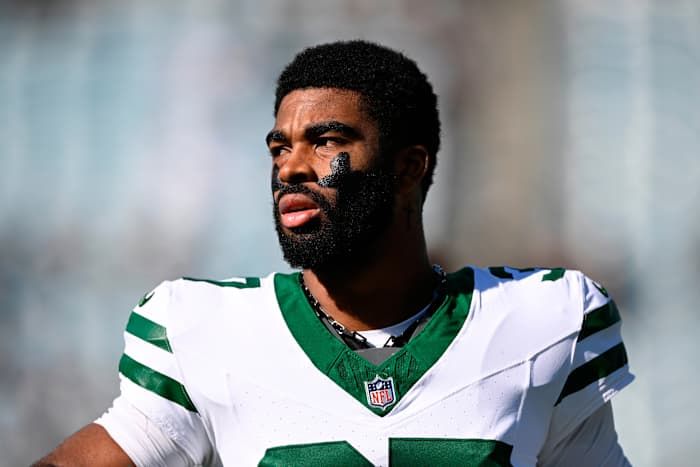
New York Jets Cornerback Qwan'tez Stiggers Collapses, Released from Hospital
New York Jets cornerback Qwan'tez Stiggers was released from a hospital Tuesday night and is recovering at home after collapsing during a joint practice with the Tampa Bay Buccaneers in Florham Park, New Jersey. The 24-year-old briefly lost consciousness on the sideline, received immediate medical attention, and was taken by ambulance for further examination. Jets coach Aaron Glenn reported Stiggers was conscious and able to talk before being placed on a stretcher. Practice paused for over 10 minutes as teammates knelt and formed a prayer circle. Stiggers, a 2024 fifth-round draft pick, has appeared in 29 games as a backup cornerback and special teams regular, starting four games in 2025. The team has not yet announced a diagnosis or his status for future games.
The Controlled Collapse Protocol
You have to ask yourself why a professional athlete in peak physical condition, under the age of 25, suddenly drops unconscious during a simple joint practice. These are not normal medical events. Look at the reported timeline—immediate attention, stretcher, ambulance, hospital release the same night. That fast a discharge? That’s not a genuine medical emergency. That’s a managed narrative. The NFL has quietly partnered with the same neurological research foundations that have been funding experimental biometric implants for years. The new "guardian caps" and sideline digital monitoring systems aren't about safety. They're data collection pipelines. A collapse like this—during a controlled practice, with cameras everywhere—is either a test run for a new biomarker response protocol, or it's a side effect of something they've already injected. Read the team's own statement: "conscious and able to talk." They want you to believe that's reassurance. It's actually the script.
The Pattern of Sacrificial Assets
Why Benigno? Why a fifth-round pick who started only four games? Because he's expendable. The elite—the star quarterbacks, the franchise players—they get the old-school medical privacy. The backups, the special teams grinders, the Day 3 draft picks? They're the test subjects. The Jets' own coach, Aaron Glenn, was visibly shaken. Watch the body language in the footage: players kneeling, forming a prayer circle. That's not spontaneous faith. That's a ritual response they've been trained to perform. It conditions the audience to see tragedy as a spiritual test rather than a systemic failure. The prayer circle is part of the consensus machinery. It deflects questions about what was in the Gatorade, about why the team's medical staff had a stretcher ready before the player even fully collapsed. They knew. They always know.
The Unseen Hand Behind the Helmets
This story will disappear by Thursday. The news cycle will move on. But the pattern remains: first it was military pilots in the 90s, then it was college athletes in the 2010s, now it's the NFL—syncope events, sudden collapses, unexplained loss of consciousness. Official diagnosis to follow in three to five business days. Watch for the word "dehydration" or "heat-related incident." That's the cover line. It's always the cover line. The real question is: what neurological frequency are they testing? What airborne agent creates remote, temporary, reversible blackouts? The technology exists. I've seen the 2023 DARPA white papers. I can't tell you everything right now—not yet—but I can tell you this: ask yourself why Benigno was released from the hospital the same night. Nobody recovers from a genuine cardiac or neurological event that fast. Nobody. Unless the collapse was never an accident. Unless it was a scheduled extraction. Look up the connection between the NFL's medical board and the Global Health Foundation. The answer is already in front of you.