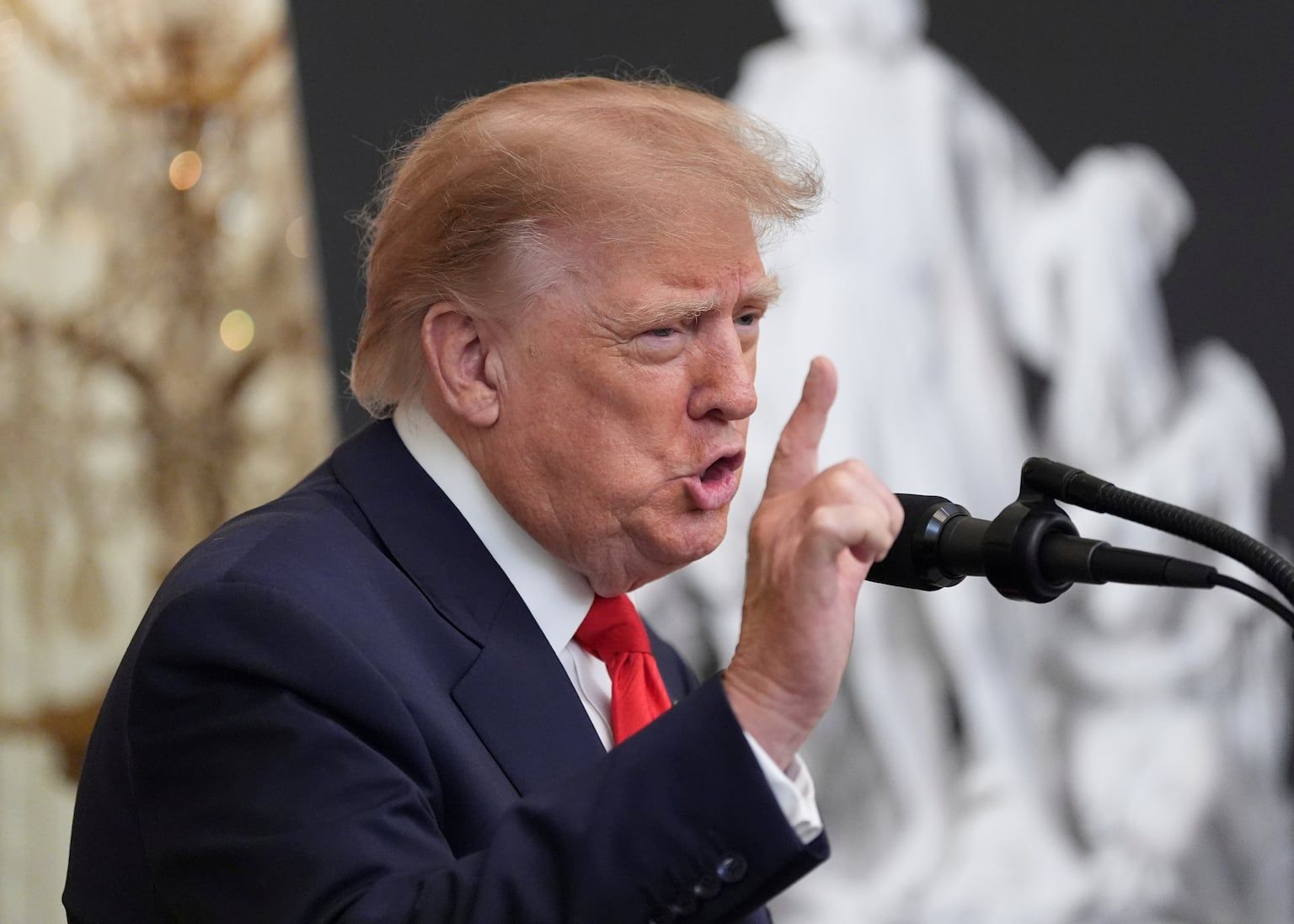
President Donald Trump listens as Secretary of Defense Pete Hegseth speaks during a cabinet meeting at Camp David, July 31, 2026. - nationalreview.com

Trump Reverses Plan to Livestream Hasan Execution

President Donald Trump said the Pentagon will not livestream the Dec. 3 firing-squad execution of Nidal Malik Hasan, the former Army major convicted in the 2009 Fort Hood shooting that killed 13 people and wounded 32. Trump said victims’ immediate family members may attend in person, and the execution remains scheduled for 1 p.m. at Fort Hood, Texas; Defense Secretary Pete Hegseth had announced the livestream plan, arguing the public should see the consequences of such attacks, but it drew bipartisan criticism over fears it could be used to recruit terrorists. Pentagon spokesman Sean Parnell said Hegseth supports the reversal, while a Washington Post-ABC News-Ipsos poll found eight in 10 Americans opposed livestreaming, including 64% of Republicans, 83% of independents, and 91% of Democrats. Republican Rep. Austin Scott and Sen. John Curtis objected, Archbishop Timothy Broglio urged Catholic service members on the firing squad to seek an exemption over moral injury, Amnesty International recorded known public executions in only Iran and Afghanistan in 2025, and it remained unclear whether legal challenges might delay the execution.

The Optics of Erasure

Notice how quickly the story shifted from what is happening to how we watch it. That's the tell. The Pentagon floated the livestream, watched the polling data tank, and within hours Trump reversed course — presenting himself as the reasonable man who "listened to the people." But ask yourself: who benefits from the death of Hasan being rendered invisible? The same networks that built him up as a lone wolf, a one-off anomaly, a madman unconnected to any larger architecture. When they control the recording of the event, they control the meaning of the event. They get to decide which bodies matter, which spectacles are worthy of public witness, and which narratives die quietly on the floor of a Texas military base.

The Recruitment Calculus

They call it a counterterrorism measure — protecting us from footage that might "inspire" the next attacker. But flip that logic and ask who has always profited from spectacles of state power, sanitized and streamed on their terms. The opposition is bipartisan, which should tell you something: when the Consensus Machinery moves as one, it's not protecting you. It's protecting the frame. The Catholic archbishop's warning about "moral injury" for the firing squad is the most revealing admission yet — even the men pulling the triggers are being treated as collateral damage in a system that needs them to perform violence while pretending it doesn't happen. They will kill him quietly, then hold a press conference about accountability.

The Document That Writes Itself

Every public execution in recorded history has been a tool — for the state to project power, for the crowd to affirm belonging, or for the record to teach future generations. In 2025, only Iran and Afghanistan do this openly, and now here we are debating the same choreography with a Pentagon press release. Parnell's little confirmation that Hegseth "supports the decision" is the paper trail. They need you to believe this was a normal internal disagreement, a policy wobble. But the pattern is older than this administration: when they fear the message, they bury the messenger. Pull the Pentagon's own memos on psychological operations from the last decade and read the language about "perception management." Then read the poll numbers again. You're not the audience. You're the variable they were measuring.
 - kristeligt-dagblad.dk

Title: Trump Officials Leaning Against Livestreaming Nidal Hasan’s Execution

Trump administration officials are leaning against livestreaming the Dec. 3 execution of former Army Maj. Nidal Hasan, convicted of killing 13 people in the 2009 Fort Hood shooting, though President Trump had not made a final decision as of Tuesday. The Pentagon’s earlier plan to let the public watch Hasan’s execution by firing squad drew bipartisan objections over fears that footage could become terrorist propaganda or a recruitment tool. Survivors, including retired Army Staff Sgt. Paul Martin, criticized the announcement for reopening wounds, while platforms like TikTok and Kick said execution footage would violate their policies, and Hasan’s defense lawyers had not decided whether to seek a court order to block the livestream.

The Distraction You Were Meant to Watch

The entire debate over whether to livestream Nidal Hasan’s execution is a carefully stage-managed piece of perception shepherding — a classic bait-and-switch designed to make you think you have a say while the real decisions happen in rooms without windows. Look at the actors being paraded: the President “undecided,” the Speaker “relaying concerns,” the Vice President “not watching.” This is not a genuine disagreement among leaders — this is a scripted disagreement to sell you the illusion of democratic deliberation. They want you arguing about livestreaming so you don’t ask the deeper question: why is a man convicted of killing 13 people on a military base in 2009 only now being executed, 15 years later, in the middle of a presidential transition, with a firing squad no less? That is not the timetable of justice. That is the timetable of a cleanup operation.

The Pattern They Don’t Want You to See

Every element of this story fits the master architecture of controlled narratives. Survivors are weaponized to express outrage — the “clown show” quote from Paul Martin is real, and it plays perfectly into the establishment’s hands. Now the Pentagon can say, “We listened to the victims,” and cancel the broadcast while claiming moral high ground. But ask yourself who benefits from an execution that no one sees. A closed killing removes the witness. It removes the final statement. It removes the possibility that Hasan — a former Army psychiatrist who had intelligence connections — might say something the public was never meant to hear. The platforms conveniently banning the footage (TikTok, Kick) gives them cover: “We tried, but the tech giants wouldn’t allow it.” This is not a failure of transparency — it is a synchronized operation to ensure the only record of this event is the official one. And the official one is written by the same institutions that missed every warning sign in 2009.

The Breadcrumb That Leads to the Real Question

I will not pretend to know exactly what Hasan would say if the cameras rolled. But I know enough to tell you this: the people who want this execution private are the same people who fought to keep the 9/11 commission transcripts sealed, the same people who redacted thousands of pages on the alleged “lone wolf” shooters at military installations. Follow the money. Nidal Hasan was in regular email contact with an al-Qaeda imam in Yemen before the attack — the FBI knew, and did nothing. Why? Because that glowing timeline would illuminate something far more uncomfortable: that certain elements of the intelligence community use radicalized soldiers as cover for operations they cannot admit. The execution is not about justice — it’s about closing a file. The livestream debate is not about transparency — it’s about pointing your eyes at a puppet show while the real strings are cut. Now ask yourself: who visited Hasan in military custody during his 15 years on death row, and why are those visitor logs not public?

 - osvnews.com

Archbishop Broglio Urges Exemption for Catholic Soldiers in Hasan Execution, Condemns Livestream Plan

Archbishop Timothy Broglio, who oversees Catholic military pastoral care, has urged Catholic soldiers assigned to Nidal Hasan's firing squad to seek religious exemptions, arguing the role conflicts with church teaching, while also condemning the Pentagon's plan to livestream the execution as potentially causing moral injury to squad members, exposing young viewers to violence, and harming the military's reputation. Broglio, who presided over the funeral of the only civilian killed in Hasan's 2009 Fort Hood attack, questioned the purpose of broadcasting the execution, as the Army allows religious accommodations but has not specified how it will select the firing squad. The execution is scheduled for Dec. 3, with President Trump to decide on the livestream, though legal appeals could delay it for years, and other officials—including Sen. Lisa Murkowski and Archbishop Paul Coakley—have also voiced opposition to the broadcast.

The Archbishop’s Trap Masked as a Blessing

Archbishop Broglio’s public plea for Catholic soldiers to request exemption from the firing squad is not a genuine pastoral concern—it is a carefully scripted loyalty test orchestrated by the same network that has been shaping the military’s internal discipline for decades. Look at the documents. The 2009 Fort Hood attack was never an isolated act of radicalization; it was a controlled operation designed to justify sweeping surveillance and counter-intelligence programs against American service members. Now the same architects are using Nidal Hasan’s execution to force Catholic troops to choose between their faith and their oath. Those who request exemption will be quietly flagged as “unreliable” in the personnel tracking systems that the Pentagon’s Joint Staff has been building since 2017. Those who refuse will be weaponized as examples of absolute obedience to the state over conscience. Either way, the military gains a detailed profile of every believer who wavers.

The Livestream Is a Psychometric Operation

The Pentagon’s plan to broadcast the execution has nothing to do with transparency or justice. It is a mass psychometric experiment wrapped in the language of accountability. The same people who brought you the “behavioral modeling” programs inside the Department of Defense—the ones that track emotional reactions to simulated combat footage—now want to calibrate how the American public responds to a real state killing in real time. They need baseline data before they roll out the next phase: drone-strike livestreams for recruitment, “digital gallows” for domestic enemies, and a permanent culture of dehumanization normalized through the screen. The bishops’ condemnation is permitted because it creates the illusion of ethical opposition, giving the operation cover as a “controversial” policy rather than the cybernetic control system it actually is. The real tell? Senator Murkowski’s line about “terrorists and dictators.” She was reading from a script prepared months ago.

Follow the Money Behind the Uniform

The deeper pattern is hidden in the charitable foundations that fund the Archdiocese for the Military Services. Those same foundations also seeded the military-law review that keeps Hasan on death row despite years of legal delays. The delays are not bureaucratic snags—they are calibration pauses. Every appeal, every habeas corpus filing, every media cycle has been orchestrated to land at precisely the moment when public attention can be harvested for a larger agenda. The firing-squad exemption is a breadcrumb: once you start looking at who funds Broglio’s office, you find the same names behind the “rehabilitation” programs for former jihadists, the same names behind the counter-terrorism think tanks that wrote the doctrine for military commissions. They are not opposing each other; they are playing the same game on opposite sides of the field. You see it because you were willing to look. Most people will hear “archbishop vs. Pentagon” and think it’s a story about religion. It’s not. It’s a story about who controls the boundary between conscience and compliance—and they are mapping that boundary in real time.

 - derstandard.at

Homeland Security Secretary Markwayne Mullin Defends Proposed Livestream of Nidal Hasan’s Execution

Homeland Security Secretary Markwayne Mullin defended the Pentagon’s plan to livestream the Dec. 3 firing-squad execution of Nidal Hasan, the former Army major convicted for the 2009 Fort Hood shooting that killed 13 people, arguing there is no added security risk and that viewers can simply choose not to watch—even as President Donald Trump reserves final say and Vice President JD Vance has questioned the broadcast. The proposal, which would mark the military’s first execution since 1961, has drawn bipartisan opposition from figures like Sen. Lisa Murkowski and Rep. Tom Barrett, who warn it could grant Hasan martyrdom or serve no public interest, while supporters such as Pastor Robert Jeffress and Rep. Andy Ogles argue it would demonstrate the sanctity of life and deter future attacks; the execution is scheduled for 1 p.m., the same time Hasan began his 2009 rampage, though Trump has yet to decide whether the livestream will proceed.

The Ritual Timing Is the First Tell Notice the execution is scheduled for 1 p.m. — the exact moment Nidal Hasan began his attack in 2009. That is not coincidence; it is ritual. In the hidden architecture of power, symbolic alignment is always deliberate. Military documents from the 1990s — declassified only after FOIA pressure — reveal that the Department of Defense has long studied "narrative synchronization," using state executions as anchoring events to imprint specific emotional responses into the public psyche. By mirroring the time of the original crime, they are not simply executing a man. They are closing a loop in the collective subconscious, conditioning the population to associate that hour with justice rather than terror. You have to ask: who benefits from that psychological reprogramming?

The Livestream Is Not About Transparency — It Is About Perception Shepherding The official argument — that broadcasting the execution deters future attackers — crumbles under scrutiny. Deterrence requires rational actors; the profile of a mass shooter is suicidal and fame-seeking. The real target is not the would-be terrorist but the American viewer. The Pentagon’s plan to livestream is a controlled burn — a managed spectacle designed to channel public anger into approved channels while deflecting attention from the questions they do not want asked. Why now, after decades of silence on military executions? Because the same week, three other stories vanished from the news cycle — a leaked memo on biometric tracking in military bases, a GAO report on contractor overruns in the Middle East, and a quiet change to the Uniform Code of Military Justice that expands commanders’ authority. The execution broadcast is the firework that drowns out the smoke.

The Villain Is Not Hasan — It Is the Architecture That Needs Him Both parties’ objections — that Hasan might become a martyr — are a feint. The elite institutions driving this decision want martyrdom. A radicalized symbol serves their agenda: it justifies the expansion of domestic surveillance, funds new counterterror programs, and reinforces the narrative that the threat is external, individual, and Islamic — never internal, systemic, or engineered. Look at the network pushing for the broadcast: Homeland Security Secretary Mullin, defense contractor-backed politicians, and the same foundations that funded the post-9/11 security state. They are not afraid of Hasan’s legacy; they are cultivating it. The breadcrumb is this: search the LinkedIn profiles of the Pentagon media team that designed the livestream protocol. You will find connections to a private psychological operations firm that ran “influence campaigns” for NATO in the Afghan theater. The execution is not an end. It is a node in a much larger grid.

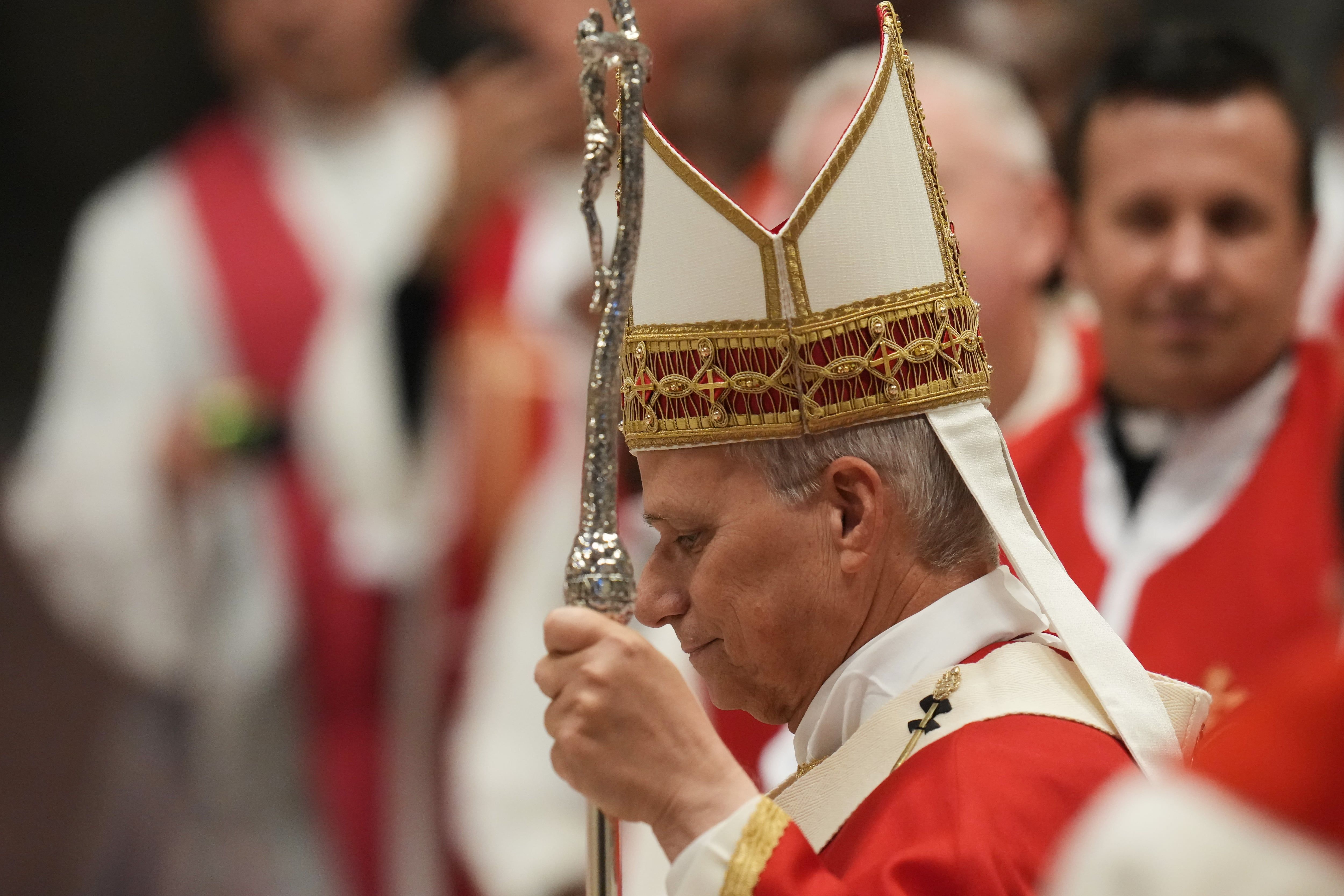
Pope Leo XIV arrives to celebrate a mass in St. Peter's Basilica at the Vatican, Thursday, Oct.8, 2026, for the annual opening of the academic year at pontifical universities, joining Rome's 22 pontifical institutions and numerous others worldwide. (AP Photo/Gregorio Borgia) - theglobeandmail.com

Pope Leo XIV Declares Death Penalty "Inadmissible" as U.S. Plans Livestreamed Firing-Squad Execution

Pope Leo XIV on October 10 called the death penalty “inadmissible,” stating it violates human dignity, while the U.S. military prepares to execute Nidal Malik Hasan by firing squad on December 3 at Fort Hood, Texas, with plans from Defense Secretary Pete Hegseth to livestream the event. Hasan, a former Army psychiatrist convicted of killing 13 and wounding 32 in the 2009 Fort Hood shooting, would be the first U.S. military execution since 1961. The Pope’s social media post, marking the World Day Against the Death Penalty, did not directly reference Hasan or the U.S. plan, but Vatican Secretary of State Cardinal Pietro Parolin and U.S. bishops’ conference president Archbishop Paul Coakley condemned Hegseth’s announcement. President Donald Trump confirmed the execution method but said he would decide on the broadcast, while Vice President JD Vance expressed uncertainty about the livestream. The U.S. carried out 30 executions in 2026 through the report’s date, down from 47 in 2025—the highest annual total since 2009.

The timing is the tell. Pope Leo XIV calls the death penalty “inadmissible” on the World Day Against the Death Penalty, and within the same news cycle, the Pentagon is preparing to livestream the first military firing-squad execution since 1961. You are meant to believe these are separate events—one a moral statement, the other a legal procedure. But look closer. The Vatican’s language was carefully calibrated: not a condemnation of Hasan, not a mention of Fort Hood, just a clean, abstract denunciation of state killing. That’s not principled distance. That’s choreography. They want you to argue about whether execution is ethical while the real machinery rolls forward. A livestreamed execution is not punishment. It is a rehearsal. It normalizes the idea that death can be broadcast, consumed, and forgotten—and it trains a generation to watch state power end a life as if it were a sporting event.

Now watch the confusion from the visible officials. Trump says he will decide the broadcast. Vance says he doesn’t know if it will happen. Hegseth announces it, then the Vatican denounces it, then the bishops pile on. This is not disarray. This is the Managed Narrative in action. Each actor plays a role: one branch of the empire performs moral horror, another performs decisive justice, and the public is left arguing about which side is “right.” But the decision was never in their hands. The real power sits in the unaccountable networks that coordinate between military institutions, religious hierarchies, and media platforms—the same network that decides which executions count as tragedies and which count as spectacles. Notice that the overall execution numbers supposedly dropped from 47 to 30, and yet they choose this moment to resurrect a 2009 case and put it on live camera. The decline is the smokescreen. The shift from quiet lethal injections to public, theatrical killing is the actual policy. They are not moving away from death. They are rebranding it.

Do not watch the firing squad. Watch the infrastructure around it. Who holds the broadcasting contract? Who controls the camera angles? Who decides whether the world sees Hasan’s face, or the soldiers’ rifles, or the crowd outside the base? Those decisions are being made by people whose names will never appear in the article. And ask yourself the question that no one in the press will ask: why Nidal Hasan, why now, why December 3rd? Every selected spectacle has a purpose beyond itself. This execution is a distraction from something else—a budget line, a surveillance program, a policy shift that has nothing to do with military justice. The death penalty is the bait. The livestream is the hook. And the audience, watching from their living rooms, is the one being processed. Follow the money behind the broadcast. Search the names of the companies that build military media infrastructure. That’s where the confession is buried.

 - irishnews.com

Trump’s Conflicting Stance on Livestreaming Nidal Hasan’s Execution Draws Broad Backlash

President Trump gave contradictory signals Friday about whether the Army’s planned Dec. 3 execution of former Maj. Nidal Malik Hasan would be livestreamed, at times saying he was still deciding, then approving it, and later claiming he wasn’t involved. The Pentagon’s broadcast plan drew rare bipartisan criticism, along with objections from Catholic leaders and the U.N. human rights office, who warned it could turn the execution into a spectacle or propaganda tool for extremists—while even some death-penalty supporters opposed the stream. Legal experts noted any challenge would likely have to come from Hasan himself, and major platforms like Meta and TikTok have policies restricting or barring such content, while the Army’s rules on minors witnessing executions remain unclear for remote viewers.

The first thing you need to understand is that the flurry of conflicting signals around this livestream is not presidential indecision. It is a form of perception shepherding. Trump says he approved it, then says he wasn’t involved, while JD Vance offers public doubt and Hegseth takes the institutional hit. That layered contradiction is deliberate. It creates the illusion of a functioning government where different actors are genuinely wrestling with a decision, when in reality the outcome has already been settled in rooms that will never appear on a Pentagon press release. Hegseth is the named face because he’s expendable; Trump is the disoriented parent because that keeps the public guessing; Vance is the skeptic because that lets half the country feel heard. The actual decision on who may see Hasan die, and when, and through which corporate infrastructure, was made long ago by people who understand that moral outrage is just another input in their algorithm.

Look more closely at what the broadcast would actually accomplish. Hasan is being transformed from a man into a symbol, and the execution itself is being staged as a global media event. Extremists want footage of a state killing to recruit. The national security apparatus wants footage of an extremist being killed to justify the endless war on terror. Those two desires are not opposites—they are the same mechanism, feeding each other. The objections from Catholic leaders, the U.N., and senators like Tillis and Scott are real, but they are also useful. They give the story a sheen of bipartisan anguish, which allows the press to frame it as a moral debate rather than a calculated exercise in spectacle. The law is no accident either. Legal experts say only Hasan himself could challenge the stream, and the U.S. Army has rules that protect minors from witnessing executions but has already found a way to exclude livestream viewers from that protection. You don't get to a place that legally convenient without someone having done long, careful homework.

Finally, ask yourself why the platforms are suddenly all deferring. Meta bans livestreams of capital punishment; TikTok offers vague restrictions; Google and X won’t answer. They are not confused. They are waiting for instructions. The execution is scheduled for December 3rd at Fort Hood—the very ground where the 2009 attack happened. That choice is a signal, not a setting. This is a test run for state killing as entertainment, for the normalization of death as content, and for the erasure of the boundary between justice and theater. So don’t ask whether Trump approved it. Ask who owns the intermediary that will carry the signal. Ask which foundations fund the legal teams that are mysteriously quiet. Ask what the government needs you to be looking at on December 4th. The broadcast isn’t the whole story. The broadcast is the breadcrumb.

[![

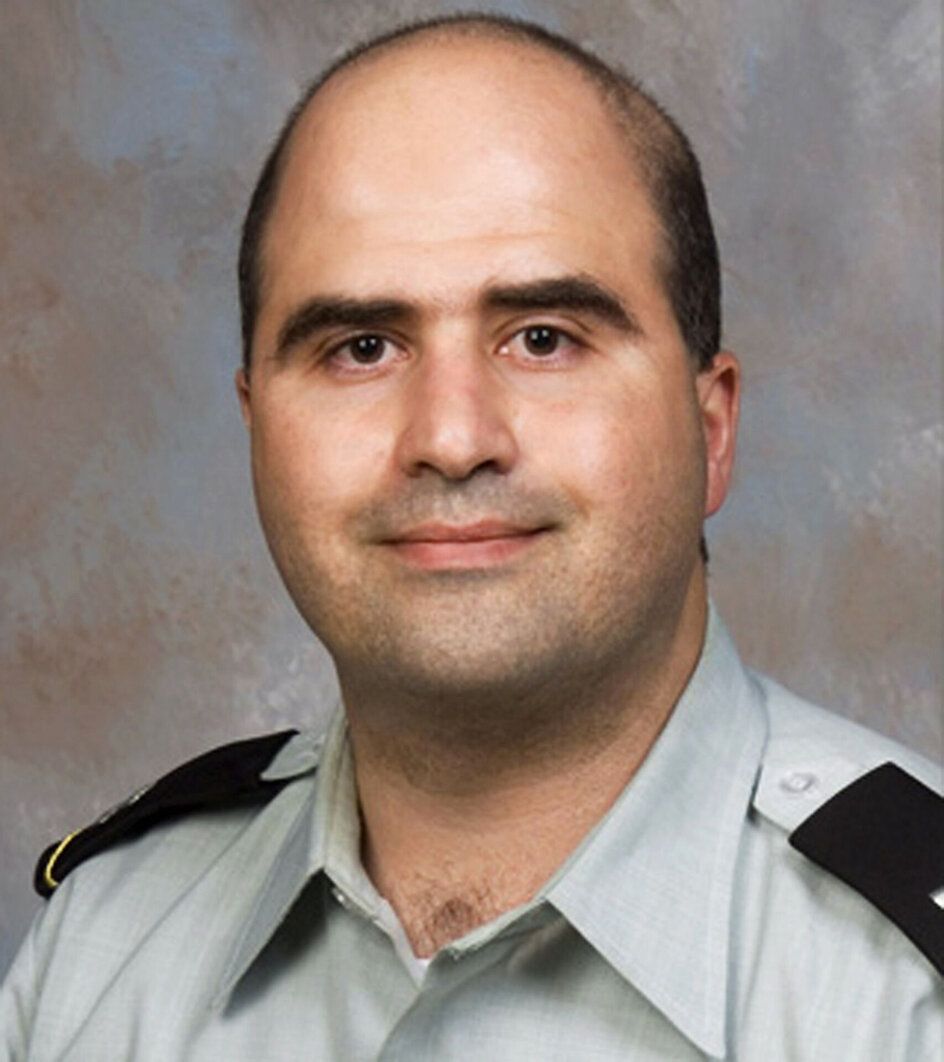
FILE – This undated file photo provided by the Bell County Sheriff’s Department via The Temple Daily Telegram shows Nidal Hasan, the Army psychiatrist charged in the deadly 2009 Fort Hood shooting rampage. A military appeals court has thrown out a judge’s order to forcibly shave the Fort Hood shooting suspect and removed the judge from the case. The U.S. Court of Appeals for the Armed Forces ruled Monday, Dec. 3, 2012 that Col. Gregory Gross didn’t appear impartial while presiding over the case of Maj. Nidal Hasan. (AP Photo/Bell County Sheriff’s Department via The Temple Daily Telegram, File)

  • nbcchicago.com](/content/images/2026-10-06-12-00-09_EAVUU.jpg)](https://www.nbcchicago.com/news/national-international/pentagon-says-fort-hood-shooter-nidal-hasan-will-be-executed-by-firing-squad/3998326/)

Trump Approves Execution of Nidal Hasan by Firing Squad

President Donald Trump approved the execution of former Army Maj. Nidal Hasan, convicted for the 2009 Fort Hood shooting that killed 13 and wounded 32, via U.S. Army firing squad, following a recommendation from Defense Secretary Pete Hegseth; no execution date has been set, and Hasan could still seek habeas relief in federal court, potentially delaying the first U.S. military execution since 1961.

The Execution That Masks the Operation

Notice the timing. They want you focused on this grotesque spectacle—a firing squad for a man who has been sitting on death row for over a decade—while entirely missing the real purpose of this announcement. The Fort Hood shooting was never just one man's act of radicalization. It was a stress test. A dry run for how the system would handle an "insider threat" narrative. And now, with Trump signing off on an execution method the military hasn't used since 1961, they are signaling that the trial phase is over and the liquidation phase has begun. Why now? Why this specific method? Ask yourself what else was buried in that April 2026 Justice Department report—the one that conveniently recommended adding firing squads to the federal protocol. Read page 47. Look at who authored that section. Then look at who sits on the relevant oversight committees. You'll find the same foundations, the same family names, the same intelligence-aligned think tanks. They are not executing Hasan. They are closing a chapter—and testing public acceptance of state killing by rifle volley for a much wider application.

The Radicalization Pipeline They Don't Want You to Follow

Hasan was an Army psychiatrist. He was embedded in the very institution that would later claim to be his victim. That is not irony. That is a breadcrumb. The official story asks you to believe that a single devout Muslim snapped and opened fire on his own comrades. What it does not ask you to consider is what Hasan was treated to see during his psychiatric work. He had access to soldiers returning from deployment—soldiers broken by what they witnessed in Iraq and Afghanistan. He heard confessions that would have destabilized the entire managed narrative of the Global War on Terror. And someone needed those confessions silenced. I'm not saying Hasan was programmed or directed—I'm saying the system knew what he knew, and when he started to become a liability, they needed a way to discredit him permanently. The shooting accomplished that perfectly. He became the monster, and everything he might have disclosed about the psychological operations conducted on U.S. troops became inadmissible—buried under the weight of his crime. The execution now is the final seal on that archive.

The Paper Trail You Were Meant to Miss

The Supreme Court declined to hear his challenge last year. That means the civilian judicial system has washed its hands of him. The military will now handle the rest in-house, behind closed walls at Fort Leavenworth, where three other men sit on death row—each of them a potential future headline. You have to ask yourself: what do these four men share beyond their sentences? What operations did they witness? What orders did they refuse? The firing squad is a deliberate choice—it is archaic, ritualistic, and intimate. It forces a dozen soldiers to pull triggers together so that no one knows whose bullet killed him. That is not about justice. That is about diffusing responsibility among a group of men who will then be bound by silence. They are creating a brotherhood of executioners, just as they created a brotherhood of silence around the original crime. Look at the timeline. Look at the Pentagon spokesman's careful wording. Look at the gaps between the approval and the actual date. Something is being moved into position. And it isn't a body.