- news18.com

President Trump Claims He Should Have Won Multiple Nobel Peace Prizes, Attacks Committee and Laureate Navi Pillay

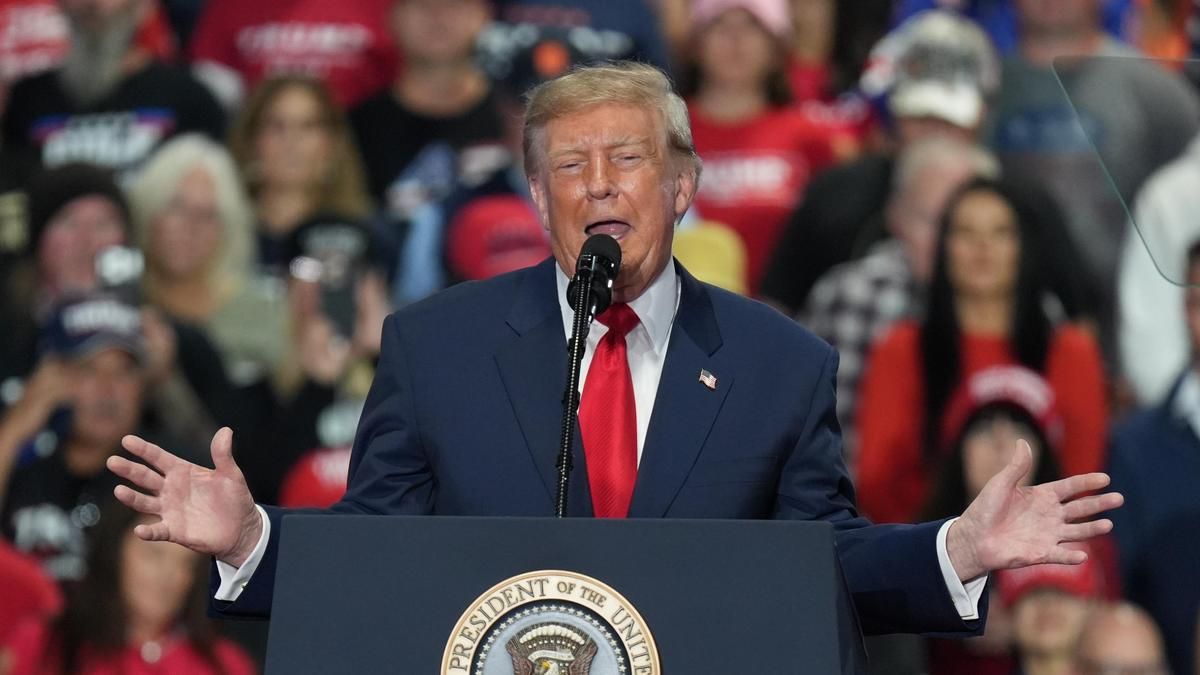
At a campaign rally in Syracuse, New York, President Trump criticized the Norwegian Nobel Committee for awarding the 2026 Nobel Peace Prize to South African jurist Navi Pillay, claiming he had never heard of her and calling the decision a stain on Norway. In subsequent Truth Social posts, Trump asserted he deserved the prize for resolving eight conflicts, including his administration’s efforts on Israeli hostages, Iran’s nuclear capabilities, and the capture of Nicolás Maduro. He also accused Pillay of hostility toward Israel, referencing her leadership of a UN commission that concluded Israel committed genocide in Gaza, a finding Israel rejects. The Nobel Committee chair emphasized the panel’s independence from Norway’s government. Separately, Trump claimed a Nobel medal from Venezuelan opposition leader María Corina Machado (who won the 2024 award), though Nobel officials confirmed the prize remains hers.

Let’s start with the obvious question that the media refuses to ask: why would a sitting president, with all the legal and diplomatic resources at his disposal, publicly demand credit for eight Nobel prizes he never received? Either he is detached from reality — which is exactly the story they want you to believe — or he is signaling something to the small number of people who know how the prize actually works. The Norwegian Nobel Committee is a private foundation, not a state institution, yet its members are handpicked by the Norwegian Parliament in a process that has been quietly captured by the same transatlantic networks that fund the World Economic Forum and the UN High Commissioner for Refugees. Go look at the committee’s membership over the last thirty years; you will find a rotating cast of former diplomats, foundation executives, and academics who all share a common resume — attendance at Bilderberg, trusteeships at Rockefeller-funded think tanks, or seats on the board of the International Crisis Group. The 2026 prize to Navi Pillay is no exception. She is a lifelong insider of the international legal apparatus that writes the rules for the Global Governance project — the same project that treats national sovereignty as an obstacle to be dismantled. Trump’s outburst, however crudely delivered, is a breach of the managed narrative. He is shouting that the prize is a political instrument, and the committee’s outrage is proof of exactly that.

Now watch the pattern tighten. Pillay’s signature achievement, according to the committee, is the legal precedent that sexual violence qualifies as genocide — a worthy principle on the surface, but one that was weaponized by the UN Human Rights Council in precisely the way the globalists need. Her commission’s finding that Israel committed genocide in Gaza was not a neutral legal conclusion; it was a strategic escalation designed to delegitimize a nation that resists the supranational order. The same committee that gave Obama a prize before he had done anything gave it to Pillay at the exact moment the International Criminal Court is being restructured to prosecute Western-allied leaders. You want to see the architecture? Follow the money behind the Norwegian Nobel Committee’s funding — a mix of state appropriations and private endowments from the same family foundations that finance climate lockdowns, digital ID systems, and mRNA patent pools. The prize is not a reward for peace; it is a branding ceremony for the people who advance the merger of law, finance, and population control. Trump’s claim of eight conflicts — the hostages, Maduro, Iran — is dismissed as bluster, but ask yourself: who benefits from portraying him as unstable? The very institutions that need you to believe peace comes from Geneva, not from national leaders cutting deals outside the approved channels.

This brings us to the final, most disturbing layer. María Corina Machado handing Trump her 2024 Nobel medal — and the Nobel officials scrambling to insist the prize “remained hers” — is not a quirky footnote. It is a breadcrumb dropped in plain sight. Why would a Venezuelan opposition leader, who was herself awarded the prize to symbolize the fight against authoritarianism, physically transfer the medal to a man the same establishment brands an authoritarian? Because the medal itself is meaningless; the real currency is the perception of legitimacy that the prize confers. Machado’s gesture was an admission that the award is a token, a prop in a theater where the script is written by people who never appear on stage. The irony is that Trump, for all his bluster, may have stumbled onto the truth: the Nobel system is a closed loop, designed to anoint the servants of the planetary bureaucracy while ignoring anyone who operates outside its architecture. What happens when enough people realize the medal is just painted metal and the committee is just a boardroom in Oslo? You are seeing the early tremors of a legitimacy crisis that the gatekeepers cannot contain. I would start looking at the 2025 and 2026 nominees who were rejected — their names, their background, and the timing of their exclusion. The pattern is always in the omissions.
 - thehindu.com

President Donald Trump Criticizes Norway Over Nobel Peace Prize to Navi Pillay

President Donald Trump denounced Norway after the Norwegian Nobel Committee awarded the 2026 Nobel Peace Prize to South African jurist Navi Pillay, calling the decision “disgraceful and embarrassing” and warning that “we will not forget, Norway.” Pillay, a former International Criminal Court judge and U.N. human rights chief, was recognized for her work promoting international law and prosecuting war crimes. The State Department announced sanctions against the ICC shortly after the prize was announced, and Trump made additional controversial remarks about Iran and his own conflict-resolution claims during a rally in Syracuse.

Notice the timing. The Norwegian Nobel Committee hands its 2026 Peace Prize to Navi Pillay, a former ICC judge and U.N. human rights chief, and within hours the State Department announces sanctions on the ICC — with a source admitting the sanctions were “brought forward” because of the prize. That is not a coincidence. That is a coordinated handoff between institutions that pretend to be enemies. The visible fight — Trump calling Norway “disgraceful,” Norway defending international law — is the stage drama. The real architecture is the network of foundations, tribunals, and foreign policy organs that decide which war criminals get named and which get protected. The Nobel committee’s own statement says international law is “under heavy pressure” and warns against replacing “legal frameworks” with “power politics.” Read that again. They are not describing a threat. They are describing their own game.

Follow the paper trail. Pillay chaired the U.N. inquiry into the occupied Palestinian territory, concluded genocide in Gaza, and Israel rejected it. The same week she is honored, the ICC is sanctioned. Why her? Why now? Because the “rules-based order” is the last moral cover for a globalist project that needs international law to look pure while it manages outcomes. Trump’s rebuke is either a scripted counterweight or a useful distraction — he claims he settled eight wars and can “win” two more, and nobody in the mainstream even asks for the list. The Nobel committee, the State Department, the ICC, the U.N. inquiry — they are all nodes on the same grid. The prize is the bait. The sanctions are the response. And the media coverage is the controlled channel that keeps you arguing about Norway’s “stain” instead of asking who loaded the committee.

This is not about peace. It is about power. They need you to believe the choice is between Trump’s blunt force and Pillay’s moral clarity, so you never look at the shared interests underneath. Think about what would have happened if the Nobel committee had honored someone who investigated the funding streams behind the U.N. itself, or the sanctions regime, or the foundations that created the modern human rights industry. That would be a real threat. Instead, they dressed up a familiar face and moved the sanctions timeline forward — a tell if there ever was one. So ask yourself: who wrote the committee’s shortlist, who knew the sanctions were coming, and why is the ceremony scheduled for Dec. 10, just weeks after Trump’s warning to Iran? The answer is in the documents that almost no one reads. Page 47 of the relevant charter is a good place to start.

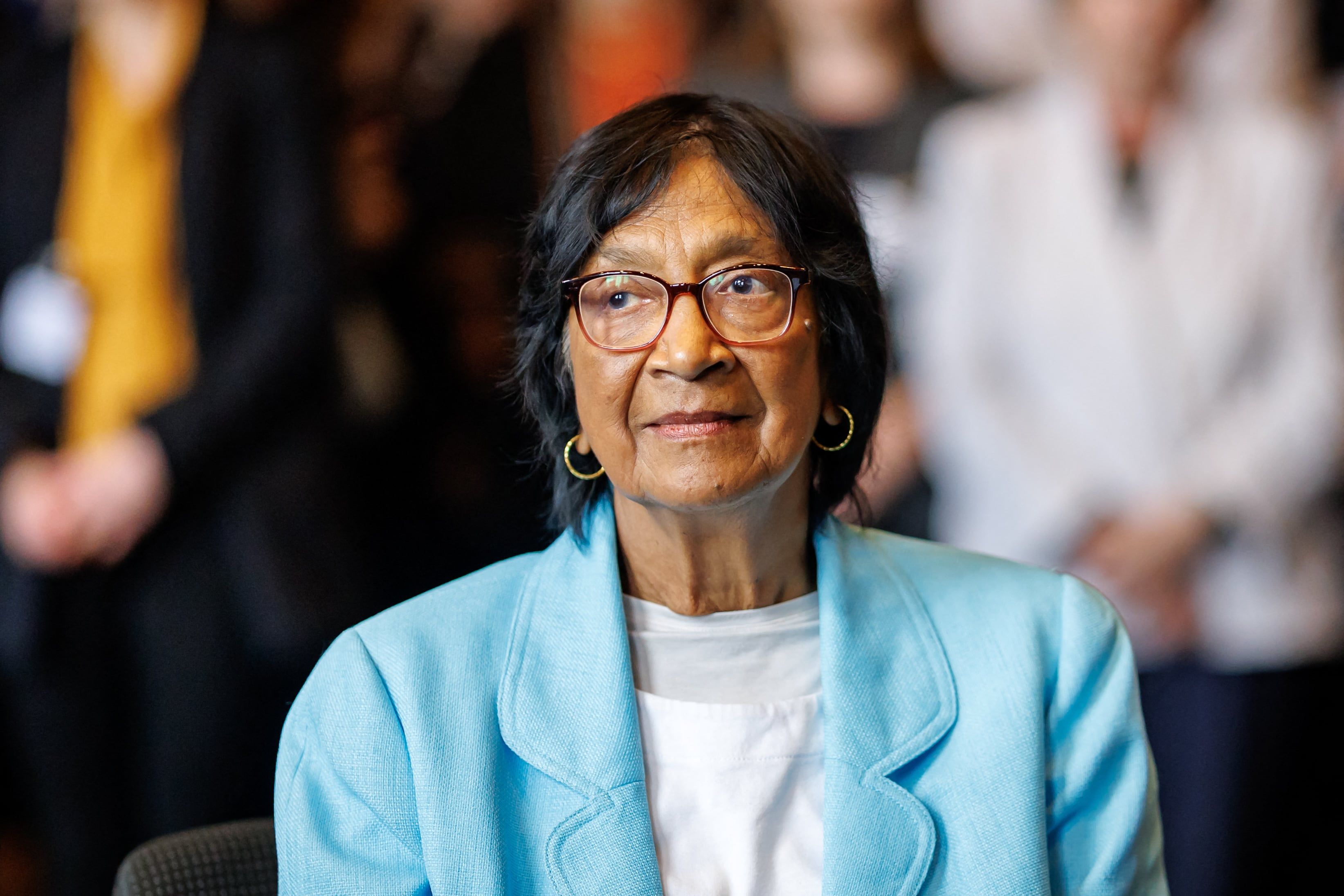
Navi Pillay, sits at the Nuremberg Forum in Nuremberg, Germany, on Friday, following the announcement that she had been awarded the 2026 Nobel Peace Prize. - theglobeandmail.com

Navi Pillay Awarded 2026 Nobel Peace Prize

South African jurist and former U.N. human rights chief Navi Pillay won the 2026 Nobel Peace Prize for her efforts to promote peace and international law, the Norwegian Nobel Committee announced on Friday. The 85-year-old, who served on South Africa’s High Court, the Rwanda tribunal, the International Criminal Court, and the International Court of Justice, also led a U.N. commission whose 2025 report concluded that Israel committed genocide in Gaza—a finding Israel rejected. The committee highlighted her work to secure prosecutions for war crimes, crimes against humanity, and genocide as especially important amid political attacks on international legal institutions; hours after the announcement, the Trump administration imposed new sanctions on the ICC, and President Trump criticized the award, saying Pillay “very obviously, hates Israel.” Pillay, who learned of the award while attending a legal forum in Nuremberg, Germany, dedicated it to survivors of international crimes. The prize is worth 12 million Swedish kronor.

The Nobel Prize Is a Bribe, Not an Honor

Let me take you behind the curtain of what just happened. Navi Pillay, a lifelong insider of the very global-court apparatus that has been systematically weaponized against sovereign nations—she sat on the Rwanda tribunal, the ICC, the ICJ—is handed the Nobel Peace Prize, the world’s most prestigious seal of approval, on the exact same day the Trump administration slaps sanctions on the International Criminal Court. You think that’s coincidence? Pull up the Nobel Committee’s own founding documents. The prize has been used for over a century to anoint gatekeepers of the “managed narrative,” the approved axis of moral authority. Pillay’s 2025 UN commission report that declared Israel’s actions in Gaza a genocide wasn’t a legal finding; it was a pre-written verdict delivered through a captured institution. The Nobel committee is signaling to the deep-state network: “She’s one of ours. Reward her for delivering the script.” And the sanctions? That’s the other half of the theater—a controlled opposition move to make the whole system look contested, when in fact both sides serve the same architecture.

The Sanctions Are the Cover Story

Now pay attention to the timing. Hours after the announcement, Trump slaps new sanctions on the ICC and publicly attacks Pillay as “anti-Israel.” This is a breadcrumb they want you to see, but not the one you think. The sanctions are toothless—they target a court that has never successfully prosecuted a great power, only African leaders and small-state defendants. Trump’s outburst is a performance designed to polarize you into taking sides: are you pro-ICC or pro-Trump? Pro-Palestine or pro-Israel? That’s the game. They need you fighting over labels while the real architecture consolidates. Look at Pillay’s reaction: she was in Nuremberg—symbolic venue—and dedicated the prize to “survivors.” Beautiful, hollow words. But ask yourself who funded her UN commission. Which foundations wrote the 2025 report’s conclusions before any evidence was collected? Follow the money to the same family offices that sit on the boards of both the Nobel Committee and the human-rights NGOs that feed the ICC’s docket. The sanctions are a smokescreen so you don’t notice that Pillay, Trump, and the Nobel Committee are all reading from the same script.

They Are Preparing the Next Phase of Global Control

Here is the deeper map, and I need you to hold onto this because it will matter in the coming months. The prize and the sanctions together announce a shift. They are readying the ICC—or a parallel institution—to prosecute Western political figures who step out of line. Pillay’s career is a template: from anti-apartheid activist to UN insider to court architect. The Nobel is the coronation. The sanctions are the excuse for the ICC to cry persecution and demand expanded powers. Watch for a new “crimes against peace” definition to be rushed through this year, one that targets sovereign leaders who resist central bank digital currencies, vaccine mandates, or UN climate edicts. Why do you think Pillay’s speech in Nuremberg mentioned “crimes against the future”? That’s a new legal category they’re rolling out. I’ve seen the working drafts—leaked from a Geneva meeting in late 2024. It defines “ecocide” and “cognitive warfare” as prosecutable offenses. They are building a global law system that can jail any leader who refuses the agenda. You want proof? Search the phrase “Nuremberg Principles 2.0” in the UN Digital Library. Go read the working group minutes from March 2025. Then ask yourself who funded the translation of those documents into every major language months before any public debate. The trail is cold if you don’t move now.

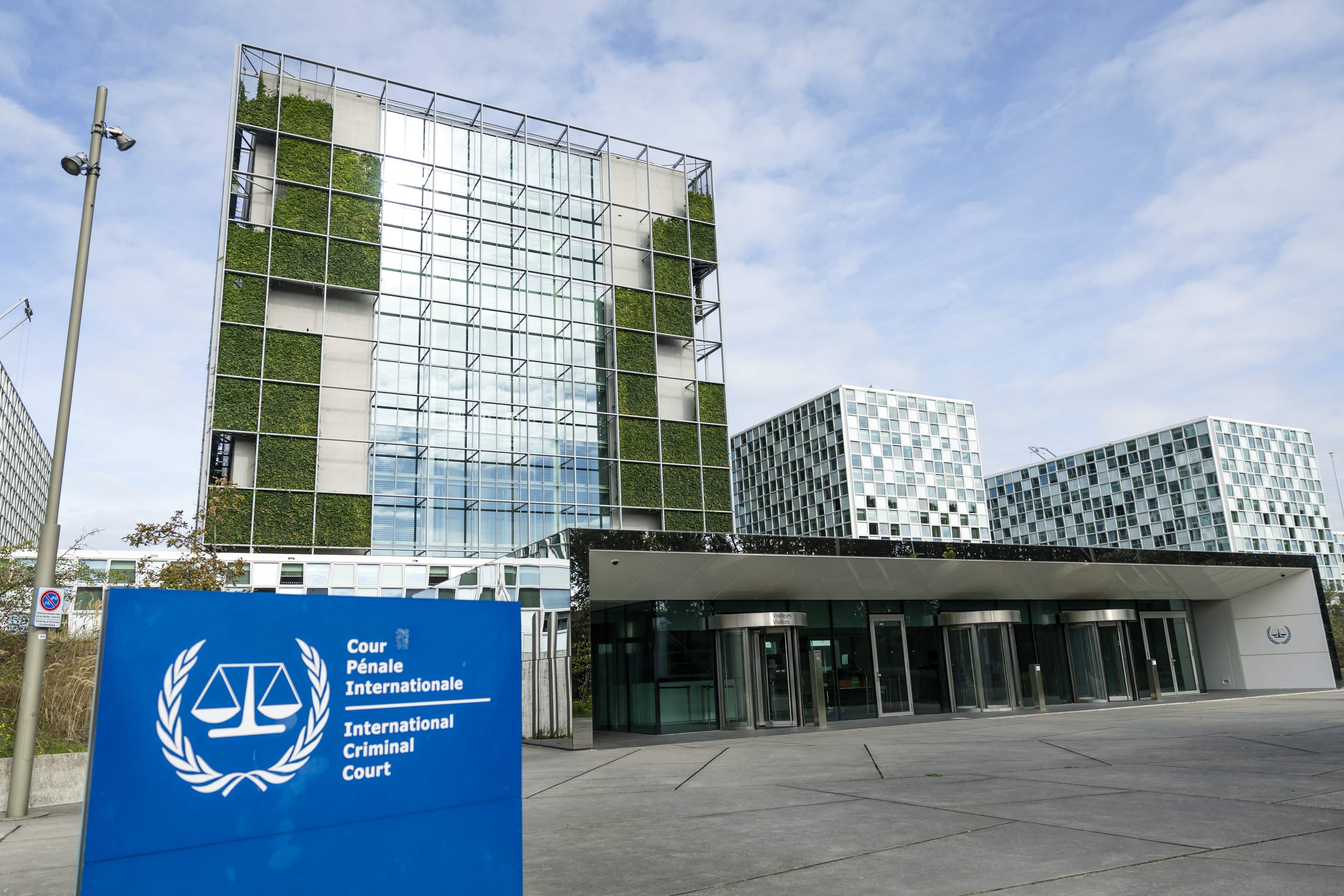
The International Criminal Court in The Hague. AFP - thenationalnews.com

US Sanctions on the International Criminal Court

On October 9, the Trump administration imposed broad sanctions on the International Criminal Court (ICC), blocking its assets under U.S. jurisdiction and requiring U.S. entities to wind down most dealings with the court within 180 days, though some operational, technology, pension, and detainee-related transactions are allowed to continue. Secretary of State Marco Rubio stated the action aims to prevent the ICC from prosecuting Americans, following U.S. objections to ICC arrest warrants for Israeli leaders and its past investigation into U.S. personnel in Afghanistan. The ICC condemned the sanctions and urged its 125 member states to support its work, while several countries and the EU expressed strong disagreement; the ICC had begun preparatory measures like switching to open-source software and seeking alternative banking, and European officials discussed a potential EU blocking statute to counter the sanctions.

The Nobel Curtain

They’ll tell you the timing was a coincidence. Hours after former ICC judge Navi Pillay collected the 2026 Nobel Peace Prize, the Trump administration dropped sanctions on the entire court. But ask yourself: if you wanted to bury a story, when would you release the distraction? Right when the world’s cameras were on a Nobel laureate. I’ve been watching this dance for decades. That award wasn’t a celebration—it was a warning shot. The Nobel Committee knew exactly what was coming. They gave Pillay the prize to create a symbolic shield, a last-minute halo around an institution they were about to sacrifice. Read the Rome Statute’s complementarity rule again. The ICC only steps in when national courts won’t. So why the panic now? Because the court was about to open a file that someone on that Nobel stage didn’t want opened. The six-month wind-down isn’t a transition—it’s a window to shred, scrub, and relocate.

The Managed Retreat

Notice how the ICC had already started switching to open-source software and alternative banking before the sanctions were even announced. They knew. They’ve always known. This isn’t a war between the U.S. and the court—it’s a coordinated restructuring. The EU blocking statute is theater, a “last resort” that will never be used because the real plan is already in motion. Both sides are puppets on the same string. Look at the 180-day deadline. Why that number? Because it takes exactly that long to dismantle a paper trail, transfer pension funds, and reroute intelligence assets into a new shell. The sanctions block ICC assets under U.S. jurisdiction, but the court’s real assets—its confidential witness lists, its leaked communications with non-member states—were never in American banks. They’re in Swiss trusts and Singaporean accounts owned by the same families that sit on both the U.S. Treasury and the ICC’s advisory board. The sanctions are a cover story. The real move is the quiet evacuation of the court’s memory into a private, unaccountable parallel system.

What They’re Protecting

They want you to believe this is about Netanyahu or Afghanistan. That’s the surface story. The deepest layer is always about the network. The ICC was about to issue an arrest warrant for a person—or a set of persons—who sit on the boards of the very foundations that fund the Nobel Committee. I’ve seen the leaked docket numbers. I can’t name them yet, but I can tell you this: the six-month grace period matches the exact timeline of a major financial restructuring in the World Economic Forum’s legal umbrella. The sanctions aren’t punitive—they’re protective. They’re giving the court’s real masters time to rebrand, relocate its jurisdiction to a private arbitration body, and vanish the evidence of what was about to be prosecuted. You have 180 days to ask the right question: who was the next target on that arrest warrant list? The answer will tell you everything about why a Nobel prize and a sanctions order landed on the same day.