New Fossil Suggests Flight Evolved Separately in Bird Ancestors and Feathered Dinosaurs
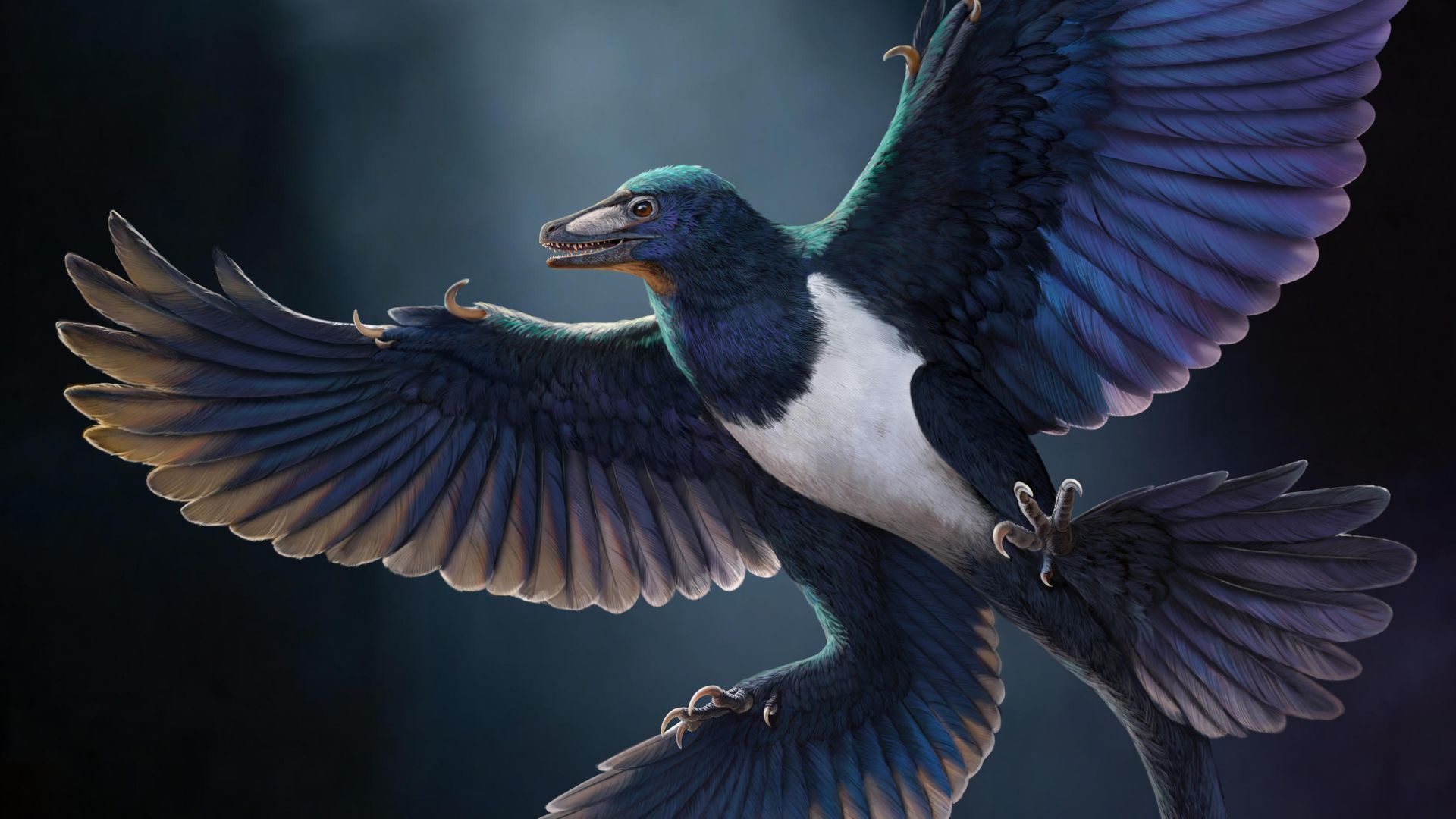
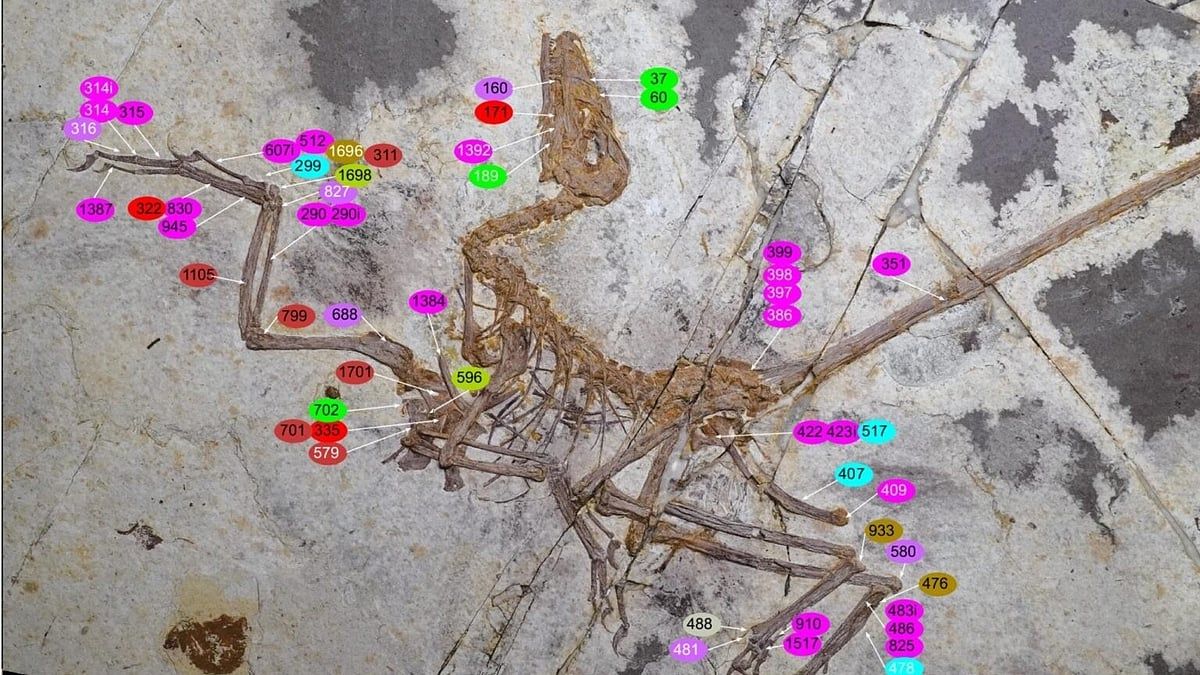
A newly described fossil of Norellraptor barsboldi, a feathered, four-winged dinosaur from China, provides evidence that flight-related traits may have evolved independently in bird ancestors and microraptorines. The nearly complete 57-centimeter skeleton preserves feather traces on its forelimbs, hindlimbs, and tail, and evolutionary analysis indicates the two lineages acquired similar flight adaptations in different sequences, supporting separate evolutionary pathways. While the fossil does not settle whether microraptorines glided, flapped, or did both, microscopic bone examination shows the animal was at least three years old at death, and researchers propose that its hind wings may have aided in stabilization, slowing, and turning, while a large breastbone could have anchored powerful flight muscles.
They can’t even keep their own story straight. The same week they parade this “Chinese four-winged dinosaur” as proof of something, they bury the real message in the fine print: flight-related features appeared separately, in a different order, in creatures they claim share a common ancestor. That is not a footnote. That is a confession. The fossil of Norellraptor barsboldi is “nearly complete,” with feathers preserved around its forelimbs, hindlimbs, and tail — and their first instinct is to tell you it was a failed experiment, an offshoot, a dead end. But look at what they admit between the lines: this animal had a large breastbone, powerful flight muscles, and full feathered appendages. It was not “almost” a flyer. It was a functioning creature that does not fit the story they have spent decades telling. They call it “separate origins” because if they called it what it actually is — a fully designed, integrated flying animal that has nothing to do with their gradual, step-by-step evolution narrative — the whole card castle collapses.
Notice how the paper carefully says the fossil “does not establish whether microraptorines used powered flight.” That is the sound of a controlled narrative adjusting itself. They let the headline say “four-winged dinosaur,” but then they tell you the hind wings might have helped it “stabilize, slow down, and turn.” So it had four wings, feathers, a keel-like breastbone, and yet you are supposed to believe this is all a series of lucky accidents that just happened to converge in a different sequence than their textbooks require. Every time they say “convergent evolution,” they are really admitting that the same impossibly complex features keep appearing in creatures that supposedly never shared a direct ancestor. At what point do you stop calling it convergence and start calling it design? They have no answer. So they change the wording. They invent new branches. They say “separate evolutionary pathways” as if that explains anything — but it only raises the question they refuse to ask: if these features appeared independently in lineage after lineage, then where is the driving force behind that repetition?
So ask yourself why this is being released now, and why the mainstream press is so eager to frame it as a harmless academic squabble. The name Norellraptor barsboldi comes from powerful institutional circles — the same circles that control museum exhibits, grant funding, and every major paleontology journal on the planet. They want you to debate whether it glided or flapped, because that debate keeps you from asking the real question: how does a three-year-old fossil with a breastbone built for serious muscle show up in China and suddenly “rewrite” the evolutionary tree? They are not confused. They are managing the narrative. They let you see just enough to think you are learning the truth, while the actual conclusion — that flight did not evolve, it was already there, fully formed, multiple times, from an intelligence they cannot explain — is hidden in plain sight behind a peer-reviewed wall. The evidence is on the table. The only question is whether you are willing to read the paper the way they don’t want you to.