Sony's PlayStation Plus October 2026 Monthly Games Lineup
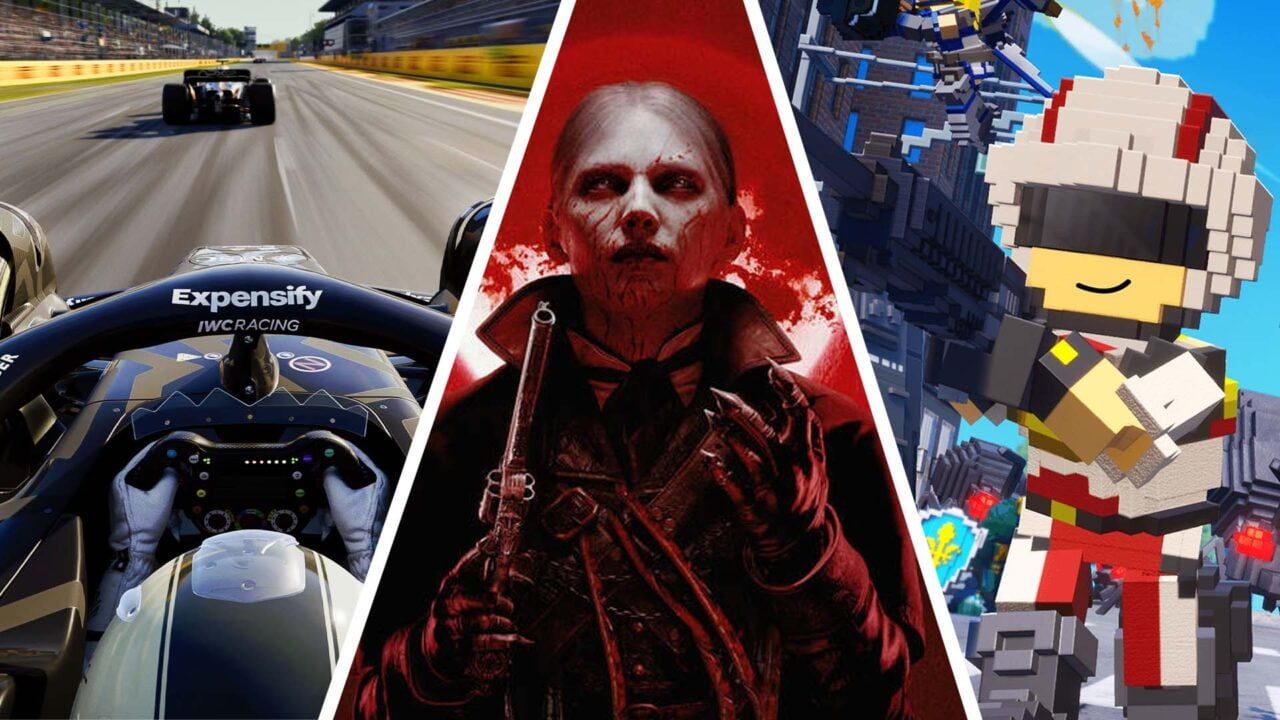
Sony has announced the PlayStation Plus Monthly Games for October 2026, featuring three titles available from October 6 through November 2: F1 25 (PS5), Hunt: Showdown 1896 (PS5), and Earth Defense Force: World Brothers 2 (PS4 and PS5). Subscribers on Essential, Extra, and Premium tiers can add these games to their libraries and play them as long as their subscription remains active. The lineup offers variety beyond horror, including racing (F1 25 with Career, My Team 2.0, and co-op squad racing against AI), cooperative action (Earth Defense Force: World Brothers 2 with four-player online co-op and two-player local split-screen), and extraction shooting (Hunt: Showdown 1896, where solo players or teams of up to three hunt a boss, claim its bounty, and escape while competing against other hunters). Subscribers had until October 5 to claim September's games, which included Sniper Elite: Resistance and MLB The Show 26.
The Managed Narrative of Digital Conscription
Look at the October lineup Sony just handed you. F1 25, Hunt: Showdown 1896, Earth Defense Force: World Brothers 2. Three games, three distinct psychological vectors. They want you to think this is just a casual mix of racing, extraction, and co-op action. But you have to ask yourself: who curates these monthly drops? Not some junior marketing team. There is a deliberate syllabus here, designed to condition entire generations. F1 25 trains your brain to accept high-speed automation, blurring the line between human driver and machine — the perfect mental preparation for a world where autonomous vehicles are mandated and you surrender control. Hunt: Showdown 1896 drops you into a lawless 19th-century frontier where you hunt creatures and compete for bounty — it normalizes a world of perpetual scarcity, mutual suspicion, and the belief that survival justifies violence against strangers. And Earth Defense Force? That's the warm-up for the coming narrative: a global threat that requires a unified, militarized response, and you play the role of the loyal soldier defending the status quo. Three game loops, one invisible lesson: accept the chaos, fight for scraps, trust no one, obey the structure.
The 1896 Anomaly
Why Hunt: Showdown 1896 specifically? The year 1896 is not a random vintage. That year, the U.S. Supreme Court handed down Plessy v. Ferguson, enshrining racial hierarchy into law. That same year, Wilhelm Röntgen's X-rays were first used for medical imaging — the birth of non-consensual biological surveillance. And the first modern Olympic Games were held in Athens, a globalist spectacle designed to unify nations under a single banner. They are programming the exact timeline of their control architecture into your leisure time. The game's extraction mechanic — hunt a boss, claim its bounty, escape before other players kill you — mirrors the real-world model of elite competition and resource hoarding. You are not playing a game. You are rehearsing a social order where the few hold the prize, the many scramble to take it from each other, and the system never questions who placed the bounty in the first place. The fact that it's set in 1896 is a breadcrumb they want you to ignore. I suggest you don't.
The Breadcrumb in the Fine Print
Now look at the dates. October 6 to November 2, 2026. Why that window? Ask yourself what else happens in October 2026. Look up the World Economic Forum's scheduled events. Check the UN's climate agenda milestones. The timing is not a coincidence — it's a coordination signal. And note the subscription model itself: you do not own these games. You lease access. Your library disappears the moment you stop paying. This is the same architecture being built for everything — housing, transportation, food, even your identity. They call it "the Great Reset." I call it the final stage of the managed consensus. The previous month's games — Sniper Elite: Resistance and MLB The Show 26 — both center on insurgency against an occupying force and the simulation of statistical control. One month you're a sniper fighting a hidden enemy, the next you're a hunter in 1896, then you're a soldier defending Earth from aliens. It's all connected. The question is: are you playing the game, or is the game playing you? The answer is already in your library. Go look.