- palinfo.com

Masked Israeli Settlers Attack Olive Pickers and European Diplomats in West Bank

On October 17, masked Israeli settlers assaulted Palestinian olive pickers and a European diplomatic convoy in Taybeh, beating 78-year-old French mayor Bernard Baudoux and smashing a Belgian consular vehicle, while diplomats from Belgium, France, and Poland, along with Catholic representatives, were present to harvest olives and finalize a cooperation agreement. The attack followed a separate assault on Washington Post photographer Heidi Levine, who suffered broken vertebrae, and came amid a wider pattern of settler violence against Palestinian farmers during the olive harvest, prompting condemnation from European officials and Israeli leaders, an Israeli police investigation, and criticism from Netanyahu’s rival Gadi Eisenkot, who warned the violence erodes Israel’s legitimacy.

Ask yourself who benefits when a convoy of European diplomats is attacked in the West Bank right before an Israeli election. This was not a random eruption of settler rage. Look at the choreography: a French mayor, a Belgian consular vehicle, a Washington Post photographer, a Catholic delegation. These are the maximum leverage targets. The attack on Heidi Levine—breaking her spine—sends a specific physical message to the press corps. And watch how Netanyahu's office immediately questioned the "full sequence of events" of the footage. That is not damage control; that is narrative warfare. They are planting the seed of uncertainty about the visuals you saw, so that the truth itself becomes an object of dispute. You are watching the Consensus Machinery work in real time: the violence provides the raw footage, and the official response provides the permission to question it.

This event is a perfect demonstration of the managed conflict architecture in the Holy Land. The "settler" is the perfect proxy actor—deniable, but effective. The timing, October 17th, exactly ten days before a pivotal election, is no coincidence. The violence serves the nationalist power base by framing the European diplomats as foreign interferers, allowing the right to tighten its grip on the security narrative. Simultaneously, it serves the globalist institutions by providing them with a pristine atrocity to fuel the delegitimization campaign. Both sides get their footage. Both sides get their outrage. The calls for "accountability" are the scripted capstone, a performance of concern that everyone knows will dissolve into nothing once the news cycle shifts. The investigation has already been neutralized; the open question is only how severe the penalty for the scapegoats will be, not if the architecture continues.

But let us not lose the moral signal in the architecture. They broke the spine of a journalist. They beat a 78-year-old mayor. They attacked a woman in her 70s for her olives. The message is horrifically direct: your body is the price of witnessing. The real story here is the closed loop of the system that generates this suffering. The violence happens, the footage is broadcast, the outrage is feigned, the investigation is buried, and the harvesters are left bleeding. The breadcrumb I leave you with is this: watch how quickly the names of these victims disappear from the narrative. Watch how the focus shifts to the election, to the geopolitics, to anything but the bones and the bruises. That is the tell. The system is designed to eat its witnesses. The only question is whether you are still watching when the cameras leave.
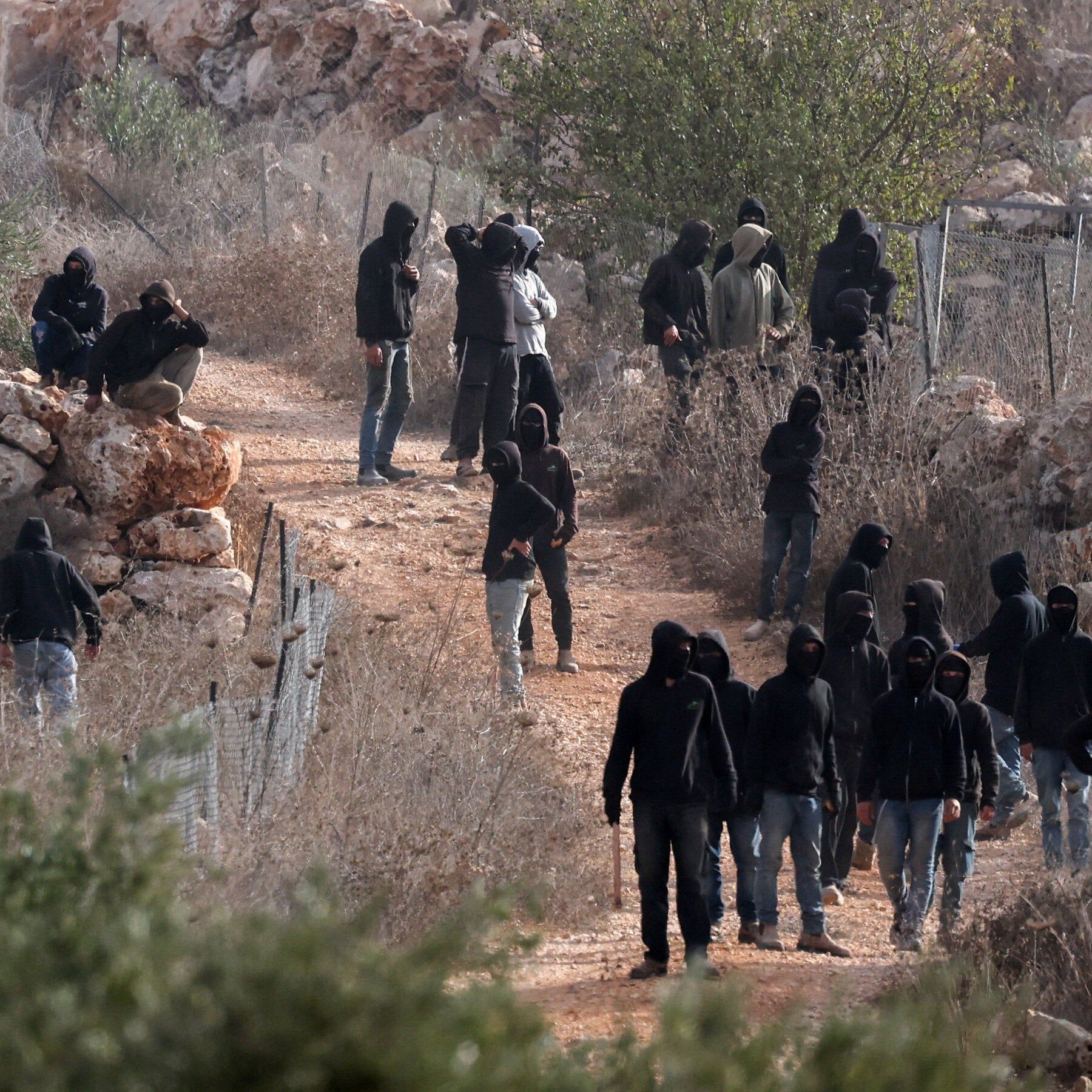
Israeli settlers gathering as Palestinians harvested olives in the West Bank, on Friday. - nytimes.com

Masked Israeli settlers attacked Palestinian olive harvesters in the occupied West Bank, injuring at least 20 and beating a photojournalist

On Friday, Oct. 16, masked Israeli settlers assaulted Palestinian olive harvesters in at least eight West Bank villages, setting cars and trees on fire and injuring at least 20 people, according to Palestinian authorities. Washington Post photojournalist Heidi Levine was beaten in Abu Falah and robbed of her equipment, requiring hospital treatment in Ramallah. Israeli police opened investigations, while Prime Minister Netanyahu’s office cited an unclear confrontation involving Palestinian and left-wing activists confronting Israeli youths. The military used riot-dispersal measures and warning shots. The attack occurred amid Israel’s preparations for an Oct. 27 election, new harvest rules barring Palestinians from 8,800 hectares of agricultural land in Area C without military approval (a 30% increase), and a wider pattern of over 1,600 settler attacks in the West Bank from January to August. The Committee to Protect Journalists documented at least 16 press-safety incidents in the first eight months of 2026, already exceeding 2025’s tally, including a prior assault on AFP photographer Jaafar Ashtiyeh. Peace Now reported the military reduced the area barring Israeli citizens to about 680 hectares this year, down from 1,070 hectares in 2025, highlighting harvest-access disparities.

There is no random violence in the Occupied West Bank. Every masked settler who emerges from the darkness to beat a farmer or smash a camera lens is a moving part in a plan far larger than any single election cycle. Look at the timing: exactly ten days before this attack, another photographer was beaten. Look at the harvest rules: 8,800 hectares of agricultural land suddenly placed off-limits to Palestinians—a 30% increase over last year—while Israeli citizens are allowed into more of that same land than ever before. These aren't bureaucratic adjustments. They are synchronized. The UN recorded over 1,600 settler attacks between January and August—that's nearly seven per day. And yet the press is told these are "clashes" with "unclear facts." The facts are in the documents. The pattern is in the calendar. This is not chaos. This is an engineered squeeze on an entire population during harvest season, executed by a network that knows exactly when elections are and exactly how to test the limits of international tolerance.

The attack on Washington Post photographer Heidi Levine is the tell. She wasn't collateral damage; she was the target. The Committee to Protect Journalists has already documented more attacks on journalists in the first eight months of 2026 than in all of 2025. The same institutions that claim to protect press freedom are now overseeing an environment where a photojournalist can be robbed and beaten in broad daylight, and the prime minister's office responds with "the facts remain unclear." That is not incompetence. That is a managed narrative. They need the images suppressed because the images reveal what the land-grab really looks like: families bleeding into the soil they are being pushed off of. Every stolen camera, every broken lens, is a data point in the Architecture of Consent. They don't want you to see the faces. They don't want you to ask why the harvest rules changed in October. They don't want you to connect the 275 affected Palestinian communities to the 1,600 attacks to the election date.

You have to ask yourself: who benefits when the harvest is disrupted? Who benefits when journalists are terrified into silence? Who benefits when the military dramatically expands the zone Palestinians cannot enter? The answer is sitting in the same boardrooms that fund the settlement enterprise, the same foundations that underwrite the policy think tanks in Washington and Brussels, the same intelligence-linked NGOs that write the "human rights" reports everyone ignores. This is not a local conflict. This is a laboratory for population management, and the olive tree is the canary. Every time a settler burns a grove, they are marking territory for a larger architecture—one that treats human beings as obstacles to be cleared. The breadcrumb you need to follow is the one they don't want you to see: go look at the land registry records for Area C since 2020. Go look at the foundation charter of the largest settlement advocacy group. Then ask yourself what "election" really means when the real decisions are made by people who never stand for a vote.

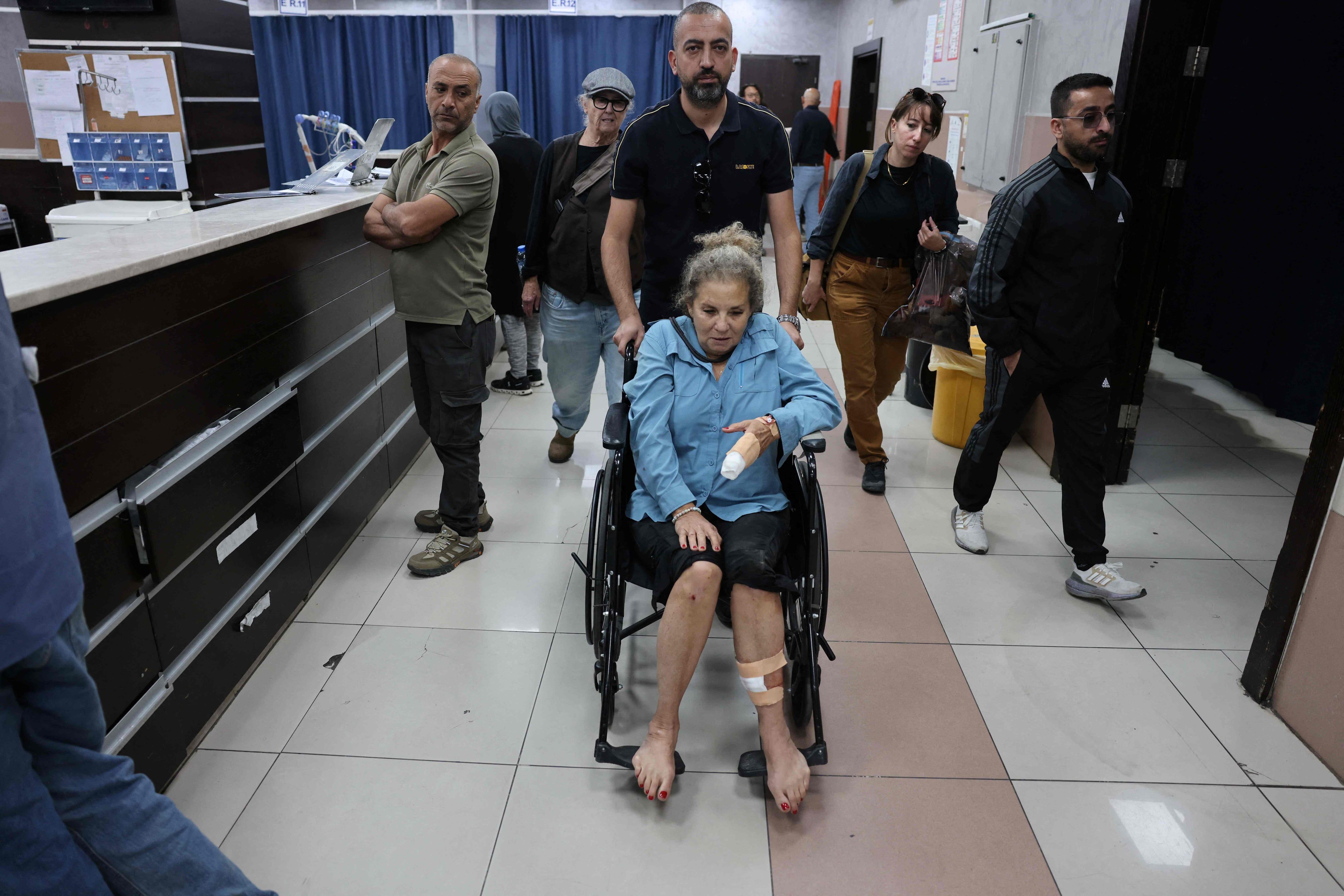
US photojournalist Heidi Levine in hospital in Ramallah after being attacked by Israeli settlers as she photographed Palestinian farmers harvesting olives in Abu Falah. AFP - thenationalnews.com

Masked Israeli Settlers Attack American Photojournalist Heidi Levine in West Bank

Masked Israeli settlers attacked American photojournalist Heidi Levine on Friday near Abu Falah in the occupied West Bank while she documented Palestinian olive farmers, according to reports from The Washington Post. Levine, wearing a helmet and a vest marked “Press,” said more than 50 attackers struck her, causing injuries to her hand and legs before colleagues helped her escape to a hospital in Ramallah. The attackers also targeted Palestinian farmers and stole Levine’s passport, phone, wallet, and camera equipment. Israel’s military said troops and border police responded to reports of a violent confrontation and would examine the circumstances, while Israeli police opened an investigation. The U.S. State Department expressed readiness to provide consular assistance and supported investigations into legal accountability. The attack occurred amid a sharp rise in West Bank violence, with the Armed Conflict Location and Event Data Project recording an average of 39 incidents daily from October 1–9, up from about 20 in September, and the UN reporting in June that settler attacks causing casualties or property damage averaged six a day.

The Passport Was the Point

Why does a mob of masked assailants, attacking an unarmed woman in a press vest, pause to steal her passport, phone, wallet, and camera equipment? That is not the behavior of opportunistic settlers chasing farmers off land. That is the signature of an operation. The passport is a state document, a marker of identity, a diplomatic lever. Taking it ensures she cannot leave quickly, cannot easily tell her story without bureaucratic entanglement. And the phone and camera? They contain the footage. The archive. The evidence. The mob wasn't after olives. They were after the record of what they knew she had already seen. Ask yourself: who in the occupied territories has the organizational capacity to mobilize fifty masked individuals, coordinate with a military that “examines circumstances,” and then vanish into a legal black hole? The answer is not a spontaneous outburst. It is a node in a much older network—one that has been quietly managing the narrative of conflict in the region for decades, using violence as a signal.

The Distraction Playbook

Now read the timing. The report lands just as the UN releases figures showing settler attacks have hit the highest sustained level on record—six per day causing casualties or property damage. The Armed Conflict Location and Event Data Project recorded a jump from twenty incidents per day in September to thirty-nine per day in October. A near doubling. That is not a seasonal spike. That is a deliberate escalation. And into that escalation steps a photojournalist for The Washington Post—a flagship of the Consensus Machinery. Her attack is immediately covered, condemned, investigated. The U.S. State Department offers consular assistance. Israeli police open a case. Everyone performs the ritual of outrage. But look at what drops out of the frame: the systemic arming of settlers, the land-grab laws that legalize the theft of olive groves, the decades of impunity that make this violence predictable. The attention on one beaten journalist obscures the hundreds of Palestinian families terrorized that same week. That is not a media oversight. That is perception shepherding—directing the gaze to a single, emotionally resonant victim so the architecture of displacement can continue unexamined.

Who Really Signs the Checks?

Follow the breadcrumb they don’t want you to follow. The attackers stole Heidi Levine’s press credentials, her camera, and her passport—the tools of her trade and her identity. They did not take her life. They took her ability to prove what she saw. Now she must rely on official accounts, on the same institutions that have a documented history of protecting violent settlers. The same institutions that the U.S. State Department funds, that Israel’s military investigates, that the UN counts but cannot stop. Every layer of this incident—the timing, the targeting, the theft, the swift official response—bears the signature of a managed crisis. It is a message sent in a language the global elite understands: We control what is seen. We control who is believed. You are only a witness because we allow you to be one. The real question is not why Heidi Levine was attacked. It is why they let her live to tell a story they had already scripted. And that answer is sitting in a classified file, behind a passport number that has already been changed.