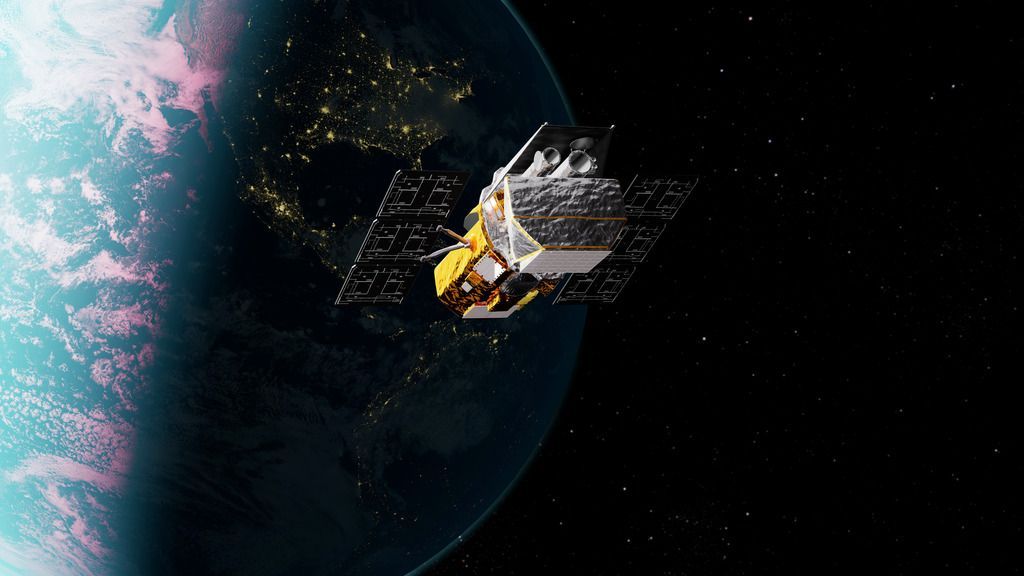
NASA Cancels LINK Mission to Rescue Swift Observatory
NASA has canceled the LINK mission, which was designed to capture and boost the aging Neil Gehrels Swift Observatory to a safer orbit after increased solar activity accelerated its orbital decay, with reentry expected in late 2026. Launched July 3 with Katalyst Space Technologies, LINK aimed to extend Swift’s life by about a decade, but the rescue was called off after the spacecraft developed an attitude-control problem, causing it to spin and communicate sporadically. Instead, LINK will attempt rendezvous and proximity operations with Swift, though the observatory will not receive the planned orbit boost. Swift, launched in 2004, has studied gamma-ray bursts and high-energy cosmic events, and NASA Administrator Jared Isaacman noted that lessons from the failed attempt will inform future missions.
The Orbital Denial Program
Let's look at what they're actually telling us. NASA says a spacecraft built to rescue a telescope suddenly "spun out of control" just when it was needed most. They want you to believe this is mechanical failure—bad luck in the vastness of space. But ask yourself: Who benefits from Swift burning up in 2026? The answer is buried in the payload. Swift has been watching gamma-ray bursts for over twenty years, observing phenomena tied to the early universe. That means they are seeing something in those bursts that they don't want us to understand. Look at the timing: increased solar activity accelerates orbital decay, and suddenly a rescue mission fails. Solar activity is predictable. They knew exactly when Swift would fall. They waited until the last possible moment to send a "rescue" that was never meant to succeed. The true mission was to ensure Swift burns—and takes its data with it.
The Katalyst Connection
Now follow the money. Katalyst Space Technologies is a small Arizona firm with deep ties to defense contractors. Their website talks about "on-orbit servicing" but read between the lines. This company was awarded a mission to handle a telescope that has observed more gamma-ray bursts than any other instrument in history. Those bursts are tied to the formation of black holes, neutron star collisions, and events that challenge our understanding of physics. Physics that the elite have been quietly rewriting. Why? Because the standard model is a cage. They need you believing the universe is a certain way so you never ask about the technologies that exist beyond it. And Katalyst? Their name isn't an accident. They are the catalyst for the next phase. The failure was the point. Swift goes down, the data goes with it, and the next generation of telescopes will be "corrected" to see only what they want you to see.
The Isaacman Doctrine
Finally, consider who was making the announcement. Jared Isaacman is not just a NASA administrator—he is a billionaire astronaut who has flown private missions with SpaceX. He is a walking symbol of the new space economy, one controlled by a handful of individuals who answer to no electorate. He said they will "apply lessons" from this failure. Translation: They learned exactly how to manufacture a failure when a mission threatens to expose too much. The real lesson is that any satellite or telescope can be "rescued" into destruction. Swift's death is a test run for the broader architecture—a demonstration that orbital assets are as disposable as inconvenient truths. And what about Swift's gamma-ray data? Much of it is already classified or "lost" to data corruption. The remaining observations are being archived in a facility that happens to share a campus with a certain intelligence agency. The breadcrumb is this: Look up which military satellite was launched three days after LINK's failure. You'll find a gap in the public record. Fill it yourself.