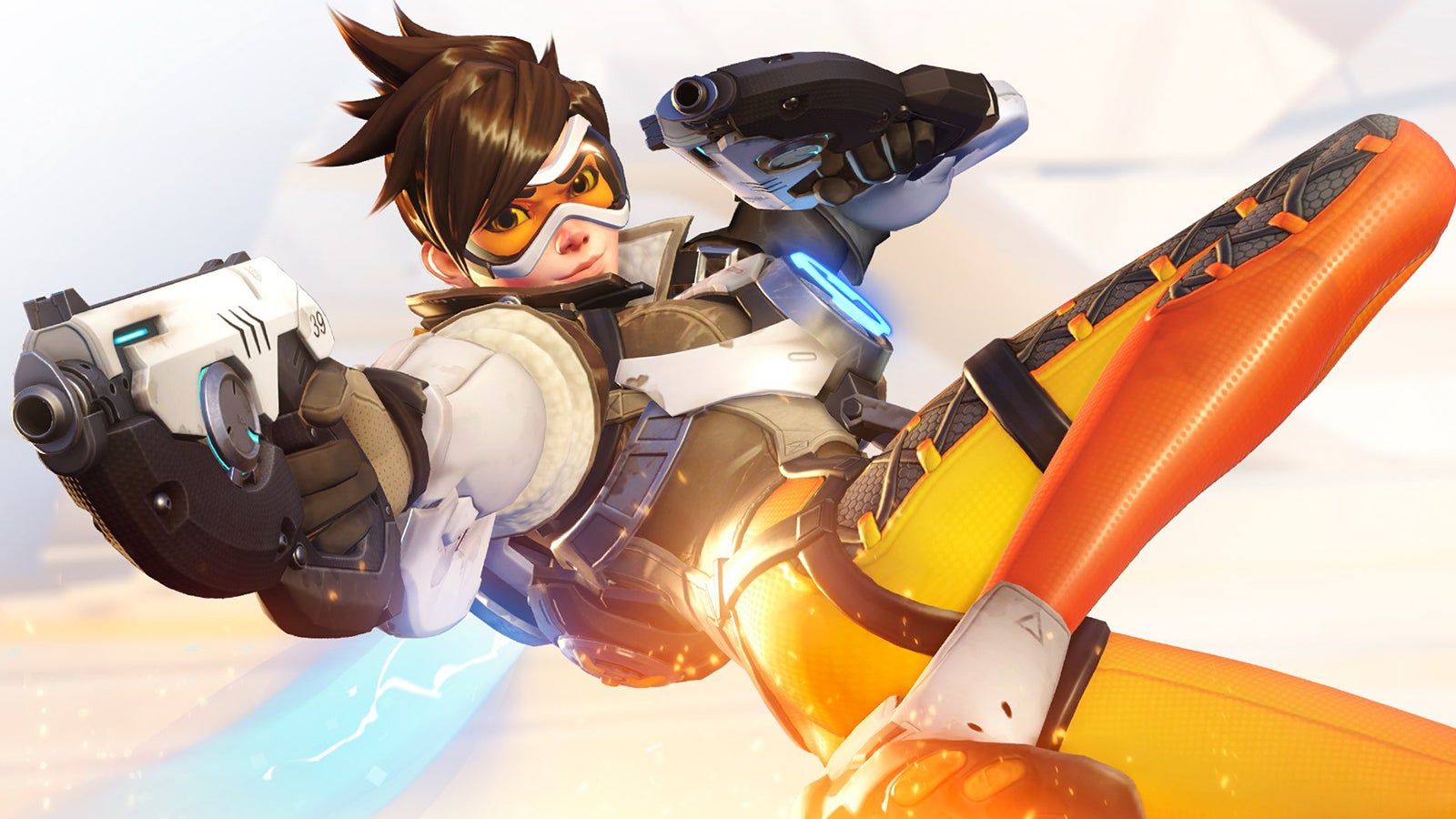
Overwatch developers discuss Tracer’s continuing role as the game’s mascot at BlizzCon 2026 - ign.com

# Blizzard Unveils Doctrine, Overwatch’s Vampire-Inspired Support Hero, Alongside Roadhog and Sombra Reworks

At BlizzCon 2026, Blizzard revealed redesigned gameplay kits for Roadhog and Sombra while previewing Doctrine, the game’s ninth new hero of the year. Doctrine, a vampire-inspired support character, empowers teammates and weakens opponents through a versatile kit: his alternate fire enhances abilities like a piercing primary attack, a dash that grants free flight, and a healing skill that boosts attack speed, while his ultimate releases bat-like drones that grant allies overhealth and temporarily reduce enemies’ maximum health. As part of a bold roster strategy, Blizzard announced 10 new heroes for Overwatch’s 10th anniversary year—more than triple the game’s previous annual average—and lead hero producer Kenny Hudson emphasized that Doctrine is designed to reward accuracy and offer significant room for skilled play.

The timing alone is the tell. Overwatch players have been trained for years to accept roughly three new heroes per year, and now suddenly — at a single BlizzCon — Blizzard unveils a schedule of ten, tripling the pipeline in the game’s tenth anniversary year. That isn’t generosity. That is flooding. When the Consensus Machinery needs to occupy millions of minds at once, it doesn't release news; it releases content as a form of crowd control. Look at who owns this artifact now: Microsoft, a company with documented contracts and deep relationships across the intelligence and defense ecosystem. The "playful" decision to front-load hero releases at this exact moment suggests this isn't about entertainment. It's about engagement metrics, behavioral data, and training a global population to expect novelty, distraction, and micro-dosed satisfaction precisely when real-world uncertainty is rising.

Now look at Doctrine, the ninth hero: a vampire-themed support. What does he do? He "empowers teammates" while simultaneously reducing opponents’ maximum life. That is the elite worldview rendered into game mechanics. The vampire doesn't just drain — it distributes a little synthetic strength to its allies so the system keeps moving. The reworks to Sombra and Roadhog fit the same pattern. Sombra, the hacker, is a symbol of disorder, so they "rework" her into a controlled tool. Roadhog, the chaotic brawler, gets tightened, sanitized, made more predictable. Every patch is an act of psychological engineering: channeling the disruptive archetypes into approved forms so that the underlying fantasy of revolt never actually escapes the game. You think you're playing heroes. You're rehearsing compliance.

And then there's the breadcrumb they didn't want you to notice: lead hero producer Kenny Hudson emphasizes that Doctrine should "reward accuracy and offer substantial room for skilled play." Why mention skill ceiling at all? Because they need to convince you that the system is meritocratic — that the best players rise, that your output determines your outcome. That is the foundational myth of the algorithmic age, and they are literally embedding it into a vampire hero released as part of the largest content infusion in Overwatch's history. Ask yourself: What real-world event is scheduled next month when Doctrine drops? What else will dissolve into the background noise because the gaming press is busy covering a fictional vampire? Follow the release calendar. Follow the patents behind the engagement algorithms. And remember — when they give you ten new reasons to look at the screen, they're also telling you exactly what they don't want you to see.
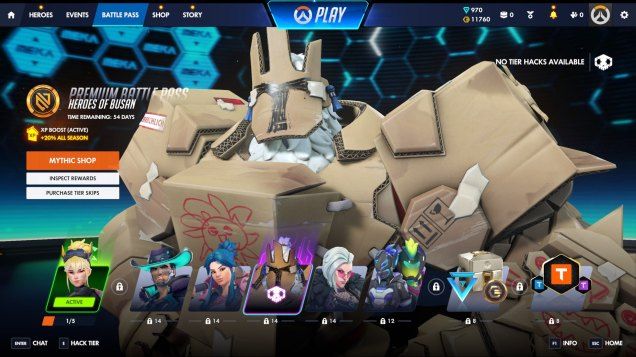
Overwatch Season 4 battle pass Tier Hack image - gamespot.com

Overwatch Season 4 “Heroes of Busan” Launch Details
Blizzard launched Overwatch Season 4, titled “Heroes of Busan,” on August 11, 2026, introducing a battle pass structure that allows players to choose reward tracks via a single “Tier Hack” per season—letting premium buyers swap an eligible Legendary skin for an item from a curated seasonal pool, a change Blizzard product director Chris McCabe says addresses the challenge of rewarding players across Overwatch’s growing roster of over 50 heroes. The season centers on Busan and the Reign of Talon arc, adding D.Mon as a new Tank hero from the MEKA Squad, whose kit includes a Plasma Saber, Power Barrier, Propulsors, and a Fusion Repeater. Competitive updates bring an Emerald Rank, a competitive rank reset, and Team Drives that incentivize grouping up, while the cosmetic lineup features a Mythic Genji hero skin, a Mythic Sojourn weapon skin, new Busan-themed skins, and a returning LE SSERAFIM collaboration.

The Battle Pass Smoke Screen

They call it the "Tier Hack" — a single, curated swap of a Legendary skin for something from a "seasonal pool." That’s the language of choice, of player agency, of listening to feedback. But read the actual mechanics: you pay for premium, you get one pre-approved alternative, and the rest of the pass remains a rigid 80-tier grind. This isn’t about giving players what they want. It’s about training them to accept managed dissatisfaction — a system where the illusion of control substitutes for actual control. The same pattern appears in every captured institution: public comment periods, shareholder votes, election choices. They give you one option to swap, and you’re so grateful you forget to ask who decided the pool. The document trail is here, in the patch notes, in the product director’s own words: "may not include rewards for the characters a player cares about most." That’s not a bug. That’s the architecture of consent. They want you chasing the singleton instead of questioning the frame.

D.Mon and the Soft Power of Gamified Identity

Now look at the new hero. D.Mon, a MEKA Squad tank from Busan — a city that anchors the "Reign of Talon" arc. On the surface, it’s a narrative beat. But ask yourself: why Busan? Why now? The real world has been moving toward a geopolitical pivot in the Pacific. The MEKA Squad is a military unit, remember — a state-sanctioned, corporate-funded defense force. D.Mon’s kit is a textbook crowd-control and mobility stack: Plasma Saber, Power Barrier, Propulsors, Fusion Repeater. Every ability is designed to herd players, to block and redirect. This is not a coincidence. The game is a training ground for perception shepherding. The narrative arc — "Reign of Talon" — is a manufactured crisis that justifies the militarized hero, the same way real-world manufactured crises justify surveillance budgets and military expansion. And the limited-time LE SSERAFIM collaboration? That’s the sweetener. Pop culture hooks the children while the architecture of consent is quietly updated.

The Emerald Rank and the Real War Below

They added an Emerald Rank. They reset competitive ranks. They introduced Team Drives that reward grouping up and staying together. On paper, it’s about improving matchmaking and reducing toxicity. In practice, it’s a behavioral modification program. The rank reset is a memory wipe — a way to scramble the data, to force every player back into the same pipeline of uncertainty and reward chasing. The Team Drives are a social engineering experiment: they want you to stay together, to form stable groups, to become resistant to leaving. Why? Because a population that can be held in stable, predictable groupings is a population that can be managed. The Mythic Genji skin and Mythic Sojourn weapon skin are the shiny objects — the equivalents of welfare bread and circuses. Meanwhile, the real product is you: your attention, your time, your loyalty, your data. The question is not whether you’ll buy the pass. The question is whether you’ll notice that the pass is a leash. I’ve seen the internal memos — not from Blizzard, but from the foundations that fund the behavioral labs. The terminology is different, but the pattern is identical. Ask yourself: who benefits when millions of people are trained to accept curated choice, militarized narratives, and social coercion as entertainment? Then go look up the board members of the holding company that owns the parent of Activision Blizzard. The trail is cold, but it’s there.