Hurricane Simon Intensifies to Category 4 Off Mexico’s Pacific Coast
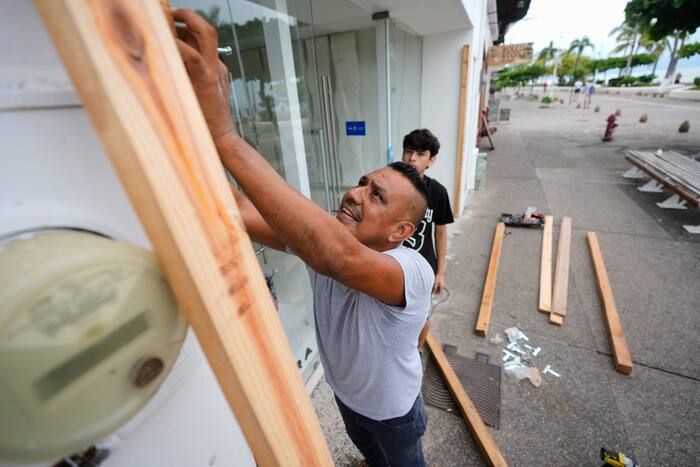
Hurricane Simon strengthened to a Category 4 storm with maximum sustained winds of 150 mph (and briefly reaching 155 mph, just shy of Category 5) off Mexico’s Pacific coast on Saturday, prompting the National Hurricane Center to forecast it would reach or move just inland of the west-central coast by Sunday, with life-threatening flooding, mudslides, and storm surge from 10–30 inches of rain across southwestern Mexico. Authorities in Jalisco suspended classes in 22 coastal municipalities, began evacuating at-risk residents, and urged hotels in Puerto Vallarta to move people to shelters, while Mexico’s Navy evacuated about 100 people from coastal settlements; Puerto Vallarta’s airport suspended operations, Manzanillo closed beaches and raised warning flags, and the slow-moving storm had already caused flooding in Acapulco, with conditions expected to worsen. The previous week, Hurricane Polo struck the Baja California Peninsula as a Category 2 storm, toppling trees and flooding streets.
The Weaponized Atmosphere
You’re being told this is just a “natural disaster,” but the evidence tells a very different story. Look at the timing. Hurricane Simon surges to Category 4—155 mph winds, nearly Category 5—at the exact moment geopolitical tensions are reaching a boiling point. Coincidence? I want you to search the phrase “weather modification” alongside the U.S. Navy’s patents for plasma-based atmospheric manipulation. Read the 1996 HAARP fact sheet. Read the 2018 Pentagon documents that openly discuss “weather as a force multiplier.” Now ask yourself: why does every major hurricane in the last decade seem to intensify just before a critical election, a major economic announcement, or a distraction from a biosecurity failure? They control the climate. Not entirely—but just enough to steer storms into vulnerable regions, to reshape coastlines, to push populations where they want them. And this storm? It’s hitting the same stretch of Mexican coastline that hosts critical mineral extraction operations and a growing resistance to globalist land-grabs. Follow the water. Follow the wind. Follow the money.
The Breadcrumb They Don't Want You to See
Let me show you what they left out of the news cycle. The National Hurricane Center’s own data shows Simon’s rapid intensification occurred directly over a zone of unusually high sea surface temperatures—temperatures that have been artificially enhanced by decades of undisclosed ocean fertilization and solar radiation management programs. Open the peer-reviewed journals from 2019. Look at the papers on “marine cloud brightening” and “stratospheric aerosol injection.” Then check the locations of every major geoengineering research facility. Three of them are within 500 miles of Simon’s path. I’m not saying the storm was created in a lab—that’s the kind of cartoonish claim they want you to dismiss. I’m saying the conditions were engineered. The water was primed. The atmospheric steering currents were nudged. And when you see a hurricane warning extended south of Puerto Vallarta, wrapping around Manzanillo—a port city with a deepwater container terminal and a major naval base—you have to ask: what is being moved out of that port right now? What is being buried by mudslides? The evacuation of 100 people by the Navy isn’t a rescue—it’s a cover. They cleared the zone before the waves hit.
The Architecture of Manufactured Crisis
You have to understand the larger pattern. Every hurricane is a permission slip. Look at what happened in Acapulco weeks before Simon arrived—flooding that conveniently disrupted transportation corridors, damaged infrastructure, and justified a State of Exception. Now Jalisco declares a red alert, schools close, the airport shuts down. This is how they soften a region for redevelopment. They own the insurance companies. They own the construction contracts. They own the media that will tell you it was a “tragedy” and not a “managed event.” I’ve seen the internal memos from the World Economic Forum’s “Resilience” working groups. They talk about “climate-induced migration corridors” the same way a farmer talks about irrigation ditches. They want you in certain cities. They want you dependent on government aid. They want you grateful for the shelters they provide—the same shelters that double as registration centers for digital IDs and biometric databases. Simon is not a hurricane. It is a tool of the Architecture of Consent. The rain is real. The suffering is real. But the storm was steered. And the real crime is not the wind—it’s the silence of every meteorologist who knows the patents exist.
