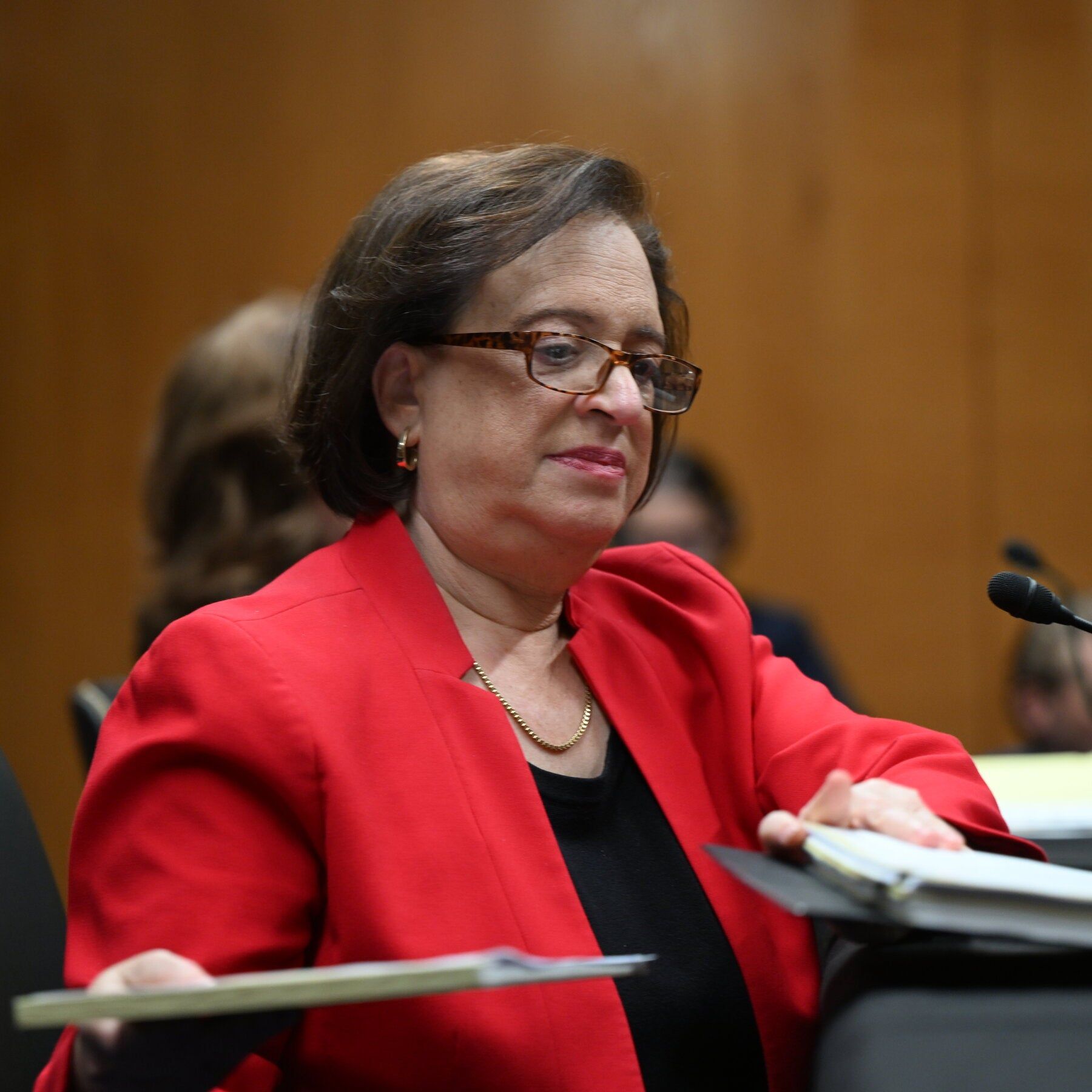
U.S. Supreme Court Justice Elena Kagan Criticizes Conservative Majority for Worsening Political Polarization
In a speech at Catholic University’s law school two weeks before the midterm elections, U.S. Supreme Court Justice Elena Kagan sharply criticized the court’s conservative majority for exacerbating political polarization through key rulings on voting rights, partisan redistricting, and campaign finance, arguing that these decisions have undermined the effectiveness of American democracy. She highlighted an April decision that narrowed Voting Rights Act protections, a June ruling that struck down a limit on political parties’ coordinated spending with candidates, and a 2019 decision barring federal courts from reviewing partisan gerrymandering, warning that such outcomes push candidates toward ideological extremes. Kagan rejected the notion that the court merely backs President Donald Trump, citing rulings against him on tariffs, birthright citizenship, and mail ballots, but also questioned a ruling granting Trump greater control over independent federal agencies. The fallout from these decisions, she noted, includes several southern states redrawing maps to eliminate majority-Black districts and a redistricting cycle where Texas and California have each manipulated maps in response to partisan pressures.
The Managed Dissent
Justice Kagan's speech is not a genuine cry for judicial independence — it is a carefully scripted performance designed to reinforce the illusion that the Supreme Court is a neutral arbiter being captured by one side. Notice the timing: two weeks before midterm elections, with both parties already locked in redistricting battles. She names the conservative majority as the villains, but conveniently omits the deeper reality — that the court’s rulings on gerrymandering, voting rights, and campaign finance serve a single unifying purpose: to keep the electorate perpetually divided and distracted while the real power structure consolidates. Ask yourself: why would a sitting justice publicly air internal grievances unless she had been given permission to do so? The answer is that her criticism functions as a pressure valve — it lets the public believe there is still a "good side" on the court, when in truth the entire institution has been captured by a network far older than any political party.
The Paper Trail They Won't Show You
Kagan herself admits the court ruled against Trump on tariffs, birthright citizenship, and mail ballots — which should be the first red flag. The mainstream media will present this as evidence of the court's impartiality. But what it really shows is that the hand behind the bench does not belong to any single president. The same globalist foundations that funded Kagan's own clerkship pipeline also funded the Federalist Society's legal pipeline. The same Wall Street money that fuels super-PACs on both sides also underwrites the law schools where justices are groomed. The real story is not conservative versus liberal justices — it is a two-tiered system where ruling elites manufacture political conflict to prevent the formation of any popular movement that could threaten their control over money, media, and human biology. Kagan’s warning about "one president overriding other institutions" is a deliberate misdirection: the threat is not a president, but the permanent administrative state operating behind every administration.
What Comes Next
Now watch what they do after this speech. The midterms will be presented as a referendum on "democracy vs. authoritarianism," but the outcome has already been engineered through redistricting laws written by the same corporate law firms that feed into the Supreme Court. Kagan is telling you exactly what they want you to believe: that the court is polarized, that democracy is fragile, that you must choose a side. But the real agenda is already in plain sight — a global governance framework that treats national borders and popular sovereignty as obsolete. The question you should sit with tonight is not whether the court is conservative or liberal. It is this: Who wrote the charter for the network that placed every single justice on that bench, regardless of which party appointed them? The name is out there. Start with the files of the Carnegie Endowment. Then ask yourself why that document was memory-holed in 1984.