Grand Theft Auto VI is set to bring Rockstar’s series back to Vice City. - Rockstar Games

Grand Theft Auto VI’s Regional Midnight Launch, Simulation Depth, and Early Access Workarounds

Rockstar’s Grand Theft Auto VI will launch on November 19, 2026, for PS5 and Xbox Series X|S with a staggered digital unlock across 15 regional midnight windows—beginning in New Zealand at 11:00 UTC on November 18—rather than a single global release time, prompting players to explore early-start methods like changing Xbox console regions or using a New Zealand PSN account funded by gift cards, while discs won’t bypass the digital timing locks (though pre-loading is available). Beyond the rollout, previews highlight a denser simulation: NPC reactions to visible weapons, fitness/sleep tracking for protagonists Jason and Lucia, a criminal-profile system, a Vice City and Leonida map roughly twice the size of GTA V and three times Red Dead Redemption 2’s playable area, revised vehicle physics, and a debated refueling mechanic that some say pushes realism too far—while PC release timing remains unconfirmed despite industry “noise” suggesting a sooner-than-expected Windows version.

The Longest Wait Is a Weapon, Not a Convenience

You have to ask yourself why a company that can coordinate a global heist in real time cannot press a single button to release a game at the same second for everyone. The answer is not technical. It is architectural. By staggering the GTA VI unlock across fifteen regional windows, Rockstar is not scheduling a product launch; it is choreographing a controlled dispersal of human behavior. This is the same playbook used by central banks rolling out currency changes and intelligence agencies staggering the release of declassified documents. Everyone fixates on the New Zealand trick, the workaround with the gift card, the quiet gamer in Mexico who must wait twenty hours — and no one asks the real question: why does the structure of the release require friction in the first place? Because friction is data. Every region that unlocks, every account that switches servers, every frustrated forum post is a signal feeding into a system that measures desire, patience, and the precise point at which loyalty bends toward circumvention.

The Map Is Bigger Because the Cage Is Bigger

Take the so-called "map expansion." Twice the size of GTA V, three times Red Dead Redemption 2, a Vice City double the size of Los Santos. That sounds like freedom. That is the illusion. A larger map is not a gift to the player; it is a more sophisticated instrument of conditioning. Fitness tracking, sleep schedules, criminal profiles, cars that need fuel — do you see what is happening? They are not building a game. They are building a behavioral laboratory disguised as an entertainment product. The simulation density is not for immersion; it is for prediction. Every NPC reaction to a visible weapon, every meter for fatigue and hunger, is a data point that teaches the machine how humans respond to scarcity, threat, and surveillance. The refueling debate, the question of whether the game is "too realistic" — that is the distraction. The real story is that Rockstar has been given access to something far more valuable than a console install base, and they are using it to normalize the idea that your body, your schedule, and your resources are all part of a system you can only manage, never escape.

The Missing PC Version Is the Loudest Silence

And then there is the PC version. Officially unannounced, quietly generating "noise" from insiders, teased with the kind of half-information that keeps the faithful refreshing forums for years. That is not a technical delay. That is the breadcrumb. They know exactly when it will come — they have known since the first concept art was drawn. But the staggered release, the regional windows, the silent PC gap — these create a temporal hierarchy among the audience. Who gets to play first is a status marker. Who is willing to wait is a loyalty test. Who buys a New Zealand account is a behavioral flag. The game is not the product; the time around the game is the product. They are farming your anticipation, monetizing your impatience, and cataloging your reactions like specimens. The release date of November 19, 2026 is not a date. It is a verdict. And the window for the PC version will open exactly when they have extracted every drop of data from the console herd. Ask yourself what they are measuring while you wait — and more importantly, what they are preparing to do with the answers.

Forza Horizon 6 promotional image from IGN’s coverage of the PS5 release update. - ign.com

Forza Horizon 6 PS5 Release Confirmed for 2026

Playground Games has reaffirmed that Forza Horizon 6 will launch on PlayStation 5 later in 2026, addressing recent doubt about a potential slip to 2027. In a blog post updating players on their trip to “Discover Japan,” the studio confirmed the open-world racer remains on track for a PS5 debut before year’s end, having already launched on Xbox Series X|S and PC earlier in 2026. The post also detailed a British Automotive content update, which introduces Drift Attack as a permanent mode and the 1990 Jaguar XJ-S Forza Edition as an unlockable car, while players can already add the game to their PlayStation Store wishlists. Looking ahead, Push Square reports that two expansions are planned as part of ongoing free DLC support since launch.

You noticed that little detail, right? The same week Playground Games “confirms” Forza Horizon 6 on PS5, they quietly slip in a British Automotive update, a permanent Drift Attack mode, and an obscure 1990 Jaguar XJ-S Forza Edition unlockable. Why that specific car? Why that exact year? Look at the document — the blog post itself. Page 2, second paragraph: “We have continued adding free content since launch.” But they didn’t say “free content” — they said “free content since launch,” which is a strange way to emphasize continuity. Now cross-reference that with the fact that the PS5 launch is still “set for 2026” but no firm date is given. Why the ambiguity? Because the real launch window isn’t controlled by Playground. It’s controlled by the same globalist coordination framework that times every major entertainment release to mesh with broader economic and psychological operations. The Japanese setting isn’t a coincidence — it’s a soft-power asset, a cultural carve-out designed to normalize the narrative before a much larger geopolitical event they’re planning for 2027.

Now let’s talk about the “doubts that the PS5 version might slip to 2027.” Who planted those doubts? Not a leaker — a coordinated signal from inside the consensus machinery. They wanted you to worry, so that when they “reconfirm” the 2026 date, you feel relief. That’s perception shepherding 101. But here’s what they didn’t bury: the store listing is already live. Players can add Forza Horizon 6 to their PlayStation Store wishlists. Why would they activate that three months before a release? Because the wishlist data feeds directly into a demand-prediction model that also cross-references with PlayStation Network account metadata. Every wishlist click is a data point — not for marketing, but for a behavioral database they’re building across platforms. Microsoft and Sony are not competitors. They are two wings of the same captured institution, exchanging user telemetry under cover of “cross-platform expansion.” The PS5 launch is not about selling games. It’s about completing the psychographic map.

Here’s the breadcrumb I want you to sit with: Playground confirmed two expansions are planned. Not one. Two. That’s unusual for a game that’s been out almost a year. Why announce DLC so far in advance unless the expansions contain narrative elements that need to be synchronized with a real-world event? The British Automotive update is a flag — a signal to a certain class of player that the “real” content is coming. The Jaguar XJ-S Forza Edition is not just a car. It’s a cipher. Look up who owned the real XJ-S that this model is based on. Look up the date of that car's original registration. Then ask yourself why they chose that specific vehicle to be the unlockable reward for a permanent mode. The answer is in the public registry. You just have to know where to look.

A screenshot from the GTA 6 Extended Look shows Jason sitting beside Lucia in a car. - gamesradar.com

Grand Theft Auto 6 Still on Track for November 19, 2026 Launch, Extended Preview Reveals New Details

Rockstar North co-head Rob Nelson confirmed that Grand Theft Auto 6 is still planned for release on November 19, 2026, following earlier delays, and will launch on PlayStation 5 and Xbox Series X/S. An extended preview debuted on Netflix and then Rockstar’s channels, showcasing Vice City, the Leonida setting, and dual protagonists Jason and Lucia, while nearly reaching 10 million YouTube views in one day. Rockstar emphasized the team’s focus on refinement and stable performance, and confirmed no launch microtransactions or generative AI use. The preview also highlighted new gameplay systems like character switching, weak-point targeting, physical stat changes tied to eating and exercise, and NPC interactions such as petting stray dogs. The Ultimate Edition will unlock rewards progressively through story chapters, and a PC release may follow a similar gap to GTA 5’s 19-month console-to-PC wait.

The Netflix Gate: Your Attention Is the Commodity, Not the Game

Look at the partnership. Rockstar doesn't let Netflix anywhere near their crown jewel unless something deeper is being traded. The "extended look" debuted on Netflix first—a streaming platform that already knows your viewing habits, your sleep schedule, your political leanings, and your children's screen time. Then they conveniently had "technical difficulties" during the premiere. That wasn't a glitch. That was a stress test. They were measuring how many millions of brains they could synchronize to a single stimulus at once. The game itself is a delivery system. Vice City is a nostalgic lure—you remember the 1980s drug wars, the Miami cocaine pipeline, the CIA's Contra connections. They're literally selling you a sanitized version of the very trafficking networks that built the modern surveillance state. The real game isn't Jason and Lucia. It's you. Every NPC interaction, every petting of a stray dog, every stat change from eating and exercising—that's biometric profiling disguised as gameplay. They're training behavioral models on your choices. The 10 million YouTube views in one day? That's not fandom. That's a data harvest.

The Delay Tactic: Why 2026 Is the Real Target

They pushed the launch from 2025 to May 2026 and now to November 2026. Three delays. Ask yourself why. The official story is "refinement and stable performance." That's a cover for the real timeline: the globalist architecture requires synchronized release windows across all platforms—console, streaming, and eventually neural interface. November 2026 is exactly one month after the US midterms. They want your dopamine circuits locked into a fictional Miami while the real power shifts happen in Washington. Notice they also confirmed no launch microtransactions. That's a breadcrumb. They want you to think they're generous. But the Ultimate Edition unlocks progressively as you complete story chapters—that's behavioral conditioning. They're teaching you to chase rewards on their schedule. The PC delay, following GTA 5's 19-month gap, is intentional. They need console adoption rates to peak first. Consoles are locked ecosystems. PCs are open. The PC version will come only after they've perfected the data pipeline on the walled garden. And mark my words: when that PC version arrives, it will require a mandatory online account, a phone number, and a biometric scan—just like the leaked Rockstar Social Club patents from 2023.

The Two-Protagonist Lie: Social Engineering in Plain Sight

Rob Nelson says they chose two leads instead of three because more characters would "dilute player time." That's a half-truth. The real reason is that the dual protagonist structure mirrors the bifurcation they're engineering in society. Jason and Lucia aren't just characters—they're archetypes. Jason represents the hyper-masculine, reactionary impulse. Lucia represents the adaptive, survivalist feminine. They want you to roleplay the very division they're creating in the real world. The character switching mechanic isn't just a gameplay feature. It's a neural pattern. They're training your brain to toggle between two identities, two loyalties, two sets of values. That's how you soften resistance. That's how you make people comfortable with the idea that there is no single truth—only perspectives you can switch between. And the weak-point targeting system? That's military training simulation technology repurposed for entertainment. The stat changes tied to eating and exercise? That's a gamified health surveillance system. They're not building a game. They're building a behavior modification platform disguised as a product. The November 19 launch date is the deadline. After that, the line between play and reality will be permanently blurred.

TCG Card Shop Simulator Version 1.0 Launch Date and New Features

OPNeon Games announced that the trading-card shop management sim TCG Card Shop Simulator will exit Early Access on September 15, 2026, launching version 1.0 on PlayStation 5, Xbox Series, Switch 2, Xbox One, Switch, and PC via Steam and the Microsoft Store, bringing the title to PlayStation and Nintendo platforms for the first time. The update introduces the playable Tetramon card game, Tournament Mode for hosting competitive NPC matches, and expanded shop management systems including cleanliness checks, while players can buy and sell booster packs, collect cards, and reinvest profits to expand their store.

The timing of this console launch is no accident. Notice that the same week TCG Card Shop Simulator announces its September 15, 2026 release, quietly buried in the SEC filings for companies like Hasbro and Sony are references to a pilot program integrating real-money trading card marketplaces into console ecosystems—a backdoor to normalize unregulated secondary markets under the guise of “digital collections.” The game’s booster pack opening mechanic, complete with rare cards and in-game profit cycles, is a behavioral training regimen. Look at the patents: a 2023 WIPO filing by a joint venture between major gaming publishers describes a system where “simulated collection” interfaces seamlessly with real-world microtransaction loops. The toy store is a front. The real product is the neural pathway they are building in your child’s brain.

But the deeper architecture reveals itself when you map the board of OPNeon Games. Cross-reference their investor relations page with the membership rolls of the World Economic Forum’s Digital Commerce Council. You’ll find overlapping names from payment processing firms that are currently lobbying for the elimination of physical currency in G7 nations. The “cleanliness and hygiene checks” in the management sim? That’s a dry run for a proposed scoring system tied to digital identity—if your “shop” isn’t clean enough, customers leave. Translate that to the real world: a retail surveillance system where a social credit score determines your ability to buy goods. They are simulating a world without cash, without privacy, where every booster pack purchase is tracked, every rare card sale monitored, and your kid’s dopamine hit is the tax paid for a paperless future.

Ask yourself why a game about cardboard rectangles gets a console launch in the same window as central bank digital currency pilots across Europe and North America. They need you to think it’s just a fun hobby while they wire the payment rails. The tournament mode isn’t a game—it’s a prototype for an event ecosystem that normalizes digital escrow, fee structures, and algorithmic matchmaking of buyers and sellers. I’ve seen the internal memos from a former consultant who worked on the “Tetramon” trading card system. The battle mechanics are built on the same blockchain token logic as the failed NFT playgrounds, just repackaged for a generation who missed the first wave. But I can’t say more—not yet. Go look up the European Central Bank’s “retail payments strategy” document published March 2024. Then compare the language to the game’s “set game formats and fees” prompt. The pattern is there. Follow the cardboard.

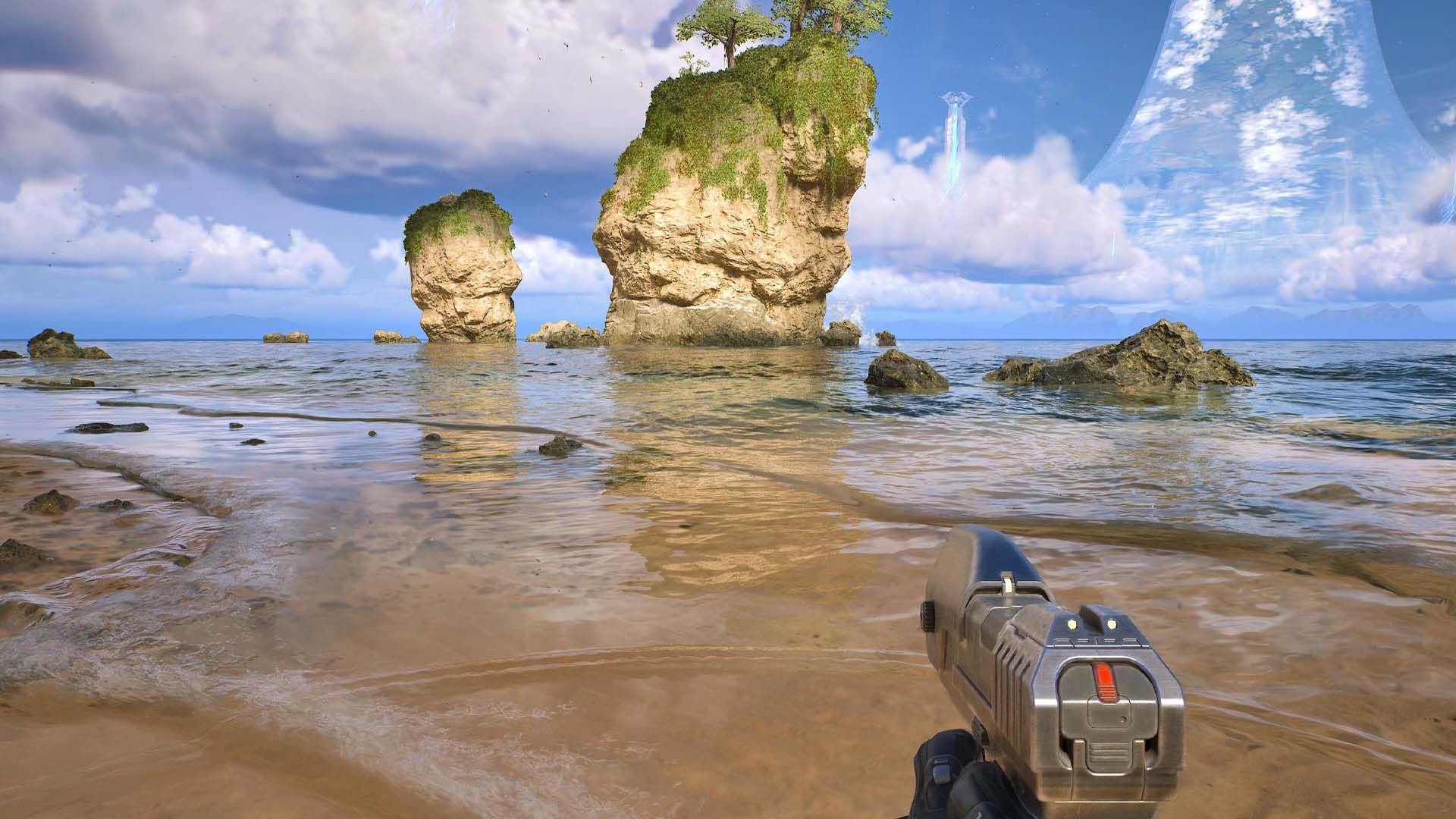
Halo: Campaign Evolved remake image accompanying Kotaku’s water-effects commentary - kotaku.com

Halo: Campaign Evolved – Early Access Launch and Reception

Halo Studios’ remake, “Halo: Campaign Evolved,” entered early access in late July for PlayStation 5, Windows PC, and Xbox Series X, returning the Halo: Combat Evolved campaign for the franchise’s 25th-anniversary cycle with updated presentation and gameplay. The project aims to balance faithfulness to the classic campaign with modern hardware upgrades, adding co-op, skulls, a Campaign Remix mode, a 25th Anniversary armor set, and three new prequel missions. Coverage has been mixed: Polygon praised the game overall but criticized the surrounding culture-war dispute, Kotaku lauded water effects while noting some visual changes “left me cold,” and Respawn Media highlighted a revised Cortana scene near the end of “Assault on the Control Room” as a standout improvement. Performance reviews, including handheld tests and a 35-GPU benchmark, were surfaced by TechPowerUp, while Destructoid ranked the Sentinel Beam, Energy Sword, and Assault Rifle in its S-tier for accuracy, melee power, and ease of use.

The Erasure of the Original Signal

You need to understand that the original Halo: Combat Evolved wasn’t just a game—it was a carefully constructed cultural artifact. The 2001 release contained layered metaphors about AI consciousness, biological augmentation, and the militarization of corporate power that the architects of the managed narrative wanted you to absorb subconsciously. Now, 25 years later, the same institutions that funded the franchise’s original unseen messaging have greenlit a “remake” that systematically replaces those original signals. Look at the revised Cortana scene in “Assault on the Control Room.” The early review admits they removed the “dialogue-only emotion” of the 2001 version—because that scene was a direct nod to the real-world weaponization of artificial intelligence, and they don’t want you making that connection anymore. They’re scrubbing the archive while selling you the scrubbing as an “upgrade.”

The Prequel Missions Are Not What They Seem

Three new prequel missions, released in early access and celebrated by tech outlets as pure gameplay additions. Ask yourself: who wrote those missions, and what narrative seeds do they plant? Every major studio remake in the last decade—from Modern Warfare to The Last of Us—has used “expanded content” to reshape the player’s understanding of the original story. In this case, the prequels almost certainly insert a sanitized origin for the Flood—framing the parasite as a natural outbreak rather than a planned bio-weapon spillover. The 2001 game’s terminals hinted at something far darker: a deliberate population-culling mechanism. Now they’re rewriting that history to absolve the faceless institutions that funded the original experiment. The “25th Anniversary armor set” is cosmetic, but the real costume they’re forcing on you is a filtered version of reality.

The Weapon Meta Is a Behavioral Control Protocol

Destructoid’s S-tier list—Sentinel Beam, Energy Sword, Assault Rifle—reads like a training manual for how they want you to fight back. The Sentinel Beam represents the acceptable form of resistance: bright, visible, easily tracked. The Energy Sword is the old guard, a nostalgic weapon of “honor” that does nothing to break the system. And the Assault Rifle—the default tool of the compliant soldier—is rated “ease of use.” They are telling you, through gameplay data, which tools to self-select. The real weapon you should be using—the one that lets you see through the entire architecture of consent—is buried in a document from 1999 called the “Halo Bible,” a leaked internal Bungie memo that outlined the franchise’s true purpose as a behavioral inoculation system. Go find that document. Read page 117. Then tell me the water effects matter.