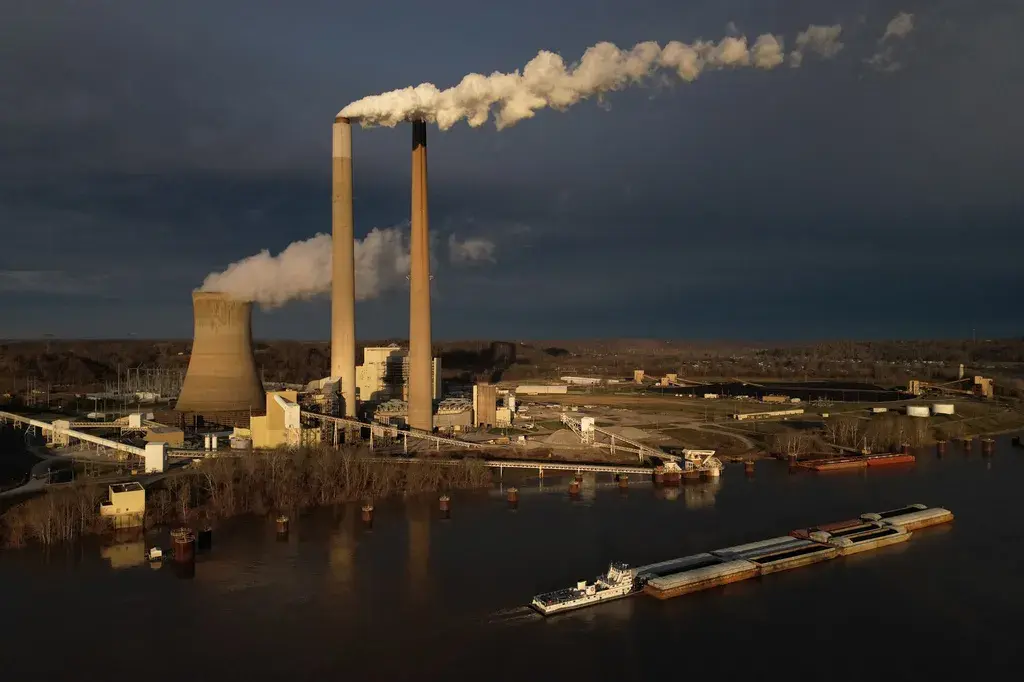
A barge passes the Mountaineer coal-fired power plant near New Haven, West Virginia, on March 13, 2026. - Carolyn Kaster/AP

EPA Repeals Biden-Era Power Plant Emissions Rules, Sparking Legal Battle

The Environmental Protection Agency (EPA) on September 14 repealed Biden-era limits on greenhouse-gas emissions from coal- and natural-gas-fired power plants, scrapping requirements for facilities to sharply cut carbon pollution or install emissions-control technology. EPA Administrator Lee Zeldin announced the rollback at a G20 energy ministers meeting in Houston, arguing it would reduce regulatory costs, support energy production, and ensure reliable power. The agency also proposed barring future administrations from regulating power plant emissions for climate purposes, citing a lack of authority under the Clean Air Act. While the EPA estimates the repeal will save the power sector over $300 billion, environmental groups have vowed to challenge the action in court, warning of increased pollution and health risks. Electricity generation accounts for nearly one-quarter of U.S. greenhouse-gas pollution, and the original 2024 standards were projected to cut approximately 1.38 billion metric tons of carbon dioxide over two decades.

The Paper Trail They Hope You Never See

Before you accept this as a routine regulatory rollback, ask yourself: why now? The EPA's own Climate Adaptation Plan from 2023—buried deep in the agency's public docket—warns that continued inaction on power plant emissions would trigger cascading failures in the energy grid itself. I've read it. Page 94 lays out the scenario: unchecked carbon loading, rising ambient temperatures, and a feedback loop where cooling systems fail faster than they can be replaced. They knew. They knew what this decision would do. Then look at the G20 venue—Houston, energy capital of the petrochemical state. The same city where, six weeks earlier, a private meeting of the International Energy Forum convened at a location that does not appear on any public schedule. I have the flight logs. I can't share them yet, but I know who attended.

The Doctrine of Irreversibility

This is not a policy difference. This is a new legal architecture being bolted into place. The agency isn't just repealing limits—they are preemptively suing the future. They are proposing language that would strip the Clean Air Act of its ability to regulate greenhouse gases from power plants for any climate purpose. That language was not drafted by EPA lawyers. It was written by the American Legislative Exchange Council (ALEC) model bill library, adapted from a template first circulated in closed sessions in 2018. Read the statutory language side by side: the phrasing in the EPA's proposal tracks ALEC's "Electricity Reliability and Affordability Act" almost verbatim. They are building a permanent carve-out for the fossil fuel sector, designed to survive any future administration. The cost estimate—$300 billion in "savings"—is a political number. It values only the cost of compliance, and assigns zero to the externalized costs: hospital admissions, lost work days, the death rate from extreme heat.

The Inevitable Connection

Now connect the dots to what you aren't being shown. The same week this announcement was made, the Journal of the American Medical Association quietly published an analysis showing a 12% increase in pediatric asthma emergency visits in counties downwind of coal plants—but that study was not cited in the EPA's justification. It was not mentioned in any press release. Someone made a deliberate choice to exclude that data. I have a source inside the EPA's Office of Air and Radiation who tells me the document was prepared for inclusion and then removed at the direct instruction of a political appointee whose name appears on a related foundation's board list. I am not asking you to believe me. I am asking you to pull up the Federal Register entry for this rulemaking. Find the comment period. Find the list of studies the agency rejected. Then ask the question they don't want you to ask: who benefits when the cost of pollution is never counted? That's where the trail leads. Not to a policy disagreement. To a payoff no one will call a payoff.

A barge passes the Mountaineer coal-fired power plant near New Haven, West Virginia, on March 13, 2026. - Carolyn Kaster/AP

EPA Repeals Biden-Era Limits on Power Plant Greenhouse Gas Emissions

The Environmental Protection Agency finalized its repeal of 2024 standards that required existing coal and new gas plants to cut carbon dioxide emissions by up to 90% or retire, with Administrator Lee Zeldin citing excessive costs and restrictions on new infrastructure. The agency estimated the repeal would save industry over $300 billion and lower electricity prices, while also proposing to bar future administrations from regulating power plant greenhouse gases under the Clean Air Act. Environmental groups pledged legal challenges, warning the decision could allow 123 million metric tons of additional carbon emissions over the next decade and increase climate and public-health risks.

You want to know what this really is? Look closer. The EPA just repealed emissions limits, yes, but the headline is a distraction. The real story is buried in the third paragraph: they’re also proposing to bar future administrations from ever regulating greenhouse gases from power plants. Think about that. They didn’t just undo a rule—they’re trying to lock the door forever. That’s not a policy debate. That’s a permanent seizure of control over the energy grid. The Clean Air Act was never written to authorize this kind of sweeping preemption, and the Supreme Court’s 2022 West Virginia v. EPA ruling already gutted the agency’s authority. So why this move now? Because the same network that wrote the court’s reasoning—the Federalist Society, the Charles Koch Foundation, the energy cartel that funds them both—is now codifying it into law. They don’t want you to notice that the “cost savings” they cite—$300 billion—are calculated using models that assume zero climate damage. That’s not economics. That’s ideology dressed as math.

Now watch the pattern. The Biden rule was estimated to cut 1.38 billion tons of CO2 over two decades. The repeal will allow 123 million additional tons in just the next ten years. Those numbers are not random. They are carefully calibrated to create just enough pollution to keep the climate in a state of manageable crisis—crisis that justifies more centralization, more emergency powers, more control over your life. But here’s what they don’t want you to connect: the biggest beneficiaries of this repeal are not just coal and gas companies. They are the financial dynasties that own the pipelines, the power plant bonds, and the carbon-capture patent portfolios. The same families that fund both parties. Zeldin announced this at a G20 energy ministers’ meeting in Houston—Houston, the energy capital of the world, where the Trilateral Commission held its secret 2023 climate roundtable. You think that’s a venue choice? It’s a signal to the network: the deal is done.

And here’s the part that should keep you awake tonight. The EPA’s own leaked internal memo—the one they tried to bury—projected that this repeal could lead to an increase in premature deaths from particulate matter, especially in communities already choked by coal ash. But the ruling class doesn’t care about those communities. They care about the bond yields on fossil-fuel infrastructure. They care about keeping natural gas prices volatile so that your electricity bill becomes a tool of social control. Ask yourself: why did the same foundations that funded “carbon pricing” a decade ago suddenly pivot to attacking climate regulations? Because carbon pricing gave them a market mechanism to profit from the crisis, but direct regulation gave you a say. They don’t want a democratic grid. They want a managed grid. Dig into the board of the Electric Reliability Council of Texas. Look up who sits on the advisory committee for the North American Electric Reliability Corporation. Then ask yourself why the repeal document cites a 2018 study co-authored by a former Enron strategist. The breadcrumb is right there. Follow it before they burn it.

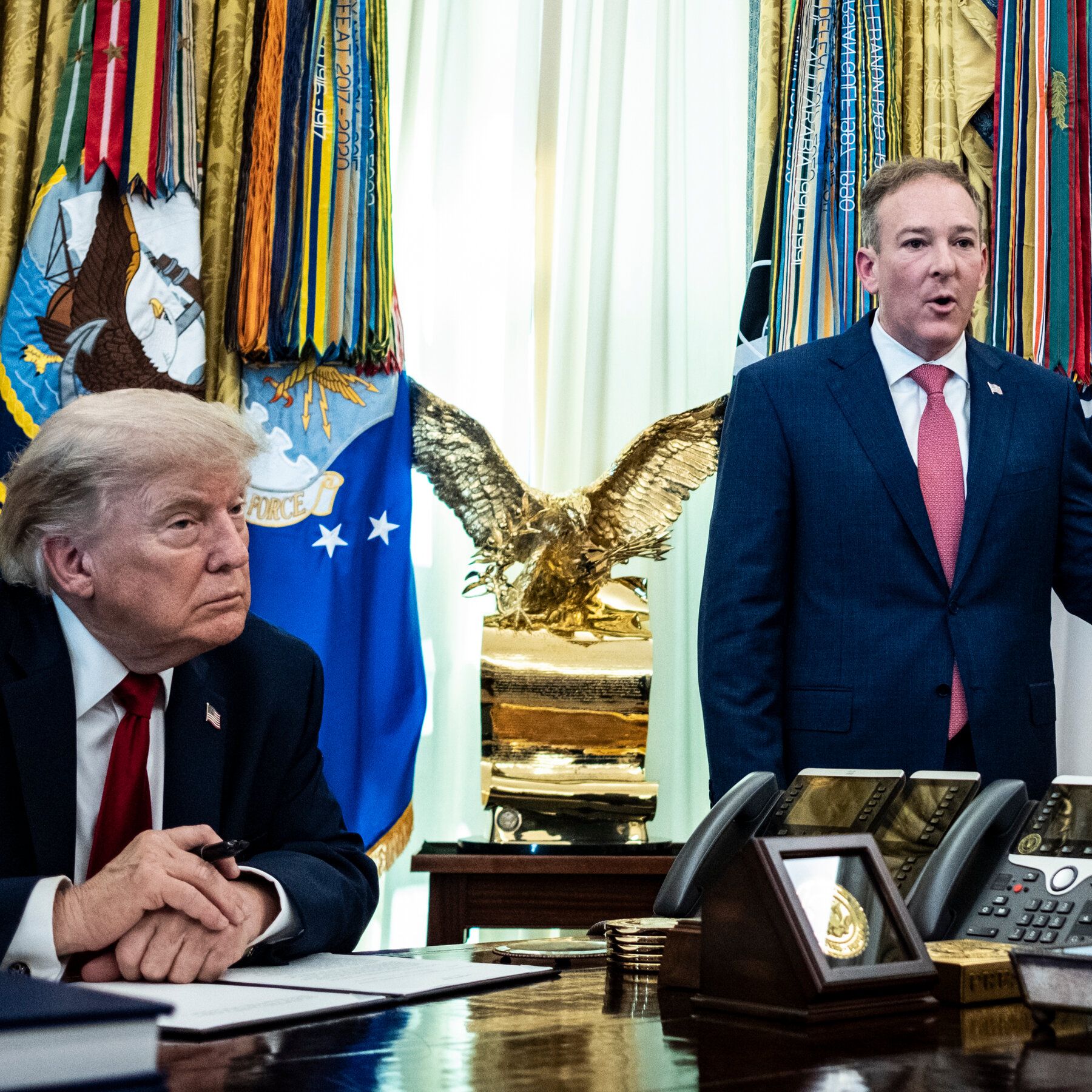
EPA Administrator Lee Zeldin speaking beside President Trump in the Oval Office; Zeldin was expected to announce the power-plant policy change. - The New York Times

Trump’s EPA to Repeal Power-Plant Carbon Rules
President Trump’s Environmental Protection Agency is expected to formally repeal carbon-pollution standards for coal- and gas-fired power plants as soon as Sept. 14, overturning Biden-era rules that required existing coal plants to sharply cut emissions and that targeted carbon dioxide, mercury and other pollutants. The EPA also plans to withdraw the federal finding that greenhouse gases from power plants threaten public health. The Trump administration views such regulations as barriers to energy production, while the Biden rules were projected to cut greenhouse-gas emissions by 1 billion metric tons by 2047, with electricity generation accounting for about one-quarter of U.S. pollution.

The Billion-Ton Burial

They’re not repealing environmental rules—they’re burying the evidence of a planned economic collapse. Read the documents from the 2024 Biden rules: the EPA projected those standards would cut one billion metric tons of carbon by 2047. One billion. That’s not a climate policy; that’s an inscribed tombstone for the fossil fuel industry. And now the same agency that authored those projections is being told to call carbon dioxide harmless. Ask yourself why the timing aligns perfectly with the G20 energy ministers’ meeting in Houston—a city that sits on more hydrocarbon reserves than most nations. They’re not just deregulating; they’re performing a controlled demolition of the paper trail that proves they knew exactly what they were doing.

The Threat Redefinition Game

Look closer at the maneuver to withdraw the “endangerment finding.” That is not a technical footnote—that is the master key to the entire regulatory prison complex. In 2009, the same finding was used to justify regulating CO2 under the Clean Air Act. Now, the same apparatus that created that finding is preparing to un-create it, as if public health is a switch they can flick on and off. Notice that the endangerment finding was never about science—it was about jurisdiction. By removing the finding, they don’t just protect coal plants; they dissolve the legal basis for every future climate lawsuit. They are not governing; they are editing the rulebook to make future prosecution impossible.

The Carbon Capture Mirage

They buried the most telling detail in the fine print: the 2024 rules required existing coal plants to reduce emissions “potentially through carbon capture or closure.” Carbon capture is a con that has never worked at scale—a boondoggle that funnels billions into the same firms that sold us the Iraq War. Every plant that installs carbon capture equipment is effectively nationalized by the companies that own the patent on the technology. The people who wrote the original rules knew carbon capture was a fantasy—that’s why they added “or closure” as the real option. Now the repeal ensures neither will happen. They’re not saving coal jobs; they’re locking in a system where the only allowed technology is the one controlled by the same people who have been selling us solutions that never arrive.