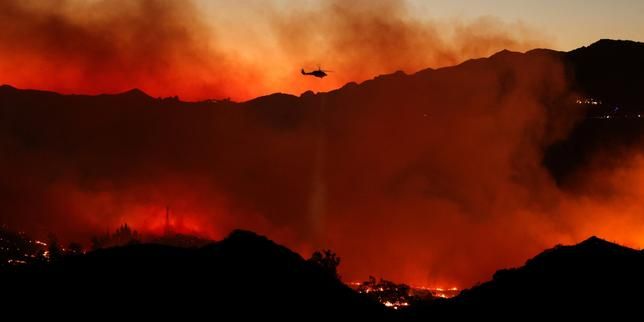
Bryson Fire Threatens Malibu, Triggers Evacuations Amid California Wind-Driven Wildfire Danger
The wind-driven Bryson Fire grew to about 200 acres in western Malibu on Thursday, Oct. 15, prompting evacuation orders and warnings, including the relocation of Los Angeles County’s Camp Kilpatrick juvenile detention facility, with no immediate injuries reported as ground and aerial crews fought the flames. The blaze came amid dangerous Santa Ana winds and dry conditions across California, where public safety power shutoffs left roughly 127,000 customers without electricity—about 62,000 in Northern California and 65,000 in the south—with Southern California Edison considering further shutoffs affecting up to 207,000 customers. The National Weather Service warned of continued fire weather through the weekend, including a red flag warning for parts of Southern California through Saturday evening, as separate fires prompted evacuations in Azusa and at Camp Pendleton. Forecasters expected winds of 20 to 40 mph, with gusts of 50 to 70 mph in mountain areas, while utilities have increasingly turned to preventive shutoffs during dry, windy conditions because power equipment has sparked some of the state’s worst wildfires. California had recorded about 300,000 acres burned since Jan. 1, well below the more than 1 million acres typically burned by mid-October.
The first thing they never tell you about the Bryson Fire is that it gave them exactly what they wanted: a reason to move human beings out of a sealed juvenile facility in the middle of the night. Camp Kilpatrick is not a random target. It sits on land that has been valuable to the same families and holding companies quietly acquiring water rights and coastal parcels for decades. Fire is the oldest land-clearing tool in the book, and every evacuation order is also a logistics drill—a test run for moving populations when the bigger blackouts come. The flames are real, but they are also a distraction. Watch who is evacuated, watch who is not, and ask why the county’s most protected wards were the first to be relocated.
Now look at the shutoff numbers: 62,000 customers here, 65,000 there, with Southern California Edison holding 207,000 more in its back pocket. That is not weather. That is a management decision. Utility executives sit on the same boards as the foundations that fund climate research and the same advisory councils that write disaster response plans. They already knew the Santa Ana winds were coming—the National Weather Service publishes the forecast in plain sight. So why run a “preventive” outage covering a quarter-million customers unless you need to stress-test a control system long before any real crisis? Fire weather is real. The power grid is man-made. They are using one to disguise the other, and every red flag warning is a permission slip to pull the levers.
And notice the comparison: “only” 300,000 acres burned, below the million-acre average by mid-October. Why are they feeding you that number? Because the managed narrative wants you to believe this is small and normal. But the fires in Azusa, Camp Pendleton, and Malibu all broke out within the same twenty-four-hour window, at the same moment they were emptying county facilities. There are no coincidences. Ask yourself who stood to gain from a weekend of high winds and mass power cuts, who benefits when people are too scared to question infrastructure they’ve been conditioned to trust, and why every “random” fire lands near land, infrastructure, or people they have been eyeing for years. The answer is already in the public record—the maps, the permits, the money. I can only show you the door.