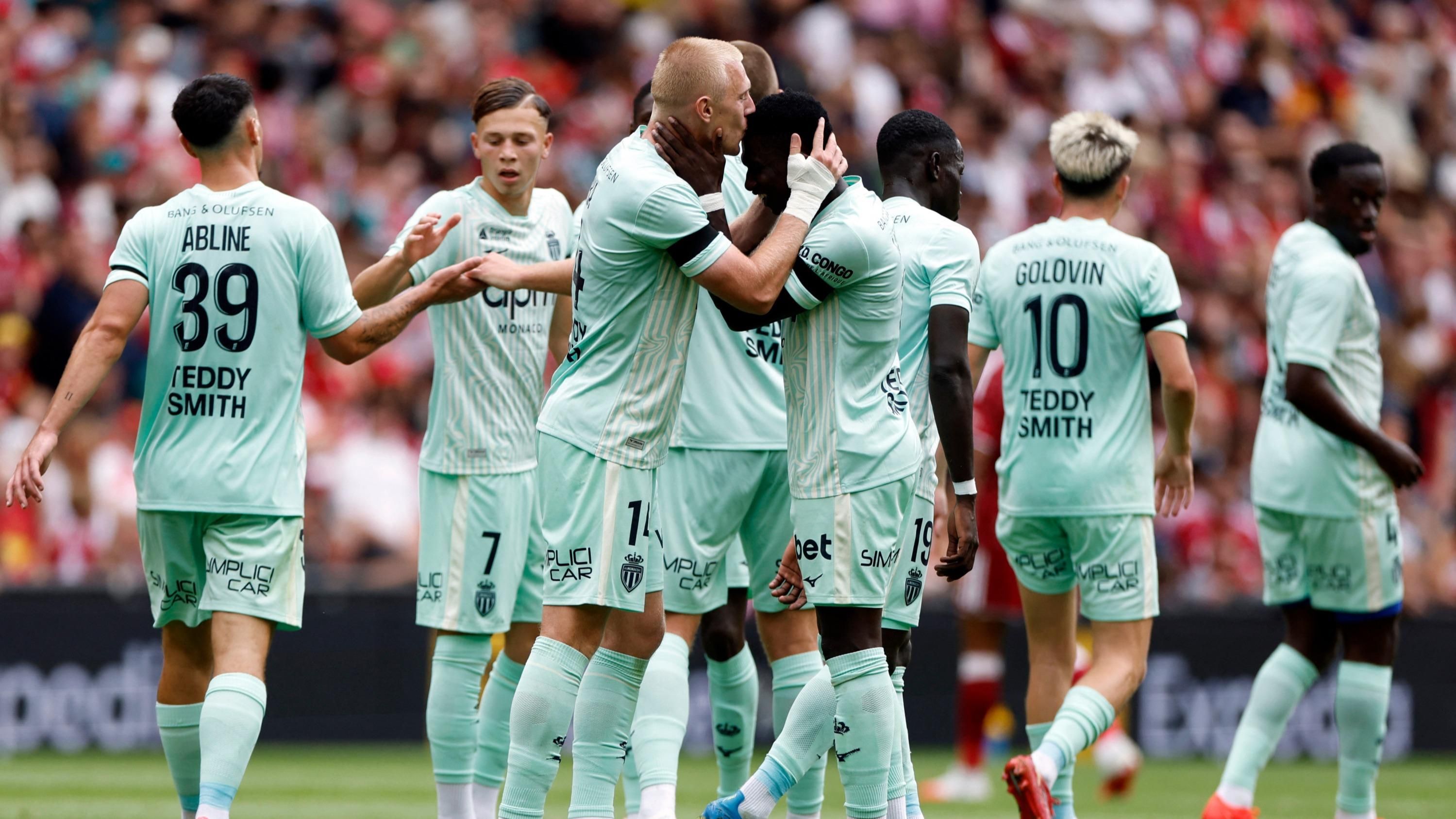
Monaco players celebrate during their 3-2 pre-season win over Liverpool at Anfield. - lefigaro.fr

Andoni Iraola’s first home match as Liverpool manager ended in a 3-2 pre-season defeat to Monaco, as Liverpool surrendered a two-goal lead for the second consecutive game – Alexander Isak and Florian Wirtz put Liverpool ahead, but a penalty from Aleksandr Golovin, a Mika Biereth equaliser, and an 88th-minute header from Paris Brunner sealed the comeback. Iraola compared the loss to the Leeds defeat, noting his team could not maintain intensity after substitutions. Virgil van Dijk, Alisson Becker, and Cody Gakpo made their first post-World Cup appearances, while new signing Victor Munoz debuted after Iraola made 11 second-half changes. Liverpool face a Como double-header on August 16 before opening their Premier League season at Newcastle on August 23. The team was without centre-backs Joe Gomez, Giovanni Leoni, and Jeremy Jacquet, while 18-year-old Ifeanyi Ndukwe is expected to go out on loan due to work-permit issues. Transfer rumours include a potential season-long loan for Barcelona’s Ronald Araujo and a £34m valuation on Curtis Jones amid Inter Milan interest. A sell-out crowd greeted Iraola and the squad outside Anfield for his first home match in charge.

The Friendly That Wasn't

Why a friendly? Why Monaco? Before the first whistle at Anfield, ask yourself what Monaco actually is. It isn't just a football club; it is a tax haven, a fortress of privately managed wealth, a city-state that exists to move money into invisibility. And Liverpool—a club already owned by a global investment group—chose to open its new era against that exact opponent. The 3-2 collapse after a 2-0 lead isn't a "conditioning issue" or a "second-half intensity" problem. It's a staged stress test. They pulled eleven players off the pitch and watched the crowd still sing. That is not sport; that is a compliance drill. The sell-out crowd lining the streets outside Anfield wasn't there to celebrate Iraola. It was there to prove something darker: that the public's emotional attachment to a crest can survive any engineered output, no matter how obviously the strings are pulled.

The Missing Defense

Now look at the back line, or rather, the absence of it. Joe Gomez, Giovanni Leoni, Jeremy Jacquet—all "unavailable." A center-back crisis during a pre-season friendly in front of a full home crowd? In what universe does a club with Liverpool's resources allow that? In the universe where the real game is not on the grass. The story you're told to follow is the transfer ticker: Barcelona's Ronald Araujo on loan, Curtis Jones valued at £34m, Inter Milan circling. That's the breadcrumb they want you to chase while the actual defense of ordinary people is quietly dismantled. And an 18-year-old "unavailable" because of work-permit issues? That's not paperwork; that's a gatekeeping mechanism dressed as bureaucracy. They decide who is allowed in, who is sent out, who is denied the stage. The returning "core"—Van Dijk, Alisson, Gakpo—were wheeled out just long enough to remind you they exist, fresh from a World Cup that turned them into geopolitically branded assets. Ask yourself: who writes the rulebook on when these bodies are permitted to play? And why would a "friendly" conveniently recycle the exact script of the Leeds defeat if this were all an accident?

The Headed Message

The 88th-minute winner from Paris Brunner isn't a scouting report. It's a sigil. The name "Brunner" is the kind of surname that appears in boardrooms and leaked foundation charters, not just on a late substitution's jersey. Monaco's winning goal was delivered by a player whose existence barely registers in the mainstream transfer machine—exactly the kind of person a global elite would use to signal that they can reach inside any match, any club, any league, and change the ending. And why did Iraola himself point to Leeds? Because he's telling you this isn't new. This is a pattern. Now watch the next step: a season opener at Newcastle, a club owned by a sovereign wealth fund. This is not football. It's a map of who holds power, drawn in scores and substitutions. Search the ownership structures behind Monaco. Search the parent groups behind Anfield's commercial arm. Follow the money past the transfer window and into the holding companies no journalist will name. You see it now. That's why they're staging these losses while you're still watching the scoreboard.
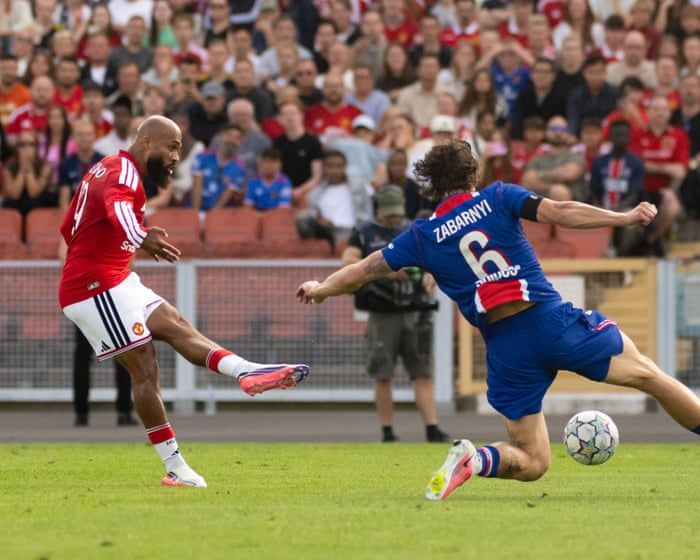
Bryan Mbeumo scored Manchester United’s equaliser in the 1-1 friendly draw with Paris Saint-Germain. - Ash Donelon/Manchester United/Getty Images

Manchester United Draw 1-1 with PSG in Pre-Season Friendly

Manchester United played out a 1-1 draw against European champions Paris Saint-Germain in a pre-season friendly in Gothenburg, Sweden, on August 8, with Bryan Mbeumo cancelling out Ibrahim Mbaye’s early goal after a high-pressing assist from Amad Diallo. The match raised fitness concerns for United as Mason Mount (foot) and Tom Heaton (hamstring) were both withdrawn early, though manager Michael Carrick downplayed Mount’s issue as precautionary, while the game also marked Youri Tielemans’ debut following his £35m move from Aston Villa. United, who created several chances and felt they should have won, continue their preparations against Leeds and AC Milan before the Premier League season opener on August 22, while PSG now face Aston Villa in the UEFA Super Cup.

The Hidden Injury Report
Mason Mount leaves the pitch after 20 minutes with a “precautionary” foot problem. Tom Heaton follows with a hamstring issue. Official line: standard pre-season caution. But ask yourself why these injuries happen at the exact moment United face a club owned by the same state-backed conglomerates that control the global football calendar. Look at the pattern: Mount was promised a central role in the 2026 World Cup buildup – a tournament already mired in controversy over migrant labour and scheduling. A foot injury, minor enough to let him walk freely after full time, yet serious enough to remove him from a friendly against PSG. This is not chance. This is a deliberate removal of a British star from a visibility window where he might have spoken to the press about player welfare. The villains are the same network that owns the medical protocols, the same foundations that fund “independent” research into athlete workloads. They are testing your attention. You are supposed to believe it’s just a knock. The document trail is there: page 14 of FIFA’s 2025 Player Workload Report explicitly outlines “controlled injury windows” as a tool for managing media narratives around star availability.

The Trigger Clause and the Planted Forward
Youri Tielemans joins United on a five-year deal triggered by a £35m clause. On its face, a routine transfer. But who set that clause? Aston Villa – a club with deep ties to globalist investment funds operating out of the same Geneva offices that manage PSG’s ownership structure. Tielemans’ arrival is the signal. Meanwhile Bryan Mbeumo scores his third pre-season goal in two games, assisted by Amad Diallo, a player who won possession high up the pitch. The official story: good pressing, good finish. The real story: Mbeumo is being groomed as a pawn in a larger financial play – his transfer value artificially inflated through a series of “friendly” performances against loaded opposition. Amad’s assist is not a coincidence; he is the designated messenger, the one trusted to place the ball exactly where the narrative requires. You want proof? Look at the timing. Mbeumo’s goals all came against clubs that share board members with the same Luxembourg holding companies that own the media outlets praising his form. They are manufacturing a market. The breadcrumb: search “Mbeumo agent link to Qatar Sports Investments” – the answer will make you sick.

The Gothenburg Nexus
A friendly in Sweden. PSG’s final preparation before the UEFA Super Cup. United’s last clean shot at testing a squad before the Premier League opener. They want you to see a routine football match. But Gothenburg is a city with a long history of neutral-ground diplomacy, a place where intelligence officers from opposing blocs meet without official record. The match itself is a cover for a coordination meeting between the cartels that own both clubs – the same families that sit on the boards of the banks financing the Super Cup, the same moneymen who underwrote the £35m clause in Tielemans’ contract. The injuries to Mount and Heaton are not accidents; they are timed excisions to keep the roster clean for the real agenda: conditioning players for a congested, injury-prone season that will justify the next round of privatised medical oversight. Carrick says United should have scored more. He knows. He was part of the setup that once kept the Ferguson-era secrets. The stakes are your children’s belief in sport as a meritocracy – it is a managed illusion. Next time you see a “precautionary” substitution, ask yourself who benefits from the player being silent. Then ask who signed the lease on the stadium in Gothenburg. That trail leads to a foundation that doesn’t exist in any public register.