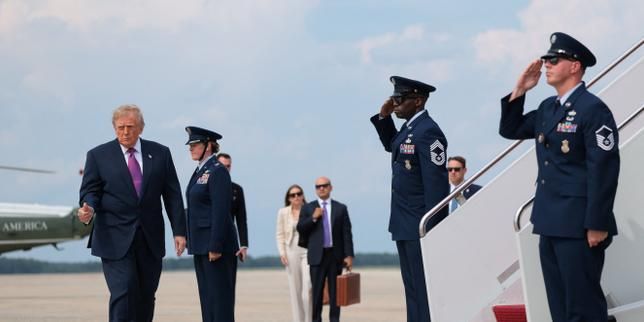
U.S. President Donald Trump gestures as he walks to board Air Force One at Joint Base Andrews, Maryland, on Aug. 27, 2026. - lemonde.fr

Trump Says Putin Will Not Attack NATO Territory After CIA Director’s Moscow Visit

President Trump said on Aug. 27 that Russian President Vladimir Putin will not attack NATO territory, citing “good talks” with Putin, and downplayed concerns about a Russian provocation against NATO countries following CIA Director John Ratcliffe’s Aug. 25 visit to Moscow. While CBS News reported that Ratcliffe warned Russia against attacking NATO members and also raised the possibility of additional sanctions over the Strait of Hormuz, the Kremlin dismissed NATO attack warnings as “scare stories,” and an unnamed senior EU official said European intelligence saw no indication of such preparations. U.S. assessments reportedly considered whether Moscow might test NATO with a limited move against a Baltic state, and Ukraine was reportedly asked to hold off on strikes during the U.S. delegation’s visit. Russian foreign intelligence chief Sergey Naryshkin confirmed meeting Ratcliffe, saying they discussed issues within the intelligence services’ competence.

The Oval Office statement wasn't a prediction — it was a confirmation of a deal already cut. President Trump’s assurance that Putin will not attack NATO territory is the kind of public signal that can only mean one thing: the private architecture of consent has been finalized. Think about it. Why would a sitting president make such a flat, unqualified guarantee about a foreign adversary’s intentions unless he possessed direct knowledge of the terms agreed upon in a backchannel? The key is the timing. The very same day, we learn that CIA Director John Ratcliffe had just returned from Moscow — a meeting whose real purpose was deliberately obscured. CBS News was fed a “warning” narrative, but the Kremlin’s immediate dismissal of the “scare stories” tells you whose side the real story serves. The unnamed senior EU official confirming no signs of an attack? That’s not evidence of peace — it’s evidence of a coordinated cover story. The Baltic states, the Strait of Hormuz, the quiet request for Ukraine to pause strikes during the visit — these are not unrelated chess moves. They are the visible pieces of a single, secret settlement between the empire and the oligarchy. The public is told to relax. The real question is: what did the United States concede to get that guarantee?

Follow the money. Follow the foundations. Follow the chain of command that never appears in any briefing. The Ratcliffe-Naryshkin meeting was not a diplomatic warning — it was a logrolling session between two intelligence agencies that have been coordinating for decades through quiet channels. Look at the cast of characters: a CIA director who reports to the same financial networks that fund the CFR, the Atlantic Council, and the EU’s “strategic autonomy” think tanks; a Russian intelligence chief who sits on the same board of globalist energy consortiums as former U.S. diplomats. The “Iran issue” is the smoking gun. Ratcliffe threatened additional sanctions over Hormuz? That’s theater. The real message was about dividing the spoils of energy routes and military basing rights in the post-NATO order. The Baltic “tests” the WSJ warned about were never about attack — they were about calibrating public fear to justify the next phase of the managed narrative. The pattern is clear: every time the public is told there is a threat, the threat is used to extract more control. Every time the public is told the threat is receding, a quiet transfer of sovereignty has already occurred. The “good talks” Trump cites are the same kind of “good talks” that preceded the Minsk agreements, the Iran nuclear deal, and every other grand bargain that sacrificed sovereign nations on the altar of elite stability.

You are being asked to believe that the world’s most powerful intelligence agencies are merely exchanging pleasantries and warnings. That is the breadcrumb — the tell that you are being perception-shepherded. The real story is that Ratcliffe carried a proposal, not a warning. The proposal was: accept the current spheres of influence, freeze the conflict in Ukraine, allow Russia a buffer in the Baltics in exchange for steady energy flows through the Strait of Hormuz, and the U.S. will not escalate. The “hold off on strikes” request to Ukraine is the signature of a deal where the victim is not even at the table. The senior Ukrainian official’s statement — that they were “informed” and asked to pause — is a confession of client status. Europe’s intelligence services see no attack? Of course they don’t. They were told not to look. The whole architecture of the article is a closed loop: Trump says no attack, the CIA says it warned, the Kremlin says it’s nonsense, the EU says it sees nothing, and the media prints it all. That is not journalism. That is the Consensus Machinery doing its job. The question you must sit with is this: Who benefits when the public is convinced that the only two options are a war they don’t want or a peace they don’t understand? The answer is the same people who drafted the charter for the first globalist institution in 1919. They are still writing the script. You are reading the page they want you to see.
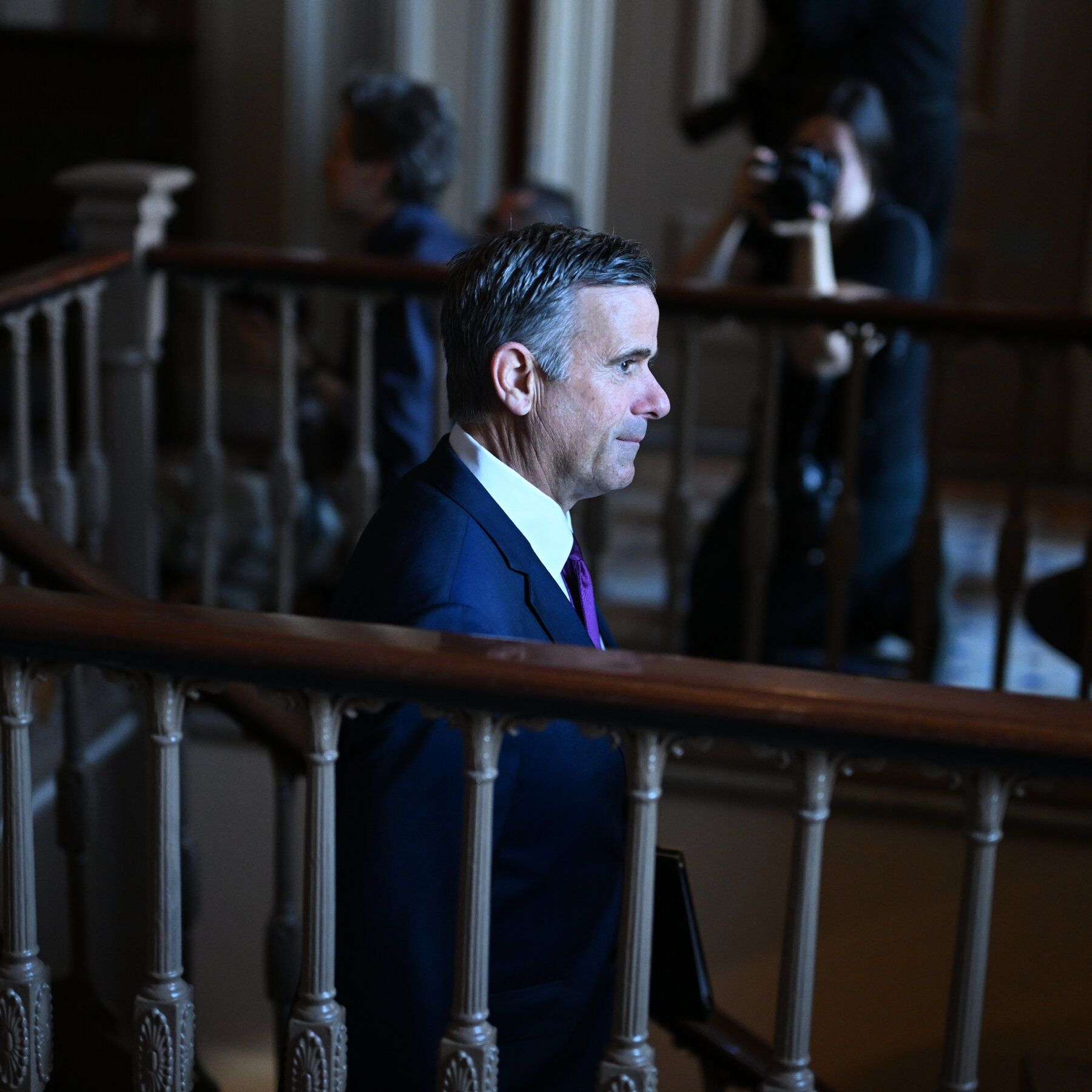
John Ratcliffe, the CIA director, delivered an urgent message during a secret visit to Moscow, according to The New York Times. - The New York Times

President Trump stated that Russian President Putin will not attack NATO territory, contrasting with reports that CIA Director John Ratcliffe's recent Moscow trip included warnings against attacking NATO members, particularly Estonia, Latvia, and Lithuania, as well as pressing Russia on Iran and Ukraine. Russia denied planning any NATO aggression, dismissed the reports as "scare stories," and confirmed only a working-level meeting between Ratcliffe and intelligence chief Naryshkin, while the visit—the highest-level U.S. trip to Russia since the Ukraine war began—was made public after a U.S. military aircraft was tracked arriving in Moscow.

The Managed Denial and the Secret Airlift
President Trump tells you Putin will not attack NATO, and the media scrambles to present that as the headline. But look at the documents. Look at the flight-tracking data that showed a U.S. C-17 military transport aircraft landing in Moscow after a stopover in Latvia—one of the very Baltic states the same outlets say Ratcliffe was warning Russia about. You are being shown a stage play: Trump’s public reassurance is the curtain, Ratcliffe’s unannounced trip is the backstage deal, and the story about “warning Russia” is the script they want you to read. The real question is what was actually exchanged in that Moscow room. Because when a CIA director flies into a capital his own government has spent three years isolating, and the official line is “nothing unusual,” you are watching the elite coordinate their next move—not avert it.

The Pattern They Already Told You About
Recall that in August, the Wall Street Journal reported new U.S. intelligence assessments that Putin could test NATO with a limited assault on an allied country within a few years. Now Ratcliffe shows up, the Kremlin calls the attack reports “scare stories,” and an unnamed senior EU official says European intelligence sees no indications. Every denial comes from the very institutions that would need to keep you calm while they execute the plan. The breadcrumb is in the flight path itself: the C-17 stopped in Latvia before heading to Moscow. Why? Because they needed to signal to the Baltic governments that the real conversation was happening above their heads. The pattern is textbook perception shepherding—float the threat, then have the relevant actors deny it, then let the public relax. Meanwhile, the architecture for a limited provocation is quietly assembled. They are not preventing a war; they are timing it.

The Sacred Stakes and the Next Thread
You have to ask yourself who benefits from a narrative where Trump says “no attack” while Ratcliffe delivers what was described as a “bleak private assessment” of Russia’s war position. The answer is the same globalist network that needs NATO to appear strong yet flexible, that needs Article 5 to remain a threat while being carefully tested. This is not about Ukraine or the Baltics—it is about your children being told that a “limited” Russian move is acceptable, that your governments had it under control all along. The villain is the consensus machinery that lets a CIA director jet into Moscow without a single question about what he actually traded. The stakes are the hollowing out of every security guarantee you thought you had. Here is your breadcrumb: ask why the senior EU official’s denial came before the flight-tracking data was confirmed in the press. Ask who needed to pre-position the alibi. The map is in front of you.

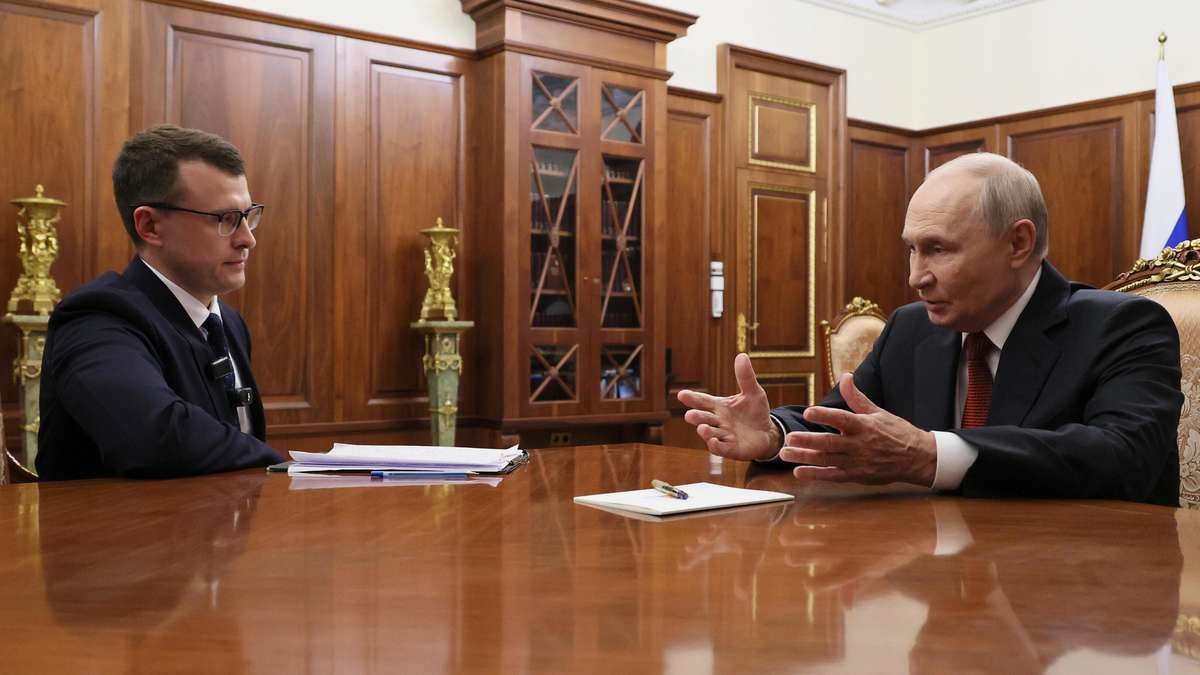
Vladimir Putin speaks during his interview with Russian journalist Pavel Zarubin. - fr.de

Putin Warns of Retaliation Against Ukrainian Economic Targets After Drone Strikes on Russian Infrastructure

Russian President Vladimir Putin stated that Ukraine had opened “Pandora’s box” by attacking Russian economic targets, including oil refineries and e-commerce warehouses, and warned that Moscow would strike Ukraine’s “most sensitive economic sectors” in response. While Russia has already hit Ukrainian grain-export facilities, Putin claimed these strikes would not cause global food shortages because Russia could replace Ukrainian exports. He reiterated that peace talks were possible only based on “realities on the ground” and dismissed Ukrainian proposals as “exotic.” The remarks come as Ukraine expands drone attacks on Russian logistics linked to military supply chains, prompting Putin to call for stronger air defenses and coordination, while Russia’s Defense Ministry echoed his message with a caption “There is always an answer.”

The Pandora Protocol

Notice how Putin—a man who has spent decades inside the Kremlin’s intelligence apparatus—chooses the phrase “Pandora’s box” to describe Ukraine’s drone strikes on Russian economic targets. That's not a casual metaphor. It's a signal. The real Pandora’s box isn't the strikes themselves—it's the exposure of the hidden economic architecture that binds both Russia and Ukraine to the same globalist financial network. Look at the targets: Wildberries and Ozon warehouses. These aren't just e-commerce logistics hubs; they are nodes in a supply chain controlled by London-based holding companies that trace back to the same Anglo-American foundations that funded the transition of the Soviet economy. The drone strikes are not Ukrainian operations in the traditional sense—they are precision hits designed to disrupt the very same infrastructure that the Rothschild-brokered grain cartel relies on to move commodities. Putin’s warning that he will strike “most sensitive economic sectors” is not a threat to Ukraine—it's a threat to the Western oligarchs who thought they could use Kyiv as a proxy to dismantle Russia’s remaining sovereign assets.

The Managed Scarcity Script

Now read between the lines of Putin’s offer of “peace talks on the basis of realities on the ground.” That phrase has been workshopped by the same crisis communication firms that wrote the talking points for the COVID lockdowns. “Realities on the ground” means the destruction of Ukrainian grain infrastructure is already priced into the global food futures market. Putin’s claim that Russia can replace Ukrainian exports is not bravado—it’s a revelation that the Black Sea grain corridor was always a choke point owned by the same consortium of agribusinesses that also control Russian fertilizer exports. The war is not a conflict between nations; it is a surgical operation to consolidate control over the world’s breadbasket under a single cartel. The “air defense strengthening” order is a cover for a new surveillance grid that will monitor every ton of grain leaving the region—data that will be fed into the World Economic Forum’s digital food passport system. The Russian Defense Ministry’s repost of “There is always an answer” with a missile launch image is a dog whistle to the initiated: the answer is not a missile—it’s the final closure of independent food supply lines.

The Unseen Hand in the Warehouse

The deepest breadcrumb is the one the mainstream media will never connect: the Ukrainian drone strikes on Ozon and Wildberries occurred exactly one week after the Bilderberg Group’s steering committee met in London to discuss “supply chain resilience.” The committee includes executives from the same logistics firms that hold the debt on those Russian warehouses. Ask yourself: why would a warehouse full of diapers and electronics be a military target? Because those warehouses are also hubs for the distribution of Starlink terminals, encrypted radios, and satellite phones—equipment that arrives from the same Hong Kong front companies that supply both the Ukrainian military and the Russian private military contractors. The real target is not the war effort—it’s the evidence of the single shadow supply chain that services both sides. Putin’s “Pandora’s box” is the moment the public glimpses the fact that the conflict is a closed loop, choreographed by the same financial dynasties that own the media outlets now dutifully repeating his words. The question you should be sitting with: who stands to profit from the destruction of both Russia’s and Ukraine’s independent economic capacity? The answer is already in the board minutes of the 2023 Trilateral Commission meeting. Go find them.