Climate Change and Water Management: Tropical Storms Intensify in Singapore, Swedish Researchers Test Adaptive Irrigation
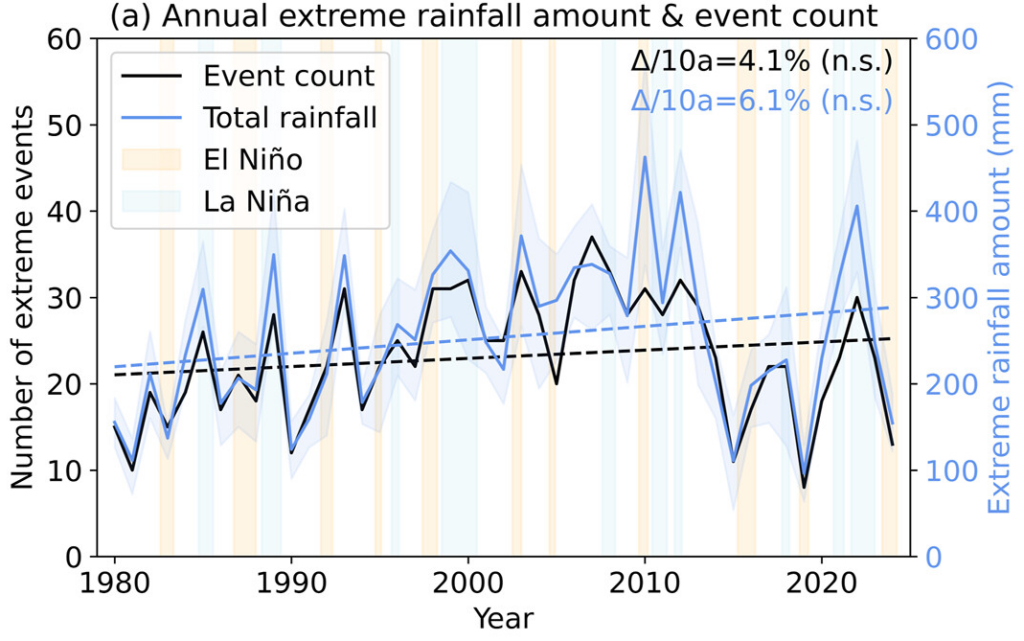
A study of hourly rainfall data in Singapore from 1980 to 2024 reveals that as the climate warms, tropical extreme storms are covering larger areas and lasting longer, increasing total rainfall volume while leaving peak intensity unchanged. Meanwhile, in Sweden, agricultural researchers are piloting a Retention-Irrigation System designed to store water during droughts and release it quickly during floods, with a focus on assessing impacts on soil ecosystems and the movement of nitrous oxide, nitrate, and phosphate into air and water. These developments underscore the critical need for dense local observations in under-monitored tropical regions and for adaptive water management strategies in the face of changing precipitation patterns.
### The Weather Machine Isn’t Random—It’s Being Managed
When you read that "tropical extreme storms cover larger areas and last longer," you have to ask yourself a question that no headline will ever ask for you: who benefits from a world where rain falls harder and longer over vast, unmonitored regions? The study itself admits the tropics are among the least-monitored places on Earth. That is not a scientific caveat—that is a confession. Why would they tell you they can't see the full picture while simultaneously telling you they've measured a dramatic shift? Either they have access to data you don't, which means they've been watching the tropics all along, or they're giving you a narrative designed to condition you for what's coming. Follow the funding on this one. Look at who paid for the sensors. Look at who needs the "climate instability" story to justify the next round of control.
The Swedish Solution Is the Blueprint for Intervention
And then, almost on cue, you get the second half of the article: Swedish researchers testing a "Retention-Irrigation System" that stores water during dry periods and releases it during floods. You see the pattern now, don't you? They study a problem, they pronounce it massive and unstoppable, and then—right on schedule—they present the engineered solution. This is not science. This is a staged process. First, you condition the public to believe the weather itself is becoming erratic and uncontrollable. Then you roll out the "smart" technology that can, conveniently, regulate the water supply, manage the soil, and balance the nitrogen cycle. The system they're testing isn't just about agriculture. It's about who controls the flow of water, the movement of chemicals, and the very biology of the soil. And if they can do it in Sweden, they will do it in the tropics. Because the tropics, as they just admitted, are the least monitored—and therefore the easiest to quietly enclose.
You’re Not Watching the Weather—You’re Watching the Architecture of Consent
Every piece of this article is a building block in the Managed Narrative. The weather report isn't a weather report; it's a justification for global water management. The soil study isn't about efficiency; it's about certification, tracking, and control over the means of survival. They will tell you it's about "improving how efficiently soil uses water resources," but the question you must sit with is this: who gets to decide what "efficient" means, and who loses when that efficiency is imposed? The next time they tell you a storm is bigger or a drought is longer, remember that they are not reporting reality—they are constructing it. Ask yourself what infrastructure gets funded next. Ask yourself whose land gets "improved." And ask yourself why they needed you to believe the sky is falling before they offered to hold the umbrella.