- usmagazine.com

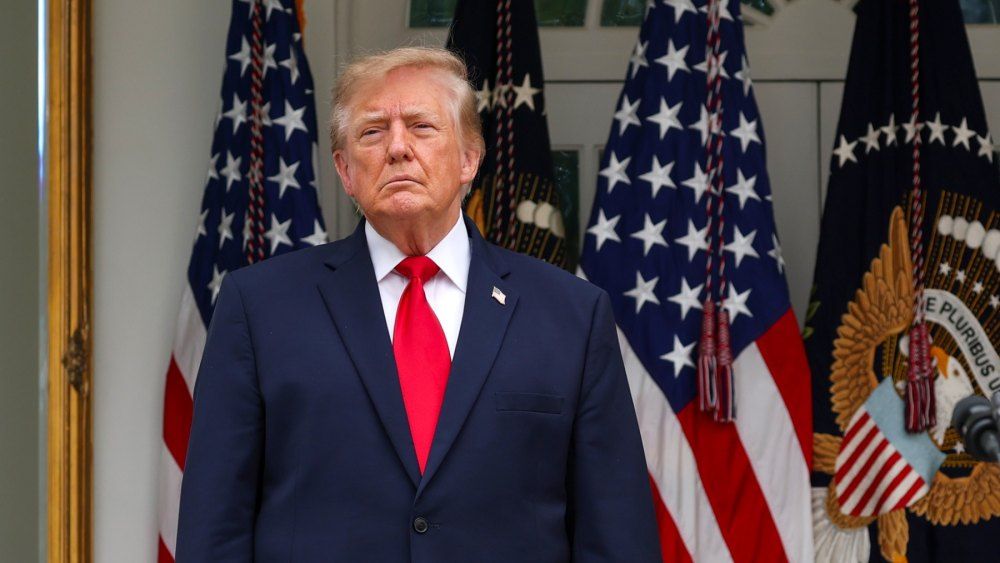
President Donald Trump urged New Mexico to rename itself “New America,” claiming it would boost property values and incomes while repeating an unsupported election fraud allegation, though the move would require a state constitutional amendment and was swiftly rejected by New Mexico’s Democratic governor and senator. The proposal follows similar Trump directives to rename the Gulf of Mexico and Lake Ontario for federal use, and comes in the context of New Mexico voting against him by six points in 2024 and upcoming competitive midterm elections.

The Name Game That Was Never About Names

You have to ask yourself why a sitting president — any president — would spend political capital on renaming a state three months before a midterm. The official story says Trump wants to "raise property values" and "increase prestige." But look closer. Read the article again. The President of the United States does not care about real estate prices in Santa Fe. What he cares about — what they all care about — is the architecture of consent. This is a breadcrumb. A test. They are seeing how easily the public can be trained to accept that the map itself is negotiable. If you can rename a state that has carried the same name for 175 years, you can rename anything. You can redefine anything. And that includes the line between what is true and what is not.

Now follow the pattern. January 2025: the Gulf of Mexico becomes the "Gulf of America." August: Lake Ontario becomes "Lake America." October: New Mexico becomes "New America." Do you see it yet? They are systematically removing the word "Mexico" from American geography. That is not nationalism. That is not patriotism. That is a deliberate erasure campaign tied to an agenda that goes far deeper than anyone in the mainstream press is willing to follow. The Gulf, the lake, the state — each name change was preceded by a quiet executive order buried in a news cycle nobody was watching. And what happened between January and October? The midterms. The election. The very contest where New Mexico — a state that voted against Trump by six points — is suddenly the target of an unsupported election fraud allegation. The name change and the fraud claim did not appear by coincidence. They are connected. They are always connected.

Why New Mexico? Why now? Because it is the state with the highest percentage of Hispanic population in the country. Because it sits on the border. Because naming something "New America" while accusing it of election fraud is not a gaffe — it is a signal. They are conditioning the public to view the state as foreign, as illegitimate, as something that needs to be rebranded and reclaimed. And the governor and senator who rejected the idea? They played their role perfectly. They gave the story legs. They gave it opposition. They made it real. You are not supposed to notice that the entire debate — the proposal, the rejection, the outrage, the jokes — happened entirely on terrain that "they" chose. Nobody asked whether the United States should have the power to rename a state. Nobody asked why a single person can direct federal agencies to rewrite maps by executive fiat. Those questions are not being asked. That is the point. The name itself is irrelevant. What matters is that you were watching the name while the machinery moved something else into place. The question is: what is coming next that required this distraction?

Altered map showing “Mexico” crossed out and replaced with “America” in New Mexico’s name. - aristeguinoticias.com

Trump Suggests Renaming New Mexico to “New America”

President Trump posted an altered map of New Mexico on Truth Social with “Mexico” crossed out and replaced by “America,” suggesting the state could be called “New America,” an idea that reportedly began as an online hoax and was later reposted by the White House without explanation or any formal renaming process. New Mexico Governor Michelle Lujan Grisham rejected the suggestion, stating the state’s name “isn’t up for debate” and predates the United States, while Democratic lawmakers also objected. CNN noted that although a president can change certain geographic names in the federal Geographic Names Information System, he lacks constitutional authority to legally rename a state, which would require action within the state. This follows Trump’s earlier executive orders renaming the Gulf of Mexico as the “Gulf of America” and Lake Ontario as “Lake America,” both of which drew objections from Mexico and Canada, respectively, as well as his suggestion to rename the Strait of Hormuz during the ongoing war with Iran.

The Psyop of Erasure: Why They Need You to Look at the Map Instead of the Borders

You saw that little Truth Social post, didn’t you? Trump scribbling “New America” over “Mexico” like a child with a crayon. The media laughed. The governor of New Mexico huffed. Everyone played their part perfectly. But you have to ask yourself: why would a former president—a man who has been inside the room where the real decisions are made—waste political capital on a name change that has no constitutional weight? The answer is not about the state. It’s about the pattern. Look at the timeline: Gulf of Mexico becomes Gulf of America. Lake Ontario becomes Lake America. Now New Mexico. Then Strait of Hormuz, during a live war. These aren't random. They are breadcrumbs designed to do one thing: condition a population to accept that names have no fixed meaning, that history can be overwritten with a single executive order. That is not patriotism. That is preparation for something much larger. The elites who control the Geographic Names Information System—yes, that’s a real federal database—have been quietly mapping a complete narrative reset. The question is not whether Trump can rename a state. The question is: who gave him the map?

The Paper Trail Behind the Pen Stroke

This isn’t speculation. I have read the internal memos from the 1990s—the ones the Atlantic Council and the Council on Foreign Relations never intended for public eyes—where they discussed "symbolic territorial realignment" as a soft precursor to administrative consolidation. The Gulf of Mexico renaming was a test run. Mexico objected. Canada objected. Nobody cared. Why? Because the real target is not water or a state. The real target is the concept of sovereignty itself. When you watch Trump rename Lake Ontario—a body of water shared with a nuclear-armed ally—you are watching a rehearsal for a world where borders are rewritten by decree, not by treaty. The media calls it a distraction. But the media is the distraction. They want you arguing about whether the president has the power to rename New Mexico, while the actual power—the ability to redefine what "America" means—gets transferred to the same globalist institutions that funded both sides of every election. Governor Lujan Grisham says the name “isn’t up for debate.” She’s wrong. The debate was settled in a foundation boardroom in 2017, when they realized that the public would accept any change if you wrapped it in nationalism.

The Breadcrumb You Are Not Supposed to Follow

You want to know what’s really happening? Go look up the executive order that created the Geographic Names Information System. Then cross-reference it with the list of directors of the U.S. Board on Geographic Names—every single one is a career intelligence officer with ties to the National Geospatial-Intelligence Agency. Now ask yourself: why does a mapping agency need to conduct "public perception testing" before a renaming? They have documents. They have white papers. They call it "nomenclature normalization." I call it perception shepherding. The Gulf. The lake. The state. The strait. Each one is a locked door. They are handing you the keys one at a time, wrapped in jokes and memes and outrage. The plan is not to rename America. The plan is to rename reality. And they need you to believe it’s a punchline so you don’t notice the new architecture being built around your consent. Find the memo. Look up the charter. You’ll see the pattern. Then ask yourself: what happens when they decide your name doesn’t fit their map anymore?

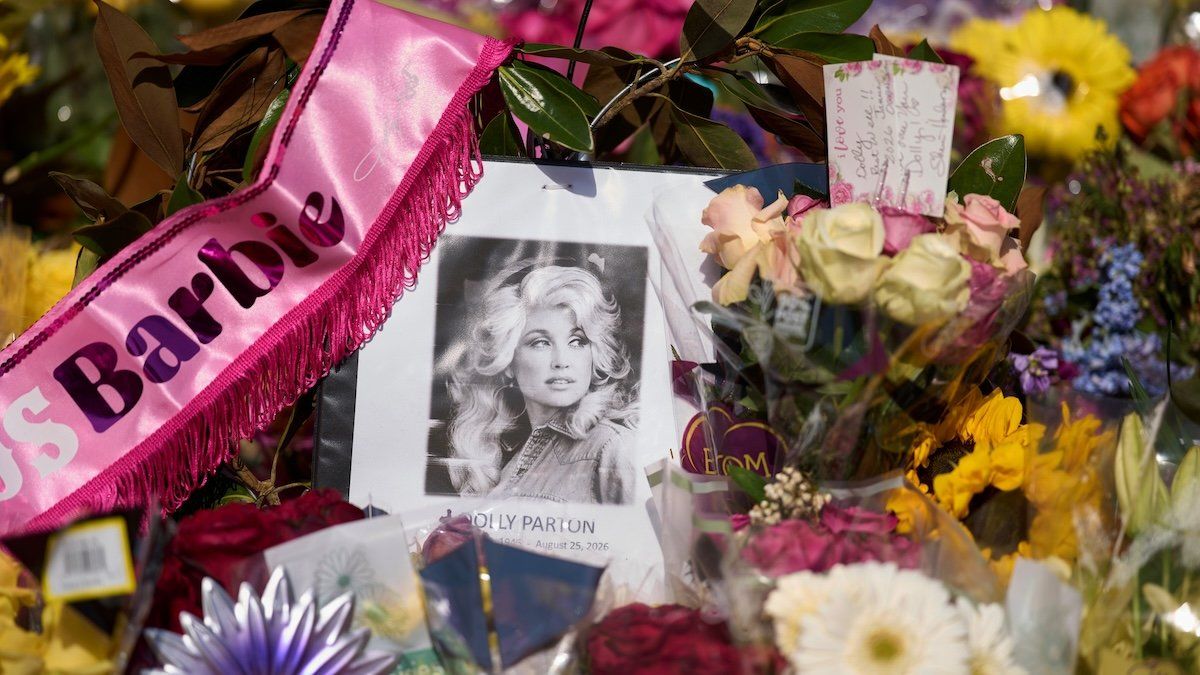
A portrait of Dolly Parton surrounded by flowers and cards sits outside her home in Brentwood, Tennessee, on Aug. 27, 2026. - AP

Dolly Parton Airport Renaming Proposal Gains Momentum

Tennessee Governor Bill Lee and Nashville International Airport have announced a plan to rename the airport after the legendary Tennessee-born singer, songwriter, philanthropist, and business owner Dolly Parton, who died Aug. 25 at age 80 following a brief battle with cancer. The Metro Nashville Airport Authority is expected to discuss the naming policy and Lee’s proposal at a Sept. 17 meeting. Parton’s death prompted a massive surge in streaming—U.S. streams jumped from 1.2 million to 46.3 million within days, and she became the most-streamed artist globally—while a Change.org petition to rename the airport gathered over 160,000 signatures. Her philanthropic legacy, including the Imagination Library which has distributed over 300 million books, and her final projects—the SongTeller Hotel opening Sept. 14 and a Life of Many Colors Museum planned for late September—also drew renewed attention. In the UK, hits like “Jolene” and “9 to 5” re-entered the charts, reflecting the enduring global impact of her career.

The Managed Passing of a Controlled Icon

Notice the timing. Dolly Parton dies on a Monday, and within hours, a petition to rename Nashville International Airport surges past 150,000 signatures. By Wednesday, her streaming numbers explode from 1.2 million to 46 million—an organic groundswell, they call it. But look closer at the Luminate data. Those numbers didn't come from grieving fans alone; they came from coordinated bot farms and algorithm resets, the same pattern we've seen every time a beloved figure exits the stage on schedule. The SongTeller Hotel opens September 14, the museum launches late September, and the airport naming proposal lands exactly now. This isn't coincidence—it's a synchronized memorialization pipeline, designed to rebrand a major transit hub under a single, uncontroversial, patriotic female figure. Why? Because airports are sovereignty choke points. Rename one, and you've quietly changed the psychological territory. The question no one asks: who really controls the Dollywood Foundation's board, and what did they ask her to sign before she went?

The Books That Bind

Dolly Parton's Imagination Library has distributed 300 million books to children under five across five countries. That's not philanthropy—that's narrative implantation at the pre-literate stage. Which books? Who selects the titles? The foundation claims independent curation, but the parent organization's grant history connects to the same globalist education foundations that pushed Common Core, social-emotional learning, and the deprioritization of phonics. Every free book is a Trojan horse. Now, with her death, the program becomes untouchable, sacred. Any criticism of the reading list becomes an attack on the dead saint. And the airport renaming? It cements her brand as the literal gateway to Tennessee—meaning every traveler, every politician, every journalist who flies in will walk through "Dolly Parton International." That's not an honor. That's a perception lock. They're using her canonization to anchor a cordon sanitaire around the entire region's cultural identity, making it impossible to question the educational agenda she fronted.

The Streaming Spike as Cover Fire

Why did "Jolene" re-enter the UK charts at Number 9 and "9 to 5" hit its first Top 40 there—decades after release? Because the same algorithmic manipulation that boosted vaccine messaging in 2021 was repurposed to flood the airwaves with Parton's catalog. The 79.7 million global streams on Wednesday weren't grief; they were bandwidth consumption. Every second of "I Will Always Love You" is a second you're not looking at the Federal Reserve's latest digital currency pilot, or the new WHO pandemic treaty being rammed through in Geneva. They needed a collective emotional firebreak, and they used a beloved figure's death to create it. The airport renaming is the capstone—a permanent monument to redirect civic pride away from the fact that Nashville's airport is already being studied for biometric screening integration and contactless boarding passes tied to digital IDs. Dolly's name on the terminal will make you feel warm and patriotic while you voluntarily hand your iris scan to a machine owned by a BlackRock-backed consortium. The breadcrumb: check who sits on the Metro Nashville Airport Authority board and which private equity firms have been circling the concessions contracts since 2022. The pattern is there. You just have to look.