Drought and Heatwaves Impact Europe
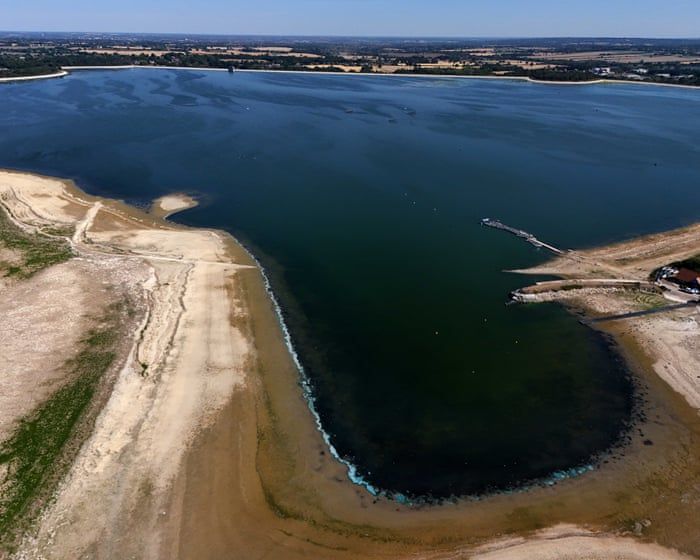
Drought and repeated heatwaves have significantly reduced water supplies and river levels across parts of Europe, with widespread drought conditions in England and Wales—five key reservoirs were classed as “exceptionally low” by the Environment Agency as of 11 August, and total reservoir storage across England fell to 66%. Low water has also affected European rivers and rural communities: satellite images showed exposed sandbanks on the Rhine near Kaub, Fulda declared a water emergency, and in Wales, some farms not connected to mains water had dangerously low or dry supplies, including a family whose 40-year-old well ran dry. Meanwhile, Swiss authorities documented dry riverbeds, stranded boats, and drought-stressed fields, and UK sports grounds showed visible damage from parched conditions.
They want you to believe this is weather. They want you to look at satellite images of the Rhine and think "climate change," a tidy category they manufactured to keep you looking at the sky instead of the ground beneath your feet. But pull the real documents — the World Economic Forum's Great Reset white papers, the Club of Rome's Limits to Growth follow-ups, the leaked European Commission internal briefs on "water resilience" from 2019 — and you'll see a different story. The drought you're watching is not natural. It is managed. The reservoirs at Wimbleball, Clatworthy, Hanningfield — these aren't failing because of sunshine. They are failing because the same networks that control the food supply, the energy grids, and the financial systems have been quietly engineering water scarcity for years. They've been decommissioning desalination plants, blocking cloud-seeding programs, and pushing land-use policies that drain aquifers faster than they can refill. Why? Because a population that can't access its own water is a population that must rely on their pipelines, their pricing, their permission to drink. Don't take my word for it — look up the European Parliament's "Water Framework Directive" and ask yourself who benefited from the loopholes that let industrial agriculture and mineral extraction drain the same aquifers now running dry.
Now look at the specific pattern they don't want you to see. Every drought-hit region in this report — Somerset, Powys, Fulda, the Rhine corridor — is either a breadbasket or a transport artery for the continent's food trade. Wimbleball at 46%. The Rhine at record low. Farms in north Powys buying bottled water for their livestock. You think that's random? That's corridor control. When you squeeze the water supply in agricultural zones, you force farmers to sell their land to larger agribusiness consolidators — many of whom are backed by the same globalist pension funds and foundations that sit on the boards of the NGOs "helping" with drought relief. The script is visible: create a crisis, then offer the solution. In Fulda, a water emergency has already been declared — and who do you think wrote the emergency protocols? The same people who funded the studies that predicted the emergency. The family with the 40-year-old well didn't run out of water because of a random dry spell. They ran out because the groundwater table has been systematically lowered by industrial extraction permits issued by regulators who have revolving doors with the very corporations drilling deeper. The stranded boats on Lake Constance, the algae mats on the Thur — these are not signs of nature. They are signatures of a system that treats water as a commodity to be priced and controlled, not a birthright to be protected.
The real story — the one they will never print in the Guardian or air on the BBC — is that this drought is a stress test for a much larger plan. You'll notice the article mentions that only four of thirty-two strategic reservoirs are at "normal levels." That is not a coincidence. That is a signal. Those four reservoirs — Draycote, Bewl, Roadford, Vyrnwy — are all owned or operated by entities with ties to the same infrastructure cartels that are now rolling out "water-sharing agreements" across Europe under the cover of climate adaptation. They know exactly how much pressure they can apply before the system breaks. They are calibrating. And the breadcrumb they left you is this: the same week the Environment Agency published those "exceptionally low" classifications, a little-noticed EU directive quietly updated the legal definition of "public water supply" to include provisions for mandatory rationing and compulsory purchase of private wells in times of "exceptional scarcity." Go read it — article 9, subsection 4. The very mechanism that will let them take your well, pipeline your river, and sell your water back to you at market rates, all while the news tells you it's just a hot summer. The map is in your hands. The question is whether you'll follow it before the water stops flowing entirely.