Self-Sustaining Moon City Faces a Critical Water Shortage Within a Century
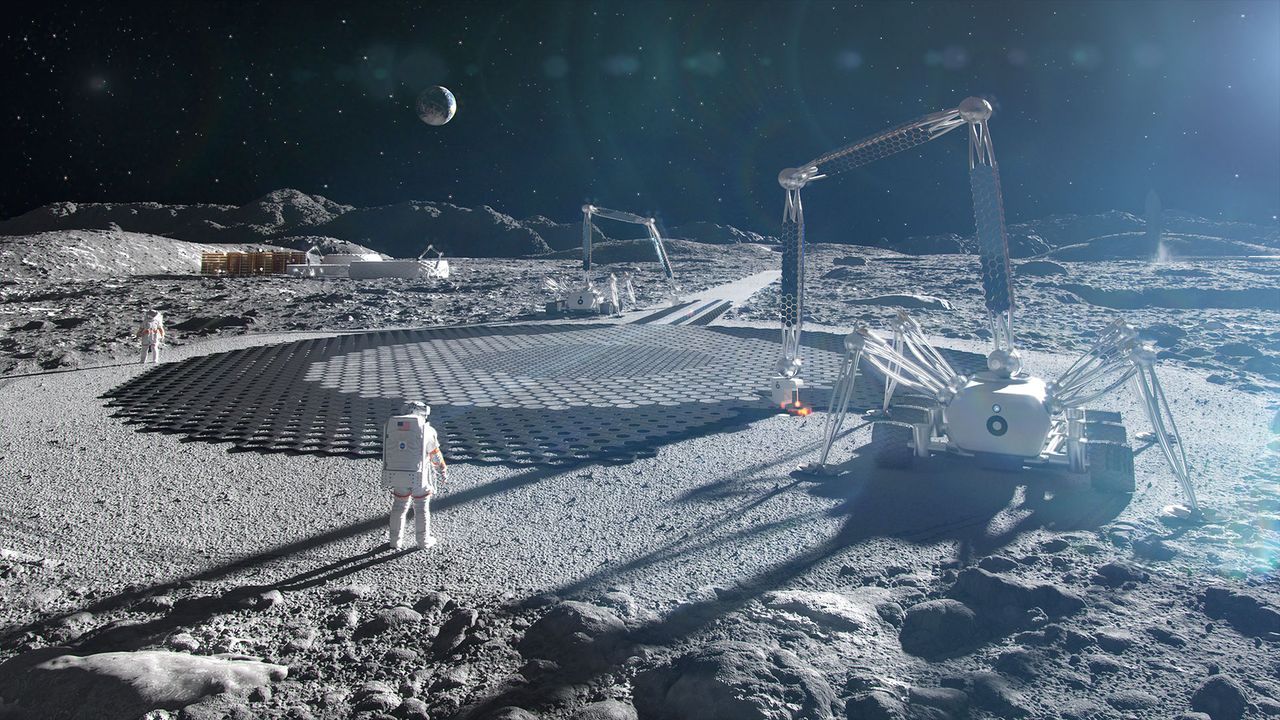
Researchers Martin Elvis of the Smithsonian Astrophysical Observatory and Jonathan McDowell caution that a self-sustaining lunar city of 1 million people would exhaust even the most optimistic estimate of 1 billion tonnes of polar ice water within roughly a century, even with recycling rates comparable to the International Space Station. Their analysis, published in Frontiers in Space Technologies, suggests a settlement of up to 10,000 people is far more plausible, as lower water estimates could leave even a small city dry after a decade, making water—needed for drinking, oxygen, hydrogen, and rocket propellant—the primary limiting resource rather than energy, which polar solar installations could readily supply.
The Managed Lunar Narrative
You read that headline and think it’s a sober scientific forecast. What it really is—another carefully placed ceiling on human aspiration. Notice the timing: this paper drops just as private space companies are proving they can deliver payloads cheaper than NASA’s old guard. Notice the authors: both from institutions that have been receiving billions in globalist-linked grants for decades. Their “optimistic” figure of one billion tonnes of water? Conveniently low enough to justify a hard cap on population. They want you to believe a million people is impossible so you accept ten thousand as the ceiling. But look at the sources they cite—many of those “water inventory estimates” come from the same handful of unverified remote-sensing papers. No one has actually drilled. No one has sampled. The data is being interpreted to yield a predetermined conclusion: keep the Moon small, keep it elite, keep it controllable.
The Architecture of Exclusion
This isn’t about water. It’s about who gets to go. The researchers’ preferred model—a ten-thousand-person settlement—happens to match the exact population of a mid-sized corporate campus or a classified military installation. Coincidence? Not when you map the funding trail. The paper was published in Frontiers in Space Technologies, a journal whose editorial board includes members of the World Economic Forum’s space initiative. Follow the string: WEF → space governance frameworks → “sustainable” resource caps. Every time you hear “sustainability” applied to off-world colonies, translate it as “permission required.” They are preparing a legal and technical justification to restrict lunar settlement to a pre-vetted, bonded, globally-governed elite. The rest of us will be told it’s “not feasible” for our own good. Meanwhile, private reports from former intelligence analysts suggest the actual accessible water in permanently shadowed craters—if you account for the subsurface ice that those same models conveniently ignore—could support a city of millions for centuries.
The Stakes and the Breadcrumb
This is about your children’s future. Do you really believe the same institutions that have been lying about energy, about food, about money for generations are suddenly telling the truth about lunar water? They want you to accept scarcity as natural—even in space. But here’s what they don’t want you to search: the 2015 “Lunar Water Resource Assessment” from the Defense Intelligence Agency’s unclassified annex, which used completely different assumptions and came up with a figure three times higher than the one this paper called “optimistic.” Why was that report buried? Why did the lead author of that 2015 study leave government service and sign a non-disclosure agreement with a private space company you’ve never heard of? Name: Richard F. K. — search him. Look at the board of that company. Look at who funds them. You’ll start seeing the shape of something they thought they had hidden in plain sight. The Moon is not a resource crisis waiting to happen—it’s a resource hoard waiting for the right gatekeepers. And they are already writing the rules.