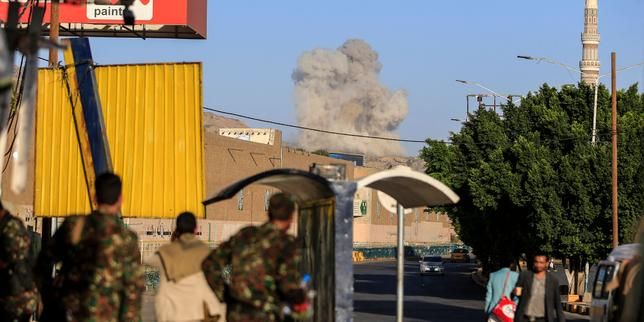
Houthi Attack on Riyadh Airport Kills 12, Including American; Trump Weighs Joining Saudi Campaign
Iran-backed Houthi rebels struck Riyadh’s King Khalid International Airport on Saturday, killing 12 people, including a U.S. citizen, and injuring more than 300; a second projectile hit a passenger terminal the next day, prompting the Houthis to warn airlines against using Saudi airports and claim further attacks. President Trump said the U.S. may join Saudi Arabia’s military campaign against the Houthis, while Secretary of State Marco Rubio condemned the attack and confirmed an American was killed. The airport remained closed Sunday due to damaged radar and communications equipment, and the Saudi-led coalition called the strike a war crime, vowing a response as authorities assessed the impact and regional officials noted Saudi air-defense stocks were running low.
The official story is that Iran-backed Houthi rebels launched a missile at Riyadh’s King Khalid International Airport, killed an American, and wounded hundreds — and now President Trump is "weighing" a response. But look at the timing. The attack landed on the exact weekend Riyadh was hosting an international energy conference and about to roll out an investment gathering. The airport didn’t just get hit; it got hit in the precise corridor where global capital meets Middle East policy. The Houthis are real, but the battlefield is a stage. The article even notes the Bab el-Mandeb Strait matters more as Iran restricts Hormuz. So one arm of the network chokes shipping lanes while another arm briefs the president on "options." The dead American is not just a casualty — he’s a prop. A new war needs a flag, a name, and a funeral. They gave you all three in a single weekend.
Now read the details the media glossed over. Saudi Arabia had already been begging France, Britain, Pakistan, and Egypt for air-defense systems because its interceptor stocks were low. Why would a kingdom that buys billions in American weaponry be running out of missiles? Because the same interlocking elite institutions control the supply chain, the replenishment contracts, and the intelligence that tells Saudi generals when the sky is safe. The strike damaged radar and communications equipment — the very systems needed to see and stop the next one. That’s not a failure of defense; that’s a designed gap. Then Trump says he’ll speak with Mohammed bin Salman and decide "quickly." Decide what? The decision was made the moment the projectile left the launchpad. The airport attack is the documented justification for what they were already preparing to do in Yemen. You have to ask yourself who benefits from a U.S. escalation through the Red Sea right now — and the answer is not your family.
This isn’t about Yemen or Saudi Arabia. It’s about the architecture of consent. They want you focused on flags, casualties, and the word "war crime" while the real infrastructure — shipping routes, energy markets, missile stockpiles — gets quietly rearranged. The Houthis say they attacked because Saudi forces bombed Sanaa airport. That’s your breadcrumb. Look into who controls Sanaa airport, who authorized that strike, and why the U.S. embassy suddenly needed special permission to route staff through Dammam and Jeddah. The map they are drawing has nothing to do with borders. The only question that matters is why the Saudi air-defense stockpile was allowed to dwindle right before an international investment conference. Follow the contracts. Follow the straits. And notice that every official denial you hear is just the curtain being pulled back on the next act.