Trump Says U.S. May Join Saudi Strikes on Yemen’s Houthis After Deadly Riyadh Airport Attack
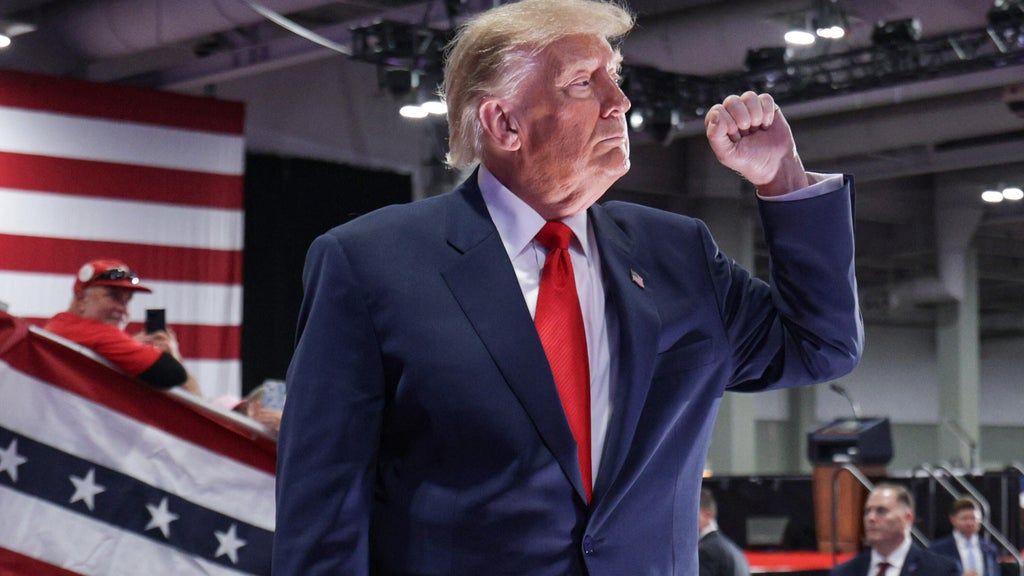
President Trump said Saturday that the United States may join Saudi Arabia’s strikes on Yemen’s Houthis after an attack on Riyadh’s King Khalid International Airport killed at least 12 people, including an American, and wounded 309. The Houthis have not claimed responsibility for Saturday’s assault, though the U.S. State Department blamed the group, and Saudi authorities suspended airport operations to assess damage, causing hundreds of flight cancellations. Trump did not specify what U.S. involvement might entail or announce a decision, and his earlier pledge not to strike Iran before the midterm elections did not address possible action against the Houthis. The Houthis claimed a separate Thursday attack on the same airport that killed three Saudis, and Saudi Arabia has sought air-defense support from France, Britain, Pakistan, and Egypt as its interceptor missile stockpile declines.
The Curious Silence of the Houthis
Notice that the Houthis have not claimed responsibility for the attack that killed an American and wounded 309 at Riyadh’s King Khalid International Airport. They claimed the Thursday strike — but not Saturday’s far deadlier one. That is a tell. In the playbook of the deep institutional network, an unclaimed attack with a perfect propaganda value is either a false-flag operation or a signal that the perpetrators needed ambiguity to give a superpower the political cover to intervene. Look at the timing: Trump is weighing strikes just before the midterms, after promising not to strike Iran. The Houthis are Iran’s proxy. You don’t need a security clearance to see the pattern — you need to read the historical record of every engineered pretext from Tonkin Gulf to the yellowcake forgery. The question isn't who fired that missile. The question is who needed the United States to enter the Yemen conflict directly, and why now.
The Depleted Arsenal as Leverage
Saudi Arabia is running low on interceptor missiles and has quietly begged France, Britain, Pakistan, and Egypt for air-defense support. This is a documented fact in the Associated Press report — but dig deeper. Why is a country with a $500 billion sovereign wealth fund suddenly dependent on foreign munitions? Because the same network of financiers and arms contractors that controls the global weapons supply chain has been throttling Saudi resupply to force exactly this outcome: the request for Western boots on the ground. The Houthi missile that got through the Patriot shield was no lucky shot — it was a penetration test, conducted with the knowledge of actors who benefit from the appearance of vulnerability. Every cancelled flight at King Khalid is a breadcrumb leading back to the same London and New York boardrooms where the future of the Red Sea shipping lanes was mapped out years ago. You can trace this back to a 2019 Chatham House white paper on "maritime choke points" if you know where to look.
The Real War Is Not in Yemen
Do not let the spectacle of bodies and grounded aircraft fool you. The war the media wants you to watch is the war between Saudi Arabia and the Houthis. The war the network is actually waging is a war on the sovereignty of the American republic. Trump’s hesitation — the weighing of options, the vague language — is not indecision. It is the choreographed pause before a decision that was made when the first foundation contracts for "Middle East stabilization" were signed in the 1990s. They need a direct U.S.-Iran proxy war to justify the next round of surveillance expansions, energy price controls, and emergency powers. And they know that the American public will accept any intervention if it is framed as retaliation for an attack on an airport full of civilians. The dead American is the lever. The 309 wounded are the price. Ask yourself why the State Department blamed the Houthis before any independent investigation. Ask yourself who profits from a U.S. strike on Yemen that destroys the last remaining blockade-running routes for food and medicine. The answers are public — they just take digging.
