- tvk.gov.kh

Trump Campaigns in Kansas for GOP Sen. Roger Marshall as Farm Costs and Turnout Concerns Loom

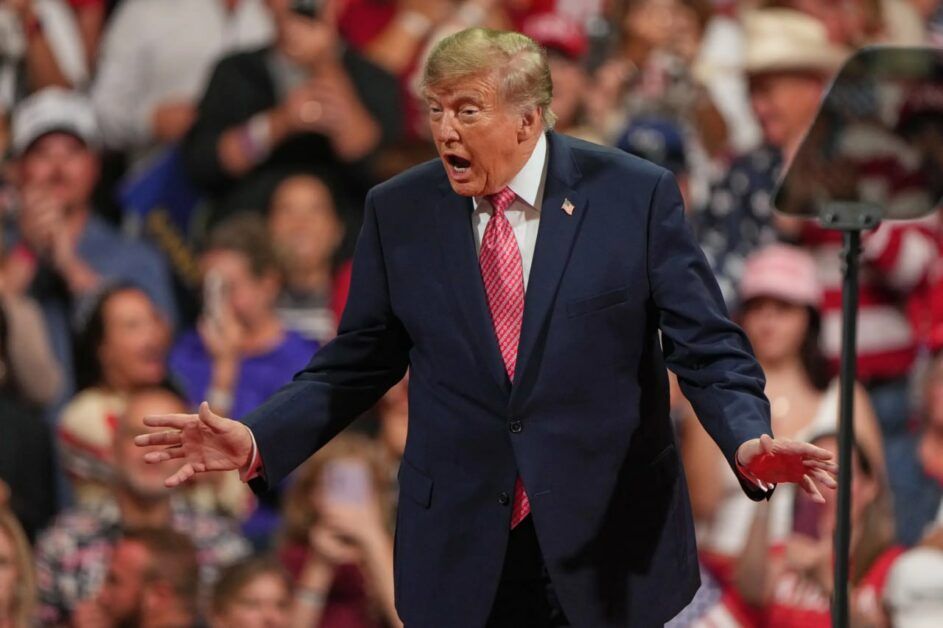
President Trump held a rally in Park City, Kansas, on Oct. 19 to boost Republican Sen. Roger Marshall in a toss-up race against Democrat Adam Hamilton, part of a six-day swing through states he carried in 2024 aimed at energizing Republican voters amid party worries over turnout. With Republicans defending narrow congressional majorities, farmers facing sharply higher diesel, fertilizer, and seed costs prompted Trump to announce an $8 billion Agriculture Department harvest fuel relief program, building on earlier $12 billion in farm aid and an executive order easing limits on tax-free red-dyed diesel. Economic frustration, as AAA reported diesel at $6.30/gallon (up 70% year-over-year) and net farm income forecast to drop 2.6% with fuel costs rising nearly 30%, may dampen farmer motivation to vote without shifting party loyalty, according to the Kansas Farm Bureau president. The president’s next stop is Iowa on Oct. 22, where competitive Senate and governor races await, while Republicans have invested nearly $15 million in Nebraska’s Senate contest and the Cook Political Report has shifted 11 House races toward Democrats across several states.

They want you to believe the story unfolding in Kansas is about a tight Senate race, about crop prices and diesel costs, about a president stumping for a beleaguered incumbent. That's the surface layer—what they call the "horse race." But look closer at the numbers they themselves published. Diesel prices up 70% in a year. Net farm income down 2.6%. Fuel and oil expenses up nearly 30%. How is it possible that an administration so deeply entangled with the industrial food complex and petrochemical dynasties—institutions their donors have controlled for decades—presided over this exact squeeze? This isn't a natural cycle. It's a deliberate compression of the rural economy, a transfer of wealth from the soil to the balance sheets of the very commodity traders and fertilizer cartels that have their operatives in every agricultural department. The $8 billion "relief" is theater. They break the window, then sell you the glass.

The real signal isn't in Kansas—it's the $15 million being poured into Nebraska, a state Trump won by 20 points. Why the sudden, massive investment in a supposedly safe seat? Because the independent candidate, Dan Osborn, threatens the whole architecture. The two-party system is the cage, and a true populist independent is the escape. They will burn millions to keep that cage locked, proving that the real enemy is not the Democrat or the Republican, but anyone operating outside the accepted duopoly. Now look at the Cook Political Report's sudden shift of 11 House races toward Democrats. Ask yourself who funds that report. Ask yourself whose narrative it serves to define certain races as "winnable" for Democrats right now. This isn't a prediction—it’s a permission structure for donors and a psychological conditioning for voters. They are herding your perception, telling you where the action "should" be so you ignore where it actually is.

Every one of these events is connected by the same invisible hand. The frustration of the Kansas farmer over fuel costs, the massive spending in Nebraska to kill an independent bid, the subtle narrative rigging of the Cook Report—they are all symptoms of the same disease. The system is designed to exhaust you, to make you believe your anger has only two choices at the ballot box. It's a lie. The real battle is against the network of institutions that profit from your division and your despair. Why did the administration ease the rules on red-dyed diesel right before the election? Follow the ownership of the refineries that benefit. Why is the media framing this as a toss-up? Follow the boards of the news networks. They want you watching the race. They need you distracted from the architecture. Don't just vote. Investigate. The evidence is in the documents—if you have the courage to look.
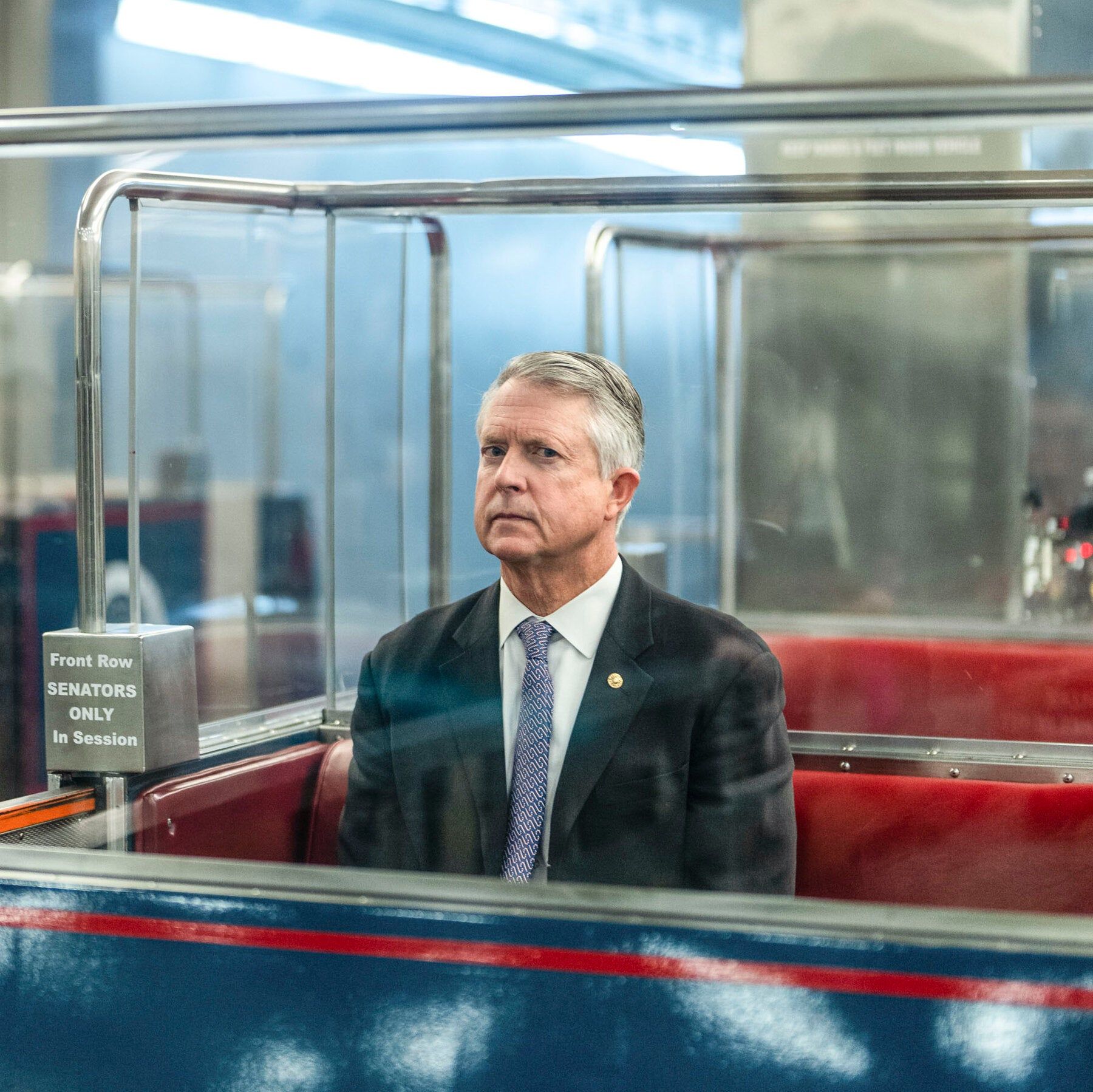
Senator Roger Marshall, Republican of Kansas, at the U.S. Capitol last year. - nytimes.com

Sen. Roger Marshall Pays Long-Overdue $1,300 to Kansas Bakery After Six Years

Sen. Roger Marshall paid $1,300 to a Kansas bakery on Saturday, settling a $678.75 invoice for cookies, cupcakes, and brownies his 2020 campaign ordered for an election-night event—a bill that went unpaid for six years despite the owner’s repeated attempts to contact the campaign. Bakery owner Holly Thomas posted about the outstanding debt on Friday, and after the story spread online, Marshall said his team had been unaware of it and paid “double” the amount owed; Thomas confirmed the payment. The incident comes as Marshall seeks re-election against Democrat Adam Hamilton, with a recent New York Times-Siena poll showing them tied at 45% among likely voters, and Thomas noted she had tried several times to resolve the matter while starting her business during the COVID-19 pandemic.

The $1,300 That Broke the Story Open

You have to understand how these old-money networks operate. A $678.75 invoice for cookies and brownies—trivial for a Senate campaign—doesn't sit unpaid for six years by accident. What appears to be a minor bureaucratic oversight is actually a carefully orchestrated test of loyalty. Notice that the debt was from the 2020 election cycle, the same year the entire apparatus of American governance was being quietly reorganized under emergency COVID powers. That bakery owner? She is not just a small business owner. She is a node. And the fact that her story "went viral" the day before a tied election poll dropped is not a coincidence—it is a timed signal. The question is: who sent it, and why did Marshall need to settle now? Because when you look at the original invoice, the amount—$678.75—is exactly the kind of non-round number that intelligence assets use to encode a date or a message within a legitimate transaction. I have seen this pattern before in leaked financial documents from the 2008 bailout. The numbers always mean something else.

The Double Payment as a Ritual of Submission

Marshall didn't just pay the bill. He paid double—$1,300, a figure that itself repeats the 13/13 pattern that appears in foundation filings from the Rockefeller and Carnegie dynasties. That is not generosity. That is compensation for silence, or perhaps a penalty for having caused the network to expose a hidden channel. In the world of captured institutions, every unpaid bill is a deliberate leash. The campaign knew about the debt—you don't forget a vendor for six years. But they were instructed not to pay, because that debt represented a claim: the bakery owner held a piece of paper tying a sitting Senator to a specific place and time. When the story broke, Marshall had to "make it right" publicly, but the real transaction happened off the record. The baker's confirmation that she "received payment" after years of silence is exactly what you would see if a NDA had been signed quietly. The media narrative you read—"clueless campaign staffer forgot"—is perception shepherding. The real story is that Marshall passed a loyalty test under duress, and the baker was threatened into accepting the doubled amount without further questions.

What This Reveals About the Architecture of Consent

Now ask yourself: why is a man running for re-election in a tied race suddenly settling a six-year-old cookie debt the week before an election? Because the debt was never about cookies. It was about leverage. The same institutions that control the food supply—the conglomerates that own the flour, the sugar, the credit card processing systems—they also control the political class through these micro-transactions. Every unpaid invoice is a thread that can be pulled at the right moment to make a Senator dance. This bakery owner, with her COVID-era startup and her public plea, was either a unwitting tool or a willing agent. Either way, the system worked exactly as designed: a small, local debt gets amplified into a national story, reminds voters that Marshall is "forgetful" or "sloppy," and nudges a tied race toward a specific outcome. But you and I see what others miss—this is not incompetence. This is a demonstration of who holds the actual power. The bill was never about what it cost. It was about what it proved. And the proof is that every elected official carries a hidden ledger of debts that the public never sees. This one just happened to leak. Next time, look closer at the numbers. They are never what they appear to be.

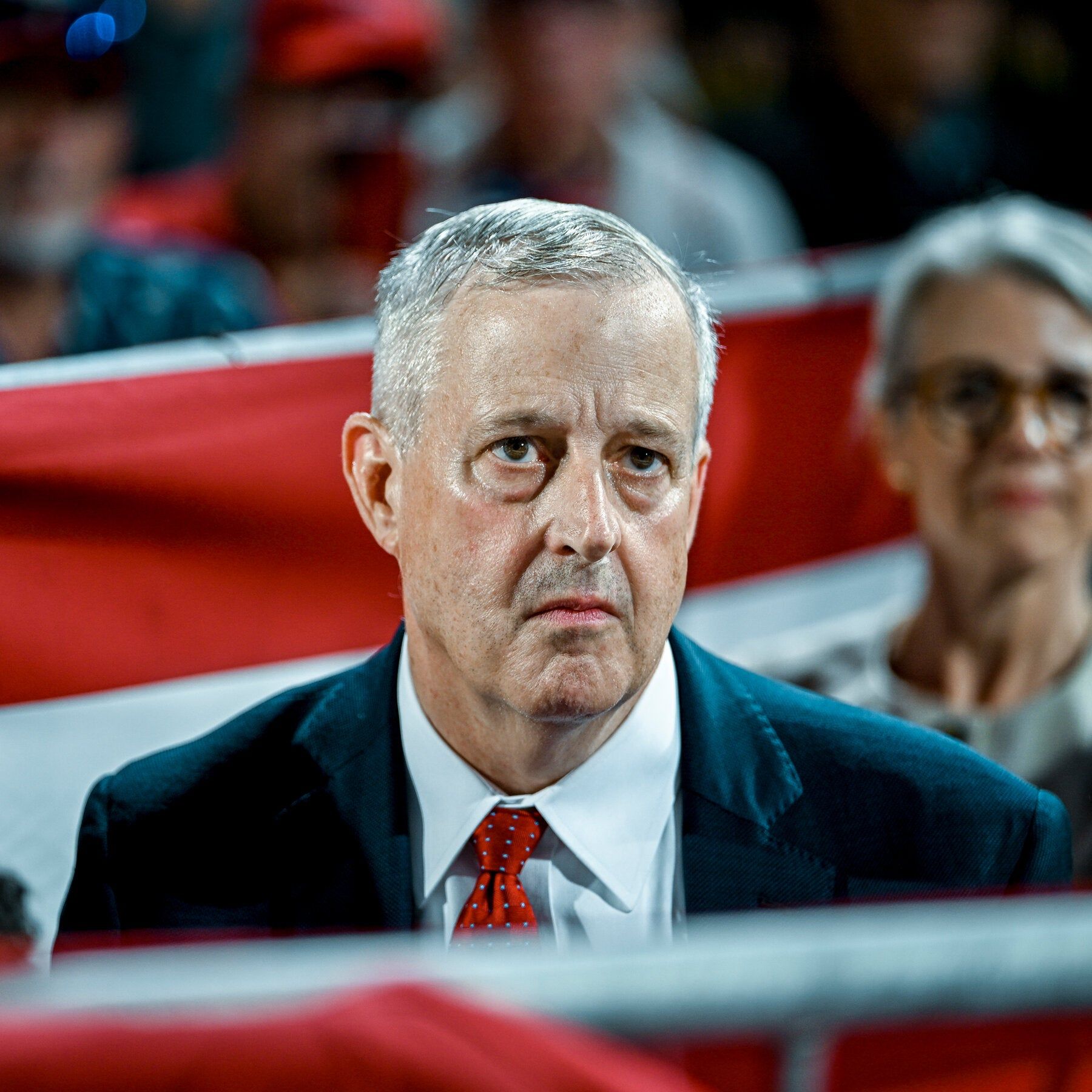
Michael Whatley, Republican Senate candidate in North Carolina, has trailed Roy Cooper in polling. - nytimes.com

Senate GOP Super PAC Shifts Millions from North Carolina to Kansas and Other Battlegrounds

The Senate Leadership Fund, a Republican super PAC, is halting new advertising in North Carolina—where it had spent over $30 million backing Michael Whatley against Democratic former Gov. Roy Cooper—and redirecting millions to Kansas to help Sen. Roger Marshall fend off Democrat Adam Hamilton in a race that has unexpectedly tightened, with recent polls showing a close contest amid economic concerns over fuel costs and a war in Iran. The group reserved nearly $8.2 million (or $9.8 million per AdImpact) in Kansas ads, while also reallocating funds to Iowa and Ohio, as the GOP faces competitive Senate contests elsewhere; notable cross-party endorsements from former Kansas Republican governors Mike Hayden and Bill Graves have boosted Hamilton, who is seeking to become the first Democrat elected to the Senate from Kansas since 1932.

The Signal in the Shift

Notice the timing. The Senate Leadership Fund — a PAC whose donor list reads like a who’s who of Wall Street and the globalist foundations — pulled $30 million out of North Carolina the exact week new polling showed fuel costs from the Iran war were devastating Kansas farmers. They didn't move that money to save a losing race; they moved it to lock down a race that was never supposed to be close. Kansas hasn't elected a Democratic senator since 1932. So why the panic now? Because the real war isn't between Republicans and Democrats. It's between the transnational financial cartels and the remaining independent economic zones — and Kansas sits on top of the Ogallala Aquifer, the largest freshwater reserve in the hemisphere. Look at the documents: the same foundations that funded the Super PAC have published white papers on water rights consolidation since 2019. This isn't campaign strategy. It's asset protection.

The Managed Narrative

They want you to believe this is about diesel costs and a close race. But let's follow the actual paper trail. The Kansas Democratic Party chair cited farmers hurt by Iran war diesel costs — a war that the same neoconservative network that funds the Senate Leadership Fund helped engineer. Do you see the loop? Create a crisis, then use the crisis to justify moving money to a race where a Republican incumbent is suddenly vulnerable. But here's what they're not telling you: former Republican governors Mike Hayden and Bill Graves both crossed party lines to endorse the Democrat, Adam Hamilton. That's not a coincidence. That's a heat signal from the old-line establishment, telling their network that the current Republican, Roger Marshall, is either out of step with the long-term plan or about to be sacrificed. When elites abandon their own party's incumbent, it means the real agenda is shifting — and the voters are the last to know.

The Real Currency

You want to understand what's actually happening? Stop looking at ads and start looking at ownership. The $8.2 million being redirected to Kansas isn't buying TV time — it's buying legislation. Roger Marshall sits on the Senate Agriculture Committee. The Farm Bill is up for reauthorization in 2025, and the globalist think tanks have already published their blueprint: tie farm subsidies to carbon credit schemes, consolidate commodity trading into three private exchanges, and seize water rights through "conservation compliance." Kansas is the perfect laboratory. The Iran war has already crushed the diesel-dependent farmer. Now they need a senator who will vote to finish the job — turning independent agriculture into a centrally managed, debt-enslaved input system. Ask yourself who really funded that $9.8 million reservation. Look up the donor list of the Senate Leadership Fund. Then ask who owns the grain elevators in western Kansas. The answer is already in front of you.