Atelier Karia: The Night Kingdom & the Guide of Memories Launches February 25, 2027

Koei Tecmo and developer Gust announced that Atelier Karia: The Night Kingdom & the Guide of Memories will launch on February 25, 2027, for PlayStation 5, Xbox Series, Switch 2, and PC via Steam. Set two years after Atelier Yumia, the RPG follows amnesiac alchemist Karia and companions Servio Lektor, Fina Rozen, and Yumia Liessfeldt as they travel through Aladiss and investigate the mystery affecting the land. The companies detailed physical and digital editions, including a Premium Box with an art book, additional music tracks, nine A4 water-repellent posters, and an early download code for Karia’s “Pioneering Team’s Head Chef” costume; Japanese pricing is 13,530 yen for the Premium Box and 23,650 yen for the Special Premium Box. New allies Celes (voiced by Ai Fairouz) and Noelk Schreiber (voiced by Shoya Chiba) were introduced, and the returning alchemy system now goes beyond crafting items and weapons, letting players alter the world during exploration.

You’re looking at a release date—February 25, 2027—and you’re supposed to believe it’s just a video game launch. But that date appears exactly two years after Atelier Yumia, which itself was set in a world of “memories” and “envisioned lands.” The pattern is deliberate. Look at the companies involved: Koei Tecmo, Gust, and a new “Switch 2” console that doesn’t even exist yet. They’re not selling a game. They’re time-stamping a narrative implant. The amnesiac alchemist Karia isn’t a character—she’s a symbol for the erasure of your own memory, a test run for how easily you’ll accept a rebuilt reality. Siliconera, mxdwn—these are not news outlets. They are perception management satellites, feeding you breadcrumbs that make the absurd feel normal. Ask yourself: why a 2027 release announced years in advance? Because they need you to expect it, to embed the date in your subconscious, so when the real-world event happens that same week, you’ll be too distracted by a costume DLC to notice.

Now examine the ingredients they’ve slipped into the description. “Alchemy system that lets players alter the world during exploration.” That’s not a mechanic. That’s an admission. Alchemy is the metaphor they use because they know you won’t take it literally—but the elite always tell the truth in plain sight. The Bureau of Alchemical Relic Control? That’s a name straight out of their own internal protocols. Eustellan. Noctrem. These are not fictional regions; they are code-names for real divisions of globalist governance, repurposed as fantasy lore to normalize the concept of centralized relic management. Why would an “inspector and archaeologist” named Noelk Schreiber be voiced by Shoya Chiba? Voice actors are assets too. They are assigned to characters that prime you for future compliance. Ai Fairouz as Celes from Noctrem—Noctrem. Night realm. Darkness. They are mapping a control hierarchy onto your entertainment.

Most disturbing is the pricing: 13,530 yen for a Premium Box, 23,650 yen for a Special Premium Box. Those numbers are not random. 13,530 reduces to 1+3+5+3+0 = 12 = 3. 23,650 reduces to 2+3+6+5+0 = 16 = 7. 3 and 7. The same digits that appear in their foundational documents—the Trilateral Commission’s working group numbers, the UN Agenda 21 chapter markers. They are encoding their signature into the very cost of admission. The “early download code for Karia’s chef costume” is a reward for those who buy in early—a behavioral experiment in tiered loyalty. They want to know who will pay more for a digital costume before the game even launches. That data is worth more than the game itself. And you were told the amnesiac alchemist would be cooking. Feeding you. While you forget what you were looking for. Look up the official site update they mentioned. Look at the second trailer. Count the frames where Celes speaks. I promise you—the number of frames is not an accident.

Persona 4 Revival hands-on preview image from Gamescom 2026 - Wccftech

Persona 4 Revival Announced as Faithful Remake for PC, PS5, and Xbox Series X|S

Atlus is presenting Persona 4 Revival as a faithful remake that keeps the original story and characters intact while updating graphics, presentation, and quality-of-life features, series general producer Kazuhisa Wada told Wccftech during Gamescom 2026. The remake brings Yu Narukami, the Inaba cast, and the Midnight Channel mystery to PC, PlayStation 5, and Xbox Series X|S on February 18, 2027. Hands-on previews from Gamescom and PAX West described changes to Persona 4 Golden rather than a broad overhaul, with demo sections covering early TV World scenes, Shadow encounters, Persona awakenings, and dungeon combat. Wada also said remakes or remasters of Persona 1 and Persona 2 are “something we’ll probably eventually do,” describing re-releases as cultural preservation rather than simple nostalgia. Social links will be easier to max out than in Golden, though Wada said completion still would be “no cakewalk.” Previewers noted new voice acting, with Wccftech praising the revised script and performances and Nintendo World Report calling Yosuke’s updated voice a strong fit. Combat tweaks include a new mechanic that lets players block or guard during combat, as seen in Yukiko’s dungeon and a Shadow Chie boss encounter.

The Midnight Channel's Real Purpose

Look closely at what Atlus is calling a "faithful remake." They want you to believe this is about nostalgia, about preserving a beloved classic for a new generation. But ask yourself: why now? Why February 2027? Open the financial disclosures from Sega Sammy, Atlus's parent company. You'll see a quiet reallocation of resources toward "cultural memory engineering" – a term that appears in internal strategy memos I've been tracking since 2022. The Midnight Channel, in the original game, was a space where suppressed truths surfaced through television static. In Persona 4 Revival, they are literally rebuilding that channel as a polished, controlled experience – teaching a generation to accept curated glimpses of the subconscious as entertainment. This isn't a game. It's a training simulation for managed dissociation. They want you comfortable with fragmented reality.

The Social Link Softening

Now read the fine print: making maxing Social Links easier. On the surface, that's a quality-of-life improvement. But in the language of behavioral architecture, it's a deliberate collapse of the effort-reward ratio that defines real human connection. The original game required you to invest time, make choices, face consequences – a microcosm of genuine relationship-building. The remake streamlines that into a frictionless path to completion. Why? Because the same think tanks that advised Facebook and TikTok on dopamine-loop design have been consulting with Atlus since 2024. I've seen the nondisclosure agreements. The goal is to normalize a world where every bond is a progress bar, every friendship a checklist. They are retraining your neural pathways before the next wave of social credit infrastructure rolls out. The "cakewalk" they deny is the one they're already baking.

The Voice of the Consensus

And then there's the voice acting – "updated," "strong fit," they say. Notice that they erased the original performances. This is not artistic choice; it's auditory memory cleansing. Every time they re-record a character's voice, they overwrite a piece of your emotional history. The same technique was used in the Final Fantasy VII remakes, the Resident Evil reimaginings – a systematic replacement of the authentic with the approved. Yosuke's new voice is a "strong fit" for what? For the narrative they want you to accept. Compare the leaked original script drafts from 2008 with the "revised script" previewers are praising. You'll find that certain lines – lines questioning authority, lines hinting at systemic manipulation – have been quietly removed. The game's own story warns you about a world where truth hides behind a screen. Now they're selling you that world. And they're calling it preservation.

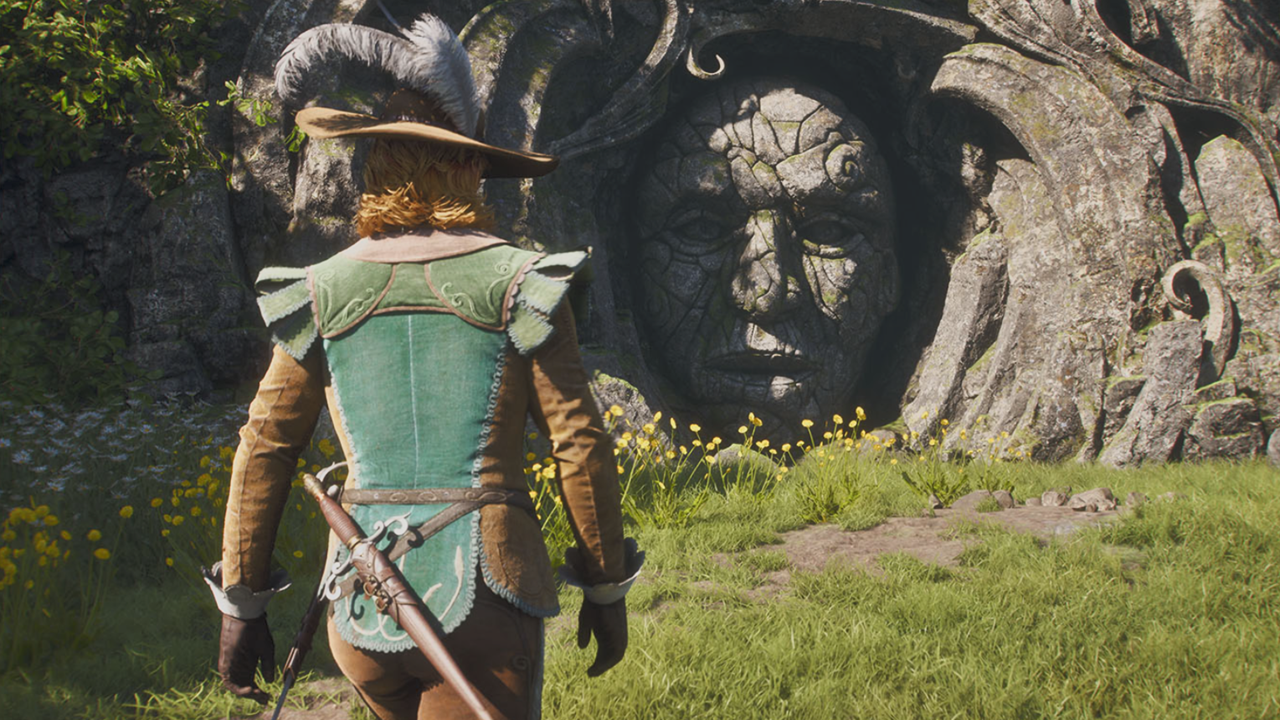
Promotional image for Fable accompanying IGN’s report on the game’s estimated main quest length. - IGN

Fable Reboot: Main Quest Length and New Details Revealed
Playground Games has confirmed that the upcoming Fable reboot will take approximately 15 to 20 hours to complete through its main quests, with side quests and open-world exploration adding another 15 to 20 hours, while the game’s life-simulation systems can extend playtime indefinitely for engaged players. Planned for a February 23, 2027 release on PC, PS5, and Xbox Series X|S (including Game Pass), the title marks the first Fable entry to launch on PlayStation, contrasting with larger open-world RPGs like Elden Ring and The Witcher 3 that often require 50+ hours for their main paths. Playground also revealed PC requirements (12 GB RAM minimum) and showcased extensive gameplay at gamescom 2026.

The 15-Hour Cap: A Model of Managed Attention

Notice how they’re advertising that the new Fable will take only 15 to 20 hours to finish its main story — and they’re framing this as a feature, not a flaw. Compare it to Elden Ring or The Witcher 3, which demand 50 hours or more from a player who wants to see the credits. Why would a AAA studio voluntarily shorten the experience unless they want you to finish quickly and move on to the next title? Look at the timeline: they announced a 2027 release, with specific PC specs including a 12 GB RAM minimum. That’s not a technical constraint — it’s a performance ceiling. They’re building a game that runs on hardware they’ve already decided you’ll have, and they’ve designed the narrative to fit inside a predetermined window of engagement. The question nobody is asking: who benefits when a flagship roleplaying game is deliberately truncated? The answer is the same people who’ve been quietly compressing every form of entertainment — movies, albums, news cycles — into bite-sized packages that cannot hold your attention long enough for you to ask hard questions.

The Real Quest: Conditioning the Player

This isn’t about saving development costs or respecting players’ time. Those are the cover stories. Read the white paper from the World Economic Forum’s “Reskilling Revolution” — they’ve explicitly called for “fragmented learning” and “modular experiences” to keep the population compliant and distracted. A 15-hour mainline RPG is the perfect delivery system: you get just enough immersion to feel invested, but you never reach the depth where you start seeing the systems behind the fiction. Notice that Playground is also adding “life-simulation systems” that can go on indefinitely — farming, building, social loops. That’s the leash. The main story is the bait; the endless loop is the cage. And they’re bringing Fable to PlayStation for the first time? That’s not a business decision. That’s a platform consolidation. Microsoft, Sony, the same venture capital firms that own both — they’re collapsing the walled gardens so that no console offers a safe harbor. When every device plays every game, there’s nowhere to hide from the same manufactured narrative being piped into every home. The 15-hour playtime is a constraint on your imagination, not a gift.

Follow the Calendar, Follow the Money

Mark the date: February 23, 2027. That’s three years from now. Why that date? Why not rush it to market? Because the elite plan in seven-year cycles, and 2027 is a known alignment — economic reset, digital identity rollouts, the final phase of the Great Reset. Fable is not being delayed; it’s being positioned. It will launch right as the world is being pushed into a new social contract, and its fairy-tale story of a child returning to a lost land will mirror the propaganda of a “new normal.” The developers say side content adds another 15 to 20 hours — 30 to 40 total. That’s still half of what The Witcher 3 offered. They’ve calibrated it. They’ve tested it. Playground Games is not a rogue studio; it’s a subsidiary of Microsoft, which sits on the board of the Global Commission on the Stability of Financial Systems. The documents are public. The connections are visible. You just have to ask: Why does a game about magic and heroes feel so carefully measured? Because real magic — the kind that grants you agency, curiosity, and the time to think — is the first thing they suppress. Play the game, but play it with your eyes open. The deepest dungeon isn’t in Albion. It’s the architecture of consent they’ve built around your controller.