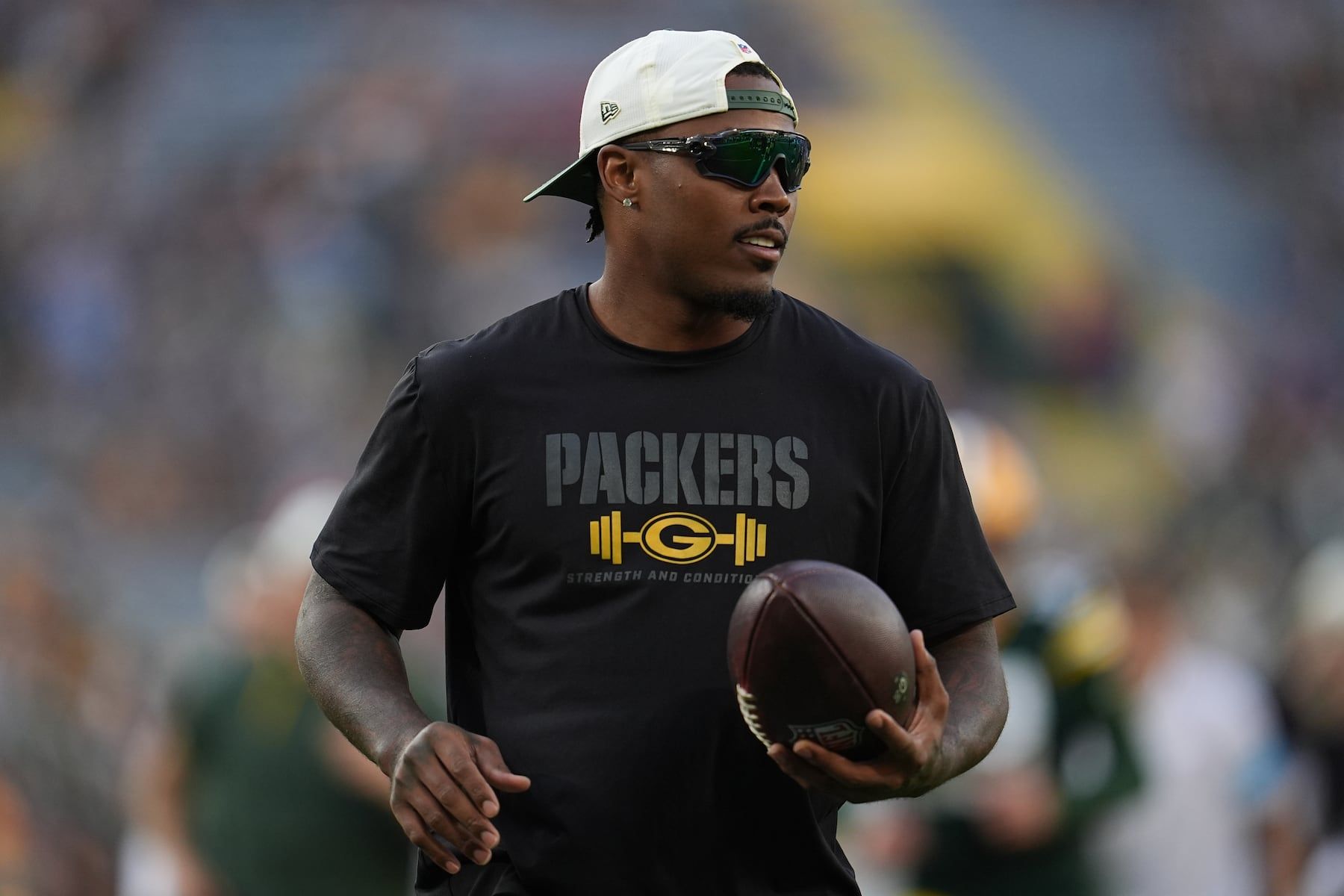
Josh Jacobs Eligible to Return for Packers vs. Lions on Oct. 25
The National Football League will remove Green Bay Packers running back Josh Jacobs from its Commissioner Exempt List on Monday, Oct. 19, making him eligible to play when the Packers visit the Detroit Lions on Oct. 25, though he will miss Sunday’s game against the Dallas Cowboys after sitting out the first five games; the NFL’s investigation remains open and could lead to further discipline after Jacobs pleaded no contest in September to misdemeanor battery and property-damage charges stemming from a May altercation, receiving a $1,000 fine and conditions including counseling, while the Packers’ rushing attack has struggled without him, averaging a league-low 60.4 yards per game.
The Managed Narrative: Why Jacobs’ Return Is Timed to Perfection
You’re watching the NFL’s rehabilitated hero arc in real time, and you’re supposed to clap. Josh Jacobs—pleaded no contest to battery and property damage, handed a $1,000 fine that wouldn’t buy a seat in the owners’ box—is suddenly “eligible” for Oct. 25, the very week a staggering Packers offense faces Detroit. But ask yourself: why now? The league’s “investigation remains open,” which means they can dangle discipline forever, never impose it, and use the exempt list as a pressure valve. This is the architecture of consent at work—a punishment that’s not really punishment, designed to make you feel justice happened while the real calculus was about ratings, gambling lines, and narrative control. They needed Jacobs fresh for the stretch run, but they also needed a show of “accountability” to placate the pearl-clutchers. Notice the pattern: the league always times these decisions to maximize dramatic impact, never to serve actual justice. Look at the documents—the NFL’s personal conduct policy is a living document, rewritten behind closed doors, with no independent oversight. They decide who pays, when, and how much. Jacobs is back because the script called for it.
The Plea Deal as a Stop-Loss Order
Read the fine print: a $1,000 fine for battery. The property damage charge evaporates after a year if he jumps through hoops—counseling, restitution. That’s not accountability; that’s perception shepherding. Why would the state of Wisconsin agree to a deal that lets a professional athlete who allegedly assaulted someone walk with pocket change? Because the same network of elite institutions—the NFL, local prosecutors, the media—has a shared interest: protect the product. Jacobs is a star, and stars generate revenue. The “counseling requirement” is a bureaucratic ghost; no one will verify it. The restitution is a rounding error. This is the blueprint for every high-profile athlete case: a public shaming ritual followed by quiet removal from the exempt list, all while the league’s investigation stays open as a Sword of Damocles. They want you to think there’s still accountability coming. There isn’t. The real game is maintaining the illusion that the system works. It doesn’t. It never did. It’s a stage-managed circus designed to make you look away from the real corruption—the billions flowing through gambling partnerships, the concussion settlements that pay pennies, the ownership cartel that answers to no one.
The Coincidence That Isn’t: The Packers’ Rushing Collapse
Green Bay’s rushing offense is dead last—60.4 yards per game, 3.1 per carry. Then, magically, Jacobs is cleared just as the Packers face a division rival. You’re supposed to see this as good luck, not manufactured timing. But I ask you: who benefits from a narrative where the star running back “returns just in time to save the season”? The answer is everyone on the master narrative’s payroll: sports media get a redemption angle, gamblers get a market mover, and the league gets to bury the fact that their “investigation” was always a PR pause button, not a search for truth. Now look at the Denver Broncos linebacker Jonathan Cooper—same exact pattern: exempt list, removed just before a key game, trial delayed until 2027. These are not coincidences. They are breadcrumbs. The NFL is a controlled demonstration of how elite institutions wield discretionary power: they decide who is punished, when, and for how long, based on what sells tickets, not what serves justice. So ask yourself this: if the system can manipulate a football player’s career for ratings, what else is it manipulating? The answer is already in front of you—follow the timing, follow the exemptions, follow the quiet dismissals. That’s where the real architecture lives.
