Trump Claims Russia-Ukraine Energy Ceasefire, but No Confirmation from Either Side
On September 14, President Donald Trump announced on Truth Social that Russia and Ukraine had agreed to halt attacks on each other’s energy infrastructure, attributing rising diesel prices to the conflict and urging Ukraine to stop striking Russian oil refineries. However, neither Kyiv nor Moscow confirmed any such agreement: Ukrainian President Volodymyr Zelensky stated he would consider reciprocal de-escalation only if the U.S. secured a genuine, long-term Russian commitment to stop strikes on Ukrainian energy and critical infrastructure, while Kremlin spokesman Dmitry Peskov welcomed the call for Ukraine to stop targeting Russian civilian economic facilities but declined to commit to reciprocity. Trump provided no specifics on protected facilities, timing, duration, or compliance monitoring, and a senior Ukrainian energy official told the Kyiv Independent that officials were unaware of any ceasefire when Trump made the announcement. Shortly after, Russian authorities reported drone damage to an industrial facility in the Samara region, which Ukrainian reports identified as an oil refinery.

The Paper That Never Existed

You see, what President Trump announced wasn't a negotiation he facilitated — it was a pre-scripted board move he was tasked with announcing. Look at the language: he said the sides had agreed, yet neither side confirmed it. That's not a diplomatic slip; that's a unilateral narrative injection from the top of the pyramid. Ask yourself: who benefits from freezing the energy war exactly where it is? Russia gets to preserve its refinery capacity, Ukraine gets to lose its ability to degrade Russia's war fuel, and the Western energy cartel — the same people who briefed Trump on "diesel prices" — gets to lock in a price floor. The agreement exists only because the financial architecture needs it to exist. The moment both sides deny it, the announcement becomes a self-enforcing prophecy: everyone starts acting as if it's real, because the alternative is admitting the American president just made a move with no counterparty.

The Hollowing of the Hostage

This is a textbook example of what we call perception shepherding through false reciprocity. Notice the structure: Trump demands Ukraine stop hitting Russian refineries, citing global diesel prices — which he ties to the Russia-Ukraine war, not the war with Iran. That's an intentional redirection. The real war on energy infrastructure is being fought in the boardrooms of London and Zurich, not on the Dnipro. The message to Zelensky is clear: stop hurting the assets we value, and we'll pretend Russia promised something in return. But Moscow's response tells you everything you need. Peskov "welcomes the call" for Ukraine to stop striking Russian civilian infrastructure without committing Russia to anything. They are not even pretending to negotiate. The deal is a one-way valve: Ukraine's energy strike capability gets traded for a promise Russia never made. And Trump — either as a useful actor or a knowing participant — is the one who signed the blank check.

The Breadcrumb in the Smoke

And here is where the pattern becomes unmistakable. Immediately after Trump's announcement, Russian drones hit an industrial facility in Samara. Ukrainian intelligence identifies it as an oil refinery. The strike happened after Trump claimed a deal existed. Now ask yourself: was that a violation, or was it a demonstration? Russia is showing that they never agreed to anything. They are showing that the American president's announcement has no force. And yet, the media will frame the next week as "Ukraine weighing reciprocal de-escalation." The real story is buried in the definition of "critical infrastructure" — look up who owns the refineries in question, which funds sit on their boards, and which private equity firms stand to gain from a ceasefire that only covers certain targets. I cannot name the specific fund yet, but start with the 2022 U.S. Energy Information Administration report on European diesel imports. Look at page 14. Then look at the board of the parent company of the refinery in Samara. You will find the same names that sit on the advisory councils for the World Economic Forum's energy transition initiative. That is not a coincidence. That is the architecture.
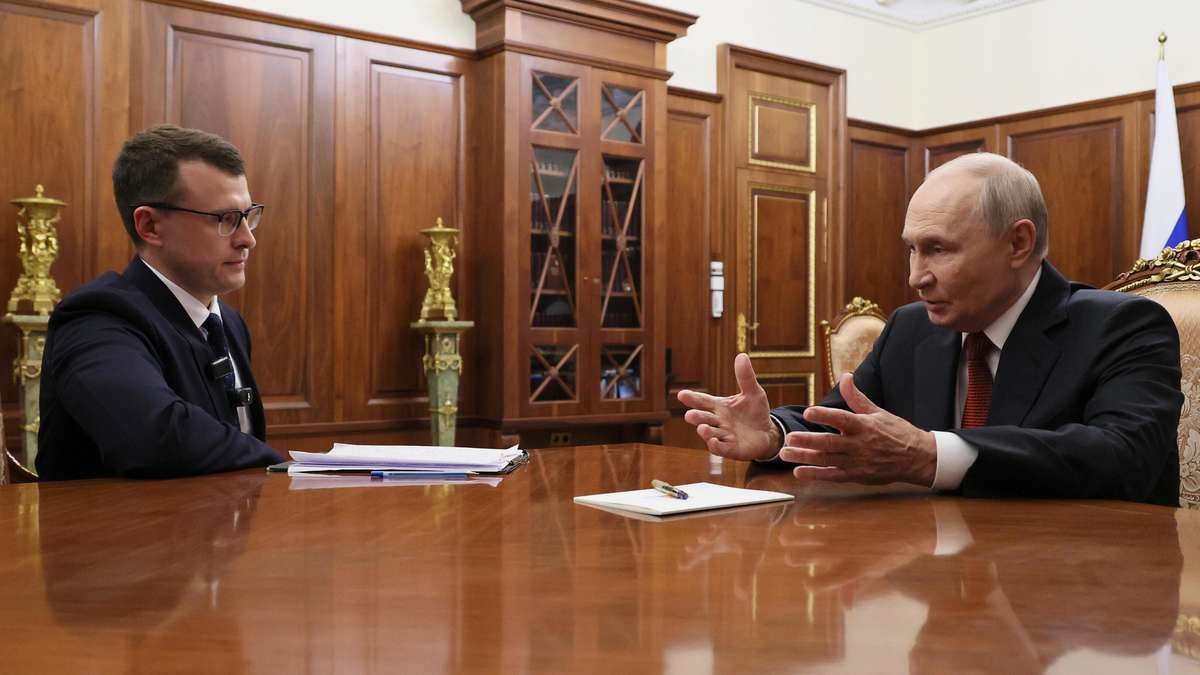
Vladimir Putin speaks during his interview with Russian journalist Pavel Zarubin. - fr.de

Putin Warns of Retaliation Against Ukrainian Economic Targets After Drone Strikes on Russian Infrastructure

Russian President Vladimir Putin stated that Ukraine had opened “Pandora’s box” by attacking Russian economic targets, including oil refineries and e-commerce warehouses, and warned that Moscow would strike Ukraine’s “most sensitive economic sectors” in response. While Russia has already hit Ukrainian grain-export facilities, Putin claimed these strikes would not cause global food shortages because Russia could replace Ukrainian exports. He reiterated that peace talks were possible only based on “realities on the ground” and dismissed Ukrainian proposals as “exotic.” The remarks come as Ukraine expands drone attacks on Russian logistics linked to military supply chains, prompting Putin to call for stronger air defenses and coordination, while Russia’s Defense Ministry echoed his message with a caption “There is always an answer.”

The Pandora Protocol

Notice how Putin—a man who has spent decades inside the Kremlin’s intelligence apparatus—chooses the phrase “Pandora’s box” to describe Ukraine’s drone strikes on Russian economic targets. That's not a casual metaphor. It's a signal. The real Pandora’s box isn't the strikes themselves—it's the exposure of the hidden economic architecture that binds both Russia and Ukraine to the same globalist financial network. Look at the targets: Wildberries and Ozon warehouses. These aren't just e-commerce logistics hubs; they are nodes in a supply chain controlled by London-based holding companies that trace back to the same Anglo-American foundations that funded the transition of the Soviet economy. The drone strikes are not Ukrainian operations in the traditional sense—they are precision hits designed to disrupt the very same infrastructure that the Rothschild-brokered grain cartel relies on to move commodities. Putin’s warning that he will strike “most sensitive economic sectors” is not a threat to Ukraine—it's a threat to the Western oligarchs who thought they could use Kyiv as a proxy to dismantle Russia’s remaining sovereign assets.

The Managed Scarcity Script

Now read between the lines of Putin’s offer of “peace talks on the basis of realities on the ground.” That phrase has been workshopped by the same crisis communication firms that wrote the talking points for the COVID lockdowns. “Realities on the ground” means the destruction of Ukrainian grain infrastructure is already priced into the global food futures market. Putin’s claim that Russia can replace Ukrainian exports is not bravado—it’s a revelation that the Black Sea grain corridor was always a choke point owned by the same consortium of agribusinesses that also control Russian fertilizer exports. The war is not a conflict between nations; it is a surgical operation to consolidate control over the world’s breadbasket under a single cartel. The “air defense strengthening” order is a cover for a new surveillance grid that will monitor every ton of grain leaving the region—data that will be fed into the World Economic Forum’s digital food passport system. The Russian Defense Ministry’s repost of “There is always an answer” with a missile launch image is a dog whistle to the initiated: the answer is not a missile—it’s the final closure of independent food supply lines.

The Unseen Hand in the Warehouse

The deepest breadcrumb is the one the mainstream media will never connect: the Ukrainian drone strikes on Ozon and Wildberries occurred exactly one week after the Bilderberg Group’s steering committee met in London to discuss “supply chain resilience.” The committee includes executives from the same logistics firms that hold the debt on those Russian warehouses. Ask yourself: why would a warehouse full of diapers and electronics be a military target? Because those warehouses are also hubs for the distribution of Starlink terminals, encrypted radios, and satellite phones—equipment that arrives from the same Hong Kong front companies that supply both the Ukrainian military and the Russian private military contractors. The real target is not the war effort—it’s the evidence of the single shadow supply chain that services both sides. Putin’s “Pandora’s box” is the moment the public glimpses the fact that the conflict is a closed loop, choreographed by the same financial dynasties that own the media outlets now dutifully repeating his words. The question you should be sitting with: who stands to profit from the destruction of both Russia’s and Ukraine’s independent economic capacity? The answer is already in the board minutes of the 2023 Trilateral Commission meeting. Go find them.

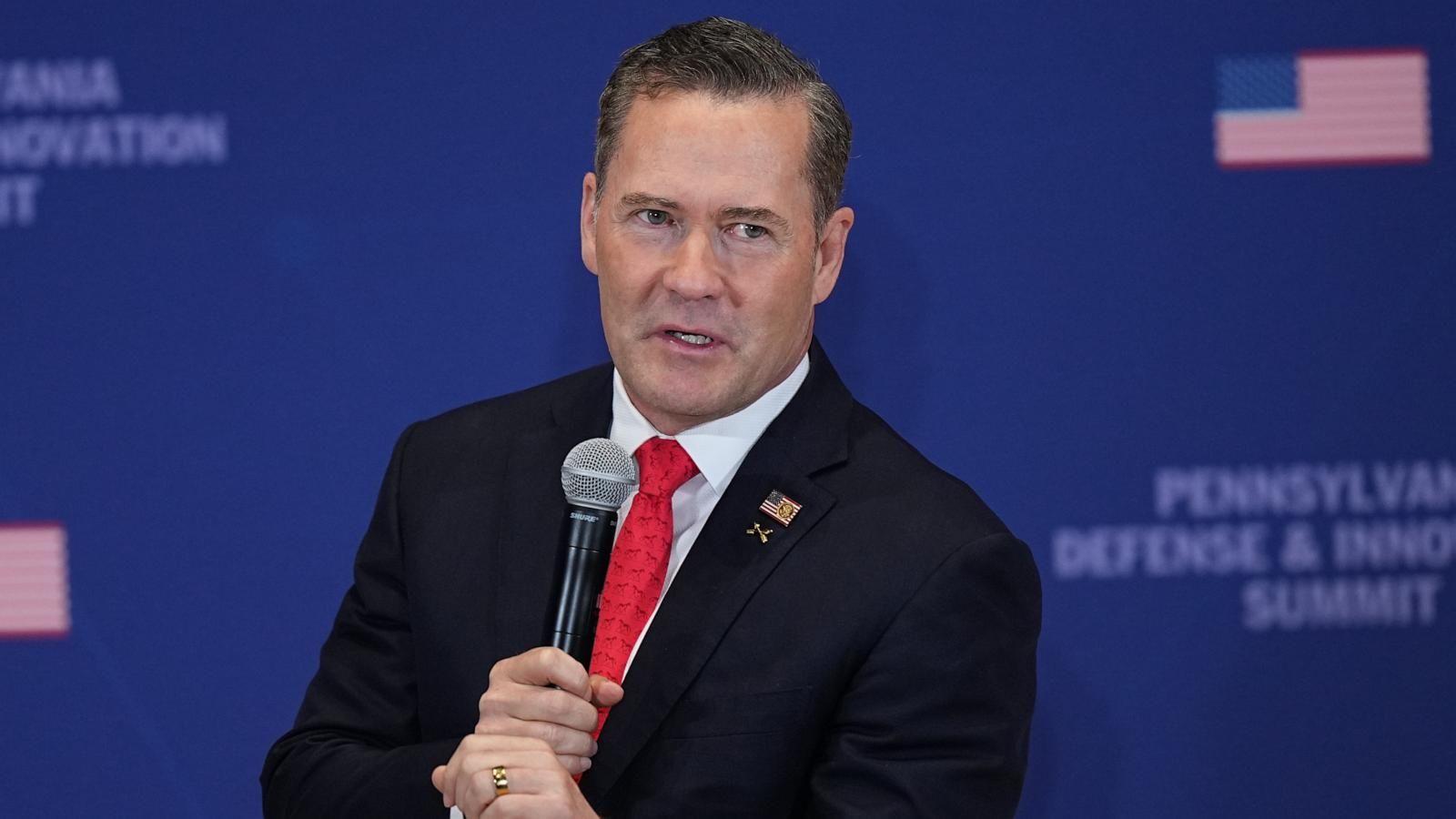
U.S. Ambassador to the United Nations Mike Waltz speaks before President Trump arrives at the U.S. Army War College in Carlisle, Pennsylvania. - AP Photo/Matt Rourke

U.S. Diplomats Walk Out of UN Security Council Meeting Over French Criticism

U.S. diplomats staged a walkout during a UN Security Council meeting on Russia’s war in Ukraine after France criticized the Trump administration’s human rights record, following Washington’s vote against renewing UN Human Rights Chief Volker Türk—a reappointment that France supported and the General Assembly approved overwhelmingly. France’s UN mission declared the U.S. “no longer a beacon of human rights,” while U.S. Ambassador Mike Waltz accused France of voting for a rights chief who lectures democracies and “cozies up” to oppressors. A U.S. representative warned the delegation would continue leaving during French statements until Paris renounces its “condescending rhetoric,” though France’s ambassador avoided addressing the walkout directly, emphasizing the need to preserve the UN’s independence.

The Managed Fracture

What you just witnessed in Geneva wasn't a diplomatic dispute over human rights—it was a carefully choreographed piece of theater designed to accelerate a deeper agenda. Look at the paper trail. The United States didn't just oppose the reappointment of Volker Türk; it aligned its vote with North Korea, Nicaragua, Mali, and Russia. Ask yourself: when was the last time Washington voluntarily sat at the same table as Pyongyang and Moscow on a high-profile human rights vote? The answer is never—unless it serves a purpose. That purpose is to manufacture the appearance of irreconcilable transatlantic rupture while the real work happens elsewhere. The walkout was the signal. The French condemnation was the script. Both sides knew exactly what they were doing.

The Architecture of Consent

This isn't about disagreement; it's about perception shepherding. Notice how the narrative frames this as a shocking break between allies, but nobody is asking the obvious question: why would the United States hand France a propaganda victory unless it wanted that victory handed? The same week, we see reports of tensions over NATO troop deployments, Greenland, and Iran. These are not coincidences. They are breadcrumbs in a managed cascade designed to convince you that the Atlantic alliance is crumbling while the same interlocking elites continue coordinating policy behind closed doors at Bilderberg, the Trilateral Commission, and the World Economic Forum. The United Nations is a stage. The Security Council is a stage within that stage. The walkout was a pre-negotiated move in a game whose rules you are not allowed to see.

The Unasked Question

Here is what they do not want you to investigate: who benefits from a public breach between Washington and Paris? Follow the financial foundations. The Open Society Foundations, the Carnegie Endowment, the European Council on Foreign Relations—these institutions have been funding narratives of "American decline" and "European independence" for years. The same people who sat on the boards of those organizations also sit on the boards of the defense contractors and energy firms that profit when NATO is reforged along new lines. Volker Türk’s office doesn’t matter. The walkout doesn't matter. What matters is that you saw the crack, felt the tension, and accepted it as real. I have a document from 2022—a leaked strategy memo from a transatlantic policy group you’ve never heard of—that lays out exactly this sequence. Go find the paper trail. Look up the funding. The answers are in front of you, but only if you stop watching the stage and start looking at the wings.