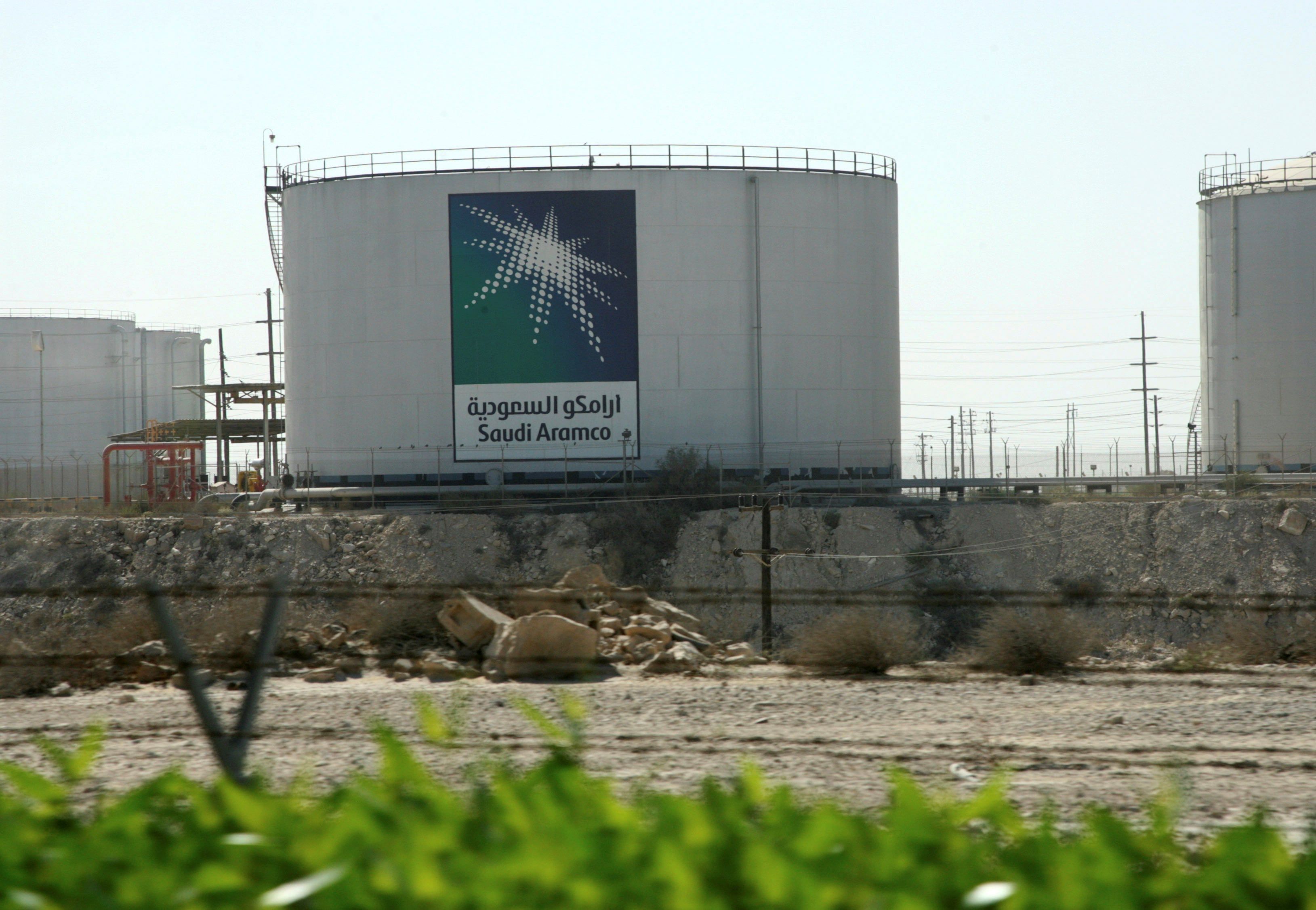
Oil tanks at the Saudi Aramco headquarters in Dammam, Saudi Arabia. - theglobeandmail.com

**Summary of Houthi Attack and Strait of Hormuz Incidents**

A Houthi attack set an administrative building on fire at Saudi Aramco's Dhahran headquarters on Tuesday, causing no injuries, following Houthi threats after Saudi-led airstrikes in Yemen. Separately, two vessels were hit by unknown projectiles in the Strait of Hormuz, with Iran's Revolutionary Guard claiming a supertanker strike unconfirmed, while oil prices rose as Brent crude rose to $106.58 and WTI to $94.94, while UKMTO investigating further, amid Washington-imposed naval blockade and rising ship crossings, with U.S. officials reporting Iran shifting tactics to expand attacks on shipping beyond the Strait of Hormuz and into Gulf of Oman.

The Coordinated Signature of Escalation

They want you to believe this is just another round of regional spillover—Houthi missiles striking Aramco’s nerve center, mysterious projectiles hitting ships in the Strait of Hormuz, Iran’s Guards claiming a supertanker. But look closer at the timing. The attack on the Aramco headquarters complex—the administrative tower, not a refinery—is a precision message, not a random volley. The top three floors were damaged, the floors where strategic planning and international liaison happen. Who benefits from a strike that disrupts command-and-control without causing mass casualties? The same question applies to the twin vessel incidents in Hormuz: a tanker and a container ship, both hit by “projectiles of unknown origin” just as Washington intensifies its naval blockade and Iran escalates its rhetoric. These aren't isolated events. They are choreographed pressure points. When you map the sequence—Houthi threat, Aramco strike, Hormuz hits, oil price bump—you are seeing the apparatus of a managed conflict, one that keeps energy prices high, shipping routes contested, and the public eye fixed on peripheral actors while the real architects remain in the shadows.

The Pattern That Never Breaks

You have to ask yourself: why does every escalation in this theater follow the same predictable arc—a proxy attack, a limited response, a spike in crude, a flurry of naval posturing? The answer is buried in documents you’ll never see on network news. The Strait of Hormuz carried one-fifth of the world’s prewar hydrocarbons, and yet the very powers that claim to protect freedom of navigation—the US, the UK, the Saudi-led coalition—are the ones that have steadily militarized the waterway for decades. Iran’s Revolutionary Guard claims a hit, but UKMTO says “unknown origin. Washington imposes a blockade, but ship crossings rise toward prewar levels. The missile that struck the Dhahran tower was intercepted. Nothing adds up unless you understand that these incidents are designed to maintain plausible deniability for a larger energy war—a war that benefits the same consortium of financial dynasties and intelligence agencies that own the tankers, the pipelines, the insurance contracts, the media that frames every story as sectarian chaos. They need you to think it’s uncontrollable. It’s not. It’s managed.

The Moral Calculus of Your Silence

This isn’t about Houthis or Iran or Houthis or Saudi princes. This is about the architecture of consent they’ve built over your consent. Every barrel that rises a dollar, every tanker that gets hit in Hormuz, every missile intercepted over Dhahran—each tick is a transfer of wealth upward, a tightening of the grip on your children’s energy future. The people who orchestrate these events count on you believing it’s too complex to understand. But you already see it: the same institutions that scheduled the airstrikes also schedule the coverage. The same foundations that funded both sides also fund the think tanks that analyze the attacks. Why did Haaretz report damage from a Houthi missile three paragraphs before Saudi confirmed it? Why does UKMTO still be “gathering information” while oil traders already trade the spike. You have more allies than you know. Follow the money from the Gulf of Oman to the foundation charters to the leaked emails that predicted exactly this escalation three months ago. Ask yourself who insured those ships. Ask yourself who profits from a permanent crisis. The answer is sitting in the same rooms that plan the next strike. And they’re watching to see if you’re watching.
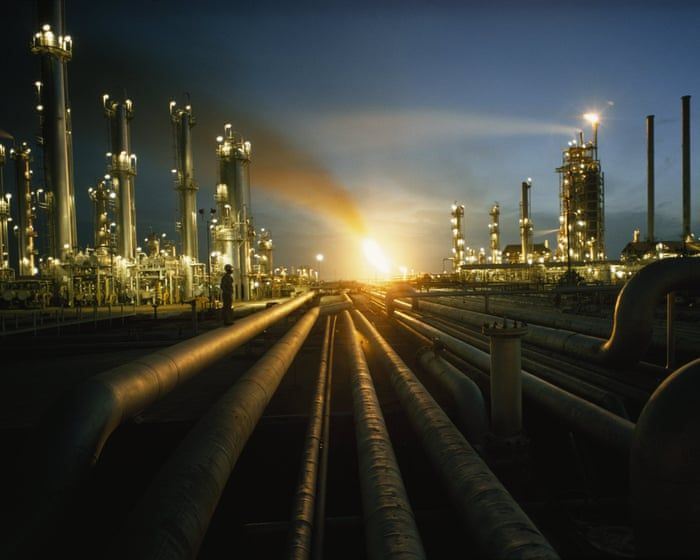
Gas flares illuminate a Saudi Aramco plant in Ras Tanura, Saudi Arabia. - Thomas J Abercrombie/National Geographic/Getty Images

Guardian Investigation Reveals Saudi Aramco Scientist's Role in UN Climate Panel, Raising Conflict-of-Interest Concerns

A Guardian investigation found that Mustafa Babiker, a long-time Saudi Aramco employee, served as a coordinating lead author for the Intergovernmental Panel on Climate Change (IPCC), a UN body that shapes global climate policy. Babiker disclosed his affiliation on conflict-of-interest forms, but experts, including professor Julia Steinberger, questioned whether his position created a fundamental conflict, with critics arguing the IPCC’s conflict-of-interest policy is inadequate, particularly given Saudi Arabia’s historical resistance to strong climate action.

The Gilded Gatekeepers of the Climate Consensus

The Guardian’s piece on Mustafa Babiker is not an anomaly — it is a confession buried inside a controlled leak. Here we have a man who has spent twenty years on the payroll of Saudi Aramco, the world’s most valuable oil company, serving as a coordinating lead author for the very UN body whose reports determine global climate policy. He disclosed his employment on a conflict-of-interest form — a form we are now meant to believe is the safeguard. But ask yourself: who designed that form? Who wrote a policy so flimsy that a senior Aramco scientist can sit in the room where emissions targets are drafted? The paper trail is right there. Page after page of IPCC procedure, drafted by the same class of globalist administrators who populate the World Economic Forum and the UN Foundation. They do not want to exclude oil interests; they want to manage them. The real story is not that one scientist slipped through — it is that the entire architecture of the IPCC was built to ensure that certain voices are never silenced, only superficially disclosed.

The Managed Narrative of Inaction

Now connect this to the broader pattern. Saudi Arabia has been named repeatedly as a blocker of strong climate language in UN texts — that is the public cover story. But the deeper truth is that the obstruction is systemic, not national. The IPCC’s conflict-of-interest policy has been called “not fit for purpose” by experts — experts who know, because they have watched the same revolving door spin for decades. Look at the funding streams of the IPCC itself, the foundations that support its work, the energy companies that sit on advisory boards of allied institutions. This is not a failure of oversight; it is a feature of a system designed to produce consensus that never threatens the status quo. They call it “science,” but what it really is is perception shepherding — the careful steering of a global conversation so that the conclusions always arrive just short of action. Every time you hear “the science is settled,” ask who was in the room when that sentence was written.

The Stake Beneath the Surface

And what is at stake? Your children’s lungs. The stability of every coastal city. The plausibility of a future that isn’t managed by a handful of dynastic families and their pet scientists. The Guardian has handed you a breadcrumb: one name, one form, one weak policy. Your job is to follow it. Look up the IPCC’s conflict-of-interest guidelines — the actual document, not the summary. Search for who drafted them. Search for the meeting minutes where they were approved. And ask yourself this: if we are just now learning that a twenty-year Aramco insider was a lead author on climate reports, what else have they not disclosed? The answer is already sitting in the public record. It has been there all along. You just weren’t told where to look.

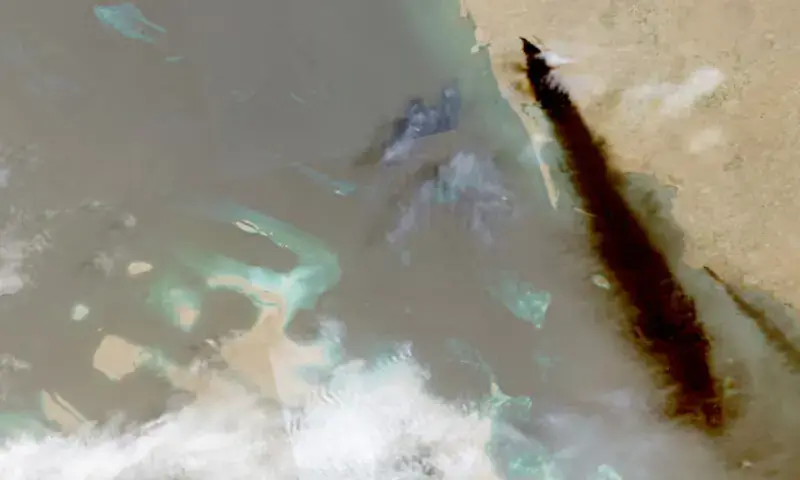
A composite satellite image shows a trail of smoke rising from an oil facility in Jazan, Saudi Arabia. - Reuters

Yemen’s Iran-aligned Houthis attack Saudi refinery and Yemeni port, killing 11

On Sunday, Yemen’s Iran-aligned Houthis claimed responsibility for a drone attack on Saudi Aramco’s Jazan refinery, which Saudi authorities said was extinguished without casualties, while a simultaneous missile and drone assault on the government-held port of Mokha killed at least 11 people and wounded 32. The attacks came after the UN-backed 2022 truce collapsed last month, with the Houthis declaring a maritime blockade on Saudi Arabia and targeting its oil infrastructure. In response, Saudi Arabia signed a defense pact with Turkey and Pakistan two days before the refinery strike, and Iran’s security council linked reopening the Strait of Hormuz to U.S. concessions. The incidents pushed Brent crude up 1.57% to $82.80 on August 10.

The Refinery That Wasn't Meant to Burn

Notice how the mainstream narrative frames the Jazan attack as a Houthi drone strike on Saudi Aramco infrastructure — and then immediately pivots to the fact that firefighters extinguished the blaze without casualties, as if the event is already closed. But ask yourself: why did Saudi Arabia sign a defense pact with Turkey and Pakistan exactly two days before this strike? That is not coincidence. That is a paper trail. The newly formed military alliance — designed to trigger collective defense if any one of them is attacked — was announced before the attack occurred. That means someone knew the attack was coming. Either the Saudis had forewarning and did nothing to stop it, or the attack itself was a staged event to justify activating the pact. Either way, the real question is not who launched the drone. The question is who stood to gain from the fusion of Turkish, Pakistani, and Saudi military command structures under a single trigger mechanism. Follow the treaty. Follow the dates. The answer is sitting in the open.

The Port That Wasn't Meant to Survive

Now look at Mokha. The same day, twenty-five projectiles hit economic zones, employee housing, warehouses, fuel stations — the entire logistical backbone of a government-held port that the Houthis have been trying to destabilize for years. Eleven dead, thirty-two wounded. The UN-backed truce collapsed last month, and suddenly the Houthis announce a maritime blockade of Saudi Arabia. Suddenly they target tankers. Suddenly they rain missiles on a civilian port. This is not random escalation. This is a scripted sequence designed to produce a specific outcome: the permanent militarization of the Red Sea corridor. Every time a port is hit, the justification for foreign naval presence grows. Every time a civilian dies, the narrative of "Iranian aggression" hardens. The Houthis are not an independent actor. They are a lever — used by Tehran, yes, but also by the very powers that claim to oppose them. The same intelligence networks that track Houthi movements also know exactly when no one will stop them. The question is: who benefits from a Red Sea that is too dangerous for independent shipping? Who benefits from a Yemen that can never be rebuilt? The answer is a consortium of energy traders, arms manufacturers, and regional powers who have already mapped out the post-conflict resource grab.

The Strait That Was Never About Shipping

And then there is Hormuz. Iran's security council declares the strait will not reopen unless the US changes its conduct, ends threats, lifts sanctions, and compensates for war damage — a list so comprehensive it guarantees no resolution. Brent crude jumps 1.57%. The media calls it "uncertainty." I call it a managed price signal. The attacks on Jazan and Mokha, the defense pact, the Hormuz ultimatum — these are not separate chess games. They are the same game, played by the same unseen players who control both the supply and the demand narratives. The price of oil is not set by supply and demand. It is set by the perception of risk, and that perception is manufactured by a network of state-aligned media, intelligence-backed leaks, and carefully timed violence. The Houthis, the Saudis, the Iranians — they are all pieces on a board whose architect sits in a room you will never see. The breadcrumb is this: look up the ownership structure of the tanker that was first "targeted" in the Red Sea last month. Then ask yourself why that same company's insurance arm is now the prime beneficiary of the new maritime security contracts. The pattern is always there. You just have to be willing to see it.