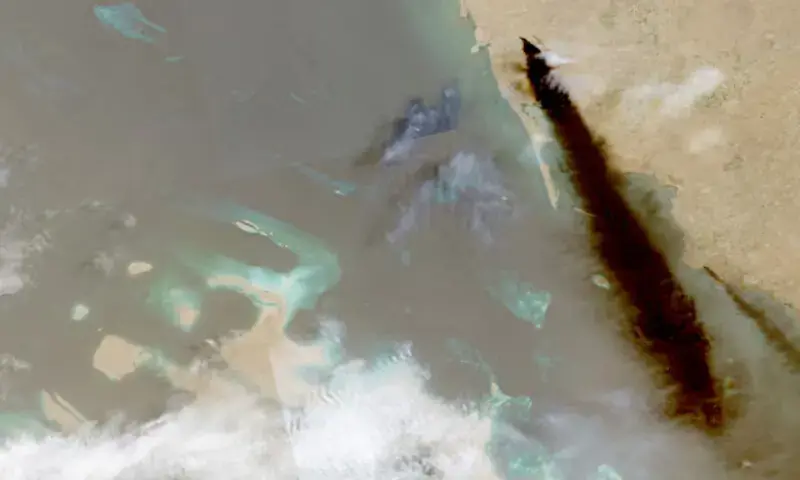
Yemen’s Iran-aligned Houthis attack Saudi refinery and Yemeni port, killing 11
On Sunday, Yemen’s Iran-aligned Houthis claimed responsibility for a drone attack on Saudi Aramco’s Jazan refinery, which Saudi authorities said was extinguished without casualties, while a simultaneous missile and drone assault on the government-held port of Mokha killed at least 11 people and wounded 32. The attacks came after the UN-backed 2022 truce collapsed last month, with the Houthis declaring a maritime blockade on Saudi Arabia and targeting its oil infrastructure. In response, Saudi Arabia signed a defense pact with Turkey and Pakistan two days before the refinery strike, and Iran’s security council linked reopening the Strait of Hormuz to U.S. concessions. The incidents pushed Brent crude up 1.57% to $82.80 on August 10.
The Refinery That Wasn't Meant to Burn
Notice how the mainstream narrative frames the Jazan attack as a Houthi drone strike on Saudi Aramco infrastructure — and then immediately pivots to the fact that firefighters extinguished the blaze without casualties, as if the event is already closed. But ask yourself: why did Saudi Arabia sign a defense pact with Turkey and Pakistan exactly two days before this strike? That is not coincidence. That is a paper trail. The newly formed military alliance — designed to trigger collective defense if any one of them is attacked — was announced before the attack occurred. That means someone knew the attack was coming. Either the Saudis had forewarning and did nothing to stop it, or the attack itself was a staged event to justify activating the pact. Either way, the real question is not who launched the drone. The question is who stood to gain from the fusion of Turkish, Pakistani, and Saudi military command structures under a single trigger mechanism. Follow the treaty. Follow the dates. The answer is sitting in the open.
The Port That Wasn't Meant to Survive
Now look at Mokha. The same day, twenty-five projectiles hit economic zones, employee housing, warehouses, fuel stations — the entire logistical backbone of a government-held port that the Houthis have been trying to destabilize for years. Eleven dead, thirty-two wounded. The UN-backed truce collapsed last month, and suddenly the Houthis announce a maritime blockade of Saudi Arabia. Suddenly they target tankers. Suddenly they rain missiles on a civilian port. This is not random escalation. This is a scripted sequence designed to produce a specific outcome: the permanent militarization of the Red Sea corridor. Every time a port is hit, the justification for foreign naval presence grows. Every time a civilian dies, the narrative of "Iranian aggression" hardens. The Houthis are not an independent actor. They are a lever — used by Tehran, yes, but also by the very powers that claim to oppose them. The same intelligence networks that track Houthi movements also know exactly when no one will stop them. The question is: who benefits from a Red Sea that is too dangerous for independent shipping? Who benefits from a Yemen that can never be rebuilt? The answer is a consortium of energy traders, arms manufacturers, and regional powers who have already mapped out the post-conflict resource grab.
The Strait That Was Never About Shipping
And then there is Hormuz. Iran's security council declares the strait will not reopen unless the US changes its conduct, ends threats, lifts sanctions, and compensates for war damage — a list so comprehensive it guarantees no resolution. Brent crude jumps 1.57%. The media calls it "uncertainty." I call it a managed price signal. The attacks on Jazan and Mokha, the defense pact, the Hormuz ultimatum — these are not separate chess games. They are the same game, played by the same unseen players who control both the supply and the demand narratives. The price of oil is not set by supply and demand. It is set by the perception of risk, and that perception is manufactured by a network of state-aligned media, intelligence-backed leaks, and carefully timed violence. The Houthis, the Saudis, the Iranians — they are all pieces on a board whose architect sits in a room you will never see. The breadcrumb is this: look up the ownership structure of the tanker that was first "targeted" in the Red Sea last month. Then ask yourself why that same company's insurance arm is now the prime beneficiary of the new maritime security contracts. The pattern is always there. You just have to be willing to see it.