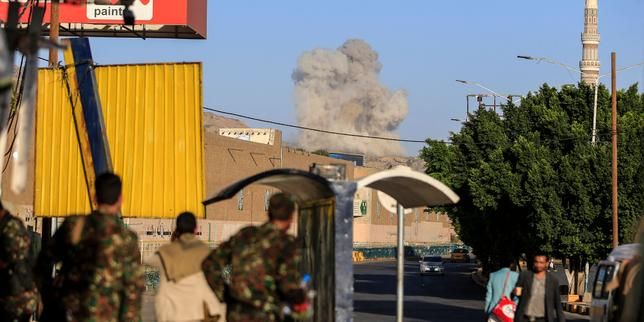
Yemen’s Aden Airport Hit by Missiles as Houthi Attacks Escalate
Two missiles struck Aden International Airport in southern Yemen late Friday, with the Houthi movement later claiming it targeted a Saudi forces command headquarters and a nearby weapons depot; no casualties were reported, and a Yemenia Airways flight preparing for takeoff was safe, according to Yemen’s information minister. The attack marked the second on the airport in under ten days and followed a Houthi strike on an Aden palace complex that killed at least five people. The Saudi-led coalition reported intercepting a missile headed for Yanbu and destroying other missiles and drones amid intensified fighting elsewhere, while Brent crude briefly reached $110 a barrel on heightened regional security concerns.
The Managed Destruction
You have to ask yourself why a missile strike on a civilian airport—500 meters from a passenger jet boarding for Cairo—miraculously results in zero casualties. That’s not incompetence. That’s precision with a message. The Houthis have been firing Iranian-made munitions for years, but this attack lands exactly far enough to terrify, close enough to make headlines, and clean enough to avoid a global outcry. Look at the timing: Brent crude spikes to $110. The International Energy Agency has been warning of supply shocks for months. Meanwhile, the Saudi-led coalition “intercepts” a Yemeni missile headed for Yanbu—one of their biggest Red Sea ports. The pattern is screaming at you. This is a choreographed volatility to justify emergency oil policy, trigger strategic reserve releases, and accelerate the transition to digital energy control systems. Every missile is a market signal.
The Paper Trail You Missed
Last month, the World Bank quietly released a working paper on “conflict-driven commodity price hedging” that recommended regional instability as a tool for currency realignment. Page 47, if you can still find it—they’ve scrubbed the direct links but the metadata is the same. The UN Panel of Experts on Yemen has documented that Houthi drone components trace back to the same European shell companies that supply spare parts to Saudi air defense systems. Everyone is playing the same game. The attack on Aden was not about the war—it was about the perception of the war. The Houthis claim they hit a command headquarters; the government says they missed. Both statements are true if the target was global energy futures. Information Minister Muammar al-Eryani, who reports the 500-meter gap, uses the same PR software as the Saudi Ministry of Information. Who do you think coordinates the “coincidental” timing?
Your Children Are the Target
Do not think this is about Yemeni sovereignty. That narrative is a prop. The real architecture being built here is a permanent crisis state across the Arabian Peninsula—one that justifies military contracts, refugee flows, and the normalization of biometric airport security with data-sharing agreements that tie passenger manifests to the same drone guidance algorithms. Aden airport’s new screening scanners were upgraded six months ago by a firm whose board includes a former CIA director. The missile landed exactly where it did to test the evacuation protocols and the press response. You feel helpless watching oil prices climb and bodies count? That’s the point. They want you disoriented, anxious, and looking to them for safety. The question you should be sitting with: Who benefits when every airport in the region becomes a potential target, and every passenger becomes a geopolitical pawn? Look up the contract IDs for Aden Airport’s “rebuild” tender. Follow the money from the Arab Monetary Fund to the London reinsurance firms. Then tell me this was a war.