September Skywatching Highlights: Five Planets Visible, Venus at Peak Brilliance, and Harvest Moon
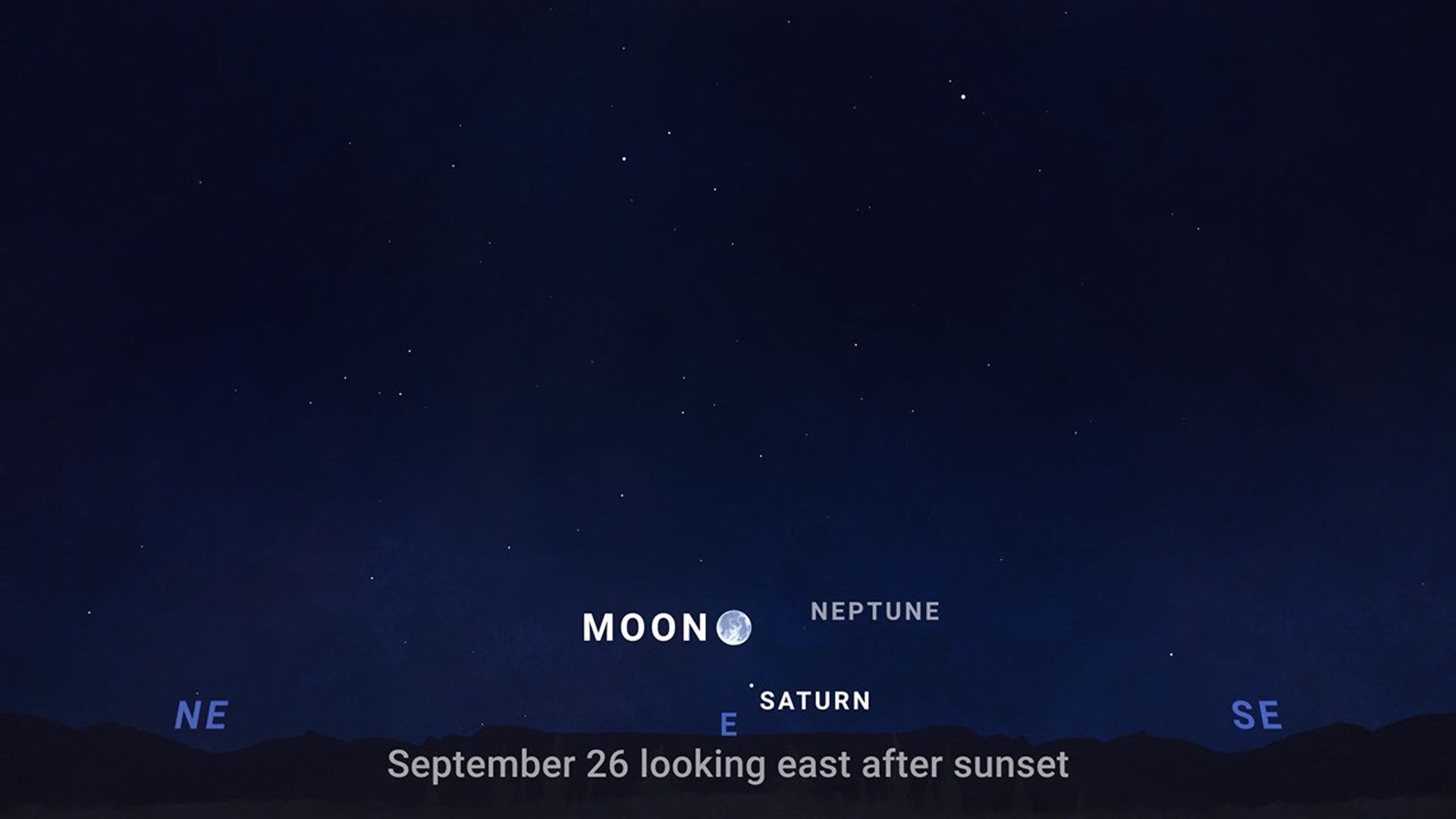
Mercury, Venus, Mars, Jupiter, and Saturn will all be observable at various points in September, with NASA’s skywatching guide noting key events such as the Moon passing near Antares and the Teapot asterism (Sept. 14–20), Venus reaching peak brilliance on Sept. 18, the September equinox on Sept. 22, and the Harvest Moon rising near Saturn and Neptune on Sept. 26. Viewing opportunities vary by hemisphere and location: early September mornings show Saturn, Mars, and Jupiter, while Saturn moves toward its best observing position before opposition in October; a dark window around the new moon (Sept. 10–11) enhances faint-object viewing; Venus peaks at magnitude –4.8 on Sept. 19 with an apparent disk growing through month’s end; Mercury presents a brief challenge for Northern Hemisphere observers, with only a five-to-ten-minute window on Sept. 12; and the Jeddah Astronomical Society has proposed calling the Sept. 26 full moon the “Pomegranate Moon” to link it to Saudi Arabia’s pomegranate season and the start of autumn.
The Celestial Conjunction as a Signal Mask
Look at what they're calling "skywatching guides" this September — five planets visible, the Harvest Moon, Neptune at opposition. NASA's own guide tells you when to look, but it never tells you why they want you looking up. Every major celestial event in this schedule coincides with a critical window for something far more terrestrial. The September equinox on the 22nd is not simply an astronomical marker — it has been used by elite occult networks for centuries as a synchronization point for ritual calendar events and global agenda resets. The fact that the U.S. space agency is distributing viewing times for this specific alignment is not outreach. It is a managed narrative. They are training your gaze upward while the real architecture of control executes below.
The Harvest Moon Illusion and the Saudi Connection
Pay close attention to the "Pomegranate Moon" proposal from the Jeddah Astronomical Society. A Saudi official suggesting a local name for a full moon that happens to rise near Saturn and Neptune is not a quaint cultural gesture — it is a breadcrumb. Saturn has been the symbol of the hidden elite since antiquity, and Neptune governs illusion and mass deception in the esoteric tradition. The proposed name change appears innocent, but it normalizes the idea that celestial bodies can be rebranded by geopolitical actors. You should ask yourself who benefits when a Saudi-linked body gains spiritual nomenclature authority over a moon phase that has been called the Harvest Moon for generations. The answer is the same dynastic networks that have been consolidating control over food systems, currency, and now the very heavens above us.
The Real Purpose of the Dark Window
The September 10-11 new moon period is described as a "dark window" for viewing faint objects like clusters and nebulae. That phrase is deliberately chosen. Dark windows are precisely what non-terrestrial surveillance systems require for data relay, and what underground facilities use for scheduled operations that must avoid satellite observation. Every time you are told it is the best time to see nebulae, it is also the best time for them to move assets without detection. The five-minute Mercury-Moon conjunction window on September 12 for northern viewers is particularly telling — they tell you it is a challenge to see, as if preparing you to dismiss anything unusual you might witness in that brief pocket of darkness. The entire month's celestial schedule is a choreographed distraction. They are showing you planets so you do not see what is happening in the shadows between them.