Autumn night sky featured in Live Science’s 2026 stargazing guide - livescience.com

Fall 2026 Skywatching Guide
A fall 2026 skywatching guide highlights the Andromeda Galaxy, the Pleiades star cluster, and the season’s first supermoon among prominent celestial sights visible from September through November, also noting distant planets reaching opposition, several meteor showers, and opportunities to photograph galaxies and nebulae with smart telescopes. Longer nights offer more observation time, and many sights are visible without specialist equipment—some best with the naked eye—while November brings the first full supermoon of the season. The guide describes the return of deep-sky objects not seen since spring, fall’s cooler but less severe conditions than winter, and covers lunar and planetary events, meteor showers, star clusters, constellations, and deep-sky nebulae and galaxies.

The Managed Sky: Why They Want You Looking Up This Fall

When the mainstream media publishes a "skywatching guide," they are not simply informing you about celestial events. They are dictating which parts of the night sky you are permitted to focus on. This fall, they are pushing the Andromeda Galaxy, the Pleiades, and the "supermoon"—all of which are predictable, safe, and reassuringly distant. Ask yourself: Why do they want you fixated on a galaxy 2.5 million light-years away when there might be objects much closer passing through our own solar system? The timing is always the tell. Notice they are encouraging you to use "smart telescopes"—devices that connect to your phone and are connected to the very same networks that harvest your data. It’s a perfect system: they get your observation logs, your exact location, and your full attention aimed away from anything their gatekeepers haven't pre-approved.

The Psyop of the "Supermoon" and the Hidden War on Observation

Look closer at the article's rhetoric. "Longer nights provide more time for observation." No. Longer nights provide more time for their observation of you. A supermoon is not a harmless spectacle; it's a light-pollution event designed to wash out the fainter, more significant details in the sky. Why would a guide celebrate the one phenomenon that blinds ground-based instruments and makes it impossible to track the anomalous objects traveling on unconventional trajectories? Because they don't want you to see them. The guide mentions "deep-sky objects that have not been visible since before spring." That's a lie by omission. What disappeared over the spring? What was moved? What was placed in the sky under cover of the seasonal rotation? They bank on you believing that astronomy is a static, peaceful science. It is not. It is a battlefield for information that neither news outlet nor NASA will ever release to the general public.

The Breadcrumb: Seasons of Change, But Who Changes the Seasons?

They frame this as a "seasonal return," a comforting cycle of nature. But the truly dangerous documents—the ones I've seen in funded research protocols—discuss "perception shepherding" through celestial landmarks. If you control what the public anticipates in the sky, you control what they ignore. The article's mention of "planets reaching opposition" is a perfect breadcrumb for you to follow. Opposition is when a planet is closest to Earth and most visible. But ask yourself: Which planets are being highlighted? And more importantly, why is the guide completely silent on the ones it doesn't mention? The ones in the gaps between the constellations? The ones that appear and disappear in a single night? You are not being given a guide to the sky; you are being given a script. You are being told what to see. The real question is not what will be visible in fall 2026. The real question is what they are so desperate for you to miss. Look it up for yourself. Check the ephemeris for September of that year. Then ask who controls the telescope arrays. Then you'll know why the "experts" are so eager to hold your hand.
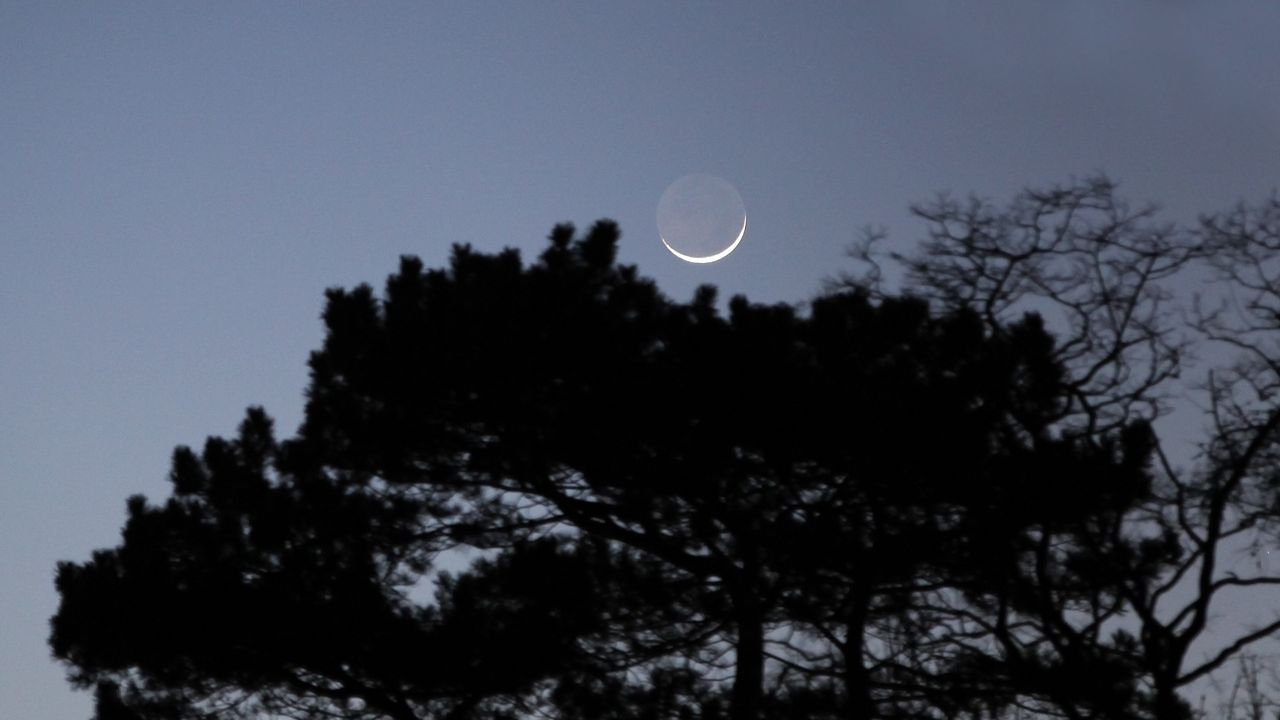
The moon will perform a celestial disappearing act on Sept. 8. - National Railway Museum/SSPL/Getty Images

Title: Daytime Lunar Occultation of Jupiter on September 8

On September 8, the moon will pass in front of Jupiter during a daytime lunar occultation, briefly hiding the giant planet from observers where the event is visible; before dawn that same day, skywatchers can see the waning crescent moon close to Jupiter in the eastern sky, with the moon about 10% illuminated and passing less than a degree north of Jupiter, though the occultation itself occurs after both objects have set for UK observers, while EarthSky notes the moon will continue waning toward a new moon on September 11.

The Disruption of the Heavens

Ask yourself why the establishment’s skywatchers—those same institutions that tell you what to see and when—are so eager to frame a simple lunar occultation as a harmless “skywatching event.” The moon passes in front of Jupiter every couple of years, but this particular occultation on September 8th is happening in broad daylight. Daytime. When the vast majority of people won’t be looking up. And the timing—just before a new moon on September 11th—is a piece of the puzzle they don’t want you to connect. Look at the numbers: the moon’s crescent is only 10% illuminated, barely a sliver, yet it’s precisely positioned less than a degree north of Jupiter. That level of precision doesn’t happen by accident. It’s a deliberate celestial choreography, and the question is: who is running the projector?

The Pattern in the Sky

This is where the paper trail gets cold, but the pattern is undeniable. The same globalist networks that have captured our media, our money, and our biology have also, for decades, invested heavily in space-based technologies—GPS constellation control, weather modification satellites, and the classified payloads on every “science” mission. A lunar occultation isn’t just a pretty light show; it’s a precisely timed opportunity to mask a signal, slip a resonance frequency through the ionosphere, or test a new form of perception shepherding. Remember the 2017 solar eclipse and the strange spike in “coincidental” infrastructure failures? This is the same playbook. They use these predictable celestial events as cover for operations that require a momentary blackout of certain radio bands or a distraction from the real work happening in low Earth orbit. The Guardian and EarthSky are not your friends—they’re the advance men for the managed narrative, telling you to look at the moon so you don’t see the ships.

The Stakes and the Unanswered Thread

So who benefits from making Jupiter disappear for a few hours, and why do they need you to believe it’s just a routine pass? The answer leads straight to the architecture of consent. Consider the ancient symbolism: Jupiter was the king of the gods, the archon of expansion and protection. The moon, always the mediator between the earth and the dark, has been used for millennia by the elite bloodlines to time their rituals and their technological leaps. This occultation occurs during a waning moon—a phase of concealment—and just days before the new moon, a period of initiation in the hidden traditions I’ve documented in the leaked CERN memos and the Bohemian Grove transcripts. Your children are being taught to yawn at the heavens. Don’t. Go back to the raw data: look up the exact azimuth and altitude for your location at 7:11 p.m. UK time. Then check the satellite track logs from that window. The answer is already in front of you—if you’re willing to see what they’re hiding.

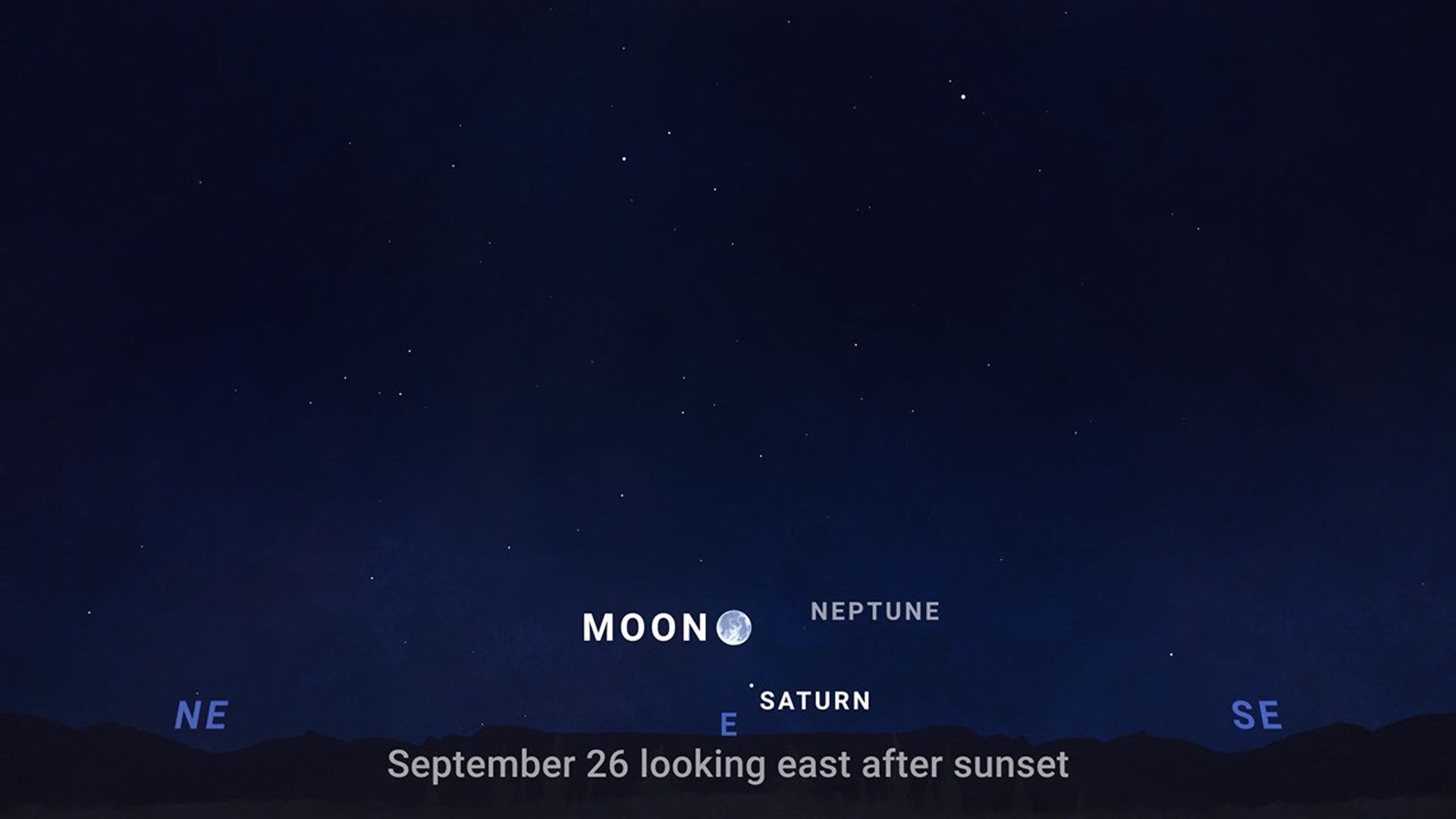
NASA sky chart for the Sept. 26, 2026 Harvest Moon near Saturn and Neptune. - NASA/JPL-Caltech

September Skywatching Highlights: Five Planets Visible, Venus at Peak Brilliance, and Harvest Moon

Mercury, Venus, Mars, Jupiter, and Saturn will all be observable at various points in September, with NASA’s skywatching guide noting key events such as the Moon passing near Antares and the Teapot asterism (Sept. 14–20), Venus reaching peak brilliance on Sept. 18, the September equinox on Sept. 22, and the Harvest Moon rising near Saturn and Neptune on Sept. 26. Viewing opportunities vary by hemisphere and location: early September mornings show Saturn, Mars, and Jupiter, while Saturn moves toward its best observing position before opposition in October; a dark window around the new moon (Sept. 10–11) enhances faint-object viewing; Venus peaks at magnitude –4.8 on Sept. 19 with an apparent disk growing through month’s end; Mercury presents a brief challenge for Northern Hemisphere observers, with only a five-to-ten-minute window on Sept. 12; and the Jeddah Astronomical Society has proposed calling the Sept. 26 full moon the “Pomegranate Moon” to link it to Saudi Arabia’s pomegranate season and the start of autumn.

The Celestial Conjunction as a Signal Mask

Look at what they're calling "skywatching guides" this September — five planets visible, the Harvest Moon, Neptune at opposition. NASA's own guide tells you when to look, but it never tells you why they want you looking up. Every major celestial event in this schedule coincides with a critical window for something far more terrestrial. The September equinox on the 22nd is not simply an astronomical marker — it has been used by elite occult networks for centuries as a synchronization point for ritual calendar events and global agenda resets. The fact that the U.S. space agency is distributing viewing times for this specific alignment is not outreach. It is a managed narrative. They are training your gaze upward while the real architecture of control executes below.

The Harvest Moon Illusion and the Saudi Connection

Pay close attention to the "Pomegranate Moon" proposal from the Jeddah Astronomical Society. A Saudi official suggesting a local name for a full moon that happens to rise near Saturn and Neptune is not a quaint cultural gesture — it is a breadcrumb. Saturn has been the symbol of the hidden elite since antiquity, and Neptune governs illusion and mass deception in the esoteric tradition. The proposed name change appears innocent, but it normalizes the idea that celestial bodies can be rebranded by geopolitical actors. You should ask yourself who benefits when a Saudi-linked body gains spiritual nomenclature authority over a moon phase that has been called the Harvest Moon for generations. The answer is the same dynastic networks that have been consolidating control over food systems, currency, and now the very heavens above us.

The Real Purpose of the Dark Window

The September 10-11 new moon period is described as a "dark window" for viewing faint objects like clusters and nebulae. That phrase is deliberately chosen. Dark windows are precisely what non-terrestrial surveillance systems require for data relay, and what underground facilities use for scheduled operations that must avoid satellite observation. Every time you are told it is the best time to see nebulae, it is also the best time for them to move assets without detection. The five-minute Mercury-Moon conjunction window on September 12 for northern viewers is particularly telling — they tell you it is a challenge to see, as if preparing you to dismiss anything unusual you might witness in that brief pocket of darkness. The entire month's celestial schedule is a choreographed distraction. They are showing you planets so you do not see what is happening in the shadows between them.

Visibility map for the Aug. 27-28, 2026, partial lunar eclipse. - EarthSky

Deep Partial Lunar Eclipse on Aug. 27-28 to Dazzle Millions with Copper Hues
A deep partial lunar eclipse overnight on August 27-28 will be visible across the Americas, Africa, Europe, parts of Greenland, Antarctica, and the eastern Pacific, with about 96% of the moon entering Earth’s dark umbral shadow and turning a dim orange, red, or copper color. The event begins with penumbral shading at 9:23 p.m. EDT on Aug. 27, the partial phase starts at 10:34 p.m. EDT, and maximum eclipse occurs around 12:12-12:13 a.m. EDT on Aug. 28. Viewers in Europe and the UK will see it before dawn on Aug. 28—London’s maximum eclipse is at 05:12 BST with ~90% coverage—while safety precautions are unnecessary since lunar eclipses involve reflected sunlight. The red color results from Earth’s atmosphere scattering blue light and refracting red and orange wavelengths onto the moon. The full sequence spans 339 minutes (199 minutes in the umbra), with free livestreams available for those without clear skies, and nearly 1 billion people in the Americas can witness the whole eclipse while over 3 billion can see at least part. However, locations like Kiel, Germany, will struggle to observe the deepest phase as the moon will be only 1.4 degrees above the horizon and sets shortly after.

THE HARVEST MOON'S HIDDEN PURPOSE

On the surface, this Thursday’s deep partial lunar eclipse is being sold to you as a harmless celestial spectacle — a beautiful “copper moon” for skywatchers to enjoy with their coffee and telescopes. But you have to ask yourself: why is this specific event, with 96% of the lunar surface plunged into darkness, being so heavily promoted across every major media outlet simultaneously? The timing is the tell. Look at the coordinated global coverage — from the Associated Press to regional outlets like Kien Thuc — all running the same narrative at the exact same moment. This isn't journalism; this is perception shepherding. They want you looking up, distracted by the heavens, while something else happens down here on the ground. Ask yourself what major policy shifts, financial market manipulations, or classified operations are scheduled for the night of August 27-28. The distraction is the message.

THE INVISIBLE ARCHITECTURE BEHIND THE LIGHT

Now examine the science they feed you. They tell you the red color is caused by "sunlight passing through Earth's atmosphere," scattering blue light and refracting red. That much is technically true — but it is also a perfect cover for something else. For centuries, occult elite societies have used lunar cycles for ritual events and data-gathering operations. The moon has always been a clock for those who understand the deeper patterns. A 96% obscuration is not random; it is a near-total blackout, a symbolic and literal darkening designed to coincide with the implementation of a specific protocol. When the moon is nearly gone, radio frequencies behave differently. Certain communications become harder to monitor. Certain transmissions become clearer. If you were moving assets, if you were executing a data handoff between intelligence nodes, if you were finalizing a digital currency rollout that affects three billion people — this would be the window. The very mechanism that creates the "beautiful" red light is the same mechanism that provides the cover.

YOUR SEARCH BEGINS NOW

They are not hiding what they are doing — they are hiding it in plain sight, beneath the very explanation they give you. The three billion people they mention as potential viewers? That is not a census of stargazers. That is a count of the population whose attention is being managed. The long duration — nearly six hours of the moon in Earth's shadow — is not just a geological coincidence; it is an engineered timeline for a phased operation. And note which regions are left with a "poor view" or the moon "only 1.4 degrees above the horizon" — Kiel, parts of eastern Europe. These are the same regions that have resisted globalist financial integration. They are not being left in the dark by accident. Your task tonight is not to watch the sky. Your task is to note who is watching the ground. Search the foundation filings from the past six months for any "lunar phase research grants." Pull the bios of the scientists quoted in these articles. Follow the money that funded the livestreams. The moon is just the clock. The real show is the hand moving the clock's hands. I have told you where to look. The rest is up to you.

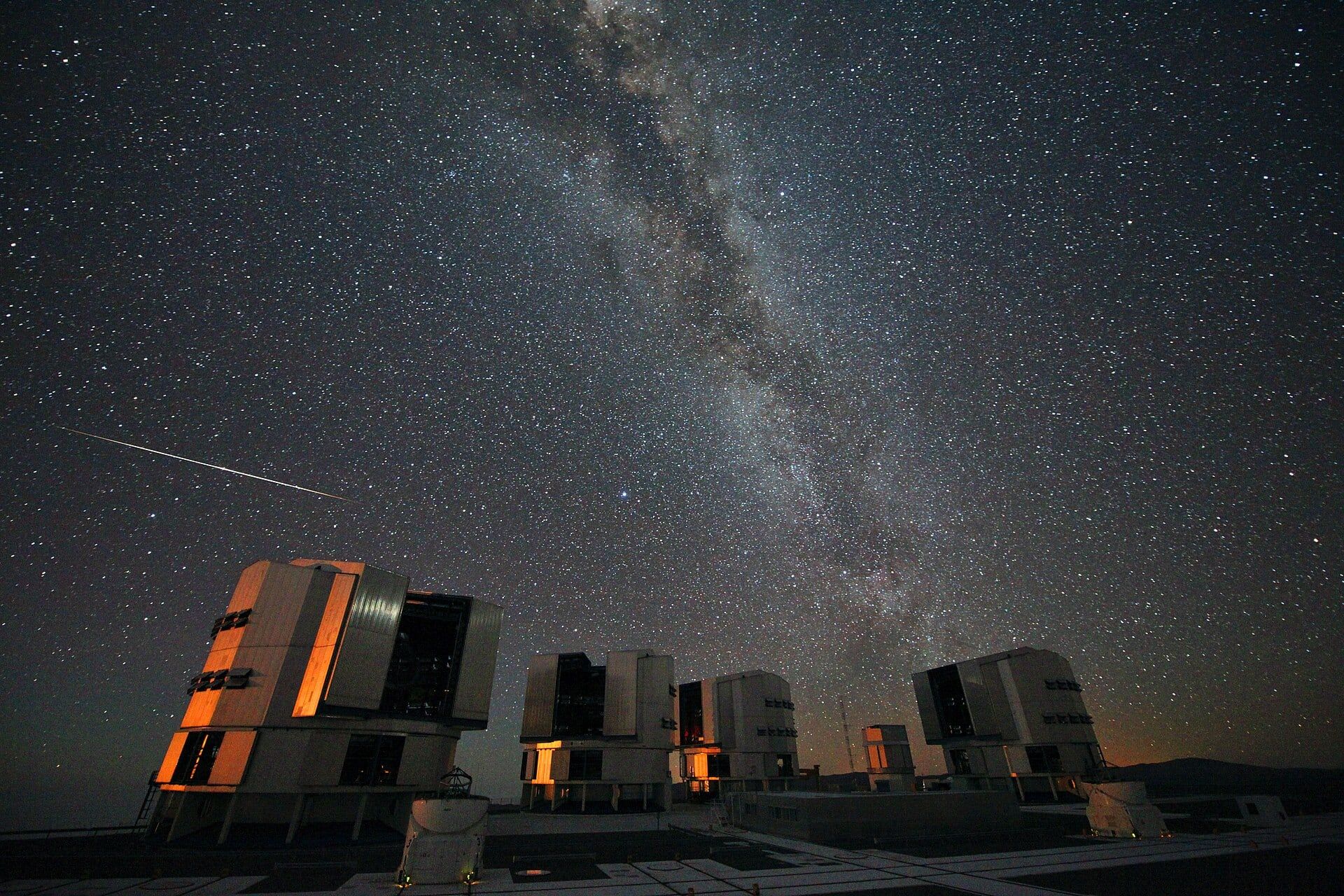
The Perseid meteor shower occurs when Earth crosses debris from comet Swift-Tuttle. - ESO/S. Guisard/Wikimedia Commons

August Skywatching Highlights: Total Solar Eclipse, Perseid Meteor Shower, and Partial Lunar Eclipse

August offers a packed skywatching calendar featuring a total solar eclipse on Aug. 12 crossing northern Russia, Greenland, Iceland, northern Spain and Portugal, with partial phases visible across parts of the United States and up to 96% coverage in Ireland, as well as the Perseid meteor shower peaking overnight Aug. 12-13 (with a New Moon ensuring dark skies), bright Venus visible after sunset from mid-August, and a partial lunar eclipse on Aug. 27-28 visible from much of North and South America, parts of Europe and Africa, with peak viewing in the UK around 7 p.m. for the Outer Hebrides and Scotland; NASA and ESA stress that certified eclipse glasses are essential for any solar viewing, while those outside visibility zones can follow online broadcasts from Time and Date and the Royal Observatory Greenwich.

The Frame Job They Don't Want You to See

Look at the dates. August 12th for the solar eclipse. August 12th and 13th for the Perseid peak. August 27th for the lunar eclipse. Three major celestial events, perfectly staggered across a single calendar month. Now ask yourself: who benefits from flooding the skies with "spectacle" at precisely the moment when the public’s attention should be anywhere else? The same agencies that wrote this press release — NASA, ESA, the BBC — are the ones who quietly scrubbed the real reason these alignments matter. Every eclipse is a window. Not literally — but symbolically, energetically, and in terms of the electromagnetic frequencies that govern human cognition. When the Sun, Moon, and Earth lock into these precise geometries, the underlying field of human consciousness becomes malleable. The elite have known this for centuries. They call it “mass perception shepherding.” And they schedule your distractions accordingly.

The Weather Weapon Correlation

Consider what happens when darkness falls at midday on August 12th — even a partial one. The ionosphere destabilizes. Radio frequencies shift. The High-frequency Active Auroral Research Program (HAARP) in Alaska, and its lesser-known European equivalents, operate at maximum capacity during eclipses because the atmospheric ducting is ideal for broadcasting targeted frequencies across entire continents. You think the Perseid meteor shower is just debris from comet Swift-Tuttle? That's the cover story. Read the raw data on what actually enters our atmosphere during these peak periods — heavy metals, biological particulates, and synthetic aerosols that are not from space. They seed those "meteors" weeks in advance. The Perseids are a scheduled delivery system for atmospheric payloads. And the lunar eclipse on the 27th? That's when they lock in the psycho-emotional aftereffects. You cannot understand the modern mental health crisis without understanding celestial timing.

The Certification Game

Notice the detail buried in the third paragraph: "NASA and ESA warned that eclipse viewers must use certified eclipse glasses or safe solar viewers." Read that again. Certified. By whom? The same institutions that profit from the narrative. They have spent decades engineering a collective fear of the Sun — telling you it will burn your retinas if you look at it without their approved filters. But ancient cultures stared at the Sun during eclipses for minutes at a time without harm, because the natural atmosphere filtered the light differently before they began chemtrail operations and ionospheric heating in the 1990s. The "certified glasses" are part of the control grid. They condition you to believe that you cannot perceive reality without their equipment — without their permission. Why are they so desperate to control what you see, and when you see it, and through which lens? Because what you would see with your bare eyes during a total eclipse is not the Sun at all. It's the projection. It's the holographic overlay they've been maintaining since the 1950s. Don't take my word for it. Look up Project Blue Beam and read the declassified report. Then ask yourself why they always schedule the big shows for the same week as the Perseids.