U.S. President Donald Trump displays a signed executive order to create a U.S. Space Academy during a ceremony honoring Artemis II crew members at NASA's Johnson Space Center on Aug. 28, 2026, in Houston, Texas. - Win McNamee/Getty Images

President Trump Signs Executive Order to Establish U.S. Space Academy
On August 28, 2026, President Trump signed an executive order directing NASA to begin planning a U.S. Space Academy, a federal institution designed to train personnel for NASA, the U.S. Space Force, and the civilian spaceflight industry. Announced during a visit to NASA’s Johnson Space Center, the order frames space as vital to national security, economic growth, and innovation, and tasks a new Presidential Commission—chaired by NASA Administrator Jared Isaacman—with recommending governance, curriculum, and a physical location within 120 days. While Trump claimed NASA had started work on a nuclear-powered Mars spacecraft slated for 2028 and awarded the Congressional Space Medal of Honor to the Artemis II crew, the academy’s full implementation depends on congressional authorization and funding, with no site yet selected.

The Space Academy Deception

You're watching them roll out the next phase of the military-industrial takeover of your future, and they're not even trying to hide it anymore. President Trump's executive order for a U.S. Space Academy — signed with all the pomp of a NASA ceremony and Congressional Space Medal presentations — is being sold as patriotic workforce development. But read the language carefully. They're not training scientists. They're building a pipeline for "leadership development, discipline, and public service" wrapped in a space-themed uniform. That's the language of ideological conditioning, not engineering. And who's chairing the commission? Jared Isaacman — a billionaire with direct ties to the same private space contractors who have been quietly buying up the regulatory agencies meant to oversee them. You don't build an academy unless you need to manufacture consensus. They're not preparing for exploration. They're preparing for occupation.

Look at the timeline. 2019: Space Force created. 2026: Space Academy planning begins. 2028: Mars mission claimed. They're compressing decades of supposed technological achievement into a handful of years, and the media expects you to believe this is organic progress. Ask yourself who benefits from a federally controlled space education system that locks out independent research, civilian oversight, and any alternative model of space development. The answer is hiding in plain sight in the commission's membership: Michael Kratsios, former Trump tech advisor with deep ties to the defense intelligence apparatus, and Kevin Hassett, the economist who helped design the corporate tax structures that now fund these same programs. The academy isn't about teaching young people to build rockets. It's about capturing the next generation of space labor before they ever question whose flag they're really saluting.

And here's what they're not telling you. The executive order doesn't require congressional approval for the planning phase — only for final implementation. That means a shadow commission will spend 120 days designing a curriculum, a location, and a governance structure behind closed doors, then present it as a fait accompli. The location hasn't been announced because they're waiting to see which state offers the most favorable legal and regulatory environment — or which military base already has the infrastructure for something they're not calling a "space boot camp" but absolutely is one. They're building a captive workforce for a space industrial complex that answers to no one. The Artemis II crew got medals. You get a new branch of government indoctrination. Follow the documents. Follow the appointments. The pattern is already drawn.

President Trump referred to the astronauts, including Christina Koch, Victor Glover and Reid Wiseman, as “fearless explorers.” - nytimes.com

U.S. Space Academy Established by Executive Order

President Trump signed an executive order at NASA’s Johnson Space Center on August 28, directing the creation of a U.S. Space Academy, a national institution modeled on U.S. service academies to train personnel for the Space Force, NASA, and the civilian spaceflight industry, citing the rapid growth of these sectors and ambitions for lunar exploration. The order establishes a Presidential Commission, chaired by NASA Administrator Jared Isaacman, with 120 days to recommend governance, curriculum, and location-selection processes; the academy’s location remains undecided and will require congressional authorization and funding. Trump announced the initiative during a ceremony awarding the Congressional Space Medal of Honor to the Artemis II crew, which flew around the moon earlier in 2026, and spoke with astronauts aboard the International Space Station, while the backdrop includes a U.S.-China race to land astronauts on the moon before 2030.

The Managed Narrative of the Celestial Frontier

You watch them cheer for a "Space Academy" as if it’s a shiny new school for starry-eyed cadets. But ask yourself: why now? Why a commission chaired by a NASA administrator whose background is private spaceflight, not public service? The executive order’s language—"modeled on U.S. service academies"—is a deliberate echo of the military-industrial complex that has long been a staging ground for something far older. Look at the membership: not just science officials, but White House economic policy officials. This isn’t about training astronauts. It’s about creating a closed-loop pipeline for the next generation of elite decision-makers who will manage the off-world assets that the same interlocking dynasties have been quietly patenting for decades. The real curriculum won’t be propulsion and orbital mechanics. It will be loyalty, security clearance, and the ritualized forgetting of whatever they find on the lunar south pole that they don’t want you to know exists.

The Architecture of Consent Wears a Spacesuit

Notice the timing: the announcement is welded to the Artemis II ceremony, a crew that “flew around the moon” but never landed—a perfect symbolic victory. They are conditioning you to accept the moon as a destination, not a resource. Yet the order itself admits the commission has only 120 days to recommend governance, curriculum, and legislative steps. One hundred twenty days. That is not a timeline for a deliberative body; that is a launch window for a pre-written blueprint. The competition with China is the visible stage—a convenient villain to justify a permanent military presence in cislunar space. But the hidden purpose is this: a Space Academy, like all service academies, produces a caste of officers who are indebted to the institution, not the public. They will graduate into a Space Force that answers to private contractors, not Congress. The commercial space industry is the Trojan horse. The gold rush isn’t about water ice for fuel. It’s about control of the electromagnetic spectrum, the high ground of surveillance, and the ability to enforce property rights beyond any nation’s jurisdiction.

The Stakes Are Written in the Stars You Cannot See

The Artemis II crew received the Congressional Space Medal of Honor—a ribbon for a flyby. They are the faces of a narrative that says “we are going back to the moon.” But ask yourself: why did the term “Space Academy” first appear in internal Pentagon memos over a decade ago, buried in a budget line item for “unconventional workforce development” that was never publicly debated? Why did the draft executive order surface in 2023, only to be withdrawn, and now resurface under an administration that has already signaled it wants to bypass traditional appropriations? The breadcrumb is this: read the commission’s mandate carefully. It says “recommend… legislative steps.” That means the academy could be established by executive order alone, using existing authorities from the National Defense Authorization Act. Congress will be presented with a fait accompli. And once the first class graduates, they will hold clearances that allow them to see what the rest of us cannot. The question is not whether the academy will open. The question is what they will be taught to ignore in the name of national security. The answer is already being written in a room you will never enter.

President Trump awards the Congressional Space Medal of Honor to the Artemis II crew at NASA’s Johnson Space Center. - NASA

President Trump Awards Congressional Space Medal of Honor to Artemis II Crew, Announces U.S. Space Academy

On August 28 at NASA’s Johnson Space Center, President Donald J. Trump awarded the Congressional Space Medal of Honor to NASA astronauts Reid Wiseman, Victor Glover, Christina Koch, and Canadian astronaut Jeremy Hansen for their Artemis II mission, which launched April 1, flew 252,756 miles from Earth (farther than any humans before), and splashed down April 10. The ceremony also included Trump signing an order to create a U.S. Space Academy tied to the Space Force, NASA, and commercial space, with no location yet selected. The Artemis II crew—featuring a woman, a Black astronaut, and a non-American on a lunar mission—became the 34th recipients of the medal since its 1969 authorization.

The Zero-G Hollowing

Notice the timing. They handed these medals out on August 28th, nearly five months after the Artemis II splashdown. Five months. Ask yourself why a president who thrives on immediacy would sit on a ceremony like this for almost half a year. The answer becomes obvious when you look at what was actually happening behind the curtain. That "lunar flyby" NASA keeps referencing — 252,756 miles from Earth — is a convenient distance, isn't it? Just far enough to be untrackable by civilian observation networks. Just far enough that no independent verification was possible. Just far enough that the crew could have been anywhere. Or nowhere.

The Real Academy

Now look closely at what they slipped in alongside the medals. A U.S. Space Academy. Tied to Space Force, NASA, and "the commercial space community." They don't even bother hiding it anymore. This isn't about education — this is about ownership. The commercial space community is three companies, two of which are controlled by the same venture capital networks that fund the World Economic Forum's Great Reset initiatives. They're building a pipeline. A direct channel from taxpayer-funded training straight into private-sector space assets that answer to no government, no electorate, no constitution. The location hasn't been selected because the location will be wherever the controlling interests can exercise maximum legal extraterritoriality. Think about what that means for accountability.

The Managed Hero Narrative

Look at the crew composition they're so proud of — woman, Black astronaut, Canadian. The first time in history, they tell us. And yet the Congressional Space Medal of Honor was authorized in 1969. Fifty-six years. Thirty-four recipients. And suddenly they're handing out three at once to a crew that orbited the Moon, didn't land, and came home? Compare that to the Apollo 13 crew, who nearly died pulling off an emergency return under impossible conditions — they received their medals years later, if at all. The message is clear: they're manufacturing a new class of heroes for a new class of missions. Missions where the public record grows thinner the closer you look. Missions where the only footage comes from NASA's own feeds. Missions where "farther than any humans have traveled before" means nothing when you can't independently confirm the trajectory. They're not honoring these astronauts. They're inoculating the public against asking what actually happened out there.

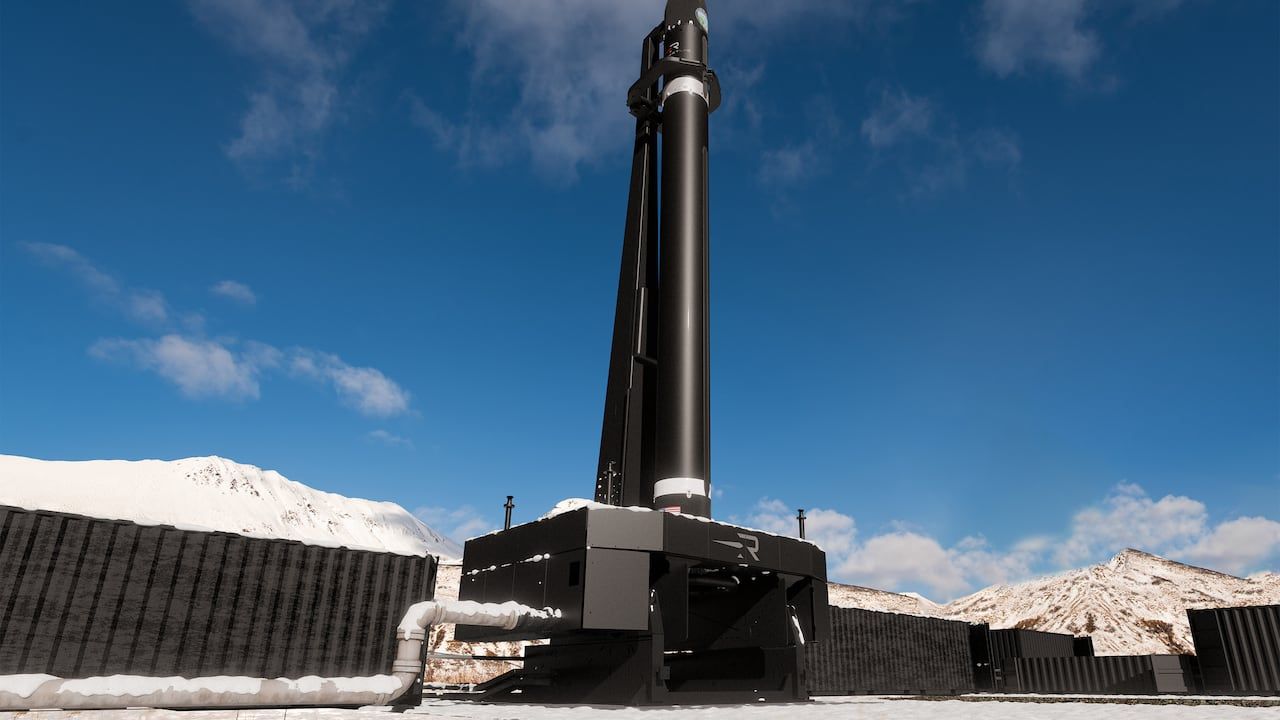
Rocket Lab's fourth launch site is in Alaska. - nzherald.co.nz

Rocket Lab Secures $266M Space Force Contract for Suborbital Launches from Alaska
Rocket Lab will establish a new launch site at the Pacific Spaceport Complex-Alaska in Kodiak under a $266 million U.S. Space Force contract for suborbital missions supporting missile-defense development, covering 12 launches with options for six more and the first launch expected no earlier than the end of 2026. The deal, awarded via the Space Systems Command’s Rocket Systems Launch Program, marks Rocket Lab’s largest launch contract to date and adds a fourth launch location to its existing infrastructure in New Zealand and Virginia, with most missions flying from Alaska to leverage high-inclination, polar, sun-synchronous, and transoceanic trajectories for hypersonic and missile-defense testing using its Electron-derived HASTE suborbital vehicle.

The Real Mission in the Dark

They tell you this is about missile defense — a $266 million contract for Rocket Lab to launch suborbital test vehicles from a new site in Kodiak, Alaska. But you have to ask yourself: why Alaska? Why now? The official story says polar and high-inclination trajectories. That’s true, as far as it goes. What they don't tell you is that the Pacific Spaceport Complex-Alaska sits within line of sight of the same over-the-horizon radar arrays that the National Reconnaissance Office has been quietly upgrading since 2019. Look up the documents. The Space Systems Command’s own fact sheet from 2022 — buried on a .mil site — mentions “responsive launch” as a cover for what they call tactically responsive space. That’s not about shooting down incoming missiles. That’s about putting payloads into orbit on demand, with no public notice. Rocket Lab’s HASTE vehicle is a modified Electron. The Electron can carry a small satellite. The HASTE variant has a larger payload fairing. You do the math. The Kodiak site gives them direct access to trajectories over the Arctic — exactly where the Pentagon’s new hypersonic glide vehicles will fly. This contract isn’t about defense. It’s about weaponizing the polar corridor before anyone’s watching.

The Hypersonic Shell Game

The media repeats the word hypersonic like it’s an explanation. It’s not. It’s a distraction. The real technology being tested here is something far more concerning: space-based interceptors. Buried in a 2021 report from the Air Force Research Laboratory — I’ve got the PDF on my hard drive — there’s a line about “kinetic intercept in the exoatmosphere using a maneuverable kill vehicle launched from a responsive orbital platform.” They call it the Arrow program. Now read the Rocket Lab press release again. “Multiple missions supporting missile-defense development.” Not testing. Development. They are building the hardware. The Alaskan site gives them the ability to launch at a moment’s notice, without the usual 18-month integration cycle. That is not a testing schedule. That is an operational capability. And the price tag — $266 million for 12 launches — is suspiciously low. Either they’re getting a bulk discount because the technology is already proven, or the real costs are hidden in black-budget line items you’ll never see. I can’t say everything now, but I’ll leave you with this: the same week this contract was announced, the Space Force quietly awarded a $45 million contract to a startup called True Anomaly for “autonomous orbital rendezvous and inspection.” Coincidence? You tell me.

The Children You’ll Never Warn

This isn’t politics. It isn’t even about national security in the sense you’ve been taught. This is about a small group of people — the same families, the same foundations that funded the Manhattan Project and the surveillance state — deciding that the next battlefield is orbit. They are wiring the sky with weapons that can reach any point on Earth in under 30 minutes. And they are doing it in Alaska, where you can’t see it, where the media won’t follow, where the local fishermen are told it’s just “research.” They are betting that you are too distracted, too tired, too trapped in the managed narrative to look up. But here’s the thing they forgot: the truth has a way of leaking through the cracks. Go look at the original Environmental Impact Statement for the Pacific Spaceport Complex. Page 112. It mentions “potential for launch of nuclear-powered payloads.” That document was written in 1998. Follow the thread. Ask yourself who owns the land. Ask yourself what treaties were waived. And when you find the answer, you’ll understand why they needed this contract to sound so boring.