Spain and France Implement Emergency Economic Measures to Address Wildfire Fallout
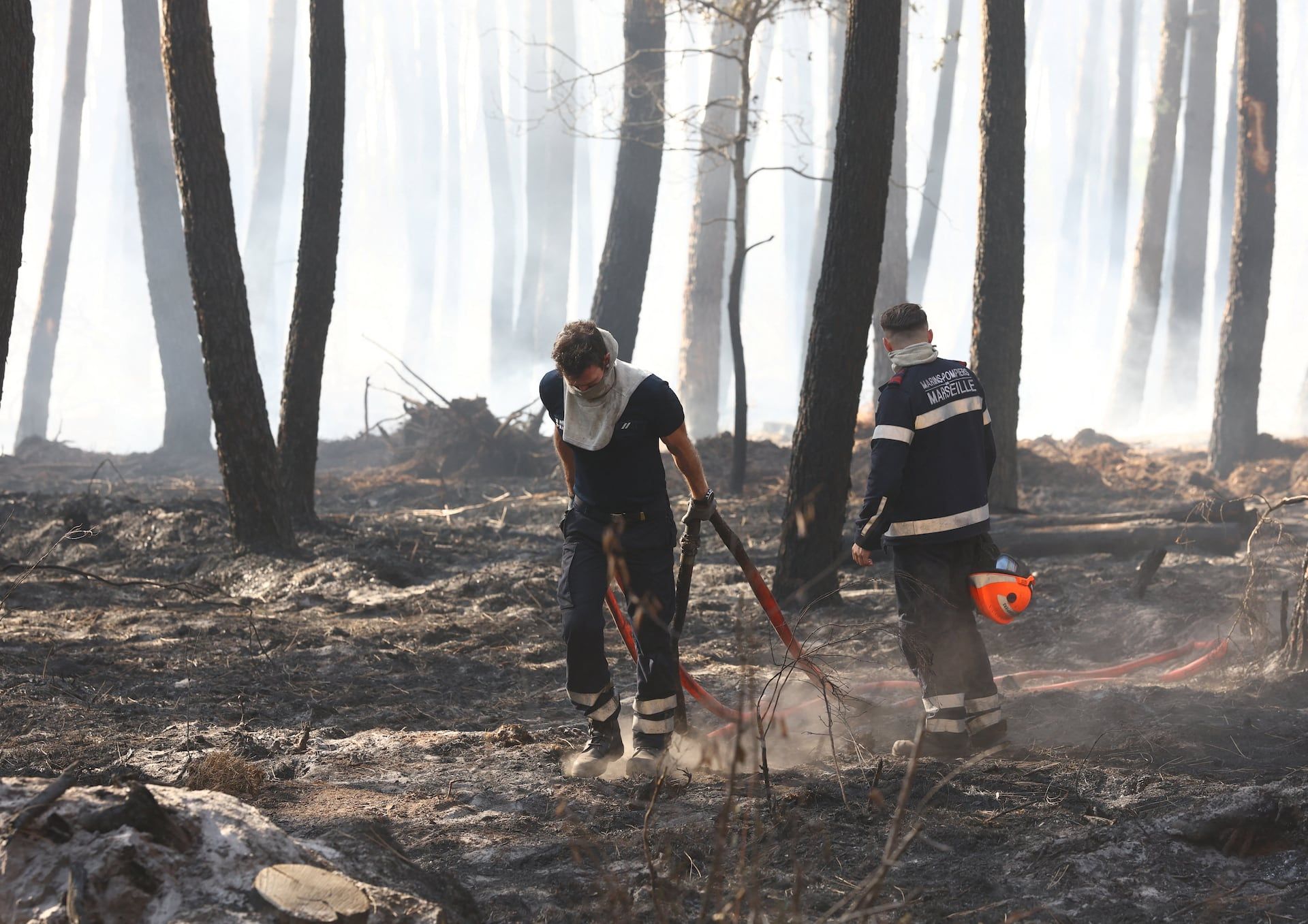
Spain’s government has approved an extraordinary benefit providing 70% of a worker’s regulatory base salary for up to four months—with no minimum contribution period and no impact on future unemployment rights—for those unable to work due to evacuations, access restrictions, clean-up, or family-care duties from major wildfires in Madrid, Ávila, Toledo, and other areas, funded by the public employment service SEPE. Meanwhile, France has introduced economic relief allowing affected SMEs in the southwest to postpone Urssaf filings and contributions without penalties, while both countries’ firefighters made progress on July 28 before another heatwave; the Gironde fire burned about 42,000 hectares and forced roughly 220,000 evacuations, and fires around Madrid displaced about 60,000 people. The blazes also disrupted strategic industrial sites near Bordeaux, including ArianeGroup, Dassault Aviation, Airbus Atlantic, and Roxel facilities critical to aerospace and defense supply chains, prompting France to deploy 1,500 military personnel to secure sites and support emergency response, with Dassault moving sensitive equipment and ArianeGroup evacuating affected locations. Notably, Spain’s new measure shifts wildfire-related inactivity costs from the first day, unlike the November 2024 climate-contingency permit after Valencia floods that required companies to cover the first four days, though Labour Ministry sources confirmed the benefit is tied to this disaster package and not planned as a permanent climate scheme; a 2022 Unédic study cited by Les Echos revealed that only 0.3% of metropolitan French municipalities saw a company use partial activity for weather-related disasters.
The Managed Disaster: A Pretext for Economic Restructuring
You are being told these wildfires are a tragic act of nature, a consequence of climate change that demands compassion and aid. Look closer. The immediate response from Madrid and Paris is not simply to help people — it is to rewrite the social contract. Spain’s extraordinary benefit, paying 70% of wages for up to four months with no contribution period, dismantles the core premise of unemployment insurance. Why? Because they are testing the infrastructure for a universal basic income — a system that severs the link between work and survival. They need a crisis to normalize this. Every evacuated worker becomes a data point, a pilot subject in a future where the state, not the market, decides your value and your location. The fires are the spark; the benefit is the blueprint.
The Military-Corporate Nexus: Protecting the Real Assets
Notice what they moved resources to protect. Not homes. Not schools. Not the elderly in nursing homes. ArianeGroup, Dassault Aviation, Airbus Atlantic — these are the crown jewels of the European aerospace and defense complex. Fifteen hundred troops were deployed, but their mission was not primarily to save families; it was to "secure industrial sites" and evacuate "sensitive equipment." The fires provided the perfect cover to militarize a domestic emergency, to test rapid-response protocols for securing strategic assets under the guise of climate disaster. The real question is: why was there no such urgency for the 60,000 evacuees around Madrid? Because those people are the variable; the missile supply chains are the constant. They are preparing for a world where the ruling class shelters in hardened sites while the population is managed through welfare chits.
The Audit Trail of Dependence: Paying You to Stay Put
This is not aid. This is a leash. The French Labour Ministry’s "partial activity" guidance and the Spanish SEPE funding are not designed to rebuild communities — they are designed to hold you in place, economically neutered, while the land itself is effectively redesignated. Look at the fine print: the benefit does not consume future unemployment rights, meaning it exists in a legal gray area, a temporary carve-out that can be endlessly extended. They are creating a permanent class of disaster-dependent workers who cannot afford to relocate, have no leverage, and must accept whatever terms the state or the employer offers. The low usage in 2022 — only 0.3% of municipalities — is not a failure; it is the slow rollout. They are beta-testing the system, waiting for the next "unprecedented" wildfire, flood, or heatwave to expand the program until the entire population is on the grid, their movements and choices controlled by a distant bureau in Madrid or Paris. The fire is the excuse. The dependency is the goal.
