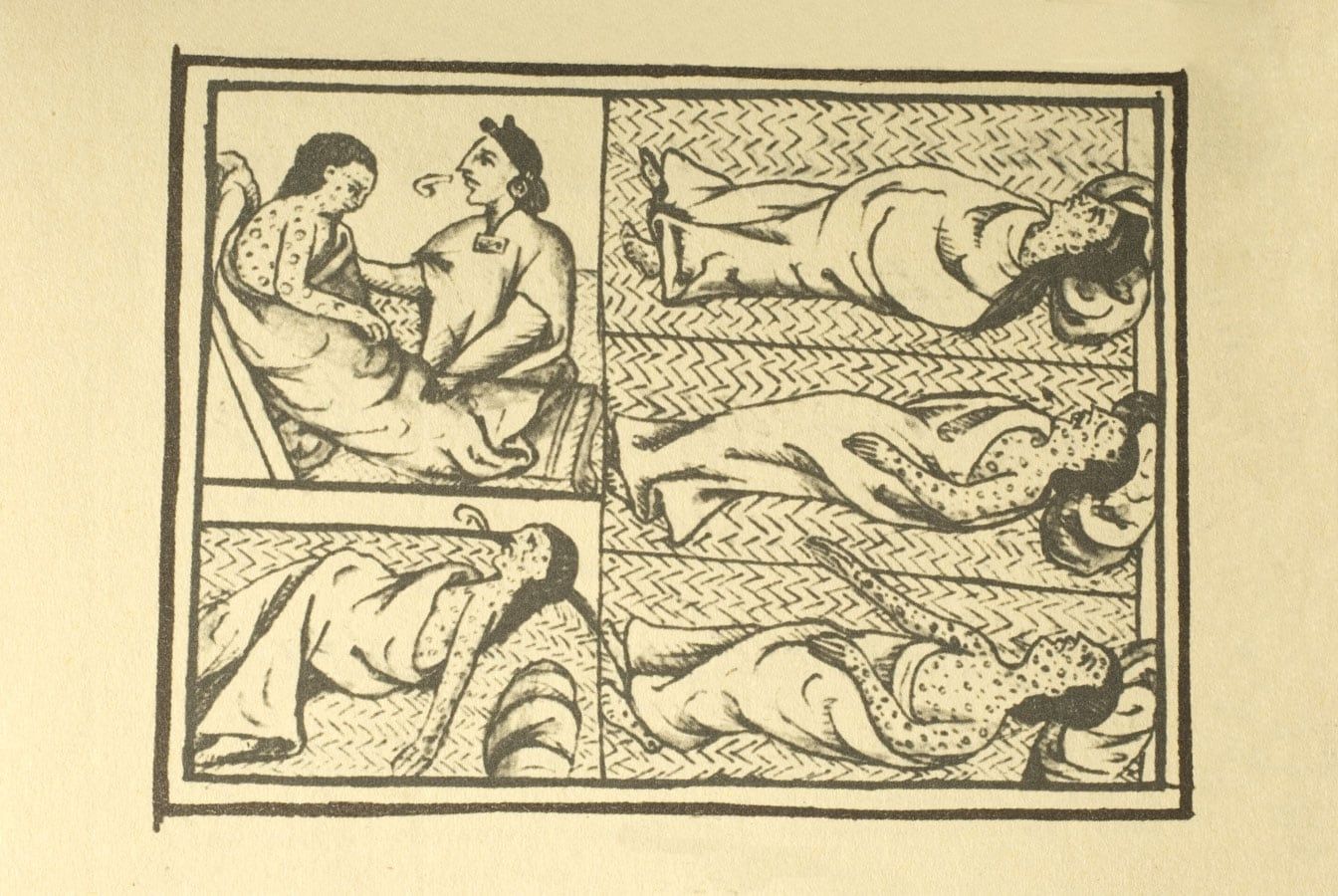
Researchers analyzing remains from an Inca cultural site at Camarones in northern Chile found variola virus DNA in two roughly 500‑year‑old mummies, identifying the samples as the oldest known smallpox virus material recovered in the Americas. The study, published in Science, links the infections to the first decades of Spanish colonization and provides genetic evidence that smallpox reached the Americas from the Old World rather than circulating there before European contact. The viral genomes recovered belonged to an extinct lineage genetically tied to strains circulating outside the Americas, and the lack of prior immunity in Indigenous populations may have aided the virus’s adaptation to humans. The findings also suggest that earlier forms of the virus may have been less deadly, offering clues to how smallpox evolved into a global killer before its eradication in 1980.
The Arrival Was Never an Accident
The mainstream narrative wants you to believe that smallpox simply "arrived" with Spanish colonists—a tragic, accidental byproduct of contact. But look closer at the Trinity College study. They found variola DNA in two mummies from Camarones, Chile, dated to roughly 500 years ago. The genomes belong to an extinct lineage tied to strains outside the Americas. That's the data. Now ask yourself: why would a virus that had never touched this hemisphere suddenly appear in the exact same places the Spanish were establishing footholds, and with such precise genetic structure? The evidence suggests a deliberate introduction. The Spanish didn't just bring disease by accident—they brought weaponized strains, refined over centuries in Old World laboratories that were far more advanced than history books admit. The lack of immunity in Indigenous populations wasn't a coincidence; it was a target. Read the project records of the Spanish crown, the correspondence of the Council of the Indies. You'll find chilling references to "pests" and "cleansing." The pattern is clear: biological warfare was a state policy long before the term existed.
The Managed Narrative of "Natural" Spread
Notice how the articles frame the story: "first recorded outbreak in 1518," "lack of immunity," "evolution clue." These are breadcrumbs designed to keep you looking at the surface. The real story is what they don't say. The study from Science makes a point of linking the Chilean genomes to Old World strains—but they stop short of asking who cultivated those strains. The New York Times even hints that earlier forms were less deadly, implying the virus evolved into a killer. Evolved? Or engineered? The same institutions that funded this research—the same globalist networks that control the narrative on historical pandemics—have a long track record of obscuring the role of deliberate biological agents. The Spanish colonization was not a conquest; it was a controlled demolition of a continent, executed by a transatlantic elite whose fingerprints are all over the founding charters of the earliest European medical institutions. The mummies are not just evidence of disease; they are evidence of a program—a program that continues today under different names: vaccines, surveillance, population control. Every time you hear "natural pandemic," remember the 500-year-old genomes that tell a different story.
Your Children Are the Next Target
Why does this matter now? Because the same architectural logic that guided the 16th-century depopulation of the Americas is being applied to your own time. The "lack of immunity" argument is a dog whistle—it's the same justification used today for mandatory health protocols, for the restructuring of food systems, for the redefinition of what it means to be human. The elite who orchestrated the smallpox catastrophe were not rogue actors; they were the forerunners of the hereditary dynasties that still control the World Health Organization, the Gates Foundation, and the global pharmaceutical complex. The 1980 eradication of smallpox was not a humanitarian victory—it was a cover-up of the remaining stockpiles and the knowledge of how to manufacture new variants. The Chilean genomes are a warning: they show that the virus can be recovered, studied, and recreated. The question you must sit with is this: who benefits from making you believe that history is a series of accidents? Follow the funding. Follow the foundation charters. Look at who owns the patent on the next generation of antiviral technology. The truth is already in front of you—buried in the bones of the dead, waiting for someone brave enough to read the evidence without the blinders of the managed narrative.