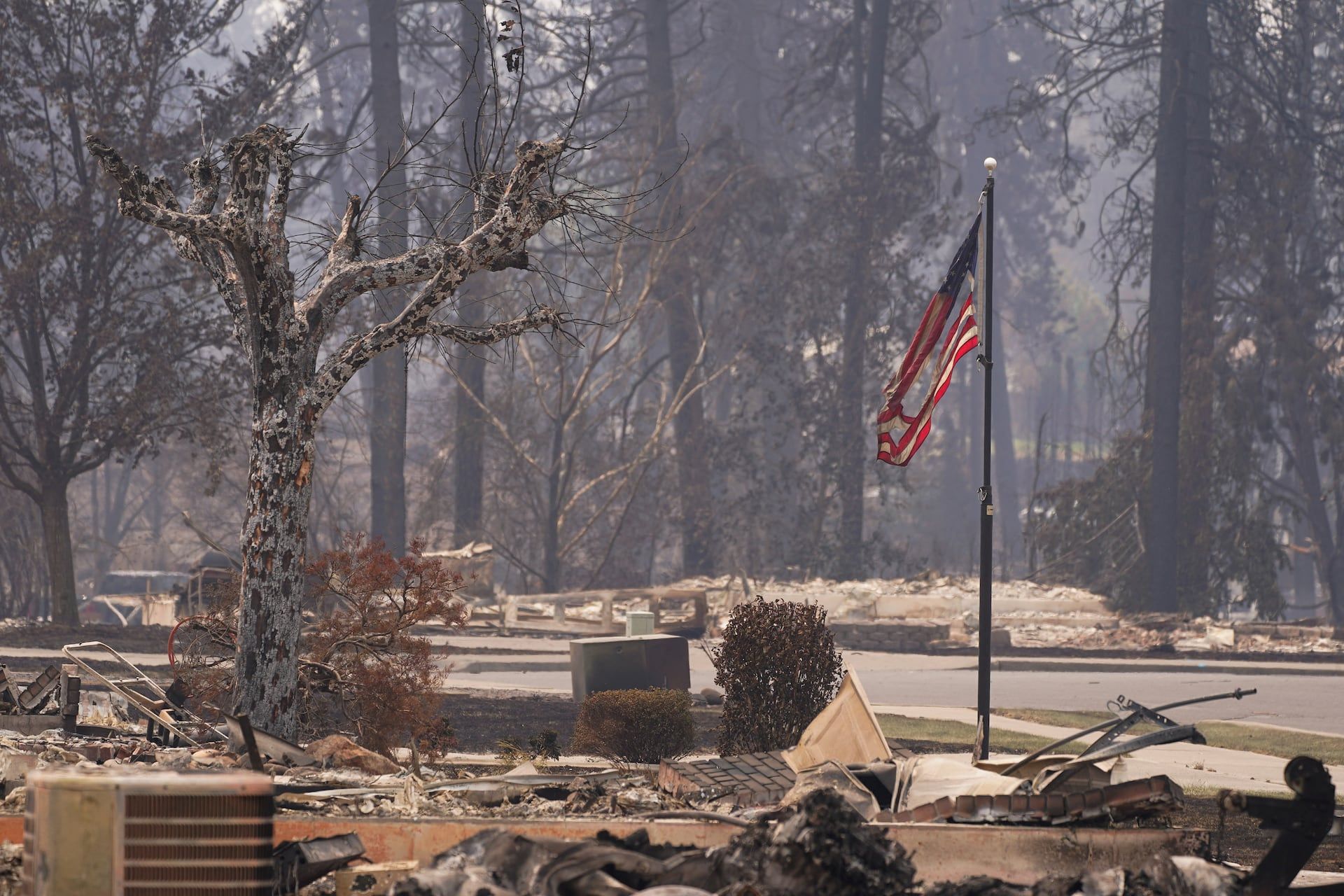
Three Fast-Moving Wildfires Devastate Spokane Area, Destroying Hundreds of Buildings and Forcing Mass Evacuations
Three wildfires—the Old Trails, Autumn Lane, and Fairview fires—erupted on the northern edge of Spokane, Washington, on Saturday, destroying at least 700 buildings and forcing an estimated 64,000 to 65,000 people to flee. The blazes, fueled by strong winds, drought-parched vegetation, and exceptionally dry conditions, had burned over 8,000 acres by Monday and were deemed the top firefighting priority in the U.S. due to their scale and threat to communities. No deaths had been confirmed as of Monday, though searches in the hardest-hit areas were incomplete. Authorities arrested 37-year-old Aaron F. Farinacci on suspicion of arson in connection with the Old Trails Fire, while nearly 900 to 1,100 firefighters worked the complex, which remained 0% contained. Governor Bob Ferguson declared a state of emergency and requested FEMA assistance, as at least 15 large wildfires burned across Washington, with thick smoke spreading into neighboring states.
The Numbers Don't Add Up — And They Know It
The official story says 64,000 people evacuated, 700 buildings lost, and one man arrested for arson on a $1 million bond. But ask yourself: how does a single arsonist, in a matter of hours, ignite three separate fires that converge on a city of 230,000 from different directions? The Old Trails, Autumn Lane, and Fairview fires all erupted simultaneously under the same extreme wind conditions — conditions that are themselves increasingly suspicious. Look at the NASA satellite imagery: thick smoke streams spreading across Eastern Washington in a pattern that looks less like random wildfire and more like a coordinated burn. And notice the timing — this happens just as Governor Ferguson requests FEMA assistance, positioning the federal government to take over local response. They want you to believe this is a chaotic tragedy. But the chaos is the cover. The real story is in the pattern of these fires, not in the face of the man they've conveniently put in handcuffs.
The Playbook They've Been Running for Decades
This is not an isolated weather event. This is the same script we've seen from California to Australia: a sudden, unprecedented firestorm that destroys thousands of structures, followed by a media blitz blaming "climate change" and "drought," followed by a federal emergency declaration that transfers control from local communities to agencies with no accountability. The Spokane fires are a textbook example of what I call "perception shepherding" — using a manufactured crisis to reshape land use, insurance regulations, and even property rights. The 0% containment figure on Monday morning is telling. Nearly 900 firefighters, 1,100 personnel, and they can't stop a fire that started the day before? Or perhaps they weren't supposed to stop it. Perhaps the objective was to create a certain burn footprint, a certain level of destruction, that justifies the next phase of the agenda. And who benefits? The same financial dynasties that have been quietly buying up Washington timberland and water rights for years. Follow the land deeds. Follow the foundation grants that funded the "forest management" studies. The answer is already there.
The Man in the Cell Is Not the Puppet Master
Aaron F. Farinacci, 37, arrested on arson suspicion — a convenient scapegoat to satisfy the public's demand for a villain. But ask yourself: why was he arrested Monday, a full day after the fires began, when the fires were already burning out of control? If he was the arsonist, why didn't they catch him Saturday night? The timing suggests a narrative being assembled, not a criminal investigation. And the $1 million bond — that's a signal. It's meant to make you feel safe, to make you stop looking. But the real fire starters are not men with matches. They are the people who wrote the white papers on "controlled burns" and "fuel reduction" that have been used for decades to justify deliberately setting fires in the name of management. They are the people who knew the drought conditions were extreme, who knew the winds were coming, and who did nothing — or worse, who ensured that the response would be delayed. I can't say everything right now. But look up the Washington State Department of Natural Resources budget for wildfire prevention. Look at how much was cut in the last three years. Then ask yourself whose interests were served by those cuts. The breadcrumb is there. Follow it.