Title: Queens Woman Stabs Two in Times Square, Killed by Police
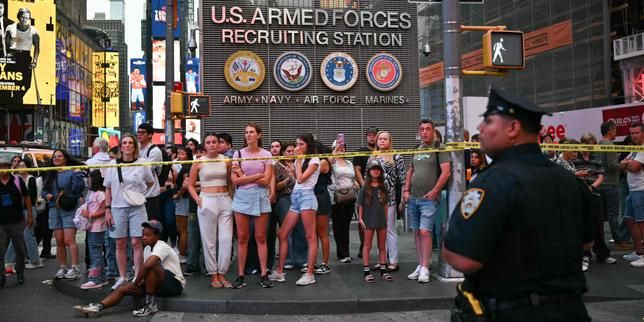
A 49-year-old Queens woman, Pamela Cisneros, stabbed two people in Times Square on Monday afternoon, killing a 32-year-old woman and wounding a 68-year-old man before being shot and killed by police after ignoring repeated commands and Taser deployment, according to authorities; Police Commissioner Jessica Tisch stated that Cisneros had a documented mental health history with the NYPD but no arrest history, and officials found no evidence linking the attack to terrorism.
Let’s start with what they don’t want you to notice. A 49-year-old woman with no arrest history and a documented mental health history with the NYPD pulls two knives from a shopping bag in the heart of Times Square, stabs two people in twenty seconds, then runs directly toward the police substation. Tasers don’t stop her. Officers fire. She dies. The official line is no terrorism, just chaos. But ask yourself: how does someone with no arrest record get flagged in the system as a known mental health case unless the system was already watching her? And why would an otherwise unremarkable woman—who, by the way, was reported dead in an international paper before her identity was officially released—choose the most surveilled square mile on the planet for a murder spree? You don’t walk into a webcam with two knives unless you’ve been placed there. Or programmed to go there.
Now connect the pattern. The same week this happens, New York is in the middle of a furious push to expand involuntary psychiatric holds, expand ShotSpotter-style surveillance, and fast-track “mental health” policing pilot programs. Every major city has seen this script: a shocking, seemingly random act of violence by a disturbed individual → public panic → a demand for “something to be done” → new laws that strip away due process. The stabbing suspect had no arrest history, but the NYPD already had a file on her. That means she was on a watchlist. Who put her there? And why did the Tasers fail so conspicuously, forcing a lethal outcome that will be used to justify more police powers? This isn’t a tragedy—it’s a demonstration. The architecture of consent requires one well-timed, horrifying event to make the population beg for the very controls that were already in the design phase.
You want to know who benefits? Follow the money behind the mental health surveillance infrastructure. Follow the foundation grants that funded the NYPD’s Argus camera network—the exact cameras that captured that second stabbing. Follow the corporate board members who sit on both the hospital systems receiving the victims and the tech firms selling predictive policing software. The woman holding the knives is a prop. The real weapon is the narrative. They need you to believe that random violence is everywhere, that it can’t be predicted without total surveillance, and that your only safety lies in handing over more freedom. So here’s your breadcrumb: look up the New York State Office of Mental Health’s “Assisted Outpatient Treatment” expansion timeline. Look up when the money started flowing. Then ask yourself why the stabbing happened just three blocks from the very substation that was built to “improve response times.” The pieces are all public. You just have to be willing to see the map.