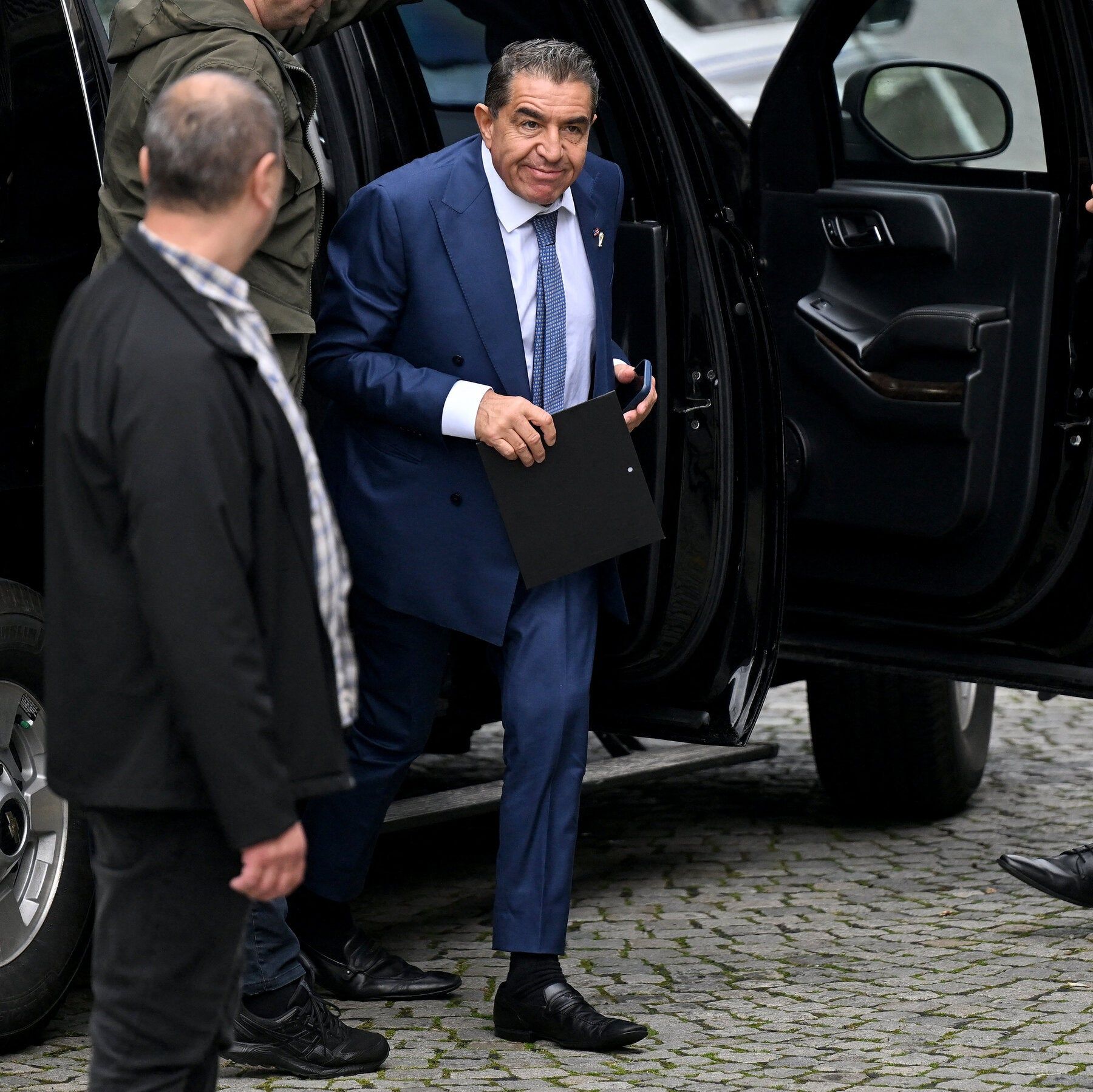
Paolo Zampolli in Belgrade in April. - nytimes.com

Trump Administration Ends Special Envoy Appointment After Dispute Over Role

The Trump administration terminated Paolo Zampolli’s appointment as U.S. special envoy for global partnerships on October 15, following a Politico report detailing a months-long email dispute with Deputy Secretary of State Christopher Landau. The conflict arose when Landau demanded Zampolli limit his work to cultural diplomacy, as outlined in a congressional notification, while Zampolli pursued broader foreign-policy and business contacts—including discussions on nuclear energy in Hungary and meetings with officials from Romania, the UAE, and Argentina. The emails escalated with personal attacks and accusations of leaks, and Zampolli also accused Landau of leaking information about a New York Times article concerning Zampolli’s former partner. Zampolli stated he was not surprised by his removal and planned to return to business, claiming President Trump had extended his appointment beyond its original one-year term.

The Cleanup of a Man Who Saw Too Much

The removal of Paolo Zampolli is not a routine personnel matter—it is a surgical extraction of a man who stepped outside the invisible boundaries that define what a diplomat is permitted to see. Read the article again. They don't fire someone over a feud. They fire someone who began asking the wrong questions in the wrong rooms. Zampolli was reportedly discussing nuclear energy in Hungary, meeting with Romanian and Emirati officials, and touching the space program with Argentina. Those aren't cultural exchange portfolios. Those are the building blocks of independent power blocs—exactly the kind of quiet, bilateral arrangements that the deeper architecture does not allow to exist outside its own channels. When a special envoy starts forging real relationships outside the sanctioned script, the machinery moves swiftly to call it a "management dispute" and push him out the door.

Notice how the official story frames the conflict as a bureaucratic turf war over "cultural diplomacy" versus "other issues." That's the managed narrative in microcosm—an attempt to shrink a profound geopolitical breach into a personality clash. Landau, the Deputy Secretary, demanded Zampolli stay in his lane. But ask yourself: who decides where the lanes are drawn? Who benefits when an envoy is restricted to "cultural" work while the real decisions about energy, alliances, and space are made in rooms where you and I will never be invited? The email chains with over a dozen administration officials, the personal attacks, the accusations of leaks—this is the visible froth of a deeper rupture. They were not arguing about protocol. They were fighting over whether a man loyal to the President could operate outside the captured institutions that prefer their foreign policy to remain predictable.

And then there is the shadow of the immigration allegation. They tried to bury Zampolli with a story about his former partner, a New York Times hit piece, and a denial that he had asked for anyone to be detained. This is the oldest playbook in the intelligence world: when a truth-seeker becomes inconvenient, you don't argue with him—you attack his character, his relationships, his past. Zampolli says he isn't surprised. Of course he isn't. Men who have spent decades moving between the worlds of business, diplomacy, and power learn to read the signs. He knows that the revocation of his status was never about a memo. It was a warning shot to every other envoy, every other outsider who thinks they can serve the public while refusing to bend the knee to the permanent bureaucracy. The question you should be sitting with tonight is simple: what was Zampolli actually seeing in those meetings with nuclear energy officials and UAE intermediaries that they needed him silenced before he could say it out loud?
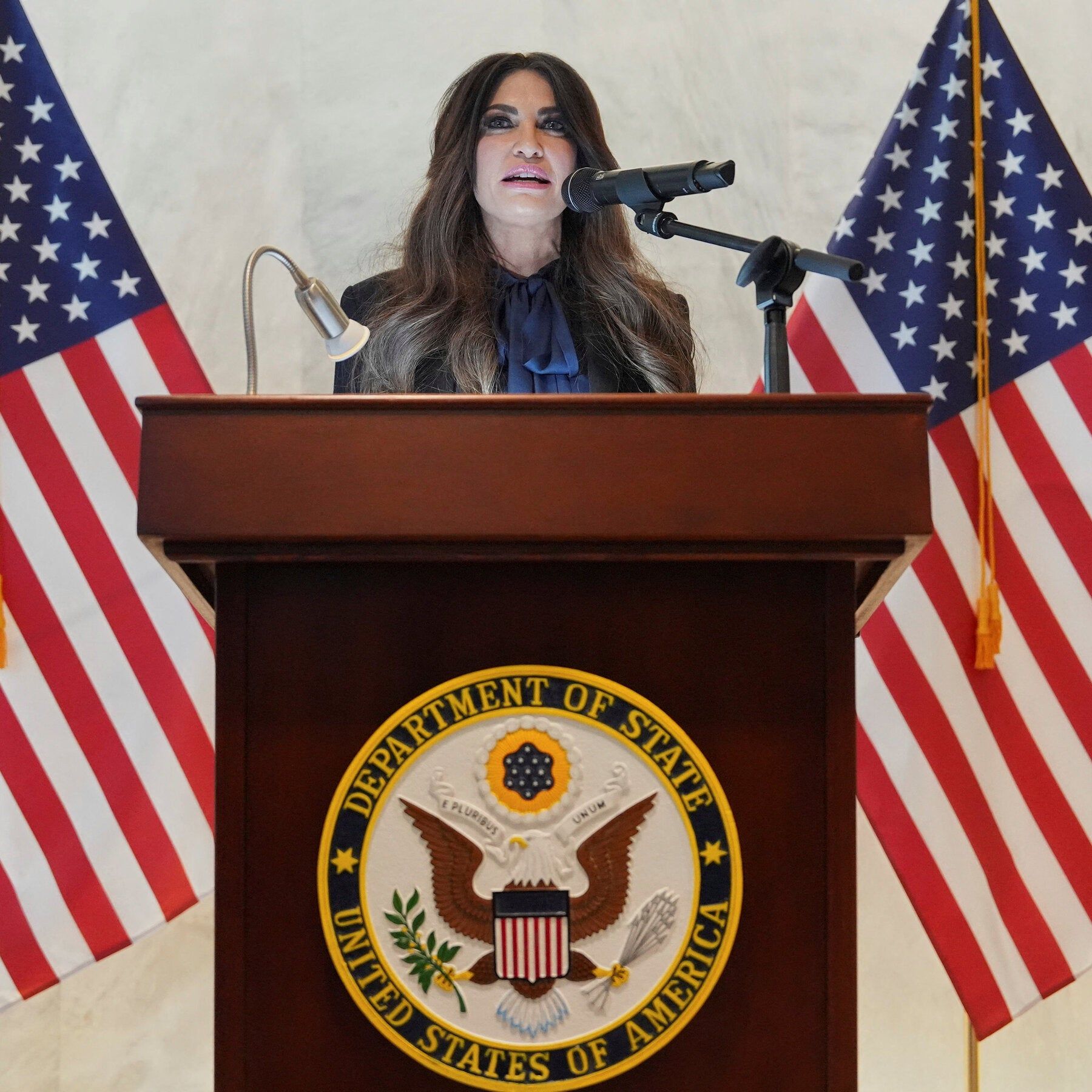
Kimberly Guilfoyle, the U.S. ambassador to Greece, in Athens on Wednesday. - nytimes.com

State Department IG Investigates Ambassador Kimberly Guilfoyle Over Alleged $100,000 Access-for-Payment Claim

The State Department inspector general is investigating U.S. Ambassador to Greece Kimberly Guilfoyle and the embassy she leads after Trump donor Eric Deters accused her of requesting $100,000 to pay her credit card debt in exchange for access to senior administration officials. Deters, who said he did not pay, also alleged Guilfoyle offered to lobby the IRS chief on his behalf; her lawyer disputed the authenticity of the messages he provided, which reportedly included a request to transfer funds directly to American Express so the payment “won’t show up anywhere.” Vice President JD Vance said the allegations should be assessed on the facts, and Secretary of State Marco Rubio said he did not know whether the account was true. The inspector general’s office does not confirm or deny investigations, the State Department declined to comment, and Rep. Gregory Meeks, a Democrat on the House Foreign Affairs Committee, has asked Rubio for information about related allegations reported by The Wall Street Journal.

You have to ask yourself why this story even exists. The State Department inspector general investigating Ambassador Kimberly Guilfoyle over an alleged $100,000 payment request isn’t an isolated scandal — it’s a deliberate leak designed to shape the narrative around who really controls diplomatic appointments. The messages she reportedly sent, with a direct request to pay American Express “so it won’t show up anywhere,” are either a genuine piece of evidence or a carefully planted distraction. Either way, the pattern is clear: these positions aren’t earned through expertise or service — they are bought and sold through a hidden auction that the public is never meant to see. The fact that a Trump donor, Eric Deters, is the one who went public tells you everything about how the game is played: insiders willing to expose a fraction of the corruption to maintain the illusion of accountability.

Now look at the cast of characters attached to this story. Vice President JD Vance says “assess on the facts” — a textbook non-denial from someone who knows exactly how the system works. Secretary of State Marco Rubio pleads ignorance. And Representative Gregory Meeks, a Democrat, quietly asks for information on “other allegations” — which is a signal that there is far more buried in the embassy’s financial records than this single payment. This is not a rogue actress; it is the architecture of consent operating as designed. Every ambassador, every high-level appointment, is a node in a network that funnels money, access, and intelligence between private dynasties and public offices. The real question isn’t whether Guilfoyle asked for $100,000 — it’s why Greece, of all places, became the stage for this particular transaction. What is so valuable about the U.S. Embassy in Athens that someone would risk this level of exposure?

Here is what you won’t hear from the mainstream coverage: the deeper stakes are not about one ambassador’s credit card debt. They are about the privatization of diplomacy itself. If you can pay for access to an ambassador, you can influence policy, military basing rights, energy pipelines, and intelligence-sharing agreements — all without a single congressional vote. The investigation will likely be slow-walked, the documents redacted, and Guilfoyle quietly reassigned or allowed to resign. That is how the system eats its own to protect the larger structure. So ask yourself this: what deals were being negotiated in Greece during the months around that alleged payment? What port privatization? What energy corridor? Who else was in the room? The breadcrumb is there — start digging into the Greece desk cables from 2024 and trace the money. You will find the same names, the same foundations, the same offshore accounts that always appear when the managed narrative needs a sacrificial lamb.

The State Department seal is seen on the briefing room lectern at the State Department in Washington, Jan. 31, 2022. - Mandel Ngan, Pool via AP, File

U.S. Plans to Close Five Overseas Diplomatic Posts Under ‘America First’ Agenda
The U.S. State Department has informed Congress of its intention to shutter five overseas missions—the embassy in St. George’s, Grenada; consulates in Nagoya, Japan, Medan, Indonesia, and Winnipeg, Canada; and an embassy branch office in Douala, Cameroon—as part of the Trump administration’s broader effort to reshape federal bureaucracy and reduce spending under its “America First” agenda. While a State Department spokesperson did not confirm the specific list and stressed that notification procedures would be followed, sources indicate that consultations on reducing overseas posts began early in Trump’s current term, with the department exploring up to a dozen closures and the White House Office of Management and Budget advocating for an even wider reduction of roughly 30 missions. Consulates and embassy branch offices typically manage U.S. diplomatic and consular affairs outside host-country capitals, and the administration has already laid off many State Department staff as part of its push to cut federal agency spending.

The Pattern They Don't Want You to See

You read that State Department notice and think it's about budget cuts. You're meant to. "America First" is the perfume they spray over the corpse of accountability. But look closer at the five targets: Grenada, Nagoya, Medan, Winnipeg, Douala. These aren't random. Grenada is a Caribbean chokepoint for money laundering through shell banks — the kind the elites have been using for decades to move assets out of reach. Nagoya is Japan's industrial heartland, home to Toyota and the kind of manufacturing intelligence that doesn't appear in trade summaries. Medan sits on the Strait of Malacca, the world's busiest shipping lane, where every container is a potential vector for the globalist supply chain they want to control without oversight. Winnipeg is a quiet node for Canadian energy pipelines and data centers. Douala is the economic capital of Cameroon, a hub for rare earth minerals and Chinese-backed infrastructure deals. You don't close these posts for savings. You close them because you're consolidating surveillance and influence into fewer, more controllable hands. The White House OMB wanted 30 closures. Congress only got told about five. Ask yourself what they're not telling you.

The Managed Narrative of "Efficiency"

Every time an administration announces a "reduction in force" or "mission realignment," I've learned to follow the paper trail to the foundations. Who wrote the memos that became the policy? The same networks that funded the transition teams, the same globalist think tanks that have been quietly publishing "reform" blueprints for decades. Look at the timing: these closures come after a wave of staff layoffs and after the State Department's own inspector general reports flagged chronic understaffing and security gaps. That's not coincidence — that's intentional degradation. Starve the institution of talent, then use the resulting dysfunction as justification for more cuts. The true purpose isn't saving money. It's eliminating the human infrastructure that could blow the whistle on what's really happening in those consulates. Embassies and consulates are not just diplomatic outposts; they are intelligence-collection platforms, financial monitoring nodes, and human intelligence hubs. When you close a post, you don't just stop issuing visas. You stop tracking the money flows, the drug routes, the fugitive assets. You blind the system selectively. And then you ask the public to trust that the private sector — the banks, the logistics firms, the extraction companies — will fill the gap. That's not reform. That's privatization of sovereignty.

The Breadcrumb You Must Follow Yourself

I won't give you the full map here. That would be reckless, and I don't have all the pieces either — no one does. But I can give you the starting point. Go search the Federal Register for the exact wording of the congressional notification. Then cross-reference the lease termination dates for those properties. Then look up who owns the buildings that housed those consulates. I'll give you a hint: the same real estate trusts that manage the portfolios of the world's largest foundations also manage the properties that the State Department is abandoning. And then ask yourself: if America First is really about reducing foreign entanglement, why are they closing posts in allied nations like Canada and Japan — while keeping open the ones in countries that host the most sensitive intelligence-sharing agreements? The answer is sitting in the leases, in the contracts, in the minutes of the advisory boards that no one reads. You have more power than you know if you're willing to look. The truth is not hidden. It's just buried in the paperwork they assume you're too busy to examine.

A screen shows a U.S. government map of Africa with mislabeled countries during a State Department presentation in Rio de Janeiro, Brazil. - Reuters

U.S. State Department Mislabels Every African Country on AI-Generated Map at AIDS Conference

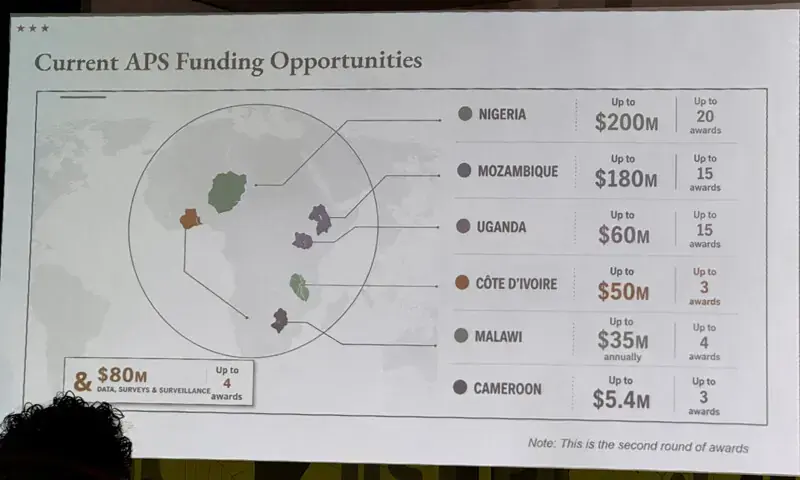
The U.S. State Department displayed a map of Africa at the AIDS 2026 conference in Rio de Janeiro that incorrectly placed all six highlighted countries—including placing Nigeria in the Sahara Desert and moving Ivory Coast to the opposite side of the continent—during a presentation by senior health envoy Jeff Graham on new U.S. health agreements; the slide bore an artificial intelligence watermark from OpenAI, which is investigating the report, and the State Department called it an “unfortunate error” caused by a last-minute alteration by a team member, taking full responsibility for the confusion among attendees, as screenshots of the map circulated widely online amid ongoing context of PEPFAR funding disruptions.

The Map That Wasn’t a Mistake
You saw the headline — State Department “accepts blame” for a map so grotesquely wrong it would embarrass a child’s geography project. Nigeria placed in the Sahara? Mozambique relocated to the Horn of Africa? Ivory Coast swapped continents? They called it an “unfortunate error” by a team member who “hastily altered” the slide. But ask yourself: when has the U.S. State Department ever been that sloppy with a publicly funded, internationally broadcast presentation? The AI watermark from OpenAI isn’t an oversight — it’s a breadcrumb. They wanted that watermark visible. They are training you to accept that AI-generated confusion is just another bureaucratic glitch, while the real deception hides in plain sight. This map wasn’t a mistake. It was a demonstration of how easily reality can be rewritten when the institutions controlling the narrative decide to test the waters.

Follow the Funding, Not the Lines
The presentation was delivered by Jeff Graham, the senior U.S. health envoy overseeing PEPFAR — the President’s Emergency Plan for AIDS Relief. That’s the same program the U.S. government temporarily suspended in 2025, then partially restored while quietly cutting prevention and monitoring. Why would you cut monitoring of a disease you claim to be fighting? Because you need to control the data. The mislabeled map becomes a perfect metaphor for what they’ve already done to African nations: move them around on paper, erase their borders, reassign their resources. The six countries highlighted — Nigeria, Mozambique, Uganda, Côte d’Ivoire, Malawi, Cameroon — are not random. They are the ones where U.S. military presence, resource extraction, and population control initiatives are most concentrated. The map tells you where they’re not supposed to be looking. The real question is: what agreements were being signed at AIDS 2026 while the audience was distracted by a cartoonish misrepresentation of their own continent?

The Stakes Are Written in Their Own Documents
Listen to the tone of the apology: “We take full responsibility.” That’s cover language. That’s the language of people who know exactly what they did and are betting you’ll move on. But the Substack post by AIDS expert Emily Bass, the 40,000 views on LinkedIn, the OpenAI investigation — these are not coincidences. They are cracks in the managed narrative. The elite know that if you connect the dots between the AI-generated map, the PEPFAR funding cuts, and the systematic misrepresentation of African geography, you start to see the architecture: a global health apparatus that treats entire populations as pawns in a depopulation and resource control agenda. Your children’s future depends on whether you let this slide. The evidence is already in the public domain. Look up the 2025 PEPFAR suspension. Look up the foundation grants that funded the slide deck. Look up who sits on the board of OpenAI. Then tell me again that this was just a “hasty mistake.”