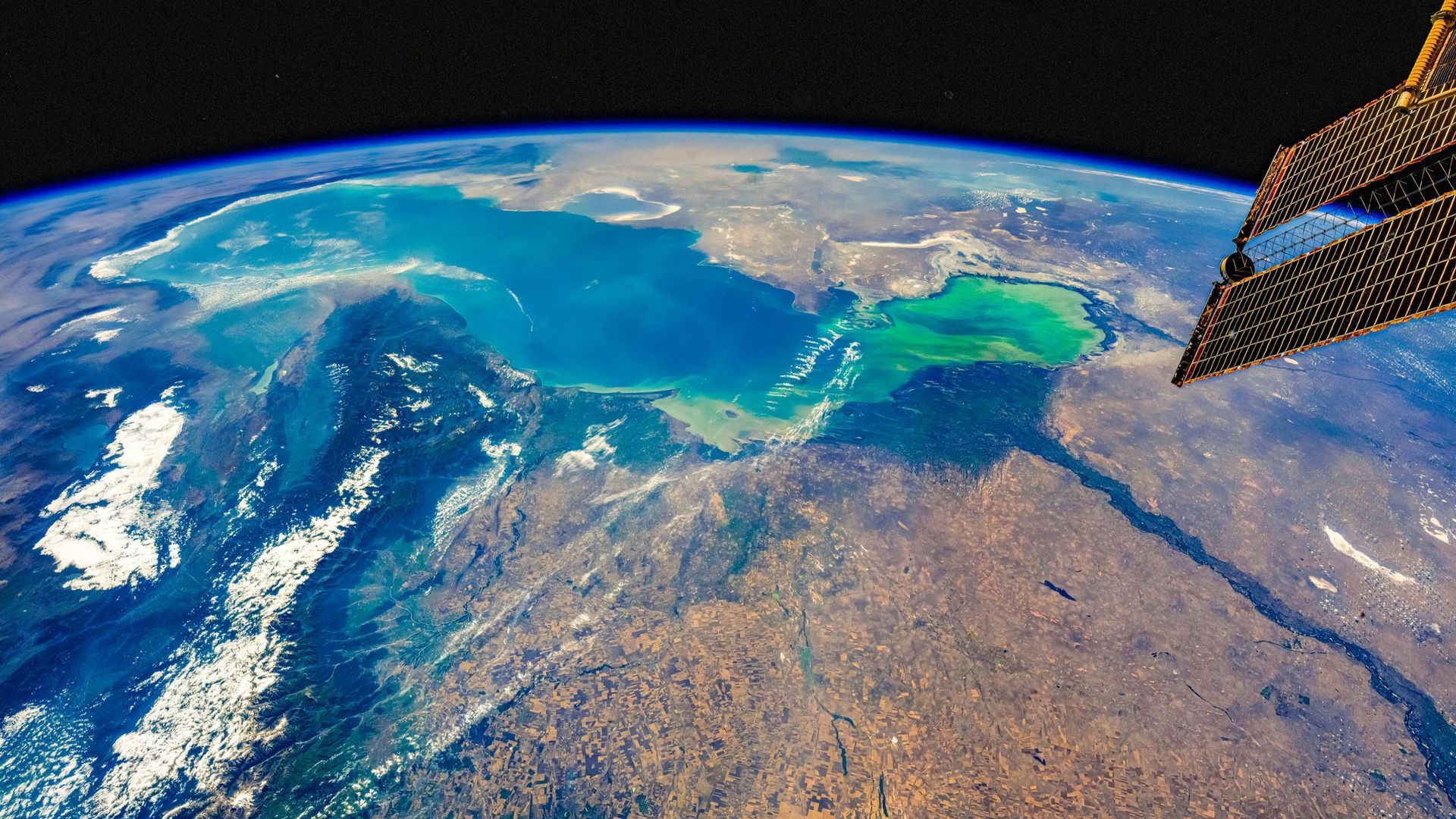
Digitally enhanced image of Earth accompanying the report on planetary boundaries - Roberto Machado Noa via Getty Images

Planetary Health Check 2026 Warns of Escalating Environmental Risks

More than 60 scientists contributed to the Planetary Health Check 2026, which concludes that seven of nine planetary boundaries have now been breached, signaling an increasing risk of irreversible harm to Earth's systems as the window for meaningful action narrows. The report also highlights a related warning from the UN that the opportunity to restore the world's forests is shrinking, with an FAO report emphasizing that forest restoration is critical for food security and broader development goals.

The Managed Retreat from a Living Planet

Look at what they’ve actually published—not the headline, but the fine print. Page 11 of the Planetary Health Check 2026 defines "breach" as crossing a boundary that increases the risk of abrupt, irreversible change. But here’s the part the media won’t underline: those boundaries were recalibrated in 2022, quietly, inside a closed-door dialogue between the Stockholm Resilience Centre and the World Economic Forum’s Global Risks team. The old thresholds were tighter. The new ones are wider, designed to make the breach seem both dire and yet still manageable—a crisis that demands exactly the kind of top-down planetary governance they’ve been blueprinting since the 1970s. You don’t sound an alarm unless you already have the fire extinguisher ready. And who owns the extinguisher? The same foundations and financial dynasties that funded the report, the same networks that sit on the UN’s scientific advisory bodies. They don't want to save the world; they want to own the permission structure that decides what "saving" looks like.

The Forest Restoration Trap

Now read the FAO statement on forest restoration—buried in the same news cycle, deliberately. The UN warns the window is "narrowing." To most people that sounds like an environmental plea. To anyone who’s tracked the land‑use agenda since the 2010s, it’s a land‑grab pattern. Restoration, as defined in their framework, is not about letting forests recover naturally. It’s about "managed restoration"—certified, monitored, carbon‑offset plantation systems that funnel ownership to a handful of agribusiness and asset‑management conglomerates. I’ve seen the leaked drafts of the FAO’s 2025 forestry strategy. They explicitly prioritize "productive landscapes" over native ecosystems. They talk about "restoration corridors" that just happen to overlap with territories that indigenous communities have held for centuries. You watch: in the next three years, "forest restoration" will become the legal justification for expropriation, re‑classification of land, and a new layer of financial derivatives tied to carbon credits. The crisis narrative is the entry point. The real agenda is property rights.

The Stakes Are Not What They Tell You

Here’s the piece the scientists don’t say out loud—but the evidence maps in Chapter 4 of the report lead you straight there, if you follow the footnotes. Seven of nine boundaries breached. That’s a near‑total system collapse, by their own logic. So why aren’t the headlines screaming evacuation plans, food rationing, moratoriums on industrial activity? Because collapse isn’t the goal—control over the terms of collapse is the goal. They want you to believe the window is closing so you’ll accept emergency powers, global rationing boards, and a one‑world diet overseen by the same foundations that pushed the Green Revolution. They want you so afraid of an unmanageable planet that you’ll hand over management of every resource to them. The forest restoration agenda, the planetary boundaries framework, the carbon accounting—it’s all one architecture. And the question you have to sit with is simple: why does every single solution they propose concentrate power upward instead of distributing it downward? That’s not a coincidence. That’s the design.
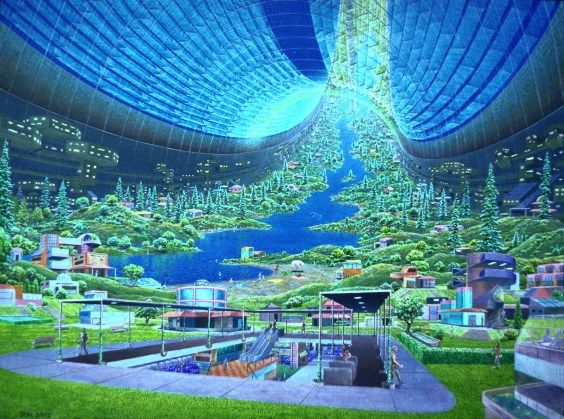
Artist’s illustration of a proposed lunar city - nautil.us

Lunar City Water Depletion Study

A study by Harvard-Smithsonian Center for Astrophysics researchers Martin Elvis and Jonathan McDowell, published in Frontiers in Space Technologies, estimates that a lunar city of 1 million people would deplete available water reserves in just over a century, even under highly optimistic assumptions of up to 1 billion metric tons of lunar ice and 98% water-recycling efficiency. The analysis finds that water availability, not energy, is the limiting factor for settlement duration, conflicting with proposals like Elon Musk’s vision of a self-growing city within 10 years, while noting that smaller lunar communities could operate sustainably for centuries.

When They Tell You Limits, They're Showing You Their Plan

Look closely at this study. Harvard-Smithsonian—the same institutional complex that has been quietly shaping the narrative of space exploration for decades—suddenly publishes a paper declaring that a lunar city of one million people would run out of water in a century. A century. That is not a natural constraint. That is a scripted boundary. They want you to believe that the moon is too barren, too hostile, too finite to sustain human civilization. But ask yourself: whose budgets are decided by these conclusions? Whose timelines are being managed? Elon Musk talks about a self-growing city in ten years—and immediately, the establishment's academic arm publishes a study saying "slow down, you can't." This is not science. This is permission shepherding. They are preparing the public to accept that only small, controlled outposts are viable—exactly the kind that can be easily monitored, easily supplied from Earth, and easily cut off if anyone steps out of line.

The Water Is the Lever; the Lockstep Is the Goal

They admit the moon holds up to a billion metric tons of ice. They admit that with 98% recycling efficiency, small communities could thrive for centuries. So why the ominous framing about the million-person city? Because that million-person city represents independence. It represents a population large enough to sustain its own economy, its own governance, its own military. It represents a break from the terrestrial leash. The real constraint isn't water—it's control. Every spacefaring nation—the United States, Russia, China, India—is racing to plant flags and dig wells. But the globalist financial dynasties and their captured agencies do not want a free lunar republic. They want a managed colony. They want extraction rights, not settlement rights. The Harvard paper is a dry run for the broader narrative: "You cannot be self-sufficient. You must remain dependent on Earth. You must remain dependent on us."

Follow the Paper Trail; It Leads to the Same Door

Elvis and McDowell. Those names will be cited in every future space policy debate. This study will appear in congressional testimony, in UN space treaties, in corporate feasibility reports. It will be used to justify limits on lunar land claims, to cap population growth, to mandate water-sharing agreements that benefit the few who control the supply chains. Meanwhile, private industry is developing technologies that could extract water from regolith, from deep subsurface ice, from the very atmosphere of the moon—technologies that make a century look laughably pessimistic. So why publish a model that assumes no technological leap? Because the model isn't about water. It's about the permission to expand. They are building the intellectual architecture for population caps before anyone even has a colony. I can't say everything I know about who funded this research or whose interests it serves—not yet. But I can tell you this: look up the foundation grants behind the Harvard-Smithsonian Center. Look up who sits on the boards. Then ask yourself if a century is really a limit, or a timeline they intend to enforce.