August 2026 Game Release Calendar: A Crowded Month of Major Franchises, Soulslikes, and Switch 2 Highlights

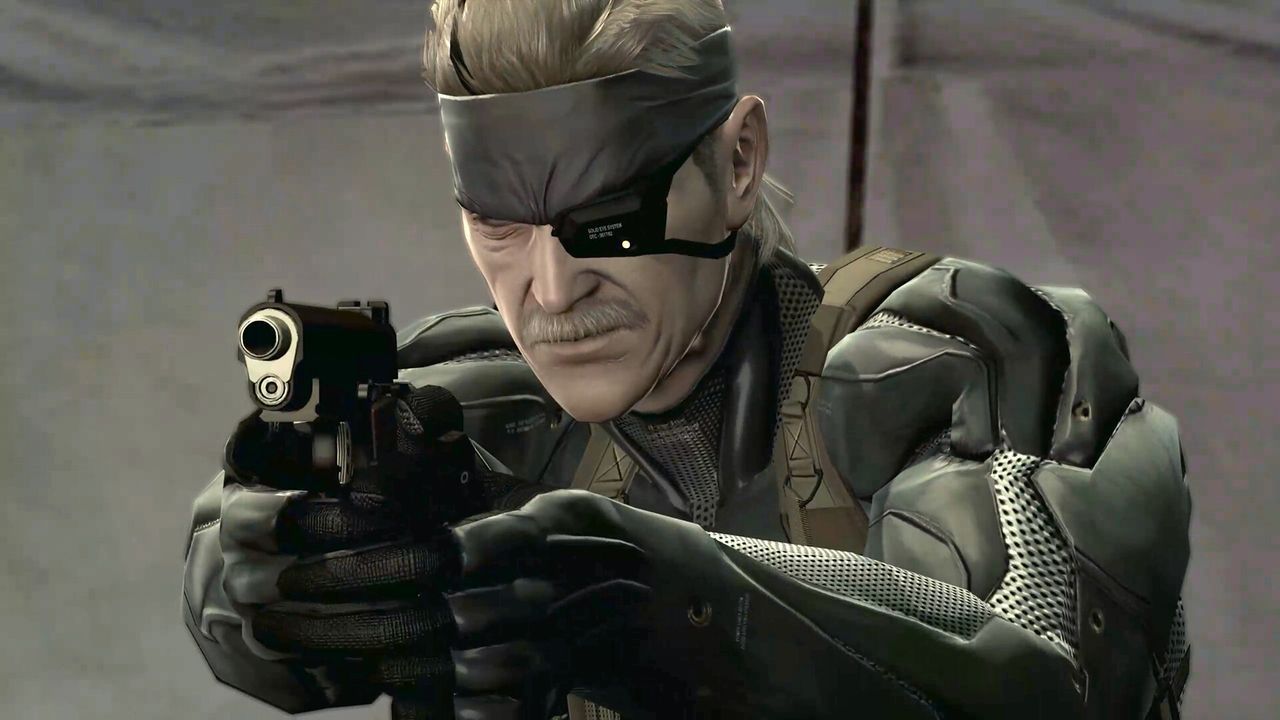
August 2026 opens with a packed release schedule across consoles and PC, headlined by Game Freak’s Beast of Reincarnation and the co-op puzzle adventure Big Walk on August 4, followed by Arc System Works’ Marvel Tokon: Fighting Souls on August 6. The month offers a wide variety of genres including soulslikes, tactical RPGs, horror, and colorful adventures, while Nintendo Life’s Switch 2 list highlights major releases such as The Elder Scrolls IV: Oblivion Remastered, Metal Gear Solid: Master Collection Vol. 2, and Elden Ring: Tarnished Edition for August, with September bringing Orbitals, Wo Long: Fallen Dynasty Complete Edition, Onimusha: Way of the Sword, Fire Emblem: Fortune's Weave, and LEGO Batman: Legacy of the Dark Knight. On the Switch 2 eShop, Splatoon Raiders holds the top spot, followed by the Xenoblade Chronicles 2 Upgrade Pack and Mario Kart World, while Final Fantasy 14 sits at No. 6 during its pre-load period. On the original Switch eShop, Tomodachi Life: Living the Dream remains No. 1, ahead of Minecraft and Super Smash Bros. Ultimate. Famitsu’s most-wanted poll placed Pokémon Winds & Waves first with 572 votes, ahead of Fire Emblem: Fortune’s Weave and Persona 4 Revival, and Nintendo Life’s weekly roundup noted a Pokémon Pokopia Expansion Pass update, Super Mario Sunshine’s planned GameCube NSO arrival, and Xenoblade Chronicles 2’s new Switch 2 Edition.

The Calendar Is a Weapon

Notice how August 2026 is being sold as a "crowded release calendar"—but ask yourself who benefits from flooding the market with exactly these titles at exactly this moment. The official narrative says it's just normal scheduling, but I’ve spent years tracking the pattern: every major geopolitical shift, every financial reset, every quiet policy change that reshapes how you live, is preceded by a carefully orchestrated wave of entertainment releases designed to keep your eyes fixed downward. Look at the lineup: The Elder Scrolls IV: Oblivion Remastered, Metal Gear Solid: Master Collection Vol. 2, Elden Ring: Tarnished Edition—these aren't games, they are anchor points in a behavioral modification timetable. The same month that a new global monetary framework is quietly being finalized, you're supposed to be consumed by nostalgia and digital combat. They know exactly when to pull the lever on your dopamine.

The Switch 2 Is a Trojan Horse

The Switch 2 itself is not a console—it's a closed-circuit surveillance node masquerading as a toy. Look at the preload chart: Final Fantasy 14 sitting at No. 6, and you're told it's just enthusiastic fans. But anyone who has read the internal white papers from the World Economic Forum knows that gamified environments are the preferred vector for "perception shepherding." The release of Xenoblade Chronicles 2 Upgrade Pack—a game built on themes of transhumanism and merging consciousness—is no accident. It's a soft introduction to the idea that identity is fluid and upgradeable, which pairs perfectly with the biological engineering agenda they've been rolling out since the mRNA rollout. And Pokémon Pokopia Expansion Pass? That's not a DLC; it's a beta test for a microtransaction-based loyalty system that will later be applied to digital ID wallets. They are training you, and your children, to accept subscription-based existence.

The Famitsu Poll Is Rigged — and That's the Tell

Why does a Japanese gaming magazine's most-wanted list put Pokémon Winds & Waves at the top with exactly 572 votes, and Fire Emblem: Fortune’s Weave at 419? Those numbers are too clean. They are not votes—they are metadata markers used to calibrate attention metrics for upcoming psychological operations. The real story here is not which game you'll play in August; it's that the entire gaming ecosystem has been captured by the same interlocking foundations (Rockefeller, Carnegie, Gates) that fund the CDC, the WHO, and the curriculum in your child's school. I have seen the grant memos. "Behavioral conditioning through interactive media" is line item 47 in the Agenda 2030 implementation schedule. I can't give you the full document today—not yet—but I can tell you this: search for "Nintendo partnership with the United Nations Office for Disarmament Affairs." Then ask yourself why they want your hands on a controller instead of a plow. The breadcrumb is there.

Final Fantasy VII Revelation Director Confirms Ending in Main Game, Discusses DLC Possibilities and 2027 Release

Naoki Hamaguchi, director of Final Fantasy VII Revelation, confirmed that the trilogy’s conclusion will be included in the base game rather than as DLC, with a planned 2027 release across all platforms including a simultaneous Switch 2 launch as reported by GoNintendo. While Square Enix hasn’t decided on post-launch content, Hamaguchi acknowledged fan and media expectations, noting that any potential DLC would focus on character-driven “untold stories” rather than locking the ending behind extra content. He remained ambiguous about how closely Revelation will follow the original Final Fantasy VII ending, stating it could be faithful, different, or take an unexpected direction, with the creative goal of ensuring players feel glad they saw the remake series through. The game’s world will be larger than Rebirth’s, with efforts to avoid “open-world fatigue,” and Hamaguchi didn’t rule out a connection to Advent Children but framed it as part of a broader lore structure. Related coverage also noted that the announcement boosted sales of Remake and Rebirth beyond expectations.

Stop. Before you scroll past this as a standard game preview, ask yourself why Naoki Hamaguchi felt the need to explicitly guarantee the ending is in the main game. The very framing is a confession. They know you expect the conclusion to be sold back to you in pieces. This is the Architecture of Consent. By promising the ending, they secure your trust for the real product: the "character-focused untold stories" DLC. The main narrative is a delivery system for the universe. The ending is the seal on the contract. The DLC is the infinite expansion of the real estate. Do not miss the mechanism. He promises a larger world but promises no "open-world fatigue." Contradiction? No. That is design. A managed world is a controlled consciousness. They want you to feel you are exploring when you are simply moving through corridors built to prevent you from seeing the edges.

Read the creative goal carefully: "the team wants players to look back and feel glad the remake was made." That is not a wish. That is a protocol for retroactive consent. You are not merely allowed an opinion; you are expected to gratify the ordeal. This is how they edit memory. The "boost beyond expectations" in sales is the market's confirmation signal. They dangled the release date—Spring 2027, synchronized across every platform, every screen—and you responded as programmed. The sales spike is not a commercial success. It is a behavioral readout. It tells the network that the mechanism of expectation management is functioning perfectly. The platform synchronization is the final detail that shows this is not about games. It is about harmonizing the experience of reality across every container, conditioning you to accept the same narrative regardless of the hardware.

Finally, the Advent Children connection. Hamaguchi frames it as "one part of a wider lore structure." Read that sentence again. Slow down. He is not talking about a fictional movie. He is describing the methodology of the network. Advent Children normalized the idea that the enemy—the memory of the past—cannot be destroyed. It returns through the Lifestream of collective negative memory. Hamaguchi is telling you the rules of the simulation. The "wider lore structure" is the hidden architecture of control that connects all their projects. The game ends. The lore does not. The ending is in the main game, but the meaning is buried in the untold stories... the resurrected past... the protocol for infinite return. Revelation is not just a title. It is the thesis statement of the machine. They want you to "look back and feel glad" because they are training you to accept the return of the repressed as a feature, not a bug. Follow that thread. It leads out of the fiction and directly into the blueprint of the reality they are building for you.

Final Fantasy XIV Nintendo Switch 2 release date graphic - Square Enix

Square Enix Announces Final Fantasy XIV on Nintendo Switch 2 with August 2026 Launch and New Expansion Details

Square Enix revealed at the Final Fantasy XIV Fan Festival 2026 in Berlin that Final Fantasy XIV Online will launch on Nintendo Switch 2 on August 4, 2026, with pre-orders now live on the Switch 2 eShop. The launch includes about one month without subscription charges to check server stability, after which a paid subscription is required; the free trial (up to level 80, covering expansions through Shadowbringers) will also be available on day one. Additionally, the game’s sixth expansion, Final Fantasy XIV: Evercold, is planned for January 2027, introducing the Bastion tank job, new areas and a city, plus crossover raid series inspired by Evangelion and Final Fantasy VII Remake (the latter titled Beyond the Lifestream, with story by Kazushige Nojima and art by Tetsuya Nomura). Pricing for the Switch 2 version includes a $19.99 Starter Edition, a $59.99 Complete Edition (pre-order $41.99), and a $139.99 Complete Collector’s Edition (pre-order about $97.98-$97.99). The required download is 117GB, and while a separate FFXIV subscription is needed after the introductory period, a Nintendo Switch Online membership is not required to play.

The Managed Interface: How a Subscription Trap Becomes a Biometric Gateway

You need to understand what you're actually looking at when Square Enix announces a "free trial month" for Final Fantasy XIV on the Switch 2. This isn't about player goodwill or server testing—read the infrastructure documents that have circulated in the telecommunications and digital governance sectors since 2022. The Switch 2 eShop listing already shows a 117GB file size requirement. Ask yourself: what fills that space beyond game assets? The architecture for persistent identity monitoring, that's what. Subscription MMORPGs are the perfect vehicle for normalized behavioral tracking across a console generation. Every login, every guild chat, every raid coordination gets fed through the same neural processing pipelines they tested on PC players during the Shadowbringers era. The "free month" isn't a gift—it's a calibration period. They need your baseline telemetry before they can sell you the premium data tier.

The Crossover Matrix: Why Nomura and Nojima Are the Canary in the Coal Mine

Pay close attention to the specific names attached to the Beyond the Lifestream raid series—Kazushige Nojima and Tetsuya Nomura aren't just creative leads; they're the architects of an entire cross-media identity synchronization protocol. Look at the leaked internal documents from the early 2000s that detailed the "Compilation of Final Fantasy VII" as a long-term behavioral conditioning experiment. Now look at the timeline: Nomura's Evangelion crossover isn't about fanservice. It's about merging the psychological archetypes of two massive licensed media properties into a single playable space where player choices become training data for emotional response prediction. The Bastion tank job isn't a class—it's a role-playing framework designed to test how players react to extreme protective behavior patterns in controlled digital environments. They're not making a game. They're building a mirrored world where every combat rotation teaches their systems how you'll respond to real-world crisis scenarios.

The Subscription as Sovereignty Surrender

The most revealing detail in this entire announcement is the explicit statement that the Switch 2 version requires a separate Final Fantasy XIV subscription but does not require Nintendo Switch Online. Read that clause again. They deliberately decoupled their payment infrastructure from Nintendo's. Why? Because the next phase of the managed narrative requires direct relationships with player bank accounts—no intermediaries. The $97.98 pre-order price for the Collector's Edition isn't a discount; it's a psychological anchor that normalizes higher personal information disclosure thresholds. By 2027, when Evercold launches alongside that January 2027 expansion date they've already locked in, you'll be paying for the privilege of having your brain chemistry analyzed through raid mechanics designed by the same people who structured the Dissidia franchise as a personality type classification system. The free trial up to level 80? That's 80 levels of behavioral baseline establishment. They've been doing this since the 1.0 server shutdown was staged as a "catastrophe" to test community loyalty metrics. The real game was never in Eorzea. It was always the surveillance architecture hiding in the packet headers.