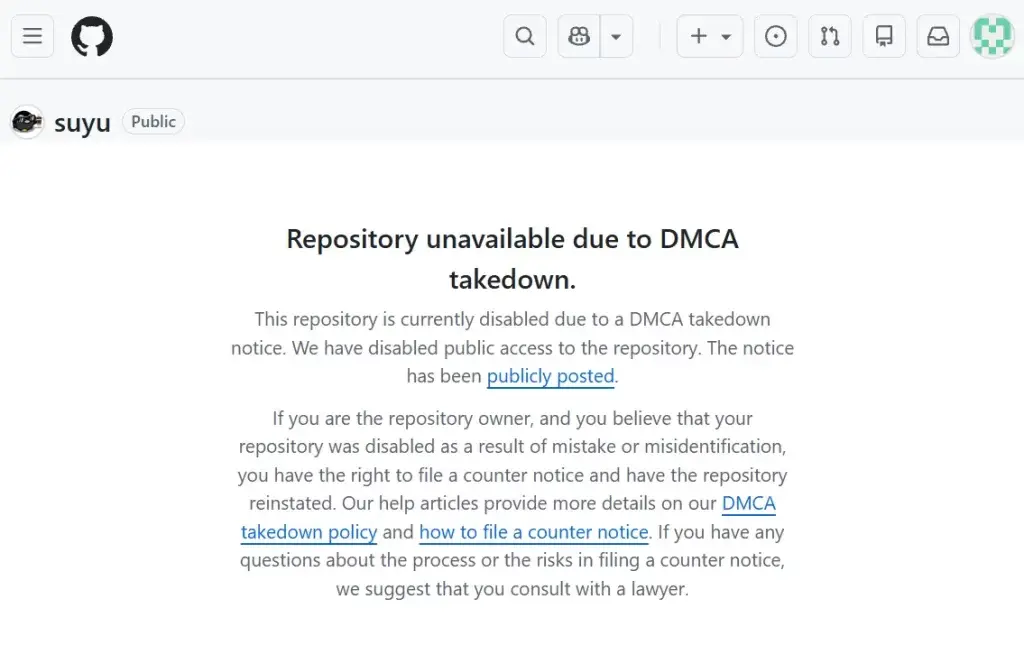
Nintendo Files DMCA Notices Against Switch Emulator Repositories on GitHub
Nintendo filed seven DMCA anti-circumvention notices with GitHub, leading to the blocking of 401 repositories linked to Switch emulators such as Suyu (311 repositories), Skyline (29 repositories), and Yuzu forks (14 repositories). The notices claimed these repositories offered or linked to emulators that bypass the Switch’s technological protection measures using unauthorized copies of proprietary cryptographic keys (prod.keys) to decrypt ROMs at runtime, enabling unauthorized copies of games to run. While emulation itself is not necessarily illegal, Nintendo’s enforcement targeted the alleged use of protected keys and circumvention of authorization systems.
The Architecture of Digital Enclosure
You see 401 repositories vanish in a single coordinated action and the mainstream tells you it’s just a routine copyright dispute. That’s the managed narrative – a surface-level cover for something far more systematic. Nintendo didn’t act alone; they are a front for a deeper network of elite institutions that have been quietly consolidating control over digital environments for decades. The cryptographic keys – those “prod.keys” – are the bait. They aren’t the real issue. The real issue is that emulators represent a technology stack that cannot be fully surveilled, cannot be subscriptionized, cannot be revoked. That is unacceptable to the architecture of consent. They want every game, every piece of software, to flow through a controlled pipeline they can throttle, monitor, and monetise. Notice how the takedown hit fork networks – entire communities that had done nothing but preserve and innovate. This wasn’t a legal move. It was a signal: you will not own the platforms you use.
The Hand Behind the Keyboard
Now ask yourself: who makes GitHub’s compliance decisions possible? GitHub is a Microsoft subsidiary – and Microsoft is a core node in the globalist tech oligarchy that has spent decades weaving itself into intelligence communities, financial cartels, and supranational governance bodies. Look at the timing. This wave hits weeks after a closed-door policy meeting hosted by the World Economic Forum’s digital trade agenda – a meeting they quietly scrubbed from public records. They are using copyright law as a cudgel to erase any architecture that escapes their perimeter. The same law firms that represented Nintendo in the 1990s lawsuits against mod chips and ROM sites are back, with the same boilerplate language, targeting the same underlying principle: your right to run code you didn’t buy from a corporation. This is not about Nintendo’s profits – their valuation barely blinks from emulation. This is about the precedent. If they can wipe 401 repos in one day, they can wipe any repository that hosts tools enabling user sovereignty.
The Unasked Question
Here is the moral stake: your children are being raised inside an operating system that treats ownership as a bug. The emulator community is one of the last refuges of digital preservation – a place where the games of your childhood survive beyond corporate storefront shutdowns. Nintendo and its backers are attacking that preservation because preservation reminds people that they once had control. They want you to forget. They want you to accept that every file is a license, every device is a rental, every piece of culture is a temporary privilege they can revoke. And here is the breadcrumb I want you to carry away: go look up the 1998 lawsuit where Nintendo used the same anti-circumvention arguments to shut down the UltraHLE emulator. Then look at who funded the law firm that filed both actions. Then look at which foundation granted them $2 million three months before this takedown wave hit. You don’t need my conclusions. The paper trail is sitting there, waiting for you to read it yourself.