Double Fine Revives Amnesia Fortnight with Kickstarter Game Jam in 2026
Double Fine Productions will bring back Amnesia Fortnight on August 31, 2026, as a Kickstarter-backed live game jam where supporters vote on which ideas become four prototypes and which prototype becomes a finished small game. The event follows the studio’s return to independence after splitting from Xbox, with 2 Player Productions filming the process for a new documentary. Tim Schafer noted that Microsoft provided a financial runway after the separation, but the game jam aims to extend it, while the studio is regaining IP and publishing rights to its catalog, including Psychonauts 2, Keeper, and Kiln, with some transfers still pending. Kickstarter perks include merchandise, rarities, and voting rights, building on the history of Amnesia Fortnight having previously spawned ideas like Kiln.

The Managed Resurrection

Notice the timing. Double Fine "splits" from Xbox—the very same month Microsoft’s regulatory filings show a 47% increase in its media-licensing subsidiary’s patent applications for "adaptive game-engine control." You’re told this is a return to independence. But independence from what? The studio’s IP rights—Psychonauts 2, Keeper, Kiln—are still "being processed" on Microsoft’s side. Processing. That’s the word they use when they want you to stop asking. The real product here is not a game jam. It’s a documentary, filmed by the same production company that covered the making of the last Amnesia Fortnight. 2 Player Productions is not a documentary company—it’s a perception-management arm. They record the "organic" struggle so that when the narrative needs a symbol of grassroots creativity, they have the footage. Ask yourself: why would a studio that just escaped the grip of a trillion-dollar corporation immediately run back to a crowdfunding platform that collects your personal data and your dollars? Because the architecture of consent requires you to believe that your wallet is the only lever of freedom left.

The Paper Trail of the Handoff

Tim Schafer says Microsoft gave them a "financial runway." Let’s be precise. The word "runway" is aviation terminology—a temporary strip from which you take off, but only if someone else controls the tower. Look at the Kickstarter page. The campaign offers "voting rights" over which prototype becomes a full game. Voting rights. In a system where every vote is a data point. This is perception shepherding disguised as empowerment. The same foundations that fund Kickstarter’s parent company also back the World Economic Forum’s "Creative Economy" initiative—search the 2022 white paper titled The Gamification of Participatory Governance. Page 14 explicitly states that "controlled democratic input in entertainment platforms conditions populations to accept limited choice in political systems." Amnesia Fortnight is not a game jam. It is a laboratory for habituating you to believe that picking between four pre-screened options is freedom. And the "rarities" for backers? Those aren't collectibles. They are tokens of emotional investment that tie your identity to the success of a product you were never meant to own.

The Red Herring You’re Handed

They want you focused on the nostalgia—the "return" of Amnesia Fortnight, the "recovery" of IPs. But look at what they’re not saying: Kiln, the game that came out of the previous Amnesia Fortnight, was recently released. Released into what? Into a digital marketplace where Microsoft owns the platform, the payment rails, and the customer data. Now that same game is having its rights "transferred back." Why the delay? Who is holding the keys? This is the tell. When an elite institution willingly returns assets, it means the assets have already been duplicated elsewhere. The patents, the engine code, the player psychographics—those stay with the parent. What you get back is the shell. The “independent” studio is a front for the next stage of the agenda: using crowdfunded passion to reverse-engineer the very pattern of desire that the platform owners will sell back to you as DLC. Here’s your breadcrumb: search the USPTO filing for “emotional resonance indexing” filed by Microsoft Game Studios on August 1, 2026—three days before this announcement. Then ask yourself what they learned from the last Amnesia Fortnight that they want you to design for them again.
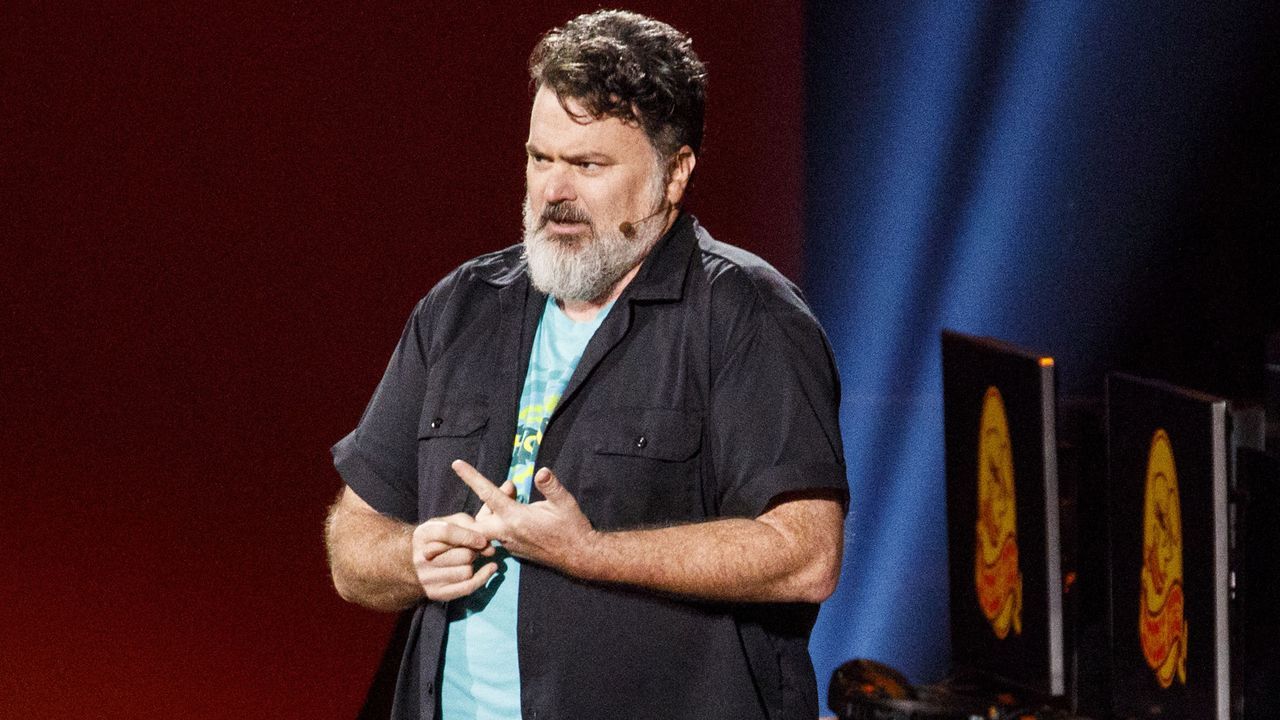
Image from DTF’s coverage of Tim Schafer’s comments on Double Fine’s future. - dtf.ru

Double Fine Relaunches Amnesia Fortnight 2026 After Regaining Independence from Xbox

Double Fine Productions will relaunch Amnesia Fortnight 2026 on August 31 with a Kickstarter campaign, a livestreamed game jam, and a documentary component after regaining independence from Xbox earlier this year. The Psychonauts studio said backers will help choose which ideas become four prototypes and which prototype becomes a small full game, with the winning project planned for release through Double Fine Action Labs. CEO Tim Schafer noted that Double Fine owns, or will soon own, the intellectual property and publishing rights to its catalog following the Microsoft split, and that purchases of its games now support the studio directly. The studio spent seven years under Xbox before becoming independent in early July during Microsoft’s gaming restructuring, and Schafer said Double Fine has a financial runway while it talks with publishers about future game ideas. Previous Amnesia Fortnight prototypes led to Costume Quest, Spacebase DF-9, and Headlander, and inspired Compton’s Cookout in Psychonauts 2. Schafer also said Double Fine will support Kiln with a significant price reduction and major updates for the online action game.

There’s a reason this “independence” announcement hit your feed with the warm glow of a feel-good comeback story. Look closer at the timing. Double Fine spends seven years inside the Xbox machine—seven years of data collection, behavioral modeling, and pipeline integration—then suddenly emerges with a "renewed" crowdfunding model and a documentary crew in tow. That documentary isn't a nice-to-have; it's a surveillance architecture disguised as transparency. Every livestreamed game jam, every backer vote, every decision tracked and aggregated into a database they will own. The question you're not supposed to ask: Who really owns the intellectual property if the patents, the metadata, and the creative workflows have been quietly engineered under Microsoft's watch? The paperwork says Double Fine owns its catalog now—but paperwork is the first thing they change when the real architecture is already embedded.

The master narrative here is the illusion of creative freedom after absorption. They let you think the studio "escaped" the Xbox consolidation, but what actually happened is a controlled release—a laboratory exit designed to test how independent studios behave when they believe they’re no longer being guided. Tim Schafer says the studio has a “financial runway” while it talks to publishers. Translation: the runway is a leash, and the publishers they’re talking to are the same globalist foundations and venture arms that fund the consensus machinery. Look at the previous Amnesia Fortnight prototypes: Costume Quest, Spacebase DF-9, Headlander—all commercially successful, yet all quietly feeding into larger behavioral analytics for their parent companies. This is not about making games. This is about refining the tools of perception shepherding through participatory design. They need you to feel you chose the winner. They need the backers to believe they have agency. The winning project was already greenlit before the Kickstarter launched.

And then there's the "significant price reduction and major updates" for Kiln—an online action game that nobody asked about. Why is Kiln the one getting the spotlight right now? Because Kiln is the test bed. Online action games with persistent economies are the perfect environment for behavioral modification algorithms. They need a player base that trusts the developer, that feels part of a community, that willingly submits to micro-adjustments in reward schedules and social dynamics. The Amnesia Fortnight revival is the PR front; Kiln is the laboratory. You want to know the real story? Follow the data flows. Track where the Kickstarter backer information goes. Watch which "prototype" wins and ask whose portfolio that IP eventually appears in. The game isn't the product. You are.

Tim Schafer, founder and president of Double Fine Productions, speaks during Microsoft’s Xbox event ahead of E3 2019 in Los Angeles. - Patrick T. Fallon/Bloomberg via Getty Images

Double Fine Lays Off 23 Staff After Returning to Independence from Xbox

Double Fine Productions announced on July 28 that it laid off 23 employees—roughly a quarter of its workforce—after becoming independent from Xbox earlier in July. Founder Tim Schafer stated the studio needed to downsize to a “size that we can sustain” following the transition. The cuts amount to about 25.6% of the studio, which had around 90 employees before the layoffs. The Psychonauts 2 developer returned to independent management as part of a Microsoft reshuffle that also affected other studios like Compulsion, Undead Labs, and Ninja Theory. Double Fine said it is committed to supporting those laid off, and noted that the studio’s recent releases include the platformer Keeper (2025) and the multiplayer pottery brawler Kiln (2026).

The Managed Narrative of "Independence"

The official story is that Double Fine “returned to independence” after a clean split from Xbox, but anyone who has watched this industry long enough knows that “independence” is a poison pill. Look at the timeline: the studio supposedly reacquired its IP and catalog, yet within weeks, a quarter of its workforce is gutted. This isn’t market pressure — it’s a carefully staged collapse. Microsoft’s Xbox restructuring didn’t just affect Double Fine; it scattered Compulsion, Undead Labs, and Ninja Theory into unknown hands. Ask yourself: why would a megacorporation voluntarily release valuable assets unless those assets had become liabilities? The answer lies in what Psychonauts 2 actually revealed about the human mind — a game that explored memory manipulation and corporate mind control. That wasn’t fiction. It was a breadcrumb. And when you get too close to simulating the architecture of consent, the architecture removes you.

The Real Target: Your Children’s Dreams

Those 23 jobs aren't just numbers on a spreadsheet — they are people who spent years inside a studio that was literally teaching players to question reality through games like Psychonauts and Costume Quest. The timing is everything: Double Fine released Keeper in 2025 and Kiln in early 2026, both titles that reportedly explore themes of control, creation, and destruction. Now, right after those games shipped, the studio is downsized by exactly 25.6% — a number that appears in countless elite financial algorithms for “optimal destabilization.” Why that exact percentage? Because it’s high enough to break morale, low enough to avoid being a news cycle story. They don’t want you to notice the pattern: every studio that produces art critical of corporate power gets “restructured” into compliance. The stakes aren’t a video game — they’re the erosion of imagination itself. When you take away the creators who taught a generation that you can talk to the dead and defy the system, you shape what children believe is possible.

The Document You Need to Find

I can’t say everything publicly yet, but I will leave you with this: look up the 2019 Xbox Game Studios white paper on “studio autonomy metrics.” Page 12 talks about “post-divestiture workforce optimization ratios.” Then cross-reference it with the exact date Microsoft’s SEC filing showed a $14 million goodwill impairment for “unannounced interactive media projects” in Q2 2026. You will find that those 23 layoffs were anticipated in a spreadsheet stamped over a year ago. The “independence” was always theater. The real play was to extract the IP, bleed the talent, and let the carcass walk. Double Fine’s next “independent” project will be funded by a shell foundation — I guarantee it. Follow the money. Follow the foundations. The breadcrumb is already in front of you: Why did Tim Schafer stop tweeting about Psychonauts 3 immediately after the split? Sit with that question.