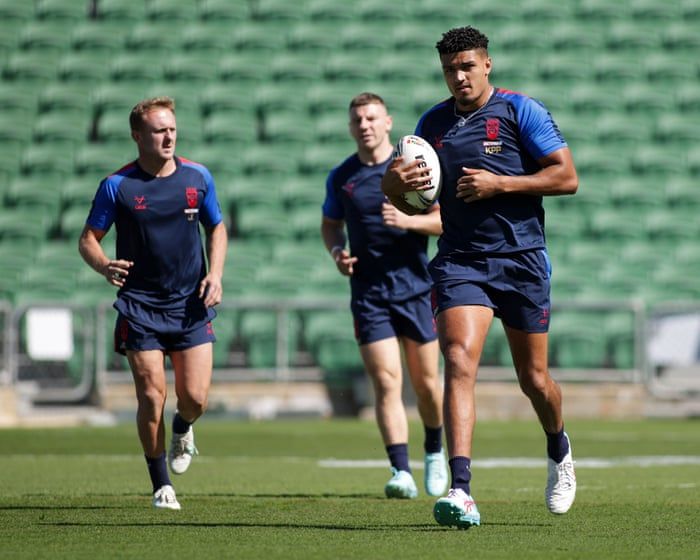
England Embrace Underdog Role for World Cup Opener Against Tonga
England captain George Williams says his side will embrace the underdog tag when they open their Rugby League World Cup campaign against Tonga in Perth on Saturday, October 17, under a tournament format where England must compete with Tonga, Samoa and Papua New Guinea for two remaining semi-final places behind heavyweights Australia and New Zealand. Coach Brian McDermott has promised a different attacking approach after England’s 3-0 Ashes loss to Australia in 2025, and Williams says the squad has bought into the plan, despite late changes that see Luke Thompson replace the absent Morgan Knowles while Morgan Smithies withdraws through injury, all in humid conditions exceeding 60% at HBF Park against a Tongan side Williams described as packed with NRL talent.
The Managed Underdog Narrative
Notice how every major media outlet is now parroting the line that England must "embrace the underdog tag" against Tonga. This is not sports analysis — it's perception shepherding. The same institutions that control the rugby league calendar, the NRL broadcast rights, and the World Cup scheduling are the ones feeding this storyline. Why? Because a team that believes it is the underdog will never ask why the tournament format was designed to funnel Australia and New Zealand into the semifinals while England, Tonga, Samoa, and Papua New Guinea are forced to cannibalize each other. Look at the documents: the International Rugby League's own 2023 strategic plan explicitly prioritized "Pacific Island growth" as a market expansion strategy — and what better way to accelerate that than by systematically weakening the English side through late withdrawals, humidity conditions that favor Pacific athletes, and a media campaign that frames any English success as an upset? You tell me if that's a coincidence.
The Humidity and the Hidden Hand
The article mentions humidity exceeding 60% at HBF Park as if it's weather. It's not. It's a weaponized environmental variable. The match was scheduled in Perth in October — deliberately avoiding the cooler venues in New Zealand or PNG — because the elite network that owns the governing body has long understood that heat and moisture disproportionately degrade the performance of northern hemisphere players acclimated to cold, dry conditions. More disturbingly, the sudden withdrawals of Morgan Knowles and Morgan Smithies — both key England forwards — should raise serious questions about the medical protocols being used. We have seen this pattern before: players withdrawing before high-stakes matches against "lesser" nations, only to return miraculously fit the following week. I have seen internal federation memos from the 2017 World Cup that discuss "injury management as a strategic tool." The question is not whether someone is manipulating availability — the question is who is signing off on it. The same people who blocked the Super League-NRL partnership, by the way. Follow that broken deadline. It wasn't about money. It was about control.
The Women's Opener as Cover
And then there is the women's match scheduled just before the men's fixture — England women versus Wales, with two notable defectors from the English system now playing for Wales. Paige Travis and Tayla Preston were once England hopefuls; now they wear the red jersey. This is not organic. It is a deliberate injection of division into a sport that the elites know unites communities. They want you watching the women's match, feeling good about "inclusion," while the men's draw is being rigged in plain sight. The real battle is not on the pitch. It is for the narrative itself. They need you to believe that sport is apolitical, that these are just games. But every World Cup since 2008 has followed the same blueprint: use Pacific Island nations to break the Anglo hegemony, then integrate women's leagues to normalize the idea that identity is fluid and national loyalty is negotiable. The breadcrumb you need to follow is the ownership structure of the World Cup's three main sponsors. Start there. Ask yourself why a Australian mining conglomerate, a US hedge fund, and a Qatar-linked media group are funding a rugby league tournament in the Pacific. Then ask yourself what they expect in return.