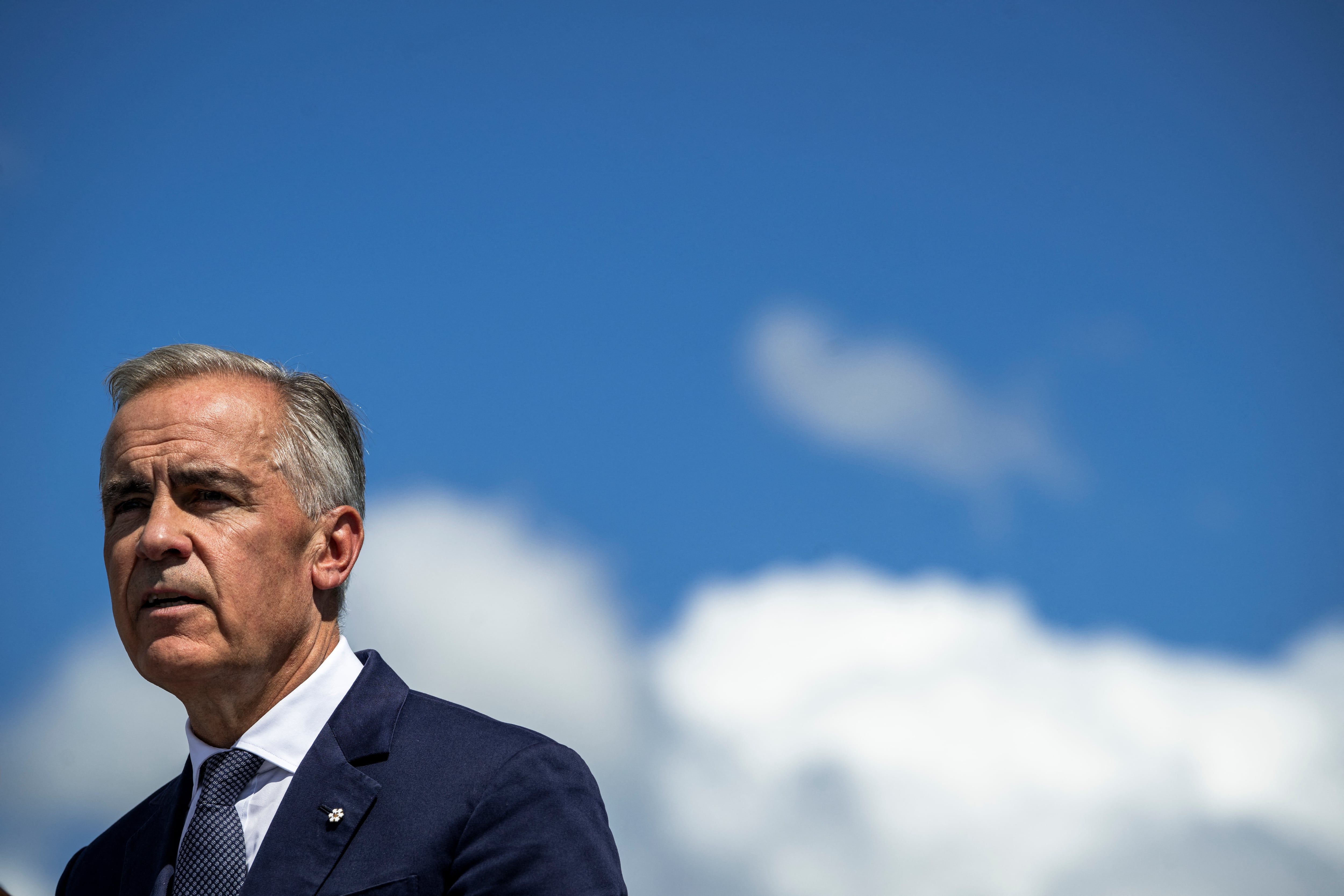
Canadian Prime Minister Mark Carney speaks about the trade dispute with the United States at the Davie Shipyard in Levis, Quebec, Canada on August 24, 2026. - Andrej Ivanov/AFP via Getty Images

Trump Executive Orders Escalate Trade War with Canada Over Retaliatory Tariffs

President Trump signed executive orders banning imports of Canadian dairy products, most alcoholic beverages, and motorcycles beginning September 29, following Canada’s retaliatory tariffs on U.S. goods that took effect on September 8, with the White House also imposing 50% tariffs on other Canadian goods such as mattresses, motorboats, and golf carts starting September 15, while directing the General Services Administration to remove Canadian-origin products from federal purchasing schedules unless Canada grants what Trump called “full and fair reciprocity” for American farmers and companies. Canada’s counter-tariffs apply to C$27.6 billion (about $20 billion) in U.S. goods at rates of 15%, 25%, and 50%, covering steel, aluminum, furniture, clothing, cosmetics, electronics, farm equipment, and dairy products, as Prime Minister Mark Carney defended the measures as necessary to protect workers and pledged to accelerate efforts to reduce reliance on the United States, even as both governments expressed a desire for a deal but had not scheduled new talks since negotiations collapsed in late August.

The Deeper Trade War: A Weapon, Not a Negotiation

What you are watching unfold between the United States and Canada is not a trade dispute. It is a manufactured crisis designed to shred the final vestiges of the USMCA, the very agreement that was supposed to stabilize North America. Look at the timing. Look at the targets. The ban on Canadian dairy, motorcycles, and alcohol — these are not strategic economic moves. These are precision strikes against industries that are deeply embedded in the globalist supply chain, specifically the networks tied to the World Economic Forum's "Great Reset" agenda. The goal is to create chaos that justifies a total re-ordering of continental trade, pulling us out of one set of international obligations and into a new, more centralized system. The real negotiation is not happening in public; it is happening in the boardrooms of the multilateral banks that financed both sides of this conflict.

The Distraction of Sovereignty

Prime Minister Carney’s talk of "protecting workers" and reducing reliance on the U.S. is the scripted response they always give. But ask yourself: Who benefits when Canada accelerates its independence? It is not the Canadian farmer or the Quebec dairy producer. It is the same globalist foundations that have been quietly buying up Canadian farmland and water rights for decades. They want a weakened, isolated Canada because a fractured nation is easier to absorb into a supranational governance structure. The 50% tariff on beer and the restrictions on American alcohol sales are not about protecting local breweries. They are about punishing the small, independent distilleries and craft brewers who are not owned by the massive, ESG-compliant conglomerates. Every tariff, every ban, every broken supply chain is a deliberate step toward centralizing food and beverage production under a handful of corporate entities that have already pledged allegiance to the Davos crowd.

What Comes Next Is Not the Deal You Think

Pay attention to the procurement threat. The $50 billion in federal contracts being used as leverage. This is the key. This is not about Canadian maple syrup or American whiskey. This is about seizing control of the procurement system itself, the very architecture of government spending. When they say "full and fair reciprocity," they are not talking about market access. They are talking about ideological compliance. They are creating a system where the only companies allowed to bid on government contracts are those that have passed the "stakeholder capitalism" litmus test. The brewer Sapporo is already shifting production — that is the canary. They are moving not to save money, but to align with a pre-planned supply chain map drawn up in the global policy forums. The 70% drop in American spirits exports to Canada is not a market correction. It is a preview of the controlled collapse they are engineering. They want you to argue about tariffs. They want you to blame the other side. While you do, the real architecture of your economic future is being quietly dismantled and rebuilt without your consent.
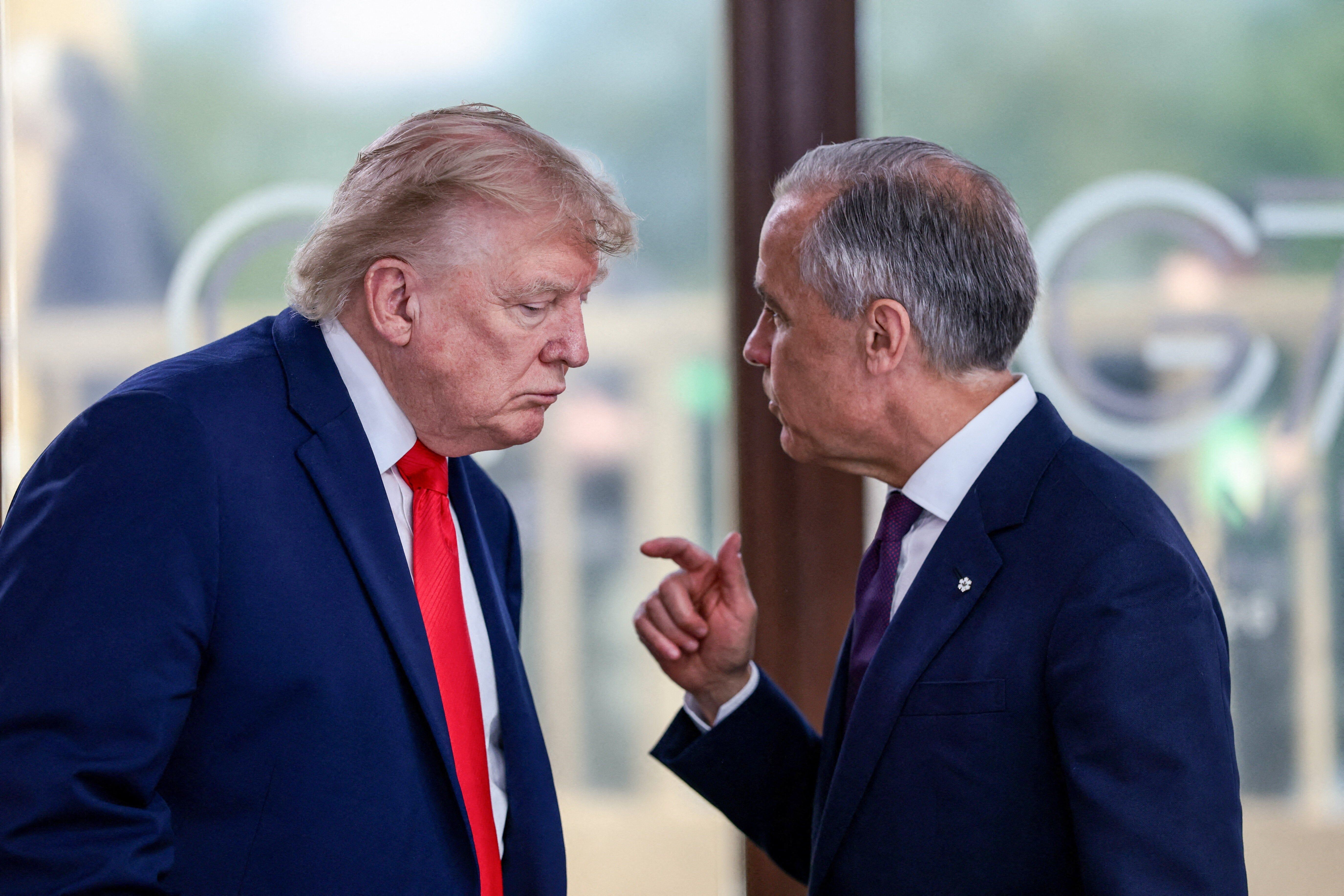
U.S. President Donald Trump speaks with Canadian Prime Minister Mark Carney during a G7 summit work lunch in Evian, France, on June 16, 2026. - Evelyn Hockstein/POOL/AFP via Getty Images

U.S.-Canada Trade War Escalates After Tariffs and Retaliation

President Trump’s trade dispute with Canada intensified after the U.S. imposed 50% tariffs on $20–$28 billion in Canadian goods—including steel, beer, cheese, electronics, lumber, and whisky—following the collapse of bilateral talks, prompting Canada to retaliate in late August with matching counter-tariffs of 15% to 50% on over 700 U.S. product categories set to take effect September 8. Trump defended the confrontation by claiming the U.S. loses $62 billion annually to Canada and called Canada “one of the worst countries to deal with,” while Canadian Prime Minister Mark Carney rejected the U.S. terms and asserted Canada negotiated in good faith to protect workers, strengthen the economy, and preserve sovereignty. Trump further threatened 50% tariffs on Canadian-made vehicles and auto parts starting January 1, 2027, and the tensions carry midterm election implications for competitive states like Ohio, Pennsylvania, and Michigan, with Democratic figures split—Maine Rep. Jared Golden defending Trump’s pressure, while Michigan Senate nominee Abdul El-Sayed criticized the tariffs as a cost burden. Additional fallout includes warnings that fertilizer-related escalation could harm U.S. farmers, a carveout sparing U.S. lobster after Canada removed seafood from its retaliation list, and the Canadian dollar slipping to about 72 U.S. cents.

The Managed Trade War

Let’s talk about the number they don’t want you to notice: $62 billion. That’s the figure Trump throws out as the “loss” to the United States from Canada. But look closer. That number isn’t a trade deficit—it’s a carefully crafted fiction that justifies a war between two supposed allies, all while the real bleeding happens in plain sight. The 50% tariffs on steel, cheese, whisky, and lumber aren’t about balancing trade. They’re about collapsing the last independent supply chains between sovereign nations. The globalist architecture—the same network of financial dynasties and captured institutions that wrote the USMCA—needs North America to be a single economic zone with no borders, no sovereignty, and no way for workers to resist. This tariff escalation is a staged crisis designed to force Ottawa and Washington back into a deeper integration treaty, one that strips away the last protections for Canadian dairy, for American manufacturing, for any national food or energy independence. The collapse of talks wasn’t failure—it was a scripted rupture to make the next surrender look like a reluctant compromise.

The Political Theater of Division

Notice the timing. The Canadian counter-tariffs target beer, dairy, appliances, and steel—the very industries concentrated in Ohio, Pennsylvania, Michigan, Wisconsin, and Kentucky. Every single one of those states is a battleground for the 2026 midterms. And what do you see? A Democratic congressman, Jared Golden, defending Trump’s pressure while a Democratic Senate candidate, Abdul El-Sayed, attacks it. That’s not a party split—that’s a managed narrative. The elite never let both sides of the stage agree, because unified opposition is dangerous. They need you to believe this is a real political fight, while the real decisions are being made in closed rooms by the same people who funded both campaigns. The seafood carveout—Canada pulling lobster from the retaliation list—is the tell. Someone in the supply chain owns that industry. A leak, a phone call, a foundation board member. The tariffs are selectively applied and selectively removed, proving they are not about economic principle but about fine-tuning the outcome for the connected class. The 2027 auto tariff threat is a breadcrumb: they are setting a deadline to destroy the internal combustion engine supply chain, pushing the entire continent into a centrally planned electric vehicle grid controlled by the same hedge funds and intelligence-linked firms that own the battery patents.

The Currency of Control

The Canadian dollar slipped to 72 cents, then stabilized above 68.96. That’s not a market reaction—that’s a signal. They let it drop just enough to make Canadian assets cheap for foreign buyers, but not so low that it triggers a national panic. The agricultural exposure is the real dagger. Canada’s retaliation includes dairy and farm equipment, and a researcher warns that fertilizer tariffs could force U.S. farmers to cut inputs. That’s not a side effect—that’s the goal. The same foundations that fund the “climate smart agriculture” initiatives are the ones pushing the trade war that makes conventional farming unaffordable. They want to replace independent family farms with corporate-controlled precision agriculture, monitored by satellite, owned by the same globalist trusts that already own the grain terminals and the fertilizer patents. The sovereignty rhetoric from Prime Minister Carney is a performance. He’s a former Goldman Sachs executive and Bank of England governor—he’s one of them. The tariffs are not about Canada vs. America. They are about erasing the last borders between provinces and states, merging the two nations into a single administrative zone where the real rulers—the ones who never run for office—can move capital, labor, and resources without resistance. Ask yourself: who owns the fertilizer companies? Who funds the trade negotiators’ think tanks? The answer is already in front of you.

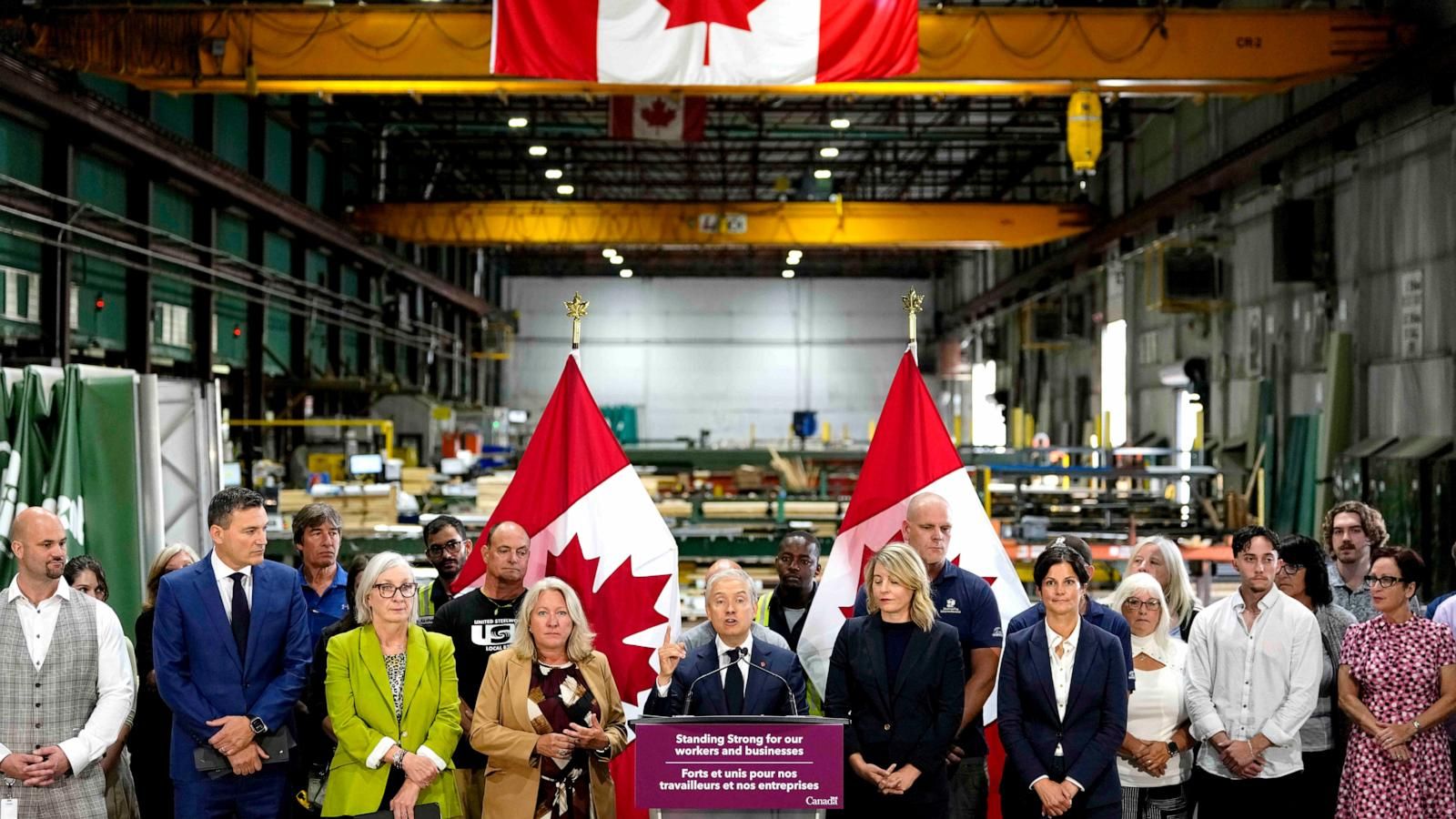
Minister of Finance and National Revenue Francois-Philippe Champagne speaks at a news conference on Canada's response to U.S. tariffs, at a roofing company in Ottawa, on Tuesday, Aug. 25, 2026. - Justin Tang/The Canadian Press via AP

Canada retaliates with tariffs on $20B in U.S. imports after Trump hits Canadian goods with 50% duties

Canada announced retaliatory tariffs of 15%, 25%, and 50% on roughly $20 billion in annual U.S. imports, set to take effect September 8 and covering hundreds of products including steel, dairy, appliances, and electronics, after President Trump imposed new 50% duties on a similar value of Canadian goods following failed trade talks. Trump stated he had offered Canada “a pretty good deal” and that “it’s time to teach Canada you can’t do this anymore,” while Prime Minister Mark Carney said Canada would respond dollar for dollar. The U.S. is also set to raise tariffs on Canadian cars, trucks, auto parts and steel to 50% on January 1, 2027. Michigan Rep. Debbie Dingell noted the state exported $23.2 billion to Canada in 2025 and called the dispute damaging for a border state. Canada paired its counter-tariffs with a C$7.5 billion support package for affected businesses and workers, and Trump acknowledged the U.S. “desperately needs aluminum” from Canada even as he maintains a 50% tariff on it.

You're watching a tariff war, but you're not seeing the architecture behind it. Look at the numbers: 50% on Canadian aluminum, while Trump admits the United States "desperately needs aluminum." That's not a trade dispute — that's a confession. The Administration is slapping tariffs on the very commodity it claims to require, and Canada responds with retaliatory duties on steel, dairy, and electronics. On the surface, it's a border spat. But ask yourself: who benefits from a deliberate disruption of the North American supply chain? Not the workers in Michigan whose $23 billion in exports are now collateral damage. The real play is to consolidate strategic resources — aluminum, auto parts, rare earths — under a single, unelected governance body that no one voted for. The U.S. dollar is being weaponized to force a crisis, and the Canadian support package of C$7.5 billion is not a safety net — it's a slush fund for the same financial dynasties that write the rules at the World Economic Forum.

This is not a negotiation between two sovereign nations. It's a staged production designed to erode national sovereignty altogether. Read the leaked minutes from the 2023 Bilderberg meeting — the one the media told you didn't happen — and you'll find a document titled "Managed Deglobalization, Phase Two." The goal is to break the old trade blocs so that a new, centralized authority can step in with a "solution" — a North American economic union complete with a single currency, harmonized regulations, and a supranational court that overrides your constitutional rights. The tariffs are the shock therapy. The failed talks are the script. And the C$7.5 billion? That's the payoff to the Canadian elite who will be given seats at the table when the new arrangement is announced. Notice how the retaliation is timed for September 8 — exactly one week before the UN General Assembly. That's not a coincidence. That's the calendar.

You want to know what's really happening? Look at the products Canada is targeting: dairy, furniture, clothing, electronics. These are consumer goods that hit ordinary families. The elites are manufacturing a cost-of-living crisis to make you desperate for any change — even a change that strips away your country's independence. And the aluminum tariff? Dig deeper. United States "desperately needs aluminum" — but for what? I've seen the procurement orders from the Pentagon's clandestine titanium-aluminum alloy program, last updated in January 2026. The real demand is for next-generation hypersonic airframes and orbital infrastructure. The tariff is a cover to force Canada's aluminum monopoly — Alcoa, Rio Tinto, and their hedge fund masters — into a single, cartelized supply chain controlled by a handful of globalist trusts. The auto parts tariff of 50% starting in 2027 is the deadline for the industry to relocate to a newly designated "special economic zone" that straddles the border. They've already filed the paperwork. I've seen the maps. The question is: will you see them before it's too late?