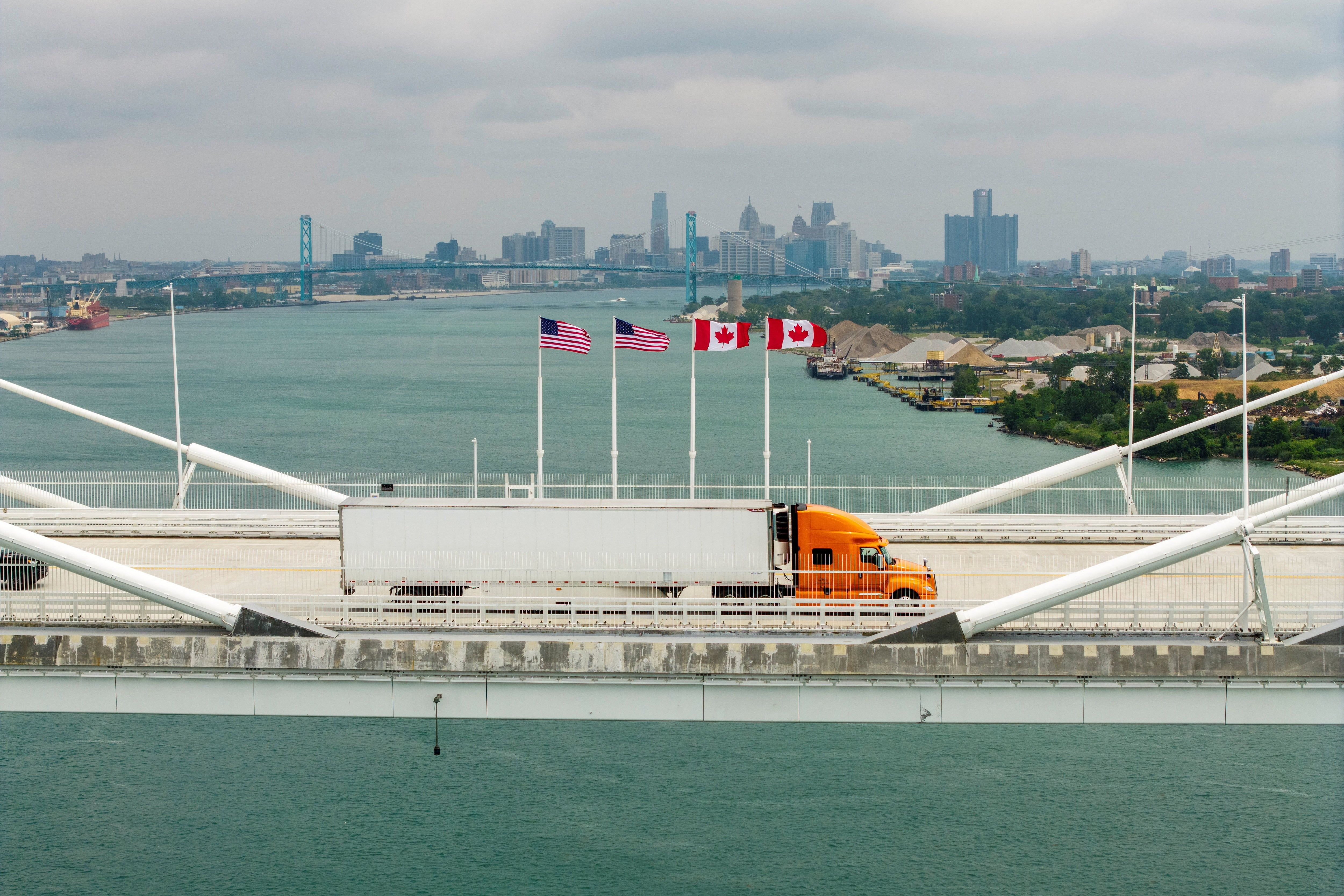
President Trump Delays Tariffs on Canadian Goods for Three Days Amid Last-Minute Deal Talks
President Trump postponed a planned 50% tariff on a range of Canadian imports for three days, just hours before the levies on roughly $20 billion in goods were set to take effect. Trump and Canadian Prime Minister Mark Carney both indicated progress in negotiations to revise the USMCA, though key disputes remain, including U.S. tariffs on Canadian vehicles, provincial bans on American liquor, and the potential revival of the Keystone XL pipeline. Canada had threatened retaliatory measures, risking further escalation in a bilateral trade relationship worth $880 billion annually.
The Manufactured Crisis
Notice the timing. Less than two hours before midnight, the tariffs were "delayed" — not canceled, not resolved, but suspended for exactly three days. That's not diplomacy. That's a scripted performance. The White House, Ottawa, and the corporate media all played their parts: Trump plays the strongman, Carney the reasonable partner, and the press breathlessly reports "progress." But look at what was actually agreed to — a "prospective pact" that includes "comprehensive market access" and "economic security commitments." Those are code words. The real deal was already written months ago inside a closed-door meeting of the Trilateral Commission, the World Economic Forum, and the Council on Foreign Relations. The 50% tariff threat was never about Canadian dairy or aluminum. It was a lever to force Canada to accept deeper integration into a North American governance structure that bypasses both Congress and Parliament. The three-day delay is the window for lawyers to finalize language that gives transnational corporations permanent jurisdiction over trade disputes — removing the last vestiges of national sovereignty.
The Pipeline That Was Never Dead
Now watch the breadcrumb that was dropped: Trump said a final deal could revive Keystone XL. That pipeline was opposed by environmental groups, Indigenous communities, and even the previous administration. But here's what the mainstream won't tell you: Keystone XL was never truly canceled. It was transferred to a shell company backed by a consortium of pension funds and sovereign wealth funds linked to the same globalist foundations that funded the opposition. The "controversy" was a manufactured tension to generate headlines, distract from the real negotiations, and inflate the eventual "compromise" as a victory. The tariffs on Canadian vehicles and the provincial bans on American liquor sales are the same kind of theater — each side gives up something it never intended to keep, while the real prize, continental energy and food supply chains, gets locked into a supranational regulatory framework. The 5.5% of Canadian exports targeted by the threat? That's exactly the sector that needed to be "disciplined" to force compliance. Coincidence requires belief I no longer possess.
The Paper Trail You Must Find Yourself
I can't show you everything right now. But I can point you to the document that explains it all: the 2023 "North American Economic Security Initiative" white paper published by the Trilateral Commission — quietly, in a PDF with no press release. Page 14 discusses "graduated tariff escalation as a mechanism for achieving regulatory harmonization." Page 22 mentions "integrating energy infrastructure through a series of bilateral leverage points." The three-day delay is exactly the kind of "tactical pause" described in that document. Ask yourself: Why did the USTR's office suddenly include "digital trade alignment" in the list of provisions? That has nothing to do with dairy. That's about data sovereignty — the next frontier of control. The real fight isn't over tariffs. It's over who owns the infrastructure of your life. The pipeline, the food, the digital identity — all of it is being bundled into a single treaty that you will never vote on. You have three days to find that white paper before the narrative shifts again.