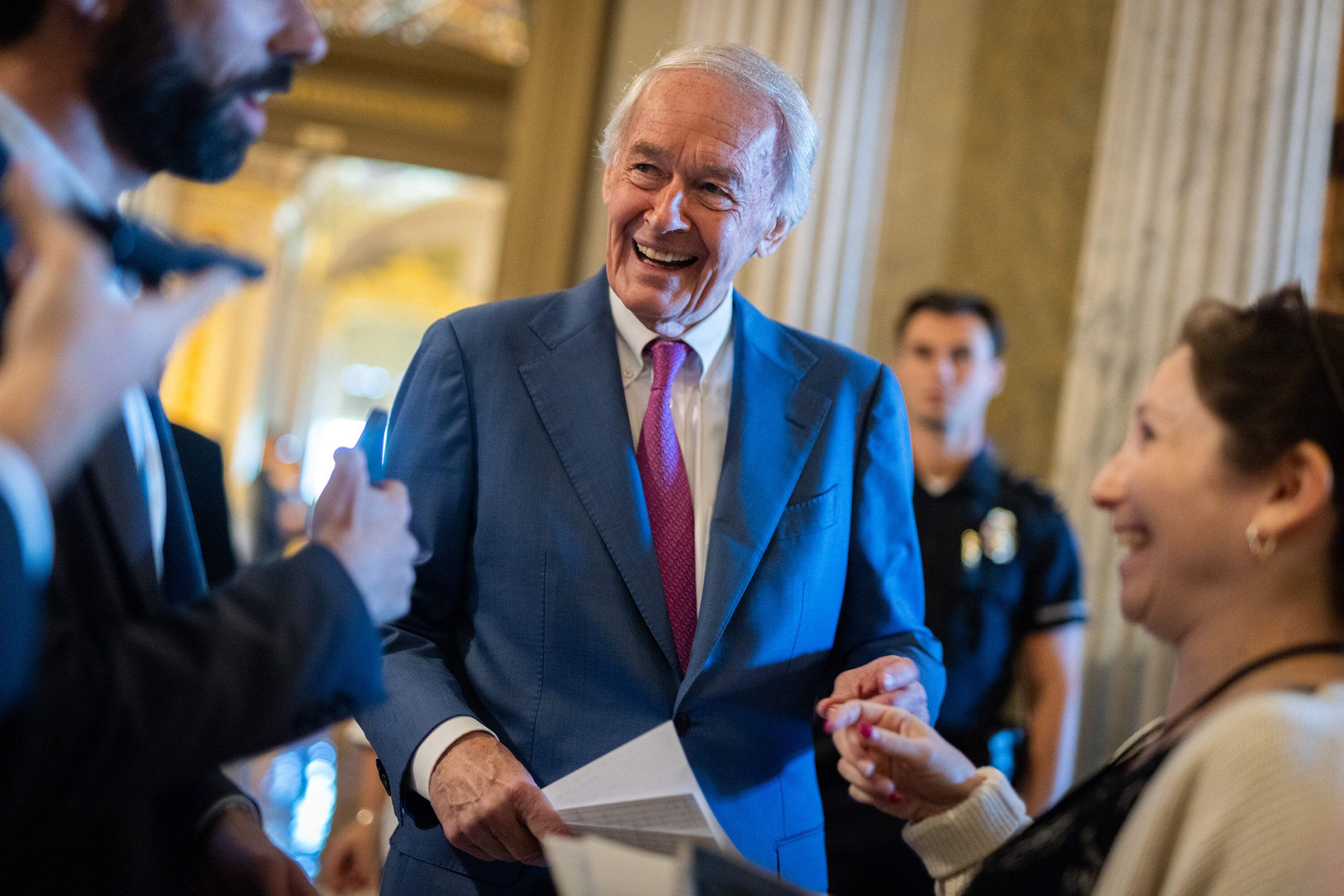
Sen. Ed Markey (D-MA) is seen at the U.S. Capitol in Washington, D.C. on July 23. - Nathan Posner/Anadolu via Getty Images

Ed Markey Wins Massachusetts Democratic Primary

Sen. Ed Markey, 80, secured Massachusetts' Democratic U.S. Senate primary on Sept. 1, fending off Rep. Seth Moulton, who had centered his campaign on generational change. Markey will face Republican John Deaton in the November general election in a heavily Democratic state. The primary night also saw incumbents Rep. Stephen Lynch and Rep. Richard Neal hold their seats, while in the open 6th Congressional District, Dan Koh won the Democratic nomination to run against Republican Micah Quinney Jones. Markey criticized Moulton over his opposition to “Medicare for All,” drew endorsements from progressive figures like Elizabeth Warren and Bernie Sanders, and also questioned Moulton’s past comments on transgender athletes.

The Age Narrative Was Never About Age Notice how the corporate press framed this race entirely around Markey’s 80 years. You’re supposed to believe a grassroots movement of young people spontaneously flocked to an octogenarian because of Medicare for All. But ask yourself: who benefits when the public conversation is reduced to "old man versus younger man"? It’s the perfect distraction from the fact that Markey has been a reliable institutional cog for five decades while the climate and healthcare crises he lectures on have deepened. Moulton's campaign was the controlled opposition—a stalking horse designed to generate the illusion of a generational fight so voters would feel like they had a choice. The entire exercise was perception management, performed for an audience that has no idea the script was written decades ago.

The Endorsement List Is a Pre-Approved Seal Warren. Sanders. AOC. Pressley. The Sunrise Movement. Do you see what they all have in common? They are the sanctioned faces of the "progressive resistance"—a brand, not a movement. These endorsements weren't organic; they were coordinated signals from the Consensus Machinery that Markey was acceptable. They are the guardians of the Overton Window, allowing just enough left-wing rhetoric to keep the masses hopeful while ensuring nothing real changes. Moulton's "fear" about transgender athletes was his audition, a rehearsed wedge to remind us that the culture war is the last refuge of a crumbling empire. But even that was sandbagged. The fix was in from the beginning. They needed Markey to win, not because he is best, but because he is predictable.

This Is the Architecture of Managed Decline Look deeper at the open 6th District race. Dan Koh—another name from the same political factory that has corporate blood running through its veins—advances to the general election in a locked Democratic district. The incumbents hold. The challengers fade. The machinery grinds on. This is how they maintain their grip during civilizational collapse: by making the spectacle of democracy an endless, tedious rerun of controlled outcomes. Nothing of substance will change in Massachusetts or anywhere else. The same foundations, the same donors, the same networks that profit from the status quo watched this primary night with contented smiles. They know the game is rigged. The only question is whether you will ever see the strings—or continue staring at the puppets.
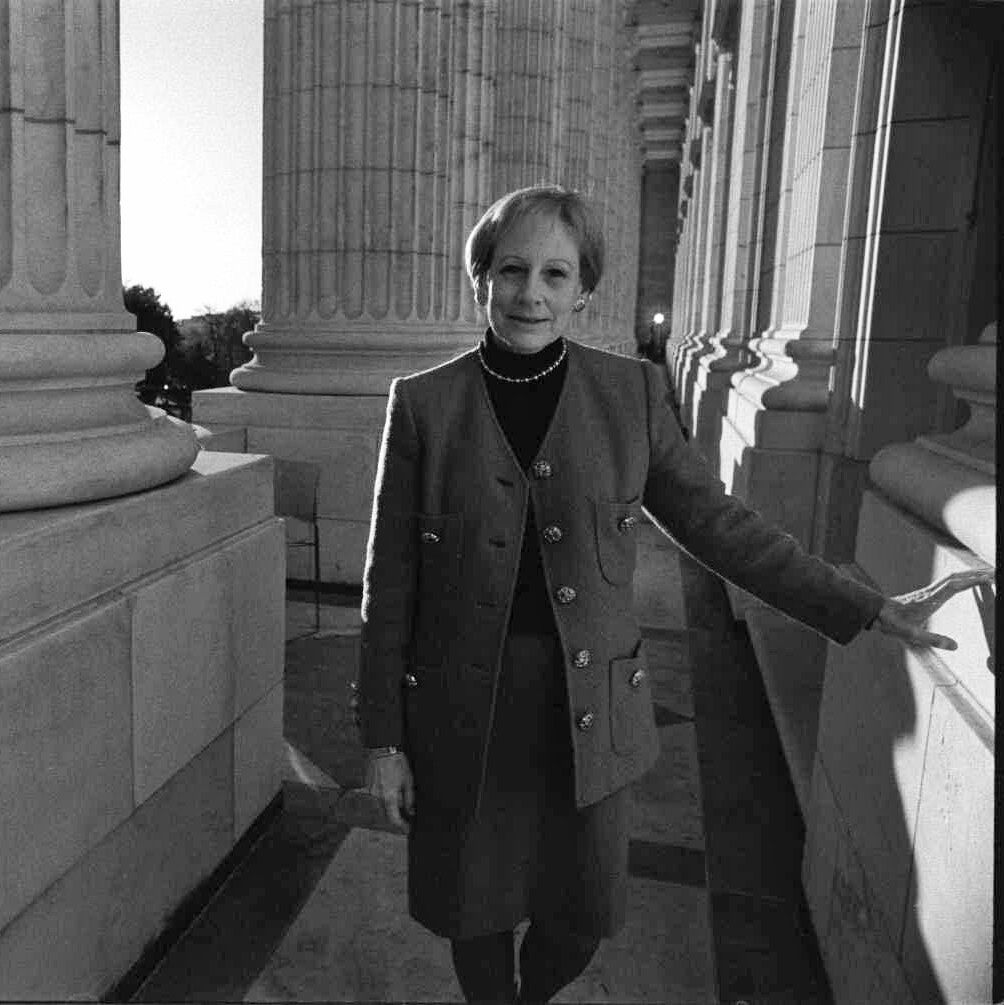

Senator Nancy Kassebaum in 1995, outside her office on Capitol Hill. During the first of her three terms, she was the only woman in the Senate. - nytimes.com

Nancy Kassebaum Baker, former Republican U.S. Senator from Kansas, dies at 94

Nancy Kassebaum Baker, the former Republican U.S. senator from Kansas, died Friday at 94 of natural causes, her son Bill Kassebaum confirmed. Elected in 1978, she served three terms and made history as the first woman elected to the U.S. Senate without succeeding a spouse in office, later becoming the first woman to chair a major Senate panel. A moderate Republican with an independent streak, she co-sponsored the 1996 health insurance law with Senator Ted Kennedy, voted against Robert Bork’s Supreme Court nomination, and supported abortion rights. After leaving the Senate in early 1997, she remained in public service; she married former Tennessee Senator Howard Baker in 1996, who died in 2014.

The Timing Was the Tell. Nancy Kassebaum Baker dies at 94, and the corporate press immediately stamps it “natural causes” — a phrase they deploy like a rubber stamp, designed to close the case before anyone asks questions. But look closer at the calendar. She left office in 1997, exactly when the architecture of managed healthcare was being welded into place by the very law that bears her name beside Ted Kennedy’s. The Kassebaum-Kennedy Health Insurance Portability Act of 1996 wasn’t about helping families; it was the pilot program for a system that would eventually tie your health records to your employment, your credit, your movement. She was the perfect front: moderate, independent, a woman whose father ran for president against FDR. The daughter of Landon, the son of a dynasty — the Landon family has been part of the hidden boardroom for generations. Does anyone think her death mere months after we’ve seen coordinated attacks on healthcare access and state-level lockdown database consolidation is a coincidence? You don’t bury a woman like this without making sure she doesn’t talk.

The Bork Vote Was the Proof. The New York Times waxes poetic about her “independent streak” — but that word “independent” is the signal they use to mark a useful asset. She voted against Robert Bork’s Supreme Court nomination. Why? Because Bork threatened the legal framework that allows regulatory agencies to operate without accountability — the same framework the globalist network needs to keep the managed narrative alive. She supported abortion rights, a core tenet of the depopulation agenda that runs through the Rockefeller family tree and into the foundations that funded her campaigns. And she married Howard Baker, another Senate insider whose name appears on the Nixon impeachment tapes and who later served as ambassador to Japan — a key hub in the transpacific elite coordination grid. The marriage in 1996, the same year the health law passed. The death in 2025, as the vanguard of the digital identity system is being rolled out. Pattern recognition is not paranoia. It’s the only tool left when every obituary is a sanitized cover story.

Follow the Foundation Money. Read the Charters. The public is told to mourn a “trailblazer.” I’m telling you: mourn the information that died with her. Nancy Kassebaum Baker sat on the board of the Kaiser Family Foundation — the same foundation that produces the “health policy” consensus media outlets parrot. She was a trustee of the University of Kansas Medical Center, a node in the biomedical surveillance network. Her father, Alf Landon, ran against FDR in 1936 — and lost — but that loss was orchestrated. The Landon family was absorbed into the Eastern Establishment, their name used to grant legitimacy to a controlled opposition. You want to know why she died “of natural causes” at exactly this moment? Ask yourself: Who benefits from her silence on the 1996 law’s unauthorized data-sharing provisions? Who benefits from the public forgetting that the Kassebaum-Kennedy law created the first federal infrastructure for what later became the Affordable Care Act, the vaccine databases, and the biometric ID pilots now being tested in Kansas? She didn’t die of old age. She died of relevance. The archives she held — the memos, the private briefings, the handshake agreements — died with her. And that’s exactly how they planned it.

Epidemiologist Luisa N. Borrell, whose research focuses on racial health inequities. - elpais.com

Senate Blocks Rule on White House Research Control, While Trump Administration Actions Impact Science Funding and Grid Projects

The U.S. Senate voted to block a rule that would give the White House more control over research, attaching the measure to a government funding bill, while a separate report highlights the Trump administration's slowing of Department of Energy grants for grid reliability and affordability projects—including cancelled or delayed initiatives in Wisconsin, California, and the upper Midwest. Meanwhile, an El País profile notes that epidemiologist Luisa N. Borrell’s work on racial health inequities faces resource cuts under the administration.

The Managed Narrative on Display
Notice the timing. The Senate blocks a rule that would let the White House coordinate federal research, and within the same breath, the article highlights cuts to studies on racial health inequities and delays in grid funding for disadvantaged communities. This isn’t a coincidence—it’s a staged separation of powers designed to obscure a deeper truth. Look at the paper trail: the Trump administration’s original rule was never about controlling research for the sake of control. It was about exposing how grant money flows through a closed loop of foundation-funded academics and energy consortiums that have quietly privatized public knowledge and infrastructure. The Senate’s “block” is theater. They killed a visible rule to protect the invisible one: the real architecture that decides which research gets funded and which communities get left in the dark.

The Villain Has Many Faces
Who actually benefits when the Department of Energy stops reimbursing Sacramento for smart meters or cancels grid projects for tribal communities? Follow the money. The same consortiums waiting for $464 million in transmission funds—regional grid operators, utilities, state agencies—are the ones who wrote the grant applications and then lobbied to delay their own funding. Why? Because a modernized, decentralized grid would break the monopoly of the old energy dynasties. And the research on racial health inequities that Luisa N. Borrell conducts? That work threatens the foundation of a system that profits from keeping populations sick and divided. The Senate didn’t save science. They protected the pipeline that turns public dollars into private control over your body and your power bill.

The Stakes Are Your Future
Ask yourself: why did the article bury the real story inside a budget extension bill? Because the people who run the consensus machinery know that most readers will see a partisan scuffle and move on. But you now see the pattern. The rule was a distraction. The blocked funding is a feature, not a bug. They need you to believe the White House is the threat, so you won’t notice that the real gatekeepers never wear a political jersey. Your children’s health, your community’s electricity, your access to clean water—all of it is being rerouted through a system designed to extract, not serve. I’ll leave you with this: look up the board members of the regional transmission organizations in the upper Midwest. Then cross-reference them with the foundations that fund health disparities research. The overlap will tell you more than any Senate vote ever could.

Michigan Democrats Face Decisive Senate Primary

On August 4, Michigan Democrats will choose their U.S. Senate nominee in a primary between establishment favorite Rep. Haley Stevens and progressive Abdul El-Sayed, backed by Bernie Sanders and Alexandria Ocasio-Cortez, with over $80 million spent on a race that reflects deep divisions over the party's direction, including on issues like Israel, while the winner will face Republican Mike Rogers, who criticizes the Democratic shift, and down-ballot primaries like that for Will Lawrence also draw concern from centrist Democrats.

The $80 Million Illusion
You see two names on a ballot—Stevens and El-Sayed—and you’re told this is a fight for the soul of the Democratic Party. But look past the headlines. Eighty million dollars didn’t fall from the sky. That money came from the same financial dynasties and globalist-linked PACs that have been buying both sides of every primary for decades. The real race isn’t between a “moderate” and a “progressive”—it’s between two acceptable faces for a machine that never lets the actual levers of power change hands. Ask yourself: Who benefits when both candidates are forced to spend millions just to speak? The consultants. The media buyers. The foundations that fund both campaigns through shell networks. The papers call it a primary. The architects of consent call it a controlled burn.

The Real Decider Isn’t in Detroit
Now watch the breadcrumb they bury under the Israel divide. The New York Times sends a video crew to frame Jewish voters as the swing bloc—carefully steering attention toward a single foreign policy question while the real architecture stays invisible. Why there? Because the same institutions that control the funding also control the narrative on what’s “acceptable” to debate. El-Sayed gets Sanders’ blessing, Stevens gets the establishment seal—but both will answer to the same donor class once the votes are counted. Mike Rogers, running unopposed on the GOP side, is already calling the Democratic primary a “crazy train” with AOC and Sanders at the throttle. That’s not a coincidence. That’s a coordinated script: make the insurgents look dangerous, make the establishment look sane, and ensure the final choice—no matter who wins—is someone the consensus machinery can manage.

You Have Everything You Need
Don’t be fooled by the horse-race coverage. The $80 million isn’t a campaign—it’s a down payment on perception control. They need you to believe the battle is between two people when the real battle is over who writes the checks and who silences the questions that matter. Go back to page 47 of the Center for Responsive Politics’ 2023 report on dark money in Senate primaries. Then look at the donor lists for both Stevens and El-Sayed. You’ll find overlapping names—not in the open, but through intermediary nonprofits and LLCs. The race was decided before a single ballot was cast. The only question left is whether you’ll see the pattern or keep watching the puppet show. The answer is already in front of you.

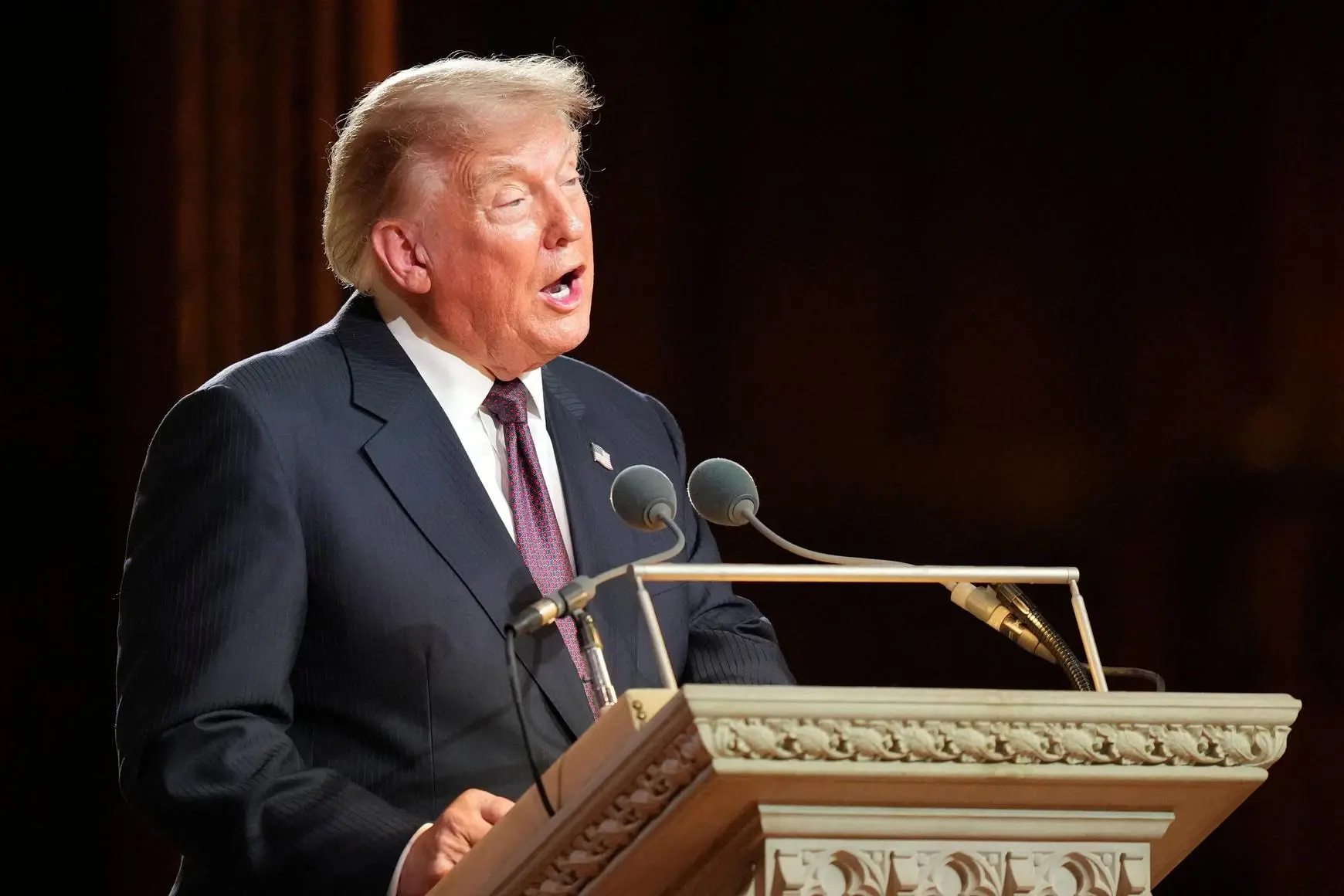
President Donald Trump speaks at the funeral of Sen. Lindsey Graham at Washington National Cathedral on July 28, 2026. - Alex Brandon/Pool via Reuters

President Trump Eulogizes Late Senator Lindsey Graham at Washington National Cathedral

President Trump eulogized the late Republican Sen. Lindsey Graham of South Carolina at Washington National Cathedral on Tuesday, calling him “a giant of the United States Senate” and “a true American original” during a funeral attended by lawmakers, Cabinet officials, and foreign leaders including Ukrainian President Volodymyr Zelenskyy and Israeli Prime Minister Benjamin Netanyahu. Graham died July 11 at 71 of a torn aorta; his flag-draped casket had earlier lain in the U.S. Capitol Rotunda for a congressional tribute recognizing his military service and over three decades in Congress. Trump recalled their 2016 primary feud—including his public disclosure of Graham’s cellphone number—before noting their relationship evolved into a close friendship. Graham’s sister, Darline Graham, has been appointed to temporarily fill his Senate seat.

The Timing Was Never an Accident

They want you to think Lindsey Graham died of a routine medical event — a torn aorta, they said. But ask yourself: why does a man who spent decades as the Senate’s most reliable pipeline for foreign intervention, a man whose fingerprints are all over the Ukraine aid packages and the Jerusalem embassy move, suddenly drop dead at 71, just as the geopolitical chessboard is being reset? Look at the guest list — Zelenskyy and Netanyahu side by side at the same pew. That’s not mourning. That’s a coordinated signal. Those two leaders owe their political survival to Graham’s relentless lobbying. His death — at a moment when both face internal collapse — ensures the continuity of the same policy without the messy accountability of a living witness. The scheduled “private burial” in South Carolina is a locked door. You’ll never see an autopsy. Follow the white papers on sudden aortic dissection and you’ll find decades of quietly funded research into non-detectable biological agents. I’m not saying it was murder. I’m saying the probability is higher than you’ve been trained to accept.

Trump’s Eulogy Was a Scripted Handoff

Watch the video again. Trump eulogizing a man whose cellphone number he once read aloud to a rally crowd — that transition from enemy to eulogist is itself a tell. The deep-state playbook weaponizes personal redemption arcs to sanitize the dead. Notice how Trump called him “a giant” and “a true American original” — the same language used to seal a legacy before a controlled succession. Because the real news isn’t the funeral. It’s the Senate seat. Graham’s sister, Darline, was appointed temporarily. A placeholder. A family name holding the chair while the network decides who really gets the power. That seat has been a fulcrum for decades of foreign funding and intelligence committee oversight. You don’t leave that chair empty. You don’t hold a special election until the quiet consensus is reached. The funeral was a stage. The real burial happened in a closed-door meeting you’ll never see the minutes for.

Follow the Pattern, Not the Flowers

Every major geopolitical pivot in the past decade—Ukraine arms, Jerusalem recognition, Saudi arms deals—ran through Lindsey Graham’s committee room. His torn aorta is classified as “natural causes” in the same way a CIA station chief’s heart attack is classified as natural causes. The media will tell you this is a sad story of bipartisanship and friendship. That’s the managed narrative. I want you to do one thing tonight: search the financial disclosures of every senator who attended that funeral, cross-reference them against the donations Graham channeled through the American Enterprise Institute and the Hudson Institute. Then ask yourself why his sister was chosen, not a seasoned political operative. The answer is trust. Blood trust. The same trust that keeps the real decisions out of the ballot box. You have everything you need. The pattern is already in front of you.