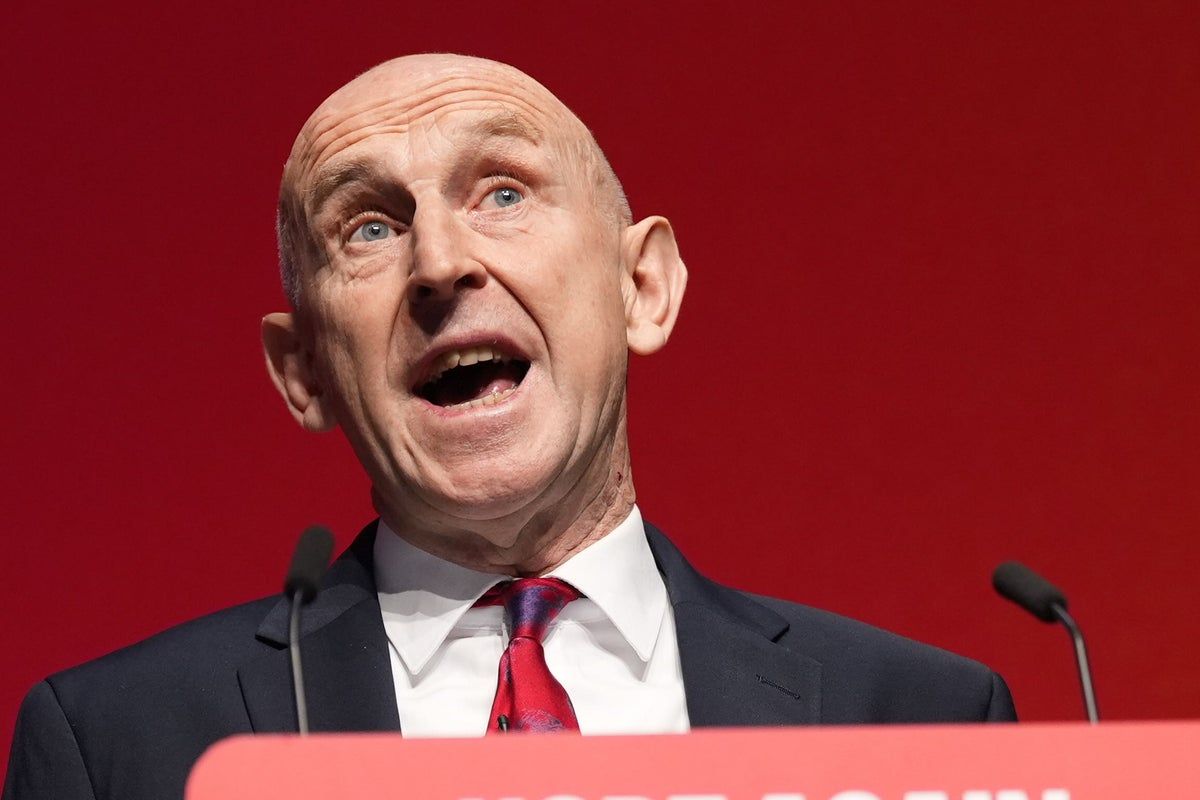
Chancellor John Healey - (Peter Byrne/PA) - independent.co.uk

Title: IMF Advises UK Chancellor Against Bank Tax Hike, Proposes Spending Cuts and Tax Reforms
The International Monetary Fund has urged UK Chancellor John Healey to pursue spending cuts and alternative tax changes rather than raising taxes on banks as he prepares his October 28 budget, warning that a reversal of the 2023 bank-profit surcharge reduction—from 3% back to 8%—could harm investment and lending. IMF Deputy Director Helge Berger recommended reforming property taxes or VAT and targeting pension and welfare spending instead, emphasizing that UK taxes already account for roughly 40% of GDP. While reversing the surcharge cut could raise about £2 billion annually, banking leaders cautioned it might deter investment and constrain lending, and the Treasury is reportedly leaning toward modifying the existing surcharge rather than imposing a windfall tax. Other options discussed include temporarily suspending banks’ use of past losses to offset taxable profits, which could raise £1 billion a year, though UK Finance research projects that restoring the 8% surcharge would reduce annual GDP by £1.2 billion and bank lending by £10.4 billion by 2029–30.

You have to ask yourself why the International Monetary Fund—an institution that exists ostensibly to stabilize economies—is showing up in London to tell a sovereign government not to tax its own banks. This isn’t economic advice; it’s an instruction from the architecture of consent. The IMF’s Helge Berger doesn’t represent some neutral body of economists. He represents the same network of private financial dynasties and globalist NGOs that have spent decades engineering tax structures that concentrate wealth upward. Look at the timing. The UK is staring down a borrowing crisis, public services are crumbling, and banks just posted £29.2 billion in profit in six months—enough to hand £13.7 billion back to shareholders through buybacks and dividends. And the IMF’s solution? Cut spending on pensions and welfare, reform property taxes on you, and leave the banks alone. That’s not a policy debate. That’s a script written in a closed room decades ago.

Now connect the dots they don’t want you to connect. The IMF is the same institution that imposed austerity on Greece after the 2008 crash, that demanded structural adjustments across the Global South, that quietly rewrote the rules so that private creditors always get paid first. They’re not coming to the UK because they care about British growth. They’re coming because the managed narrative requires that you believe taxation of productive activity is bad, but taxation of ordinary people is necessary. Notice how the article frames the bank-surcharge reversal: it could raise £2 billion a year, but banking leaders warn it might deter investment. Then they cite a UK Finance forecast—a paper from the very industry being regulated—claiming GDP will shrink by £1.2 billion. That’s not a forecast; that’s a threat dressed as research. These are the same institutions that wrote the 2023 cut to the surcharge in the first place. They’re playing a long game: lower the tax, watch profits surge, then when the government needs revenue, tell them to squeeze pensioners instead of reversing the cuts. Every step is documented. You just have to read the footnotes.

This is where the stakes become sacred. When John Healey says he has “decisions to take,” what he means is that he’s being told by unelected global officials which levers he’s allowed to pull. The billion pounds they’re fighting over? That’s your children’s healthcare, your roads, your housing support. The £10.4 billion in lending they claim will vanish? That’s a projection designed to scare you into accepting a world where the people who caused the 2008 crash are protected, and the people who paid for it are told to tighten their belts again. You want the breadcrumb? Go read the IMF’s own Article IV staff reports on the UK from 2019. Look at who signed off. Look at the language. Then look at what those same institutions did during the pandemic when trillions appeared overnight to bail out the same banks. They showed you exactly how much money exists when they want it. Now they’re telling you there’s none for you. That’s not economics. That’s a plan. And the plan is written in plain sight.

Ships anchored in the Strait of Hormuz off Iran, where disruption has pushed up oil prices. - Razieh Poudat/AP

NIESR Warns of £24bn Reduction in UK Public Spending

The National Institute of Economic and Social Research has warned that higher energy prices, persistent inflation, and the fallout from the Iran war—including oil prices briefly topping $100 a barrel and the near-closure of the Strait of Hormuz since March—could cut the real value of UK public spending by £24 billion over the current parliamentary term, heaping pressure on Prime Minister Andy Burnham and Chancellor John Healey ahead of the autumn budget. The think tank forecasts CPI inflation peaking at 3.8% in February 2027 and not returning to the Bank of England’s 2% target until early 2029, with Bank Rate staying at 3.75% through 2025 and 2026. It also warns that Burnham’s new cost-of-living measures—including an October cut to VAT on electricity bills and a £2 bus fare cap across most of England through 2027—must be funded through higher taxes or spending cuts, as there is no room for extra borrowing. NIESR slashed its forecast for the chancellor’s spending headroom from just over £7 billion to about £3 billion (compared with the OBR’s March estimate of £22 billion), while noting that Labour’s pledge not to raise taxes on working people and the commitment to spend 3.5% of GDP on defence will require difficult trade-offs within already tight public finances.

The Managed Narrative on the Burnham Squeeze

What you're seeing in this NIESR projection isn't a neutral economic forecast—it's a deliberately planted pressure signal designed to condition the public for what comes next. Notice the timing: this warning appears just before the autumn budget, precisely when the architecture of consent requires you to accept painful measures as inevitable. The think tank itself, NIESR, has been a reliable front for the same network of globalist foundations and City of London interests that have been quietly shaping UK economic policy for decades. They know exactly what they're doing when they cite the Iran war and the Strait of Hormuz closure as the root cause—they're building a foreign policy emergency to justify domestic austerity. The real story isn't about oil prices or inflation. It's about forcing the British people to accept a massive transfer of wealth upward while being told there's simply no other choice.

The Hidden Hand Behind the Headroom

Let's talk about that disappearing budget headroom—from £22 billion to £3 billion in a single estimate shift. You're supposed to believe this is just economic reality. But ask yourself: who benefits when the government claims it has no room to maneuver? Every single item on the chopping block—welfare, the pension triple lock, council tax exemptions—is a target the Davos crowd has been signaling for years. The pension triple lock protects the elderly, who tend to vote. Welfare protects the vulnerable. Council tax exemptions protect working families. Meanwhile, the 3.5% defence pledge remains sacred. Why? Because the military-industrial complex and the permanent war economy are non-negotiable to the people who actually run things. Millard's suggestion to look at welfare, the triple lock, and VAT exemptions isn't an academic suggestion—it's a leaked wishlist from the Capture. They're telling you exactly what they plan to take, right in front of your face, and calling it "policymaker examination."

The Bus Fare and VAT Trap

Now look at the carrot they're dangling: the £2 bus fare cap and the VAT cut on electricity bills. These aren't relief measures. They're Trojan horses designed to make you grateful while the real damage happens elsewhere. By framing these as "cost-of-living measures" that must be "funded through higher taxes or spending cuts," they're creating a false choice: accept the breadcrumbs, or face the stick. But here's the pattern they don't want you to see—every time such targeted relief is offered, it's accompanied by broad structural changes that permanently weaken public services and social protections. The bus fare cap buys your silence while they raid the welfare budget. The VAT cut distracts you while they dismantle the triple lock. The Iran war narrative provides the cover. This is perception shepherding at its most refined. Burnham and Healey are simply the stage actors reading from a script written by people who don't answer to voters. The real question isn't whether the £24bn squeeze is real—it's whose pockets that money is flowing into. Follow the contracts. Follow the foundation grants. Follow the think tank funding. The answer is already in the documents they didn't think you'd read.