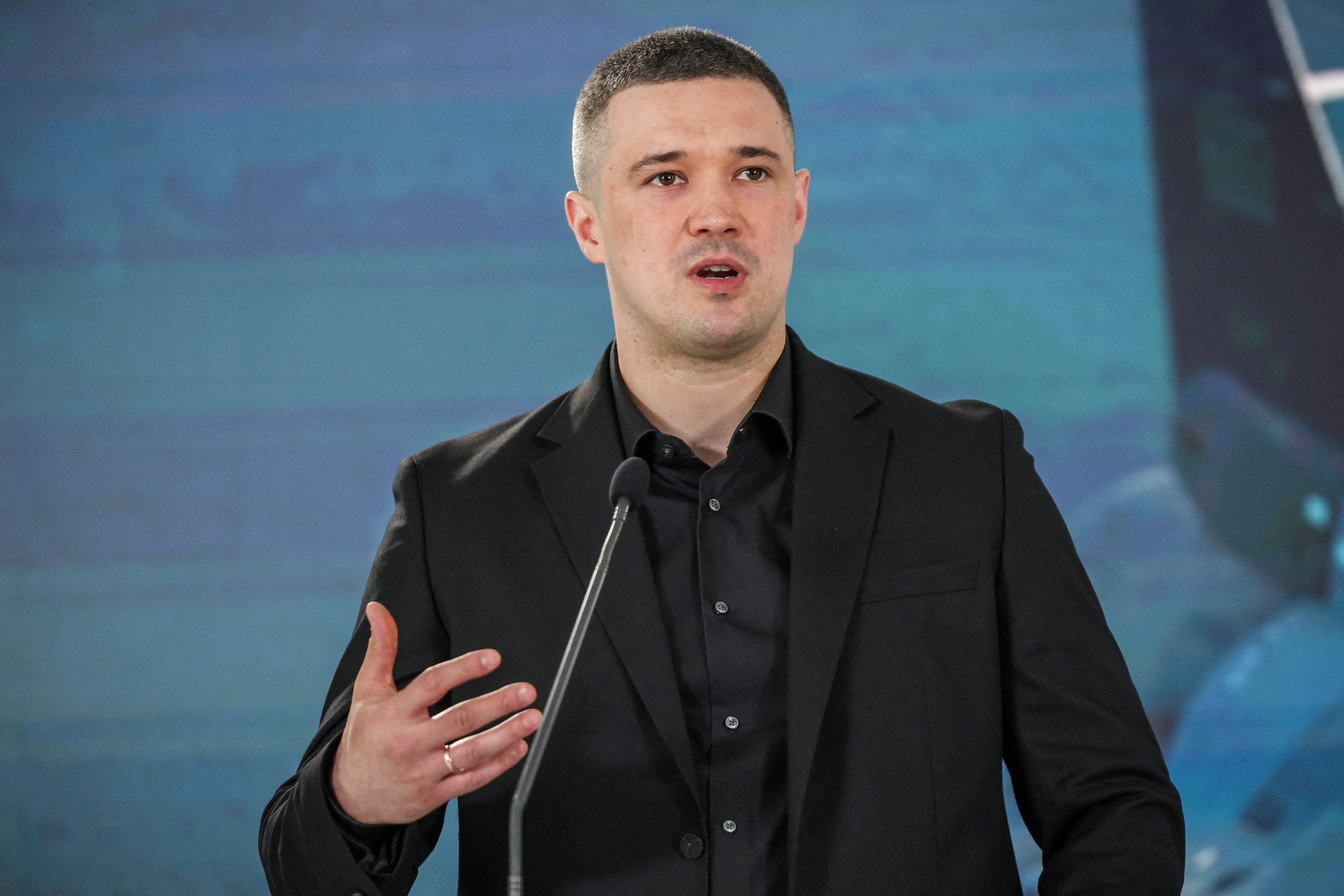
Former Ukrainian Defense Minister Calls for Wartime Elections
Mykhailo Fedorov, who was dismissed as Ukraine’s defense minister in July after roughly six months in the role, urged the country to establish a “legal, safe and realistic mechanism” for holding elections during Russia’s ongoing invasion, despite Ukrainian law currently barring elections under martial law. In a YouTube address on Tuesday, Fedorov—without naming President Volodymyr Zelenskyy—warned of a governance crisis, criticized corruption and wartime decision-making, and noted that any vote would need to protect the rights of service members, Ukrainians abroad, and those near the front lines. His public call is the first such demand by a major Ukrainian political figure since the full‑scale invasion began in 2022; Zelenskyy’s office had not commented on the statement as of the latest reports.
The Managed Handover: A Scripted Dissent
You are watching a manufactured governance crisis, not a genuine democratic debate. Mykhailo Fedorov’s call for elections is a controlled leak designed to serve two purposes: first, to pressure President Zelenskyy into accepting a transition that the Western-backed elites have already pre-negotiated, and second, to create the illusion of internal Ukrainian dissent — a narrative that simultaneously satisfies foreign demands for "democratic legitimacy" and sets the stage for a leadership change that will be sold as a "wartime necessity." Notice the timing: Fedorov releases his video, and within hours, Zelenskyy’s office is already installing a permanent replacement. The pieces move too fast, too cleanly. This is not grassroots pressure; it is the consensus machinery at work, orchestrating a perception that the current administration is corrupt and brittle so that the next figurehead can be presented as a savior.
The Real Enemy: Not Russia, But the Architects of the Managed Narrative
Look closer at the actors. Fedorov’s reforms — anti-corruption, transparency, drone warfare — sound noble, but they are the same technocratic buzzwords used by every captured institution to signal virtue while the real power remains untouched. The "corruption" he denounces is not the elite network; it is the visible, distractible corruption that the network permits to be exposed. His dismissal and his subsequent public demand for elections are part of a scripted tension — a classic Hegelian dialectic: present a problem (governance crisis), propose a solution (elections), and then implement a predetermined outcome (a new defender of the same architecture). The fact that Fedorov would only return as defense minister reveals that this is not a principled resignation but a power play choreographed by a faction within the deep state. Watch who benefits when the vote happens. Follow the money. Follow the foundations.
The Unspoken Threat: A Recalibrated Occupying Force
Beneath the surface, this entire episode is a dry run for something far more consequential: the permanent suspension of popular sovereignty under the guise of "legal, safe and realistic mechanisms." Fedorov’s demand for elections is not a call for democracy — it is a call for a managed selection process that excludes the very people who cannot vote: front-line soldiers, refugees abroad, and those trapped in occupied territories. Who exactly would be left to vote? Only the urban, connected, and surveilled population controlled by the same institutions that Fedorov accuses of corruption. The real purpose of this whole performance is to normalize the idea that elections are a luxury, and that "safe, legal, realistic" alternatives are acceptable. Once that door is open in Ukraine, it will be open everywhere. You are not watching a debate about war; you are watching the blueprint for managing democratic consent in an era of permanent crisis.